

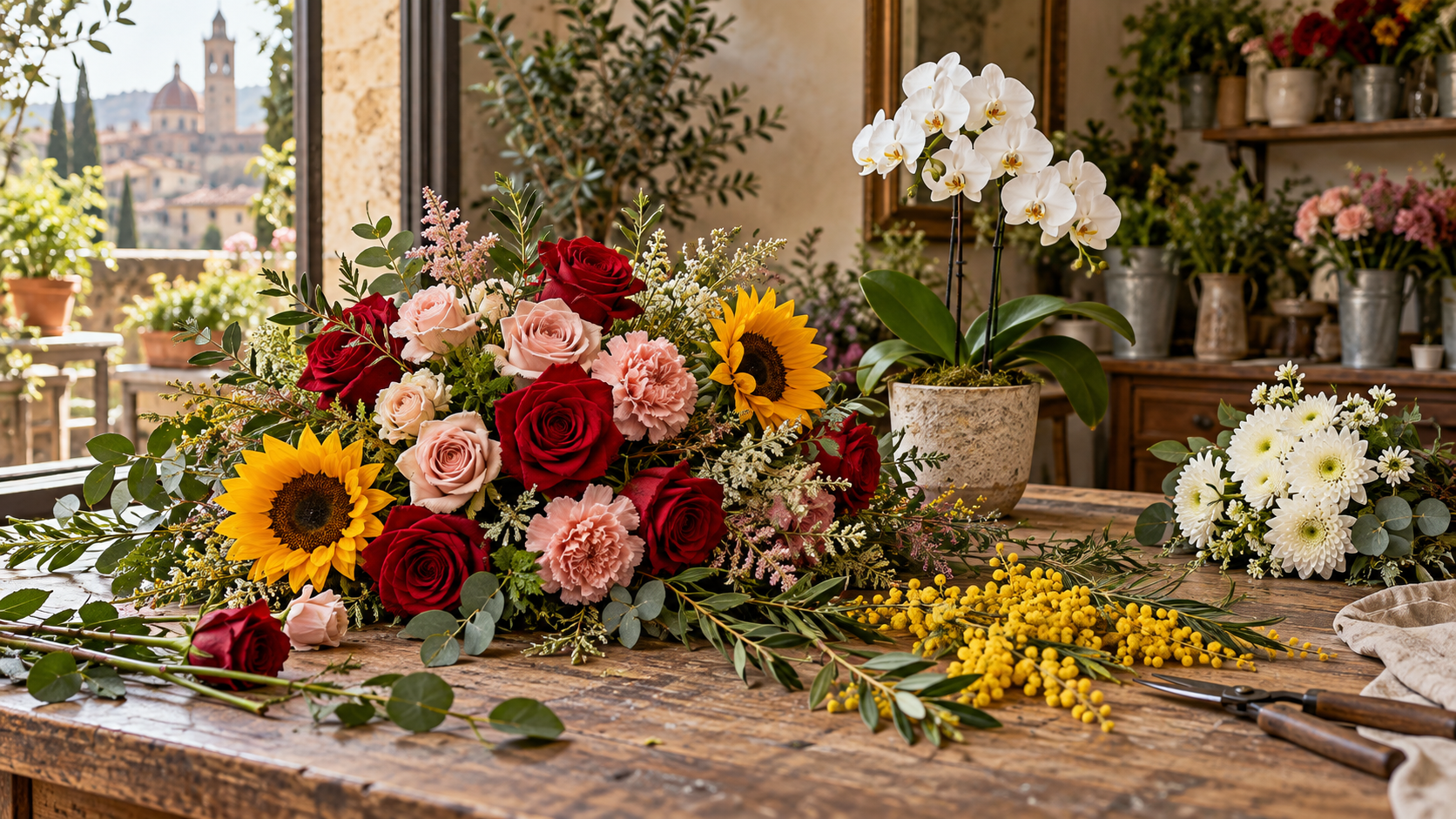
 Flowers can say something lovely without requiring a speech. In Italy, though, the occasion matters as much as the bouquet. Red roses make a clear romantic gesture. A potted orchid can brighten someone’s home for months. Chrysanthemums, beautiful as they are, carry an association that makes them a poor choice for a birthday.
There is no fixed code that every Italian follows. People have their own favorite flowers, and a thoughtful gift should begin with what the recipient actually likes. Still, knowing a few common associations can help you choose a flower that suits the moment.
1. Roses: For a Romantic Gesture
A red rose is the clearest choice when you want to express romantic love. It works for Valentine’s Day, an anniversary, or an ordinary evening when you want to make your feelings unmistakable. A single rose can be more personal than a large arrangement, particularly if you give it in person with a few sincere words.
Roses in other colors offer more flexibility. Pink or cream roses can make a warm birthday or thank-you gift when an intensely romantic message would feel out of place. Rather than relying on a florist’s elaborate list of meanings for every shade, think about the recipient and the relationship you share.
If you are sending flowers to a partner in Italy, check whether they will be at home to receive them. For a dinner invitation, you might bring a modest bouquet yourself. The gesture should feel natural in the setting: an enormous arrangement can be awkward for a host who has to find a vase while preparing the meal.
Best occasions: Valentine’s Day, anniversaries, a romantic date, or a personal celebration.
2. Carnations: For Affection and Appreciation
Carnations, or garofani, are sturdy flowers available in many colors. They can suit a thank-you bouquet, a birthday, or a visit to someone you care about. Their usefulness lies less in one universal symbolic meaning than in their range: a florist can arrange them simply, combine them with other seasonal flowers, or make them part of a bright, informal bunch.
The earlier version of this article suggested carnations as a customary flower for a long list of Italian holidays. That is too rigid. A carnation bouquet is a possible gift for Mother’s Day or another family occasion, but it is not a required part of an Italian Easter or Christmas celebration.
Consider the person receiving them. Someone who enjoys fresh flowers may welcome a colorful bunch. Someone with little room for a vase might appreciate a small arrangement instead. A short note explaining why you thought of them gives the flowers more meaning than an assigned color symbolism ever could.
Best occasions: Birthdays, congratulations, thank-you gifts, and affectionate visits.
3. Sunflowers: For a Cheerful Seasonal Gift
A sunflower makes an immediate impression. Its size and strong color lend themselves to a relaxed summer gift, particularly for someone who likes flowers with a little drama. A few sunflowers in a simple arrangement can be a cheerful way to celebrate a birthday, thank a host, or mark a personal achievement.
Sunflowers do not need to carry a specifically Italian romantic message to be appreciated in Italy. Choose them because they suit the recipient’s taste and the season. Their large heads also make them less convenient to carry than a compact bouquet, so think about how the person will get them home and where they might display them.
If you are visiting a friend’s house, ask the florist to trim and wrap the stems neatly. Giving flowers should be pleasant for the recipient, not create a hurried search for a container large enough to hold them.
Best occasions: Summer birthdays, congratulations, informal thank-you gifts, and visits to friends.
4. Orchids: For a Gift That Lasts
A potted orchid is a different kind of flower gift. Instead of enjoying a bouquet for a week or two, the recipient can keep the plant and, with suitable care, see it flower again. It can work for a housewarming, birthday, anniversary, or thank-you gift, especially when you know the person enjoys plants.
A common moth orchid is elegant without requiring an extravagant presentation. Ask the florist whether the plant comes with basic care instructions, and choose a pot that suits the recipient’s space. If they travel often or dislike looking after houseplants, fresh flowers may be the kinder choice.
An orchid can be romantic, but it does not have to be. Its lasting nature makes it equally suitable for a relative, a close friend, or someone who has welcomed you into their home. For more ideas about flowers and plants indoors, see Italia Mia’s guide to bringing Italy into your home with houseplants and flowers.
Best occasions: Housewarmings, birthdays, anniversaries, and gifts for plant lovers.
5. Chrysanthemums: For Remembrance, With Care
This is the flower whose context matters most. In Italy, chrysanthemums, or crisantemi, are closely associated with cemeteries and remembrance of the dead, particularly around All Saints’ Day on November 1 and All Souls’ Day on November 2. They may be chosen to honor someone who has died, but they can send an unintended message if given as a cheerful birthday bouquet.
That does not make chrysanthemums undesirable flowers. It means you should be attentive to their strong association. If you are arranging flowers after a bereavement, ask the family or a local florist what would be appropriate. Families have different wishes, and it is better to follow them than to assume any particular flower is expected.
If you simply admire the shape or color of chrysanthemums, enjoy them yourself or ask a florist for another flower with a similar appearance when selecting a celebration gift. This small distinction prevents an otherwise thoughtful gesture from becoming uncomfortable.
Best occasions: Cemetery visits and remembrance, according to the family’s wishes. Avoid them as a casual birthday or romantic gift.
One Important Exception: Mimosa on March 8
No guide to flowers in Italy should overlook mimosa. Its small yellow blossoms are associated with International Women’s Day, observed on March 8. A sprig of mimosa may be given to a partner, friend, family member, or colleague. The day also concerns women’s rights and achievements; its meaning extends well beyond exchanging flowers. Italy’s official tourism site explains the connection between mimosa and the observance.
Mimosa deserves its own mention even though this article focuses on five flowers you might choose for a range of occasions. If you are buying flowers specifically for March 8 in Italy, it is the tradition to know.
How to Choose Well
Before ordering flowers, consider three simple questions: What does the recipient enjoy? What is the occasion? Can they easily receive and care for what you send? These answers are more useful than a supposedly universal dictionary of flower meanings.
For a romantic occasion, roses are a straightforward choice. For a cheerful celebration, carnations or seasonal sunflowers may suit the person better. An orchid works when a lasting plant will be welcome. Chrysanthemums call for the most care because of their connection with remembrance. And on March 8, mimosa has a particular place in Italian life.
The best gift feels chosen for one person, at one moment. When you are uncertain, a local florist can help you select what is fresh, available, and appropriate—and a personal note can explain the thought behind it.
External Sources
Italy’s official tourism guide to International Women’s Day