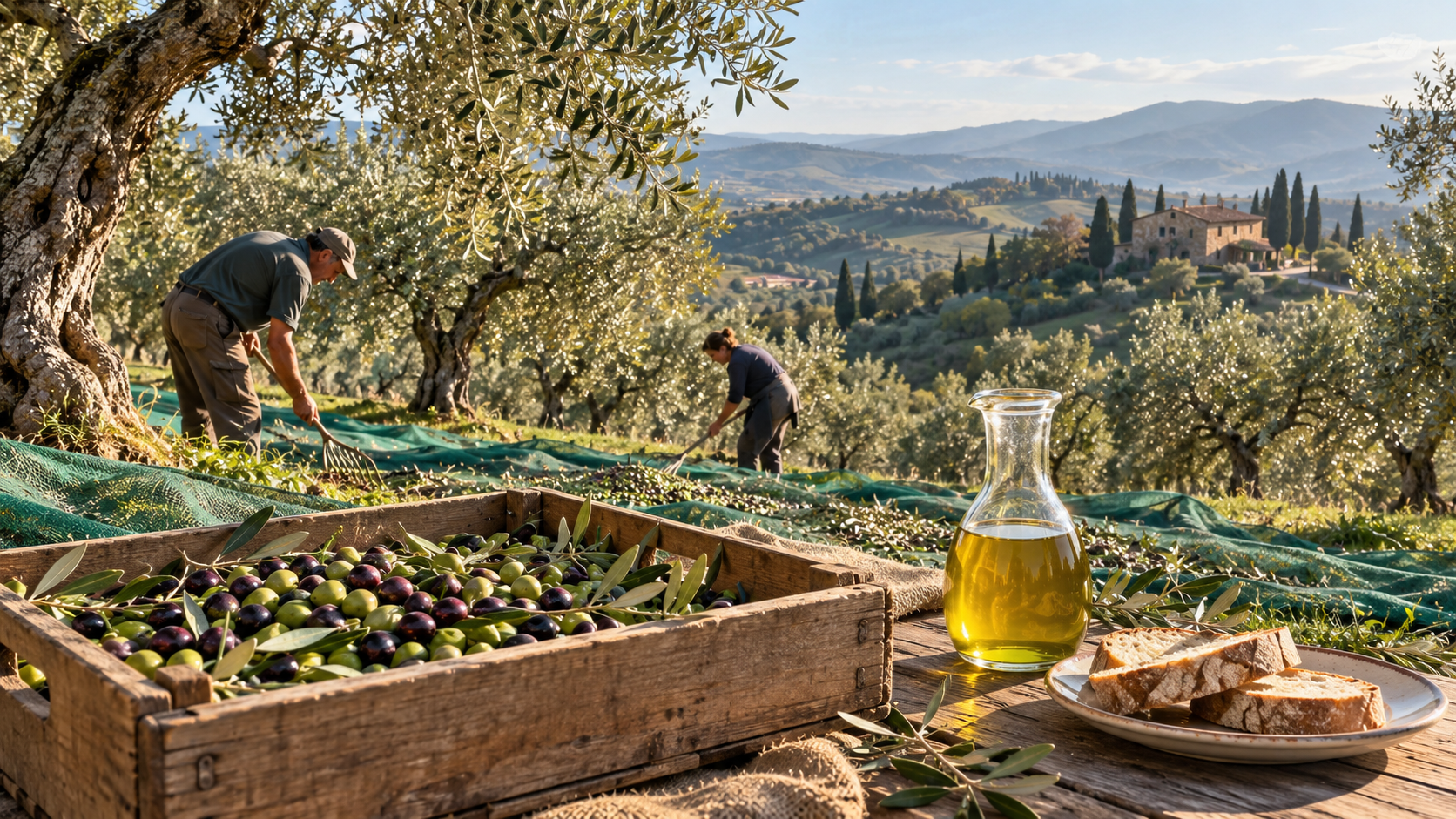
 The olive harvest in Italy offers a different way to experience the countryside. Nets spread beneath the trees, crates arrive at local mills, and the first oil of the season finds its way onto warm bread. For travelers interested in food and rural life, this is an opportunity to understand an ingredient that appears on almost every Italian table.
The experience can be wonderfully simple: a walk through an olive grove, a guided mill visit and a tasting with the producer. However, choosing the right place and date matters. A tasting does not automatically include harvesting, and a historic mill may be a museum rather than a working production site.
Here is how to plan a visit, where to look and what to expect when Italy welcomes its olio nuovo.
When Is the Olive Harvest in Italy?
There is no single national harvest date. October and November are useful starting points for planning an autumn visit, but local schedules vary. Some producers continue into December or beyond, depending on the olive variety, growing conditions and the style of oil they want to make.
In Tuscany, harvesting begins in October in many areas. Around Lunigiana, the regional tourism board identifies late October and early November as an important early-harvest period. In western Liguria, the Taggiasca season can extend into winter. Visit Tuscany
The best approach is to select a region, contact a producer and ask when they expect to be harvesting. Then reconfirm shortly before your visit. Weather and the condition of the fruit can change the timetable.
If you are planning a broader seasonal holiday, combine the visit with Italia Mia’s guide to autumn foliage in Italy. Earlier trips may also overlap with vendemmia, Italy’s grape harvest, although the two harvests do not follow identical calendars.
What Is Olio Nuovo?
Olio nuovo means “new oil”: olive oil from the latest harvest. In Tuscany, you will also hear olio novo.
The appeal lies in tasting the new season’s production close to where it was made. Depending on the olives and how they were processed, the oil may have aromas recalling fresh grass, herbs or other green plant notes.
Bitterness and a peppery sensation can be positive characteristics of virgin olive oil. They should not automatically be mistaken for defects. The International Olive Council recognizes fruitiness, bitterness and pungency as positive sensory attributes. internationaloliveoil.org
However, “new” does not by itself establish an oil’s quality or classification. Extra virgin olive oil must meet chemical and sensory standards. A vivid green color alone cannot tell you whether a bottle is excellent. International Olive Council
For more background, read Italia Mia’s introduction to Italian olive oil.
Tuscany: Olive Mills, Hill Towns and Country Weekends
Tuscany makes a practical starting point for travelers who want to combine olive oil with art, villages and regional cooking.
One specific option is Frantoio del Monte Pisano in Vicopisano, listed by Visit Tuscany. Its experiences combine an olive grove visit, a mill tour and a tasting of three extra virgin olive oils.
The published listing includes a shorter tour with bread and focaccia, plus a longer option with additional food. Minimum group sizes apply, so couples should ask whether they can join an existing group. Confirm the current price and whether production will be running during your appointment. Visit Tuscany
Vicopisano also works well for visitors using Pisa or Lucca as a base. Instead of filling the day with several tastings, I would pair one mill visit with a leisurely village lunch and an afternoon walk.
Farther north, Lunigiana offers another perspective. Visit Tuscany describes an olive-growing culture that remains largely connected to family activity. This makes the area an interesting choice for travelers who want to explore beyond Tuscany’s most familiar wine routes. Visit Tuscany
Umbria: Plan Around Frantoi Aperti
Umbria is particularly convenient for travelers who want an organized introduction to olive oil culture.
Its annual Frantoi Aperti program brings visitors into participating mills during the new-oil season. The appeal is the opportunity to see working production sites and meet the people behind the oil.
For 2026, the confirmed dates are October 17–November 15. Umbria’s official tourism board identifies this as the event’s 29th edition. Umbriatourism
Start with the official Frantoi Aperti website to choose an activity and participating mill. Then build the rest of your trip around its location. The overall festival dates do not mean that every mill offers the same program every day.
For a short break, I would choose one base in the area around Assisi, Spello, Trevi or Spoleto, depending on the booked activity. Leave room for a second day of sightseeing instead of attempting to cross the entire region between appointments.
Check whether individual tastings, meals or guided activities require separate reservations.
Liguria: Discover the Taggiasca Olive
Western Liguria offers a strikingly different olive landscape, with groves arranged on terraces above valleys and coastal towns.
Around Badalucco and Taggia, the visit becomes as much about the terrain as the finished bottle. The terraces help explain the work required to cultivate these hillsides.
The regional tourism portal lists an Olio Roi experience in Badalucco combining the family’s historic mill museum, its modern mill and tastings. La mia Liguria
This is a useful opportunity to compare older equipment with contemporary production. Ask the organizer to confirm the next available date, tour language and whether the modern mill will be operating.
For accommodation, consider whether you prefer to stay inland near the experience or on the coast and travel up for the day. Check the actual driving route before booking: a short distance on a map can involve a winding valley road.
Puglia: Ancient Groves and Underground Mills
In Puglia, an olive oil visit can introduce both the agricultural landscape and the history of rural buildings.
Near Ostuni, Masseria Brancati offers a guided visit covering the estate, olive grove and underground mill, followed by a tasting of its extra virgin olive oils.
Its booking page describes a tour lasting approximately one hour and ten minutes. Requests must be made at least a day ahead, and the reservation becomes valid only after confirmation. masseriabrancati.com
This is an example of a cultural visit and tasting. The advertised itinerary should not be read as a promise of hands-on harvesting or a demonstration of modern oil production.
I would combine it with time in Ostuni and nearby countryside, using one accommodation base for several nights. Italia Mia’s guide to the best places to visit in Puglia can help you decide what else to include.
Sicily: Make Olive Oil Part of a Food Itinerary
Sicily deserves a place in the itinerary for travelers who want to explore olive oil alongside the island’s broader food culture.
The official Visit Sicily website highlights regional oils, including Monti Iblei DOP, and describes tastings that pair Sicilian oil with locally made bread. Visit Sicily
Rather than assume that every farm offers harvest activities, use the regional tourism board’s food and wine operator directory to identify businesses and then ask about their current programs.
For a first visit, I would keep the oil experience close to an existing sightseeing base. A traveler staying around Ragusa or elsewhere in southeastern Sicily can ask local producers about nearby tastings without adding a long journey across the island.
Confirm whether the visit involves an olive grove, a working mill, a tasting room or several of these. Each offers a different experience.
What Happens Inside a Frantoio?
A frantoio is an olive mill. Watching one at work helps connect the fruit on the tree with the oil in the bottle.
Production generally involves cleaning the olives, crushing them into a paste, mixing that paste and separating the oil from the other components. Many modern mills use centrifugal equipment, so the word “pressing” does not necessarily mean that you will see a traditional press. internationaloliveoil.org
Ask your guide to explain which machines are operating and what each stage does. A good visit should make the process understandable without requiring any technical knowledge.
Historic stones and old presses are fascinating, but distinguish a heritage display from equipment used for the current harvest.
Production access also varies. Follow the host’s route and instructions, especially around machinery and delivery areas.
How to Choose the Right Experience
Before paying, establish what you are actually booking:
| Experience | What to confirm |
|---|---|
| Olive oil tasting | Number of oils, language, food pairings and duration |
| Grove and mill tour | Walking distance, terrain and access to production areas |
| Working-mill visit | Whether milling is expected during your appointment |
| Hands-on harvest | Whether supervised picking is explicitly included |
| Harvest meal | Whether the meal, drinks and tasting are included in the price |
A few additional questions can prevent disappointment. Is there a minimum group size? Can children join? Are there steps or steep paths? What happens if rain prevents outdoor activity?
For harvesting, wear closed shoes with good grip and clothing suited to the forecast. Ask whether gloves or other equipment are supplied.
If accessibility matters, request details about the entire route, including parking, toilets and the tasting area. An accessible shop does not necessarily mean an accessible grove.
Taste the Oil Before Adding the Bread
Bread makes olive oil immediately enjoyable, but tasting a little oil on its own first can help you notice differences between samples.
Follow the host’s guidance and take your time. Focus on aroma, bitterness and the sensation in your mouth and throat. You do not need an expert vocabulary to explain which oil you prefer.
Then try the same oils with food. Plain bread, beans or a simple vegetable dish can make an instructive comparison. Keep strongly flavored toppings for later if your aim is to distinguish the oils themselves.
When buying, ask which harvest the bottle comes from and how the producer recommends storing it. Protect olive oil from heat, light and unnecessary exposure to air. Choose quantities you can use regularly rather than saving a special bottle indefinitely. International Olive Council
Italia Mia’s Italian olive oil buying guide offers further help with choosing a bottle.
Where to Stay for an Olive Harvest Trip
An agriturismo can be a good choice when you want the farm visit to be part of a countryside break.
However, check what the property actually produces and which activities it offers. A room overlooking olive trees does not guarantee a harvest experience, a mill visit or dinner on site.
For a two- or three-night trip, choose accommodation within easy reach of your confirmed activity. Ask about heating, restaurant opening days and road access, especially for late-autumn stays.
A town-based hotel may be more convenient if you want restaurants within walking distance. Arrange transport to the mill in advance if you will not have a car.
The Italia Mia guide to choosing an agriturismo explains the practical differences between farm stays, hotels and holiday apartments.
A Simple Three-Day Olive Oil Break
Day one: Arrive, settle in and explore the nearest town. Choose a local restaurant and ask which olive oil it serves.
Day two: Take your booked grove or mill tour. Allow time for the tasting and questions, then leave the afternoon flexible for a village visit or short walk.
Day three: Enjoy a market, museum or another nearby attraction before departing. If you want to compare a second producer, arrange the appointment ahead of time.
I would keep the trip concentrated in one area. The pleasure of olive harvest travel comes from paying attention: learning why a farmer chooses a particular picking date, recognizing a new flavor and understanding the landscape around the table.
External Sources
- Umbria Tourism: Frantoi Aperti 2026
- Frantoi Aperti: official program and participating mills
- Visit Tuscany: Frantoio del Monte Pisano tour and tasting
- Visit Tuscany: olive oil traditions in Lunigiana
- Visit Tuscany: how Tuscan olive oil is made
- La Mia Liguria: Olio Roi experience in Badalucco
- Masseria Brancati: guided visits and reservations
- Visit Sicily: olive oil in Sicily
- International Olive Council: olive oil categories and characteristics
- International Olive Council: standards, sensory methods and storage guides