

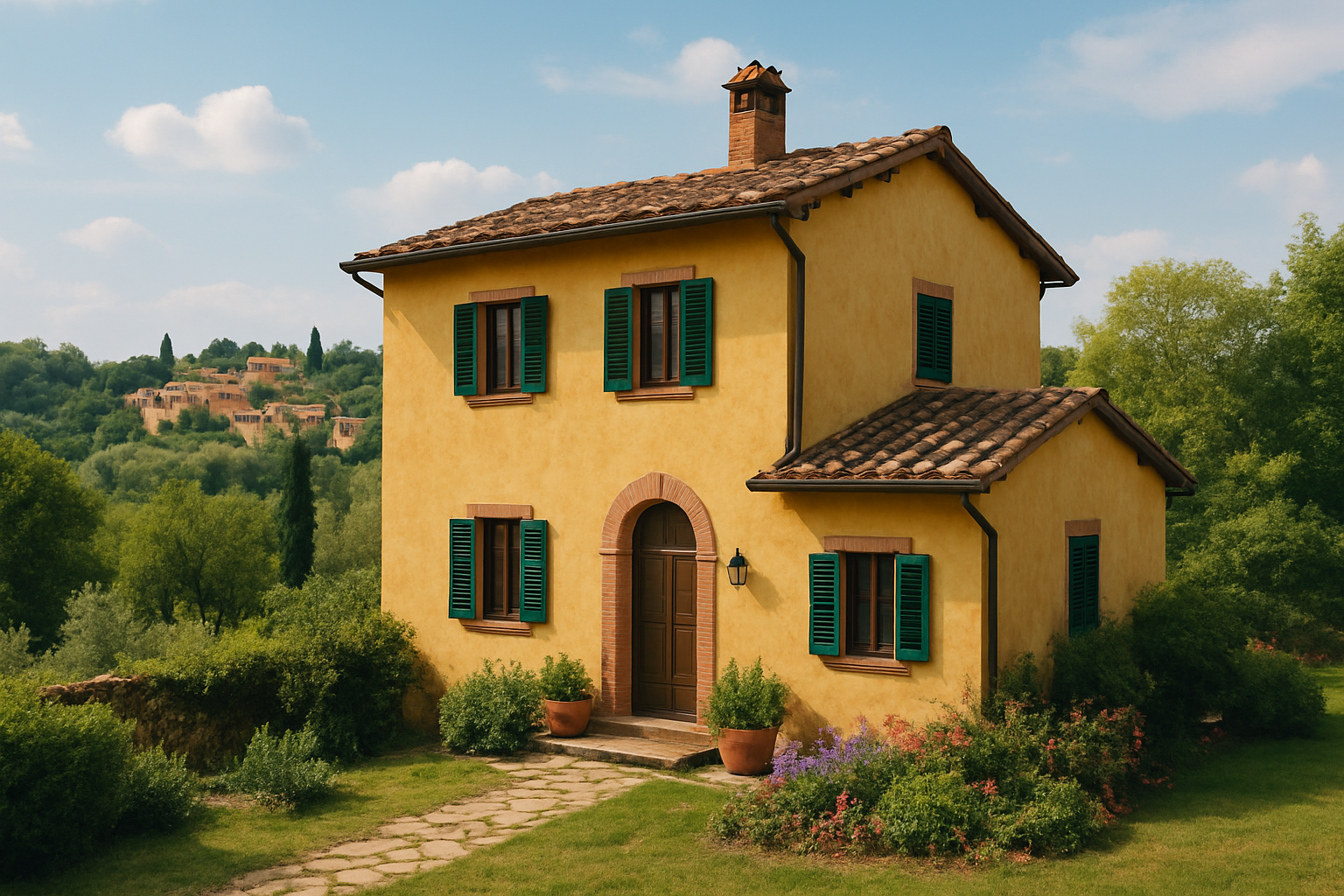
Moving to Italy is an exciting prospect, but finding a home can quickly become one of the most complicated parts of the relocation. Attractive online listings do not always tell the whole story, rental contracts follow unfamiliar rules, and buying a charming old house can reveal legal or structural problems that are difficult to see during a first visit.
For most newcomers, I believe renting before buying is the safer approach. It gives you time to experience daily life in a town, understand its transport and services, and discover whether the place you loved on vacation still suits you in winter.
This guide explains how to rent or buy a home in Italy, which documents you will need, what costs to expect and which checks should be completed before you sign anything.
Decide Whether to Rent or Buy
Buying is not automatically better than renting. The right choice depends on how certain you are about the location, how long you intend to remain in Italy and whether you are ready to manage the responsibilities of property ownership.
Renting may be better if you:
-
Have never lived in the town or neighborhood
-
Are still completing your visa or residency arrangements
-
Expect to move again within a few years
-
Want to compare different regions before committing
-
Prefer predictable short-term costs
-
Do not yet understand the local property market
Buying may make sense if you:
-
Expect to remain in the same area for several years
-
Know the town during different seasons
-
Have sufficient funds for purchase taxes and professional fees
-
Are prepared for renovation and maintenance expenses
-
Want a permanent residence or long-term family home
Anyone still choosing a destination should begin with Italia Mia’s broader guide to moving to Italy as an expat.
Buying a House Does Not Give You Residency
Foreigners can purchase property in Italy without automatically becoming Italian residents. Owning a house does not replace a visa, residence permit or other immigration requirement.
Citizens of the European Union, European Economic Area and Switzerland benefit from freedom of movement, although they generally must register with the local municipality when remaining in Italy for more than three months.
Most non-EU citizens need the appropriate long-stay visa before relocating. Depending on the applicant’s circumstances, possibilities may include employment, self-employment, study, family reunification, elective residence or the digital nomad and remote-worker visa.
The elective residence visa is intended for people who can support themselves through qualifying passive income and financial resources. It does not permit employment in Italy. Requirements and interpretations can vary between consulates, so applicants should consult the Italian consulate responsible for their legal place of residence.
Arrange your immigration status before making a property purchase dependent on your ability to live in Italy permanently.
Obtain a Codice Fiscale
The codice fiscale is the Italian tax-identification code used for contracts and administrative transactions. You will normally need one to:
-
Sign and register a residential lease
-
Purchase real estate
-
Open certain bank accounts
-
Arrange utilities
-
Pay Italian taxes
-
Complete transactions before a notary
Foreign citizens may request it from the Italian Revenue Agency. In certain circumstances, it can also be obtained through an Italian consulate before moving.
The codice fiscale itself does not create Italian tax residency. Tax residency is a separate matter determined by Italian law and, where applicable, international tax treaties.
Where to Live in Italy
Italy’s housing market changes enormously from one city or region to another. Milan, central Rome, Florence and the most famous coastal or lake destinations generally command much higher prices than provincial cities and inland towns.
Before choosing a location, examine more than the beauty of the surroundings. Consider:
-
Access to hospitals and medical specialists
-
Public transportation and railway connections
-
Distance from an international airport
-
Availability of shops throughout the year
-
Internet quality
-
Summer crowds and winter isolation
-
Flood, landslide, seismic or wildfire exposure
-
Local employment opportunities
-
Availability of long-term rentals
-
Municipal and condominium charges
Southern Italy can offer more space for the money, but services and transportation vary considerably. Explore Italia Mia’s guides to Puglia, Abruzzo and Tuscany before comparing specific towns.
A village that feels enchanting in August may be very different in January. When possible, rent locally during the quiet season before buying.
How Long-Term Rental Contracts Work
A written and registered contract is essential. Do not rely on an informal arrangement, even if the landlord appears trustworthy.
The principal residential contracts include:
Free-market contract: 4+4
The standard contratto a canone libero normally lasts four years and renews for another four, subject to the termination and renewal provisions established by law.
The parties negotiate the rent freely, but other aspects of the tenancy remain governed by Italian law.
Agreed-rent contract: 3+2
A contratto a canone concordato generally lasts three years, followed by a two-year renewal. The rent is calculated according to local agreements between property-owner and tenant organizations.
These contracts may offer tax advantages to the landlord and can sometimes be more affordable for the tenant.
Temporary contract
A contratto transitorio is intended for a genuine temporary need and can generally last up to 18 months. The reason for the temporary arrangement should be stated and, where required, documented.
It should not be used simply to bypass the protections of a normal residential lease.
University-student contract
Special contracts are available to qualifying university students. They generally run from six months to three years and are commonly used in cities with major universities.
Documents a Landlord May Request
Requirements vary, but tenants are commonly asked to provide:
-
Passport or identity card
-
Codice fiscale
-
Visa or residence permit, when applicable
-
Employment contract or proof of pension
-
Recent payslips
-
Bank statements
-
Italian or foreign tax returns
-
References from previous landlords
-
A guarantor or bank guarantee
New arrivals without Italian employment history may be asked for several months of rent in advance. This can be negotiable, but every payment should be documented and reflected in the contract.
Never send a deposit merely on the basis of photographs, messages or a video call. Confirm the identity of the landlord or authorized agent and verify that the property exists and is genuinely available.
Costs to Check Before Renting
The advertised rent is only part of the monthly cost. Ask for a written breakdown of:
-
Condominium charges
-
Central-heating expenses
-
Water charges
-
Electricity and gas
-
Internet service
-
TARI municipal waste tax
-
Parking or garage fees
-
Agency commission
-
Contract-registration costs
A security deposit may not normally exceed three months’ rent. It is different from rent paid in advance and should be identified separately in the agreement.
When an estate agency is involved, ask whether its commission is calculated as one month’s rent or as a percentage of the annual rent, and whether VAT is included.
Inspect the Apartment Carefully
Italian homes vary widely in age, energy efficiency and condition. Before signing, inspect:
-
Plumbing and water pressure
-
Electrical system and available power
-
Boiler and heating system
-
Windows and insulation
-
Signs of dampness or mold
-
Air conditioning
-
Mobile-phone reception and internet availability
-
Noise from neighbors, traffic or businesses
-
Elevator access
-
Parking arrangements
-
Furniture and appliances included
-
Condition of walls, floors and fixtures
Request the property’s Attestato di Prestazione Energetica or APE, which describes its energy performance. Poorly insulated homes can be surprisingly expensive to heat or cool.
Prepare a signed inventory and photograph the property when you receive the keys. This can help prevent disagreements about the deposit when the tenancy ends.
Registering the Rental Contract
Residential rental contracts lasting more than 30 days in a year must generally be registered with the Italian Revenue Agency. Registration must normally take place within 30 days of signing or from the contract’s effective date, if earlier.
The landlord commonly handles registration, but the tenant should obtain:
-
A complete signed copy of the contract
-
Proof that the contract was registered
-
The registration details or receipt
-
Receipts for deposits and advance payments
Under the ordinary tax system, registration tax is generally payable. If the landlord chooses the cedolare secca regime, registration tax and stamp duty are normally not charged on the lease.
Do not agree to a lower rent being written into the contract while paying an additional amount privately. Besides being unlawful, an unregistered payment leaves the tenant poorly protected.
How to Buy Property in Italy
The typical purchase follows several stages.
1. Establish your budget
In addition to the price of the property, allow for purchase taxes, notary fees, estate-agent commission, technical inspections, legal advice, translations, mortgage expenses and immediate repairs.
Total additional costs vary considerably. Ask for individualized estimates before making an offer instead of relying on a single percentage.
2. Choose independent professionals
The estate agent facilitates the transaction but does not replace an independent surveyor, lawyer, accountant or notary.
The buyer normally selects the notary. The notary is a neutral public official rather than the buyer’s personal legal adviser. Buyers who need independent representation—especially those who do not speak Italian—may also wish to appoint their own lawyer.
A local geometra, architect or engineer can investigate the property’s planning, cadastral and physical condition.
3. Make a written proposal
An accepted proposta d’acquisto can become legally binding. It should never be treated as a casual expression of interest.
Before signing, understand:
-
The proposed price
-
The amount paid with the proposal
-
Whether the payment is a deposit
-
The completion deadline
-
What happens if either party withdraws
-
Whether the purchase depends on mortgage approval
-
Whether the offer depends on satisfactory legal and technical checks
If you require financing, include an appropriate mortgage condition. Otherwise, failure to obtain a loan may not release you from the agreement.
4. Sign the preliminary contract
The contratto preliminare, often called the compromesso, records the parties’ commitment to complete the transaction.
It normally states the purchase price, deposit, property details, completion date and other conditions. Preliminary contracts must be registered. In appropriate cases, a buyer may also request that the preliminary agreement be recorded in the property registers, providing additional protection.
5. Complete due diligence
Before the final deed, qualified professionals should verify:
-
Legal ownership
-
Mortgages, liens and other encumbrances
-
Cadastral identification
-
Correspondence between plans and the actual property
-
Planning and building-law compliance
-
Authorized extensions and renovations
-
Habitability or occupancy documentation where applicable
-
Outstanding condominium charges
-
Planned extraordinary condominium work
-
Energy-performance documentation
-
Rights of way or access
-
Boundaries and land classifications
-
Tenancies, occupants or third-party rights
Cadastral conformity alone does not prove complete planning compliance. This distinction is extremely important when dealing with older properties or homes that have been altered.
6. Sign the final deed
Ownership is transferred through the final notarized deed, known as the rogito. The notary verifies the parties, prepares and reads the deed, receives the required declarations, collects the applicable taxes and registers the transfer.
Foreign buyers who cannot understand Italian may require an interpreter and a translated or bilingual deed.
Property-Purchase Taxes
Taxes depend on whether the seller is a private individual or a VAT-registered business and whether the buyer qualifies for prima casa benefits.
When purchasing from a private seller or a business selling without VAT, the principal registration-tax rates are generally:
-
2% with qualifying first-home benefits
-
9% without first-home benefits
The calculation may be based on the property’s cadastral value when the legal requirements for the prezzo-valore system are satisfied. Fixed mortgage and cadastral taxes are also normally due.
When a sale is subject to VAT, commonly encountered in certain purchases from builders or businesses, the usual VAT rates may be:
-
4% for a qualifying first home
-
10% for an ordinary residential property
-
22% for designated luxury categories
Fixed registration, mortgage and cadastral taxes generally accompany VAT-taxed transactions.
Eligibility for first-home treatment does not depend simply on calling the property your main residence. Specific legal conditions apply, including requirements concerning the municipality, other properties and the deadline for transferring residence.
Always obtain a written tax calculation from the notary before committing to the purchase.
Can Foreigners Buy Property?
EU citizens can generally purchase Italian real estate under the same conditions as Italian citizens.
For non-EU buyers, the notary may need to verify the condition of reciprocity between Italy and the purchaser’s country, unless an applicable treaty or the buyer’s immigration status provides another legal basis.
This should be checked before paying a non-refundable deposit.
Mortgages for Foreign Buyers
Italian mortgages are available to some foreign residents and non-residents, but approval is not guaranteed. Banks may request:
-
Proof of stable income
-
Tax returns
-
Bank statements
-
Credit information
-
Employment or pension documentation
-
Evidence of available deposit funds
-
Certified translations
-
A bank valuation of the property
Non-resident applicants may receive a lower loan-to-value ratio than residents. Currency differences can also create risk when income is earned outside the eurozone.
Seek mortgage approval early and do not assume that a preliminary online assessment constitutes a final lending decision.
Annual Costs After Buying
Ownership continues to generate expenses after completion. These may include:
-
IMU municipal property tax
-
TARI waste tax
-
Condominium charges
-
Building insurance
-
Utilities
-
Boiler servicing
-
Ordinary maintenance
-
Extraordinary repairs
-
Property-management expenses
A qualifying non-luxury principal residence is generally exempt from IMU, but second homes and many properties owned by non-residents are normally taxable. Rates are established locally, so the amount varies by municipality.
Before buying an apartment, request condominium accounts, recent meeting minutes and information about approved or proposed work. Roofs, façades, elevators and structural repairs can result in substantial special assessments.
Tax Residency Requires Separate Planning
Moving into an Italian home can affect much more than property taxes. Becoming an Italian tax resident may bring worldwide income and assets within the Italian reporting system.
Special regimes exist for certain new residents, foreign pensioners and qualifying workers, but the conditions are detailed and should not be treated as universal incentives.
International residents should speak with a tax professional before moving—particularly if they own foreign investments, companies, pensions, trusts or real estate.
Ten Mistakes to Avoid
-
Buying after seeing a town only during the tourist season
-
Assuming property ownership provides residency rights
-
Signing an offer without understanding that it may be binding
-
Sending money before verifying the owner and property
-
Using only the estate agent’s recommended professionals
-
Failing to commission technical and planning checks
-
Confusing cadastral conformity with planning compliance
-
Ignoring condominium accounts and future major works
-
Budgeting only for the advertised price or monthly rent
-
Becoming an Italian tax resident without obtaining cross-border tax advice
My Recommended Approach
If you are unfamiliar with the area, rent for six to twelve months before buying. Use that period to experience the climate, transportation, healthcare, shopping and community during ordinary daily life.
Once you are confident about the location, assemble an independent team that may include a notary, technical surveyor, lawyer and international tax adviser. The cost of professional advice is modest compared with the expense of correcting an unauthorized alteration, disputed title or unexpected tax problem.
Italy can be a wonderful place to establish a new home. The process becomes considerably safer when you slow it down, insist on written documentation and verify every important detail before transferring money.
Official External Resources
Legal, immigration and tax rules can change, and individual circumstances matter. This guide provides general information and does not replace advice from an Italian notary, lawyer, immigration professional or tax adviser.