

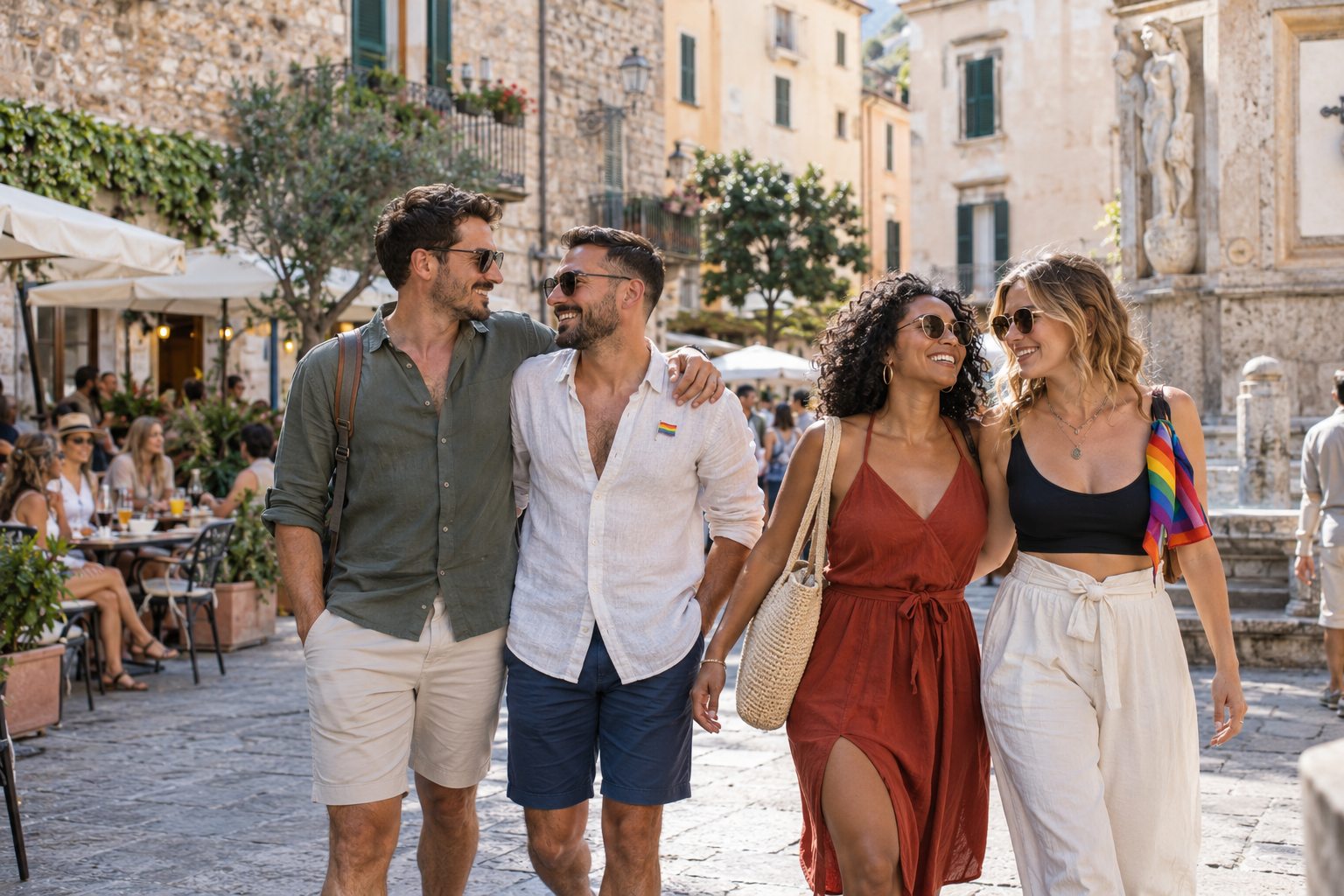
 Italy is one of the world’s most visited countries, but LGBTQ travelers may reasonably wonder whether they will feel welcome outside its famous museums, resorts and historic centers. The short answer is that most LGBTQ visitors enjoy Italy without serious problems, particularly in large cities and established tourist destinations. The more complete answer is that acceptance varies considerably by place, generation and social setting.
Milan, Rome, Bologna, Turin and Naples have visible LGBTQ communities, established organizations and major Pride celebrations. Smaller cities are increasingly organizing their own events, while coastal resorts such as Gallipoli and Torre del Lago have become popular LGBTQ summer destinations.
However, Italy’s social openness is not always matched by its laws. Same-sex civil unions have been recognized since 2016, but Italy does not perform same-sex marriages and its national protections remain less comprehensive than those of several other Western European countries.
For travelers, this contrast rarely prevents an enjoyable trip. It does mean that Italy should be described honestly: generally safe and welcoming, but not free from discrimination, harassment or regional differences.
Is Italy Safe for LGBTQ Travelers?
Same-sex relationships are legal in Italy, and there are no restrictions on LGBTQ visitors, couples or Pride events. Hotels routinely accommodate same-sex couples, and requesting a double room should not create difficulties at reputable properties.
In major cities, two men or two women walking together, dining together or sharing a hotel room will attract little attention. Public affection is increasingly common, especially in central neighborhoods, university cities and coastal resorts. Nevertheless, openly affectionate couples may occasionally encounter staring, comments or verbal abuse.
Italy’s principal travel risks are the same for LGBTQ and non-LGBTQ visitors: pickpocketing, bag theft, transport disruption and scams in crowded tourist areas. Travelers should be particularly attentive around railway stations, metro systems, buses, nightlife districts and major attractions.
LGBTQ travelers may wish to use slightly greater discretion late at night, around intoxicated crowds or in isolated areas. This does not mean hiding one’s identity. It is the same situational awareness that visitors should practice in any unfamiliar city.
The U.S. Department of State’s Italy information page confirms that Italy has no legal restrictions on same-sex relationships or the organization of gay and lesbian events.
Understanding LGBTQ Rights in Italy
Italy introduced civil unions for same-sex couples in 2016. These unions provide many rights associated with marriage, including inheritance, pensions and hospital visitation. However, civil unions are legally distinct from marriage, and family and parental rights remain more complicated.
Same-sex marriages celebrated abroad are generally recorded in Italy as civil unions rather than marriages. Joint adoption is not automatically available to same-sex couples, although Italian courts have decided individual cases involving stepchild adoption and parental recognition.
Protection from employment discrimination based on sexual orientation exists, but Italy still lacks a comprehensive national law covering every form of anti-LGBTQ hate crime, hate speech and discrimination. The ILGA-Europe Rainbow Map therefore places Italy below several neighboring Western European countries in terms of legal equality.
These shortcomings matter politically and socially, but they should not be interpreted as evidence that LGBTQ tourists are routinely unsafe. Daily life in central Milan or Bologna can feel very different from what a national legal ranking alone might suggest.
Italy’s Most Welcoming LGBTQ Cities
Milan
Milan has Italy’s largest and most visible LGBTQ scene. It combines cosmopolitan attitudes, international business, fashion, universities and a substantial year-round community.
Porta Venezia is commonly considered the center of LGBTQ Milan. Via Lecco and the surrounding streets contain gay bars, cocktail venues, restaurants and clubs, although businesses and opening nights change frequently. The neighborhood is well connected to the historic center by metro and tram.
Milano Pride is one of Italy’s largest annual LGBTQ celebrations. Pride Week generally includes cultural events, political discussions, exhibitions, parties and community initiatives before the main parade.
Milan is an excellent choice for first-time LGBTQ visitors who want nightlife alongside art, shopping and architecture. It is also a practical base for day trips to Lake Como, Bergamo and other destinations in Lombardy.
Rome
Rome has a large and diverse LGBTQ community, although its venues are more geographically dispersed than Milan’s.
The city’s best-known LGBTQ meeting point is Gay Street on Via San Giovanni in Laterano, close to the Colosseum. Other events and clubs operate around Testaccio, Ostiense, Pigneto and central Rome. Because nightlife changes quickly, travelers should consult current local listings instead of relying on an old printed guide.
Roma Pride is one of Italy’s most prominent Pride celebrations, bringing a large, colorful procession through the capital. The wider Pride program usually includes concerts, debates, cultural events and parties.
Rome’s combination of ancient monuments, religious authority and modern LGBTQ life reveals many of Italy’s contradictions. The Vatican remains influential in national debates, yet nearby neighborhoods support busy LGBTQ venues and one of the country’s largest Pride marches.
Bologna
Bologna is widely regarded as one of Italy’s most progressive cities. Its large student population, long tradition of civic activism and strong cultural life have helped create an atmosphere in which many LGBTQ travelers feel particularly comfortable.
The Cassero LGBTQIA+ Center is one of Italy’s best-known community institutions. It organizes cultural projects, social events, exhibitions, discussions and nightlife activities. Bologna does not have a large commercial gay village, but its LGBTQ community is integrated into the city’s broader social and cultural life.
Bologna Pride and Rivolta Pride events emphasize civil rights and political participation as much as celebration. The city is ideal for travelers who prefer an authentic, relaxed environment to a large club scene.
Turin
Elegant Turin has an important place in Italian LGBTQ history and a well-organized local community. Its nightlife is smaller than Milan’s but includes recurring parties, cultural events and LGBTQ-friendly venues.
The central districts and San Salvario are generally relaxed and welcoming. Turin also provides an excellent base for exploring Piedmont, including the wine areas of the Langhe and Monferrato.
The city will host EuroPride from June 18 to 26, 2027, making it an especially important future destination for LGBTQ travelers. The program is expected to combine a major parade with cultural, political and community events.
Naples
Naples has an energetic LGBTQ scene shaped by the city’s theatrical personality, street culture and long tradition of gender-nonconforming figures such as the femminielli.
The city does not have one clearly defined gay district. LGBTQ-friendly bars, cultural spaces and events can be found around the historic center, Chiaia and other central neighborhoods. Napoli Pride is one of southern Italy’s leading LGBTQ events.
Visitors should exercise ordinary big-city precautions around stations, crowded streets and late-night transport. Social attitudes may sometimes be more traditional than in Milan or Bologna, but Naples also has a strong tradition of tolerance toward individuality and self-expression.
Palermo and Catania
Sicily contains both deeply traditional communities and a highly visible LGBTQ movement. Palermo and Catania have active organizations, Pride marches, nightlife events and younger populations that have helped make the island increasingly welcoming.
Palermo Pride is particularly notable for combining its parade with discussions, performances, exhibitions and community activities. Catania also hosts a substantial annual Pride and has a lively nightlife scene.
Attitudes may become more conservative in smaller inland towns, but LGBTQ travelers should not avoid Sicily on that basis. Palermo, Catania, Taormina and the principal resort areas receive visitors from around the world.
Florence and Tuscany
Florence does not have the concentrated LGBTQ nightlife of Milan or Rome, but its international population and tourism industry make it comfortable for most visitors. LGBTQ-friendly events and social venues can be found in and around the historic center.
Tuscany Pride is held in different cities within the region, bringing visibility beyond Florence. The seaside resort of Torre del Lago, near Viareggio, is one of Italy’s most established LGBTQ summer destinations. Its beach clubs, bars and evening venues become particularly busy during the summer.
Gallipoli and Salento
Gallipoli, on the Ionian coast of Puglia, has developed into one of Italy’s most popular LGBTQ beach destinations. During July and August, its beach clubs, parties and nearby towns attract a mixed Italian and international crowd.
The wider Salento area also hosts Pride events, particularly in Lecce. Visitors should remember that the summer scene is seasonal: many clubs and beach venues operate only during the busiest months.
Pride Events Across Italy
Italy’s Pride season is no longer limited to Rome and Milan. The national Onda Pride calendar now includes marches in dozens of cities, from large regional capitals to provincial communities and islands.
Most events take place between May and September, with the busiest period occurring in June. Major annual celebrations include:
• Roma Pride
• Milano Pride
• Torino Pride
• Bologna and Rivolta Pride
• Napoli Pride
• Palermo Pride
• Catania Pride
• Genova Liguria Pride
• Bari Pride
• Sardegna Pride in Cagliari
• Toscana Pride
• Salento and Lecce Pride
• Rimini Summer Pride
In 2026, major parades included Turin on June 6, Bologna on June 13, Rome and Palermo on June 20, and Milan, Naples, Catania and Cagliari on June 27. Other events continued through September.
Dates, routes and security arrangements change every year. Travelers should consult the official Onda Pride calendar and the individual organizer’s website or social pages before booking transportation or accommodation.
A Pride parade in Italy is both a celebration and a political demonstration. Expect music, elaborate costumes and floats, but also banners addressing legal recognition, family rights, discrimination, transgender healthcare and violence. Many cities organize conferences, exhibitions, film screenings and community events around the parade.
Planning a Pride Trip
Reserve accommodation early in Rome, Milan, Bologna, Naples and Palermo, especially when Pride coincides with concerts, trade fairs or the beginning of the summer season.
Check the exact parade starting point and finishing area shortly before the event. Street closures can affect taxis, buses and trams, while metro stations near the route may become exceptionally busy.
Summer Pride events can involve several hours of walking in high temperatures. Carry water, use sunscreen and wear comfortable shoes. Keep phones and wallets secure in crowded areas.
Italy’s rail network makes it possible to combine several cities without renting a car. The high-speed corridor connects Turin, Milan, Bologna, Florence, Rome and Naples. Our guide to traveling around Italy without a car can help visitors build a multi-city itinerary.
LGBTQ Couples and Hotels
Professional hotels, guesthouses and vacation rentals in major destinations generally welcome LGBTQ couples without difficulty. When reserving, select the bed arrangement you actually want rather than assuming that a property will change it at check-in.
All guests must normally present identification because Italian accommodation providers are required to register visitors. The names on the booking should therefore match the travelers’ identification documents.
If inclusivity is especially important, look for properties that state a clear nondiscrimination policy or receive consistent reviews from LGBTQ guests. A rainbow symbol alone is less useful than recent, detailed reviews describing how staff treated couples and transgender travelers.
Transgender and Nonbinary Travelers
Transgender and nonbinary visitors travel throughout Italy, but experiences can vary. Large cities generally offer more community resources, specialist services and gender-inclusive venues than small towns.
Identification checks are common at airports, hotels and some clubs. Carry travel documents that match the information used for the reservation. If a person’s appearance differs substantially from the photograph or gender marker on a document, allowing extra time for check-in may reduce stress.
Gender-neutral public toilets are still uncommon. Transgender visitors may also encounter misunderstanding or intrusive curiosity, particularly outside major urban areas. This is not inevitable, but it is worth considering when choosing accommodation and nighttime transportation.
Prescription medication should remain in its original packaging. Travelers who use hormones or injectable medication should bring a copy of the prescription and, if possible, a short letter from their doctor.
Public Affection and Local Attitudes
There is no law preventing same-sex couples from holding hands, embracing or kissing in public. In central districts of Milan, Rome, Bologna, Florence and Turin, modest affection is unlikely to cause concern.
Conditions can be different in small towns, late-night transport areas or crowds associated with heavily masculine sporting culture. Couples should trust their instincts and respond to the immediate environment rather than assuming that every part of the country will feel the same.
Italian social interaction can also be physically expressive. Friends may embrace, kiss on the cheek or walk arm in arm, so observers may not automatically interpret physical closeness as romantic.
Practical Safety Advice
Use licensed taxis or established ride-booking services when returning from clubs late at night.
Avoid isolated railway platforms, parks and beaches after dark unless you know the area.
Watch drinks in crowded clubs and do not accept opened beverages from strangers.
Keep a copy of your passport and travel insurance details separate from the originals.
Do not leave phones or wallets on outdoor café tables, especially in crowded tourist districts.
Tell a friend where you are going when meeting someone through a dating app. Arrange the first meeting in a public place and control your own transportation.
Save the address of your accommodation in your phone. Italian streets and historic centers can be confusing after dark.
Dial 112 for police, ambulance or fire emergencies anywhere in Italy. The European emergency number is free.
If harassment occurs, move to a busy, well-lit place and seek assistance from venue staff, police or a local LGBTQ organization. Gay Help Line provides support concerning homophobia and transphobia at 800 713 713 and through its online services.
When to Visit
June offers the greatest concentration of Pride events, but it also brings rising temperatures and increasingly busy cities. Late May can provide pleasant weather and early Pride celebrations, while September combines fewer crowds with several regional events.
July and August are best for LGBTQ beach destinations such as Torre del Lago and Gallipoli. However, these are also among the hottest and most expensive months. Consult our guide to the best time to visit Italy before choosing dates.
Travelers primarily interested in art, food and city life may prefer spring or autumn. LGBTQ venues in Milan, Rome and Bologna operate throughout the year, even when the beach clubs and outdoor Pride programs have ended.
A Country of Contrasts—and Growing Visibility
Italy does not offer the same level of legal equality found in Europe’s most progressive countries. Political debates about LGBTQ families, transgender rights and protection from hate crimes remain active and sometimes contentious.
Yet the country also contains large, resilient LGBTQ communities, dozens of Pride events and cities where queer life is visible and well established. Visitors can attend a parade beside ancient monuments, spend a summer evening at a gay beach in Tuscany or Puglia, and find community organizations operating from Sicily to the Alps.
The most useful approach is neither to portray Italy as completely carefree nor to exaggerate the risks. Choose destinations that match your comfort level, check current local information and follow the same sensible precautions you would use elsewhere.
For most LGBTQ travelers, Italy remains a rewarding destination—one where art, food, history and landscape can be enjoyed openly, even as the country continues its unfinished journey toward full equality.
External Sources
ILGA-Europe – Italy on the Rainbow Map
European Pride Organisers Association – EuroPride Torino 2027
Onda Pride – National Italian Pride Calendar
Arcigay – Italian LGBTQIA+ Association
U.S. Department of State – Italy Travel Information