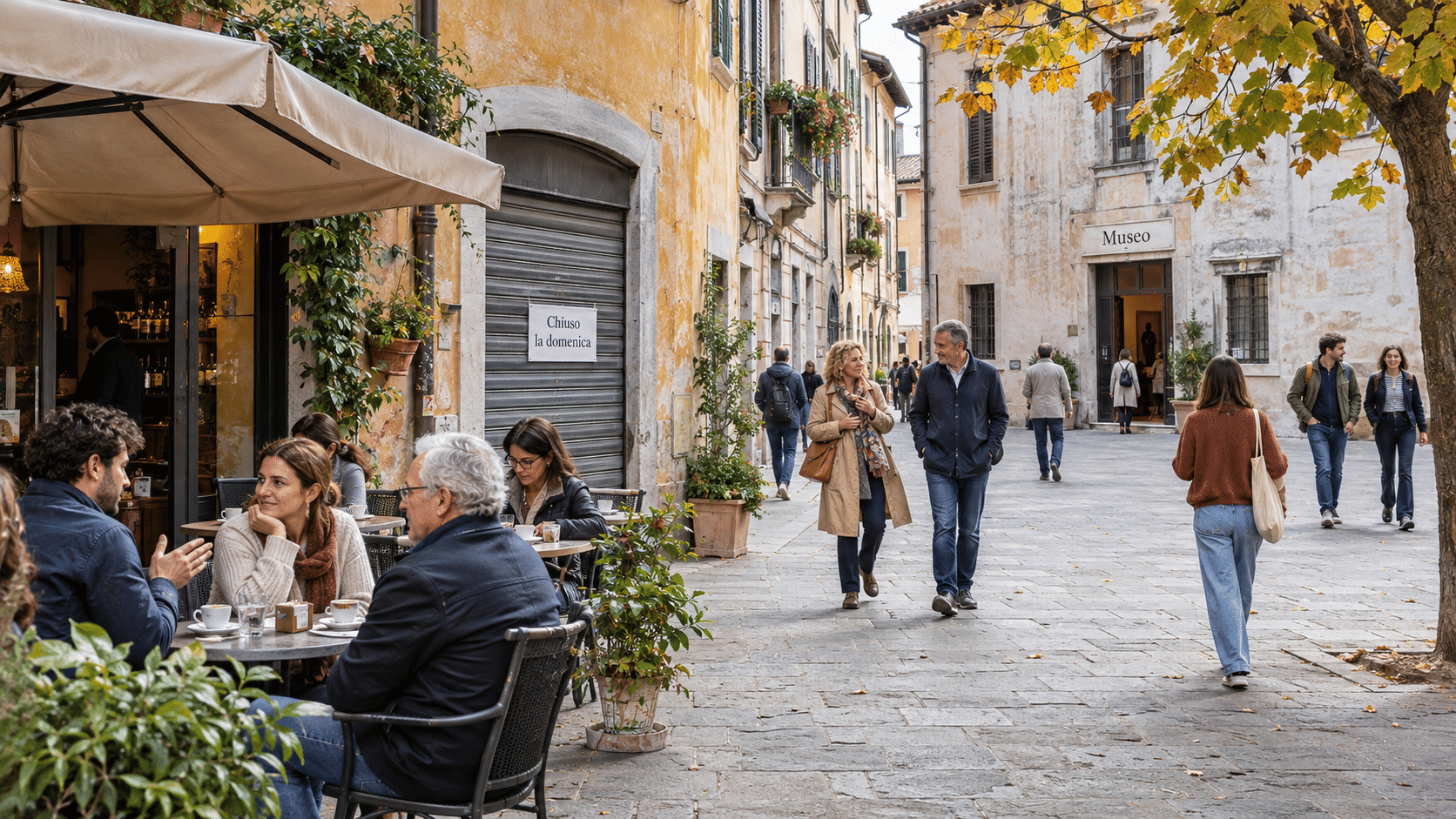
Sunday in Italy can be a rewarding day for a museum visit, a long lunch or a walk through a historic centre. It can also be an awkward day to arrive without groceries or head to a village without checking the bus home.
There is no single Sunday timetable for the country. A busy shopping street in Milan, a seaside resort in summer and a residential neighbourhood in a small town can offer very different experiences. Plan around the opening hours and connections you actually need, then leave room to enjoy the day.
Sunday in Italy at a Glance
| What you need | What to check for Sunday |
|---|---|
| Shops and supermarkets | The individual branch’s hours, including any lunchtime closure |
| Museums and archaeological sites | Opening calendar, timed entry, last admission and free-Sunday arrangements |
| Churches | Tourist visiting hours, separately from worship |
| Trains | Services for your exact date and any engineering notices |
| Local buses, trams and metros | Sunday or holiday timetable, route changes and the last useful return |
| Restaurants | Lunch and dinner service, reservations and kitchen hours |
| Markets | The organiser’s calendar and exact location |
Treat these as separate checks. An open museum does not guarantee a convenient bus, and a shopping centre’s opening time does not necessarily apply to every service inside.
Are Shops Open on Sundays in Italy?
Many shops open on Sundays in historic centres, tourist districts, airports and large railway stations. Elsewhere, Sunday opening is less predictable, and seasonal changes can make a substantial difference.
For a particular boutique, artisan workshop or specialist food shop, check its own website or contact it directly before making a special journey. A shopping street can be busy even when the business you want is closed.
Read the full opening notice, too. Orario continuato means the business stays open through lunchtime; a split timetable means you need to allow for the gap. Neither phrase, by itself, tells you whether Sunday is included.
During the Christmas shopping season, look for date-specific notices rather than assuming every December Sunday follows the same pattern. Our guide to Christmas shopping in Italy covers opening hours, gift receipts and exchanges.
Supermarkets: Check the Branch Before You Arrive
For a Sunday arrival in an apartment, identify a supermarket near your accommodation before travelling. Use the retailer’s official branch page and check the date, especially around holidays.
Save a second option within a reasonable distance. If you will arrive late, ask your host where you can buy breakfast supplies or whether there is a suitable place to eat nearby.
Buy essentials on Saturday when convenient, particularly before staying somewhere with limited shops or transport. This is especially useful if you need specific food, baby supplies or household items that a small convenience shop may not stock.
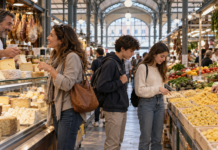
A Sunday market can be an enjoyable addition to the day, but verify whether it sells food, clothing, antiques or something else. Check whether it runs weekly or only on a particular Sunday each month.
Museums: Sunday Can Be a Good Sightseeing Day
Sunday is a practical choice for many museum visits. The Uffizi in Florence, for example, publishes regular opening from Tuesday through Sunday, with Monday as its usual weekly closing day.
That is an example to check against your plans, rather than a rule for all Italian museums. Each institution has its own calendar, and different buildings within one museum complex can have different arrangements.
Before booking, confirm the entrance you need, the admission time and how long the visit is likely to take. Last admission may be considerably earlier than closing.
For a short city break, choose the museum you most want to see and build the day around it. Leave enough time for security, getting between sights and lunch instead of fitting several timed tickets tightly together.
First Sunday of the Month: How Free Museum Entry Works
The Ministry of Culture’s Domenica al Museo initiative offers free entry on the first Sunday of each month at participating state museums, archaeological parks and other state cultural sites.
Check the Ministry’s Domenica al Museo information and then the individual attraction’s instructions. This is a state cultural initiative; municipal museums, private collections, foundations and church-run attractions may follow different policies.
Free entry does not settle every booking question. Depending on the site, a reservation may be required or recommended, and admission remains subject to the institution’s arrangements and capacity. Check whether temporary exhibitions or particular areas have separate conditions.
Allow extra flexibility if admission involves queuing. Avoid placing an onward train or another timed visit immediately after a museum whose entry time you cannot guarantee.
The Vatican Museums Follow a Different Sunday Calendar
The Vatican Museums are normally closed on Sundays. Their published schedule provides free opening on the last Sunday of the month, subject to specified holiday exceptions.
The listed hours for that opening are 9 a.m. to 2 p.m., with final entry at 12:30 p.m. Confirm the official calendar for your date before making plans.
This arrangement is separate from Italy’s first-Sunday state museum initiative. A first Sunday in Rome does not automatically mean the Vatican Museums will be open.
Check the Vatican Museums’ official opening calendar before arranging the rest of your day.
Churches: Check Tourist Access Separately
Sunday worship can affect sightseeing access to churches. Check the visitor timetable for the building and any separate museum, bell tower, crypt or dome you want to enter.
Florence offers a useful example. The Cathedral of Santa Maria del Fiore is closed to tourist visits on Sundays and during religious celebrations, while other monuments in the Piazza del Duomo complex have their own schedules.
A ticket for part of a complex does not mean every building will be available at the same time. Consult the Opera del Duomo’s official visit information when planning Florence.
At any church, follow the arrangements for worshippers and visitors. Attending a service should be approached as participation in worship, with respect for those attending.
Public Transport: Search for Your Exact Sunday
Public transport operates on Sundays in Italy, but availability depends on the route and operator. Look up the actual date rather than carrying over a weekday journey.
In printed timetables, festivo generally indicates Sundays and public holidays. Feriale generally refers to non-holiday days and can include Saturday; the operator’s legend determines the precise meaning. School-day and seasonal restrictions need attention as well.
For trains, use the operator’s journey planner and review notices for the route. Trenitalia also provides regional timetable information.
For local transport, check every part of the journey. A train may reach a station while the connecting bus to your final destination has no suitable Sunday departure. Confirm the return before committing to the outward trip.
Autolinee Toscane, for example, provides date-and-time searches and advises checking scheduled services again close to departure. Use the equivalent official information for the area you are visiting.
Our guide to visiting Capodimonte and Vomero by public transport shows how to plan a sightseeing day around connections.
Sunday Lunch: Reserve a Meal You Care About
If a particular restaurant is part of your plans, reserve and confirm when its kitchen serves lunch. Ask about dinner separately if you expect to return later.
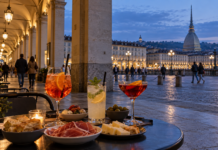
Italy’s national tourism website gives roughly 12:30–2:30 p.m. as a usual lunch window, with variations. Use that as a planning guide and verify the restaurant’s own service times.
For a leisurely meal, leave the afternoon flexible. If you have a train or ticketed visit afterwards, tell the restaurant when booking and allow a comfortable margin.
A useful question is: “Siete aperti domenica a pranzo?”—“Are you open for Sunday lunch?” Follow with “È necessario prenotare?”—“Do we need to reserve?”
Outlets and Day Trips Need a Return Plan
For an outlet excursion, confirm the centre’s Sunday hours and the transport timetable independently. Check the boarding point, whether a reservation is necessary and how the return journey works.
Our guide to Italian fashion outlets without a car helps compare possible trips. Recheck the operator’s current arrangements before buying.
For a village visit, choose a destination where the walk, a confirmed attraction and a booked lunch can make a satisfying day. If the trip depends on one small museum or workshop, contact it first.
When driving, check parking and local access restrictions for your date rather than assuming Sunday removes them.
A Sunday Plan with Room to Enjoy It
A manageable city Sunday might combine one morning museum visit, lunch and an afternoon walk. Keep additional shopping optional unless you have confirmed a particular store’s opening.
In a smaller town, start with the return connection and lunch reservation, then fit sightseeing around them. Save the timetable and any tickets on your phone.
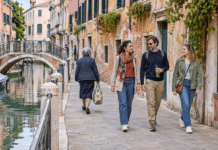
Leave space for a passeggiata, the Italian social stroll. A walk through the centre or along the seafront can give the afternoon a pleasant shape without another timed booking.
Before the weekend, confirm your main attraction, essential shopping, meal plans and journey home. Those few checks leave the rest of Sunday open for whatever catches your interest.
External Links
- Weekend in Italy: Buy tickets in advance
- Italia.it: daily schedules and public holidays
- Ministry of Culture: Domenica al Museo
- Uffizi: opening hours and visitor information
- Vatican Museums: opening days and closures
- Florence Duomo: plan your visit
- Trenitalia: regional timetables
- Autolinee Toscane: finding bus timetables