
Sardinia is often represented by the glamorous resorts and emerald coves of the Costa Smeralda. Yet the island’s southern coast offers a different and equally rewarding experience: a lively historic capital, ancient ruins beside the sea, long sandy beaches and coastal roads that still feel remarkably unspoiled.
Cagliari provides the ideal starting point. From the city, the coast stretches southwest through Pula and the archaeological site of Nora before reaching the beaches of Chia, Capo Spartivento and Teulada. The distances are manageable, but the landscape changes constantly—from urban neighborhoods and wetlands to dunes, lagoons, watchtowers and secluded coves.
For travelers who want Sardinian culture as well as beautiful beaches, southern Sardinia deserves much more attention.
Why Choose Southern Sardinia?
The Costa Smeralda is known for luxury hotels, designer boutiques and an international summer crowd. Southern Sardinia feels less polished and more connected to everyday island life.
Cagliari is a working Mediterranean city rather than a seasonal resort. Pula has restaurants, cafés and a pleasant town center alongside its archaeological heritage. Chia is surrounded by dunes, lagoons and low hills instead of large-scale coastal development.
The south also works well for travelers who do not want to move between hotels every night. Cagliari, Pula and Chia can each serve as a base, depending on whether the priority is city life, archaeological sites or beaches.
Cagliari: Sardinia’s Historic Capital
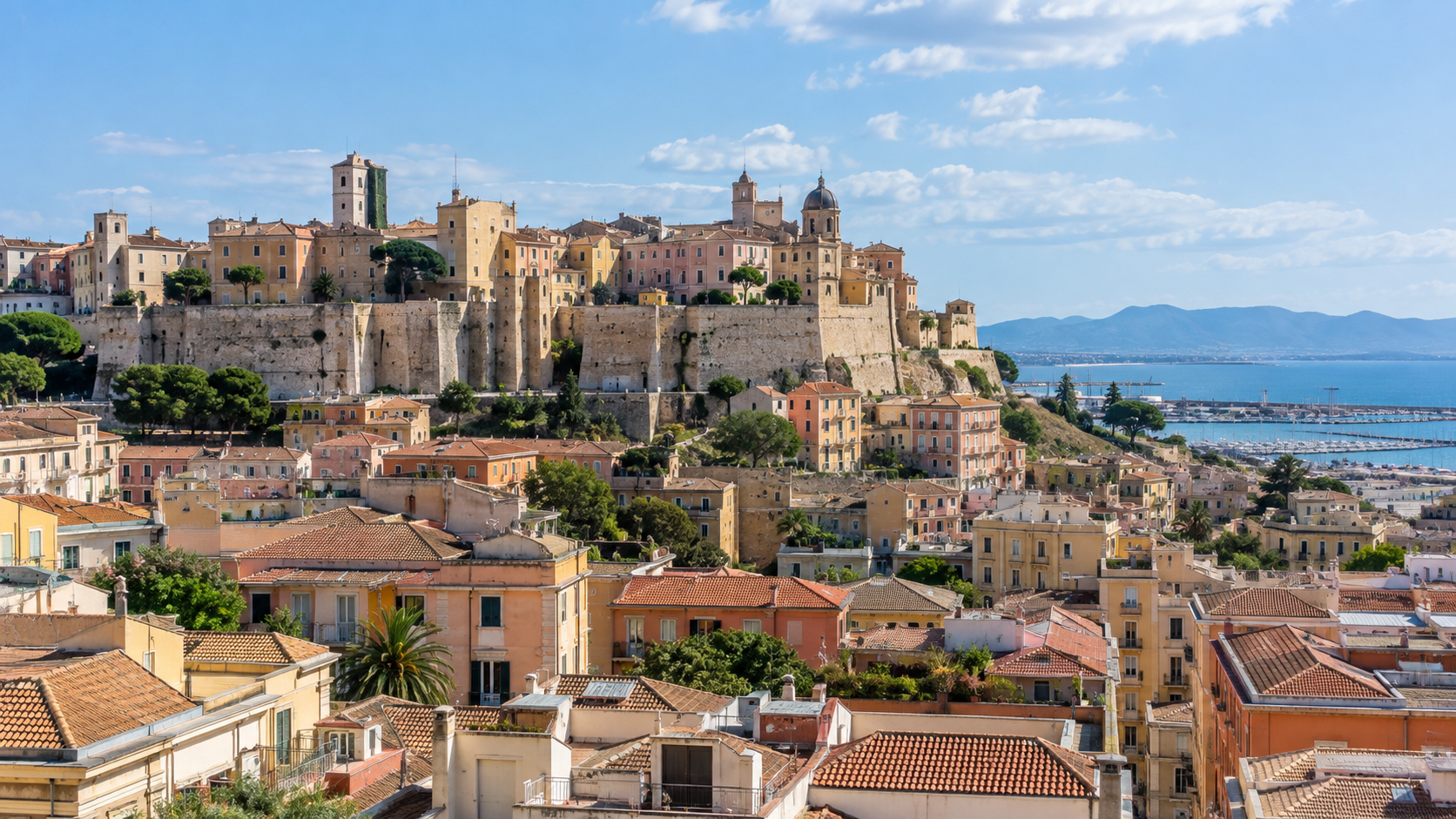
Cagliari rises above the Golfo degli Angeli, or Gulf of Angels, with neighborhoods climbing from the port toward the fortified Castello district. It is a city that rewards walking, although its hills and stairways can be demanding during the hottest part of the day.
Castello forms the historic heart of Cagliari. Its limestone walls, narrow lanes and panoramic terraces overlook the harbor, rooftops and surrounding wetlands. Important sights include the Cathedral of Santa Maria, the medieval towers of San Pancrazio and the Elephant, and the museums of the Cittadella dei Musei.
The Bastione di Saint Remy connects the upper city with the lower neighborhoods. Its broad terrace is one of Cagliari’s best viewpoints, especially in the quieter morning hours or shortly before dinner.
Below Castello, the Marina district is filled with restaurants and small shops. Stampace preserves churches, archaeological remains and traces of the city’s Roman past, while Villanova has a more residential atmosphere, with flowered balconies and streets that become especially pleasant in the evening.
Markets, Sardinian Food and Everyday Life
Cagliari is one of the best places to become acquainted with Sardinian cooking. The city’s markets display seafood, local cheeses, bread, fruit and vegetables from across the island.
Traditional dishes to look for include fregola with clams, malloreddus pasta, culurgiones filled with potato and cheese, and burrida made with fish, walnuts and vinegar. Bottarga—salted and cured fish roe—is frequently grated over pasta or served in thin slices.
Southern Sardinia also produces excellent wines. Vermentino remains the island’s best-known white wine, while Carignano del Sulcis is closely associated with the southwestern corner of Sardinia. Cannonau, Monica and Nuragus may also appear on local wine lists.
For more regional inspiration, see the Italia Mia Travel section.
Poetto Beach and the Flamingos of Molentargius
Cagliari has its own long city beach. Poetto extends along the coast toward Quartu Sant’Elena and is easily reached from the center. Its cafés and beach establishments make it convenient for travelers who want to combine sightseeing with a few hours beside the sea.
Between the city and Poetto lies Molentargius-Saline Regional Natural Park. The former salt-producing area is now an important habitat for aquatic birds and is particularly associated with its population of pink flamingos, known locally as sa genti arrubia.
Walking and cycling routes cross parts of the park, although access conditions and operating hours can change. Check the official information before visiting, particularly if you want to rent a bicycle or join a guided excursion.
Pula: A Relaxed Base South of Cagliari
Approximately 35 kilometers southwest of Cagliari, Pula is an appealing alternative for travelers who want a smaller base with restaurants and evening activity.
The town itself is not directly on the beach, but the coast is only a short drive away. Its central streets and squares become lively during summer evenings, while the surrounding area includes beaches, pinewoods, lagoons and archaeological remains.
Pula is particularly convenient for visiting Nora. It also provides easier access to Chia than Cagliari while retaining more of a year-round town atmosphere than a purely beach-oriented resort.
Nora: Ancient Ruins Beside the Mediterranean
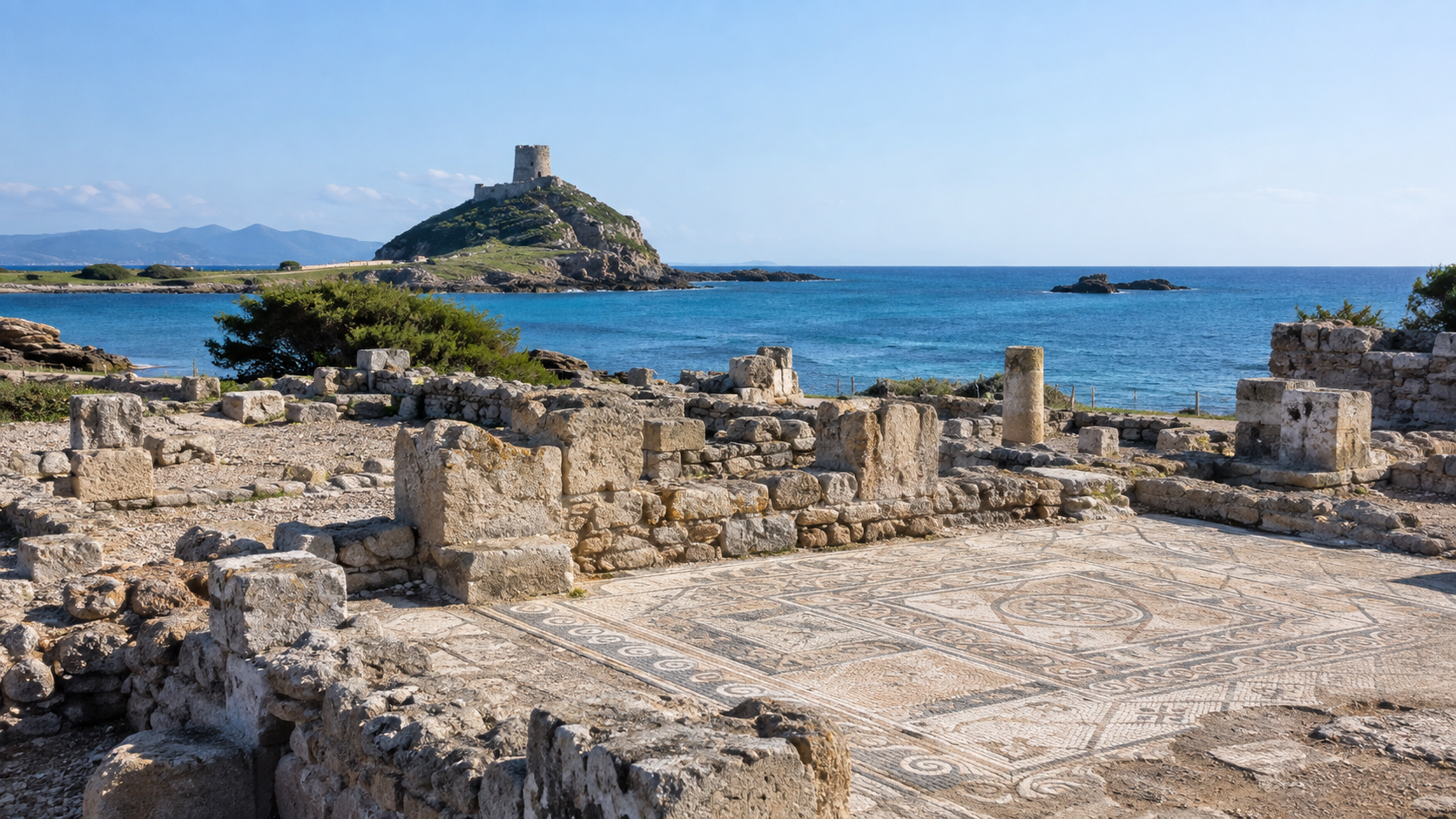
Nora occupies a narrow peninsula just outside Pula. According to tradition, it was one of Sardinia’s earliest cities, developing through Phoenician, Punic and Roman periods.
The surviving archaeological area includes streets, baths, temples, houses and mosaic floors. Its small Roman theater is still used for cultural performances, creating an unusual connection between the ancient city and contemporary Sardinian life.
What makes Nora especially memorable is its setting. The ruins stand within sight of the sea, and the surrounding coastline is part of the experience rather than merely a background.
Because much of the site is exposed, visitors should bring sun protection and water. Opening times, ticket arrangements and guided-visit requirements should always be checked before arrival.
Chia Is More Than One Beach
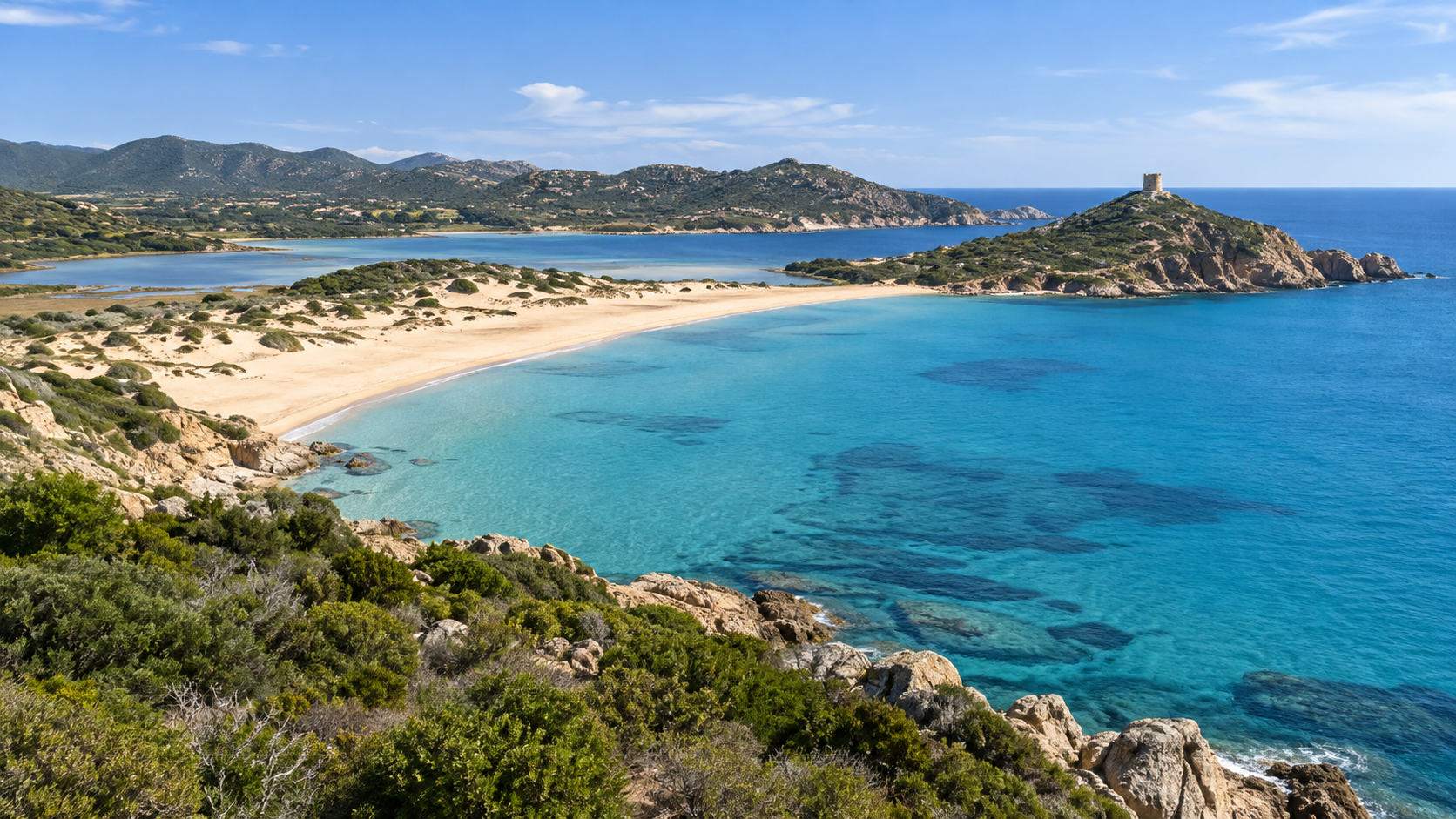
Chia is sometimes described as if it were a single beach. In reality, the name refers to a coastal area containing several beaches, coves, dunes and lagoons.
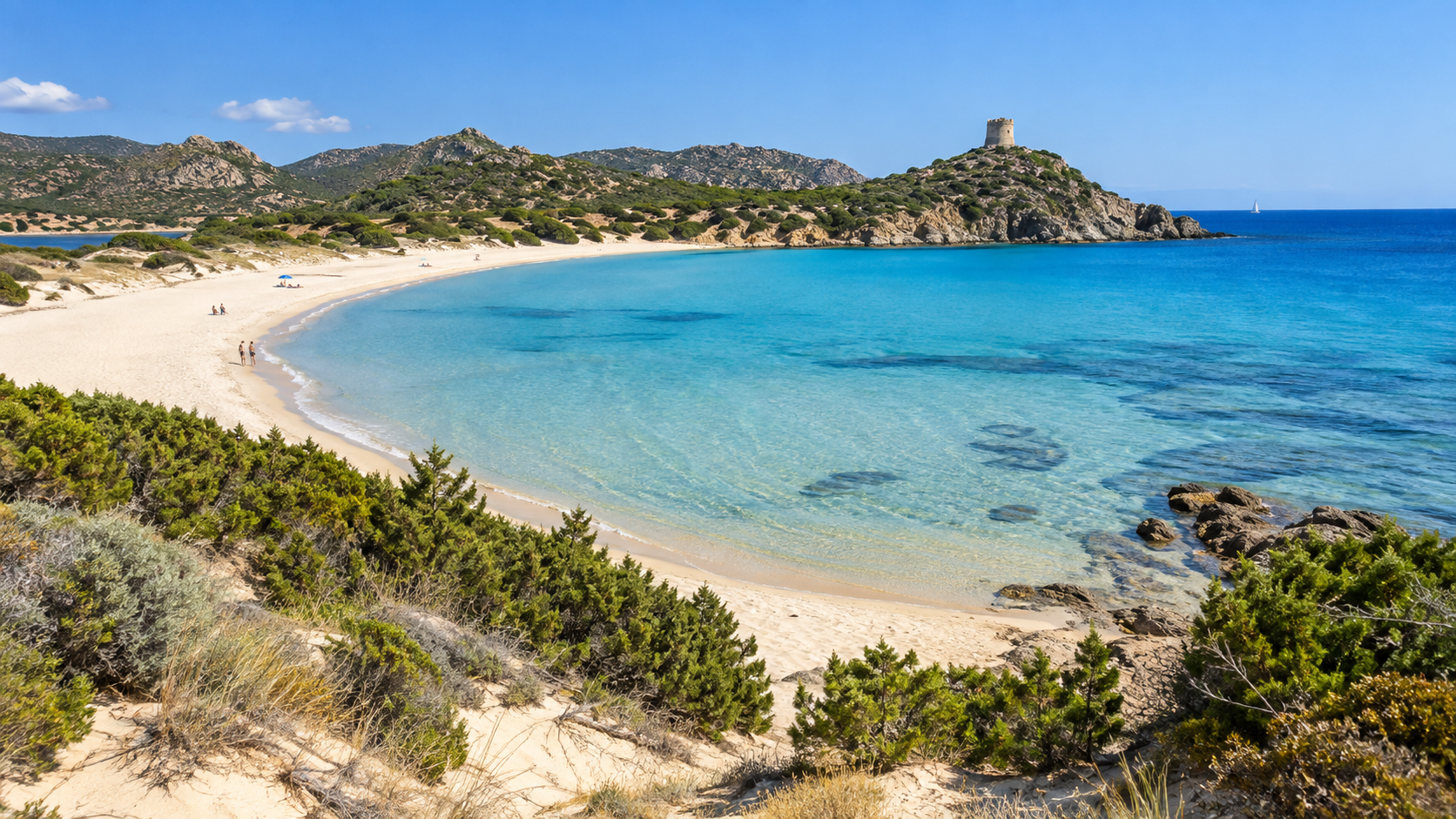
The coastline is watched over by the Torre di Chia, one of the defensive towers constructed during the Spanish period. Around it, clear water shifts between blue, turquoise and green depending on the depth, weather and position of the sun.
Among the best-known beaches are Su Giudeu, Campana Dune, Sa Colonia and Cala Cipolla. Each has a slightly different character.
Su Giudeu is broad and sandy, with shallow water and dunes behind it. Cala Cipolla is smaller and more sheltered, enclosed by rocks and Mediterranean vegetation. Sa Colonia lies closer to the Torre di Chia and can be combined with a walk toward the headland.
The lagoons behind parts of the coast support birdlife, including flamingos. The dunes and vegetation are environmentally sensitive, so visitors should remain on marked paths and respect barriers.
Capo Spartivento, Tuerredda and the Road to Teulada
West of Chia, the landscape becomes increasingly dramatic. The road toward Capo Spartivento and Teulada passes rocky headlands, small coves and elevated viewpoints over the sea.
Cala Cipolla is the natural starting point for walks toward the Capo Spartivento area. The historic lighthouse occupies a remote position above the coast, although access to the property itself may be restricted.
Farther west, Tuerredda is celebrated for its pale sand and exceptionally clear water. Its beauty also makes it one of the region’s most popular summer beaches. Parking and access systems can change during peak season, so travelers should verify current rules before setting out.
The road continues toward Teulada through one of southern Sardinia’s most scenic coastal areas. Drivers should allow more time than the distance suggests: the route is winding, and viewpoints make frequent stops almost inevitable.
When to Visit Southern Sardinia
May, June, September and early October offer the best balance for many visitors. Temperatures are generally suitable for sightseeing, the countryside retains more color and beaches are usually less crowded than during the height of summer.
July and August provide the warmest sea conditions but also bring higher accommodation prices, heavier traffic and greater demand for beach parking. Cagliari remains lively throughout the year, making it a better choice than Chia for an off-season visit.
Winter can be mild, but beach services and seasonal hotels may close. Wind and rain can also alter plans quickly, so a winter itinerary should emphasize Cagliari’s museums, markets, restaurants and archaeological attractions.
Do You Need a Car?
A car is not essential for staying in Cagliari. The airport is close to the city, and urban buses connect the center with Poetto and other neighborhoods.
Public buses also serve Pula and parts of the southern coast, but schedules may be limited or seasonal. Reaching several beaches in one day is much easier with a car.
For a road trip, collect the vehicle after spending time in Cagliari rather than immediately upon arrival. Parking and traffic make a car unnecessary in the historic center, while it becomes extremely useful once the journey continues toward Nora and Chia.
Always check road conditions and beach-access information during summer. Avoid leaving bags, cameras or other valuables visible inside a parked vehicle.
Where to Stay
Choose Cagliari if you want restaurants, museums, nightlife and easy airport access. The Marina and Stampace districts are practical for first-time visitors, while areas closer to Poetto suit travelers who prefer beach access.
Choose Pula for a smaller-town atmosphere and convenient access to Nora, Santa Margherita di Pula and Chia. It is a good compromise for couples and families who still want restaurants within walking distance.
Choose Chia when the beaches are the main purpose of the trip. Accommodation is more dispersed, however, and a car is strongly recommended.
A Four-Day Southern Sardinia Itinerary
Day one: Spend the day in Cagliari, walking through Castello, Marina and Stampace. Visit the archaeological museum or a city market and finish with dinner in the historic center.
Day two: Visit Molentargius and Poetto in the morning. Collect a rental car and continue to Pula in the afternoon.
Day three: Tour the archaeological site of Nora before the hottest part of the day. Spend the afternoon at a nearby beach and the evening in Pula.
Day four: Drive to Chia and choose one or two beaches rather than rushing between all of them. If time permits, continue toward Cala Cipolla, Capo Spartivento or Tuerredda.
With five or six days, add a second day in Cagliari and a slower drive toward Teulada.
A Different Side of Sardinia
Southern Sardinia does not attempt to imitate the Costa Smeralda. Its appeal comes from a more varied combination of city life, archaeological history, wetlands, small towns and striking coastal scenery.
Cagliari gives the journey cultural depth. Nora places the island’s ancient history beside the sea. Chia and the coast toward Teulada provide the beaches and transparent water for which Sardinia is famous—without making luxury resorts the center of the experience.
For travelers willing to look beyond the island’s most advertised corner, the south offers one of Sardinia’s most complete and satisfying itineraries.
External Sources
Cagliari Turismo — Official tourism website of the Municipality of Cagliari
Molentargius-Saline Regional Natural Park — Official visitor information
Italia.it — Official Sardinia tourism guide
ARST — Sardinia regional public transportation