Discover your Italian family story
Start with a grandparent’s name and the place they lived.
Explore Ancestry® to look for records and clues that could
help you trace your family’s past.
Your ancestor’s first and last name, approximate birth year,
and town or country of residence.
Explore your family history on Ancestry® →
Affiliate link: Italia Mia may earn a commission if you
purchase through this link, at no additional cost to you.
An old photograph, a surname nobody pronounces quite the same way, a grandmother’s story about her village: discovering your Italian ancestry often begins with something small.
The challenge is turning that clue into a family history you can document—and a connection with Italy that feels personal. Where did your relatives actually live? What work did they do? Who traveled with them, and who stayed behind?
You do not need to answer every question at once. Start with one person, gather what your family already knows, and follow the evidence one generation at a time.
This guide introduces the first steps, explains where genealogy websites and DNA testing can help, and suggests ways to bring your discoveries into everyday life or a future trip.
Affiliate disclosure: This article contains affiliate links. If you purchase through these links, Italia Mia may earn a commission at no additional cost to you. As an Amazon Associate, we earn from qualifying purchases.
What Does It Mean to Have Italian Ancestry?
Having Italian ancestry means that part of your family descends from people who came from Italy. That connection might be through a parent, a grandparent, or relatives who emigrated several generations ago.
Your family’s story will usually become more meaningful as you move beyond “Italy” to a particular place: a town, a neighborhood, a parish, or a rural community.
Rather than trying to discover everything about your heritage immediately, choose a question you can investigate:
- Where was my grandmother born?
- Did my great-grandfather travel alone?
- What was the original spelling of our surname?
- Are the people in this photograph siblings or cousins?
- Which family traditions can we connect to a documented place?
These questions give your research direction. They also leave room for surprises.
Start With the People and Documents Closest to You
Before paying for a subscription or ordering a DNA kit, speak with relatives and look through family papers.
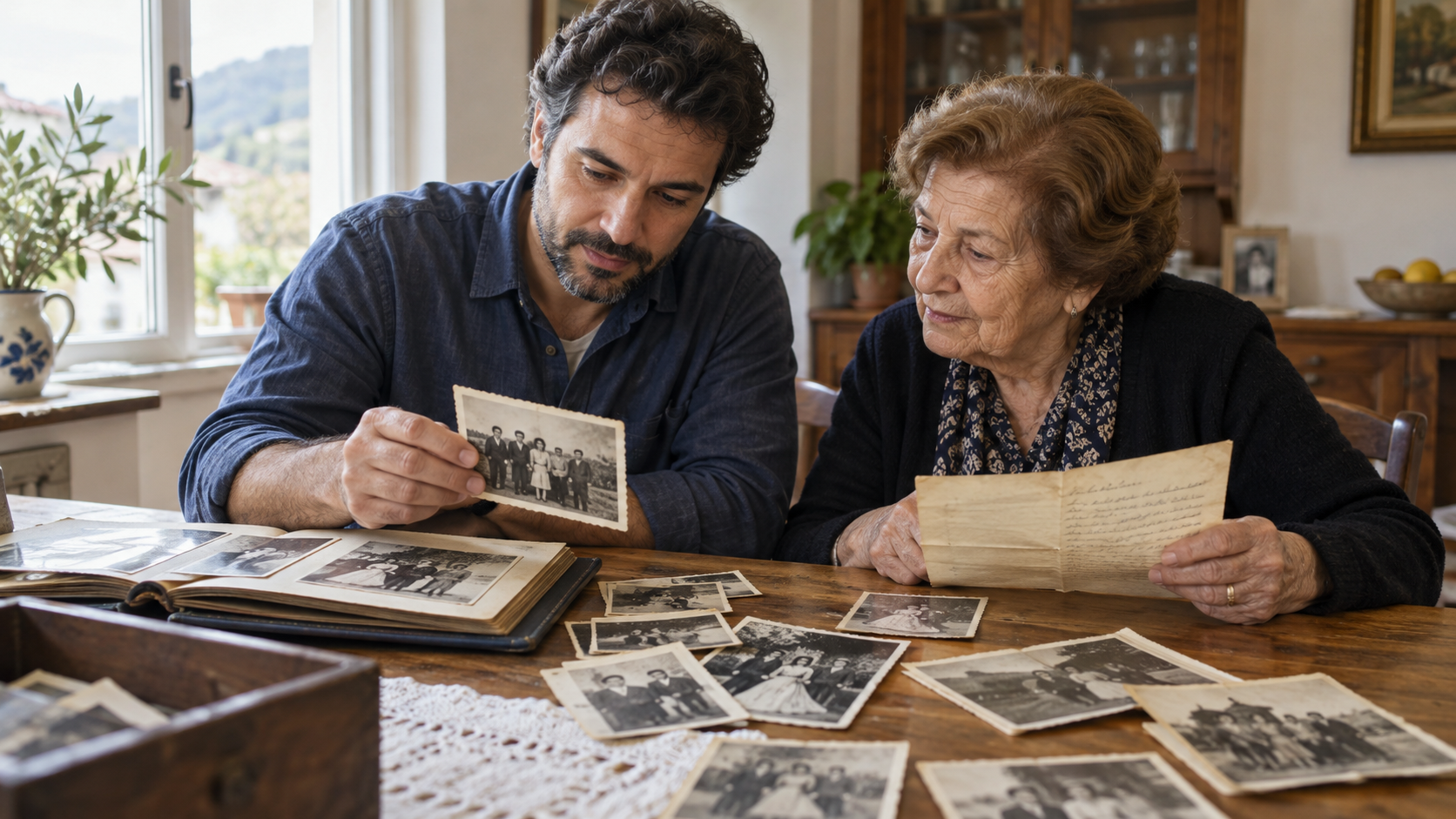
Ask permission to scan photographs, letters, certificates, passports, funeral cards, and handwritten address books. Photograph the backs of pictures as well as the fronts: a short inscription may identify a person or place.
When talking with relatives, ask specific questions. “What do you remember about your grandfather?” may produce more useful details than “Where did our family come from?”
Try asking:
- What names or nicknames did relatives use?
- Did anyone mention a village, church, or nearby city?
- Who received letters from Italy?
- Were there relatives in another country?
- What jobs did family members do?
- Who might have inherited the older photographs?
Record who supplied each detail and when. Keep remembered stories separate from facts supported by documents.
A useful first project is a one-page profile of an immigrant ancestor, with their known names, approximate dates, spouse, children, and places of residence. Leave gaps visible instead of filling them with guesses.
Follow the Family Backward, One Generation at a Time
Start with yourself and work backward through parents, grandparents, and earlier generations. Establish each relationship before attaching another branch to the tree.
A matching surname is a clue, not enough evidence on its own. Compare ages, spouses, parents, occupations, addresses, and other relatives.
For families who settled in the United States, census, immigration, naturalization, and military records are useful starting points. The U.S. National Archives provides guidance on these record groups and how to begin using them.
Read the original document whenever it is available. A search result may show only a few indexed details, while the image contains other people, handwritten additions, or an address worth investigating.
Our detailed guide to researching your Italian ancestors explains how to build on these discoveries with Italian records and archives.
Find the Town Behind the Family Story
One of the most useful discoveries is the exact town associated with your ancestor.
A family memory such as “near Naples” gives you a starting area, but it is not yet a precise research location. Keep separate notes for birthplace, last residence, and departure port rather than assuming they refer to the same place.
Passenger records can help. Depending on the period and document, they may identify a birthplace, previous residence, occupation, or relatives the traveler intended to join.
If your ancestor’s records are inconclusive, investigate a sibling or another close relative. Compare the place names across documents, preserving the original spelling before proposing a modern equivalent.
For example, imagine that a family remembers only “the Naples area.” One document names a province, while a sibling’s passenger record identifies a smaller town. That town becomes a lead to test against further records—not an automatic conclusion.
Use Genealogy Websites With a Clear Question
Genealogy websites are most useful when you know what you are trying to find.
Instead of searching a surname without context, begin with a person’s approximate birth year, known relatives, and likely residence. Keep a note of which collections and date ranges you have searched.
You can explore family-history records on Ancestry as part of that process. Check the relevant collection coverage and membership requirements before subscribing.
Use other people’s family trees as leads. Before copying a relationship, look for the document supporting it and decide whether it fits your family.
Free resources also deserve attention:
- FamilySearch provides Italian genealogy guidance and historical record collections.
- Portale Antenati, a project of Italy’s archival administration, provides access to digitized archival material useful for family-history research.
- National and local archives offer research guidance and records that may complement commercial databases.
FamilySearch’s Italian research guidance describes using multiple resources, while Italy’s archival administration explains the Antenati project and its collaboration with FamilySearch.
An unsuccessful name search does not necessarily mean the record is absent. Check the collection’s location, dates, and available images before deciding what to try next.
Get to Know Italian Birth, Marriage, and Death Records
Once you have a likely locality, Italian records can help you test the connections you have made.
The main civil-record terms are:
| English | Italian |
|---|---|
| Births | Nati |
| Marriages | Matrimoni |
| Deaths | Morti |
| Civil registration | Stato civile |
| Marriage banns | Pubblicazioni |
| Supporting documents | Allegati |
Record availability depends on the locality and period. Some collections also contain indexes and supporting material that can help you navigate the registers. FamilySearch’s guidance introduces these record types and explains how to locate them across major research platforms.
For a practical next step, read our guide to Italian civil records: finding births, marriages, and deaths.
Save each useful image with a descriptive filename. Record the archive, locality, year, record number, and link so you can return to it later.
Can a DNA Test Help You Explore Italian Ancestry?
DNA testing can add another dimension to family-history research, but it answers different questions from a birth certificate or marriage record.
An ethnicity estimate compares your DNA with reference populations. The percentages are estimates, and they may change as the provider updates its reference groups and methods. Genetic patterns also do not fit neatly within modern national borders.
If you are considering testing, you can explore AncestryDNA options. Review the current product details, privacy settings, and terms before ordering.
Treat results as another source to investigate alongside your documents. Avoid interpreting a percentage as a measure of how Italian you are, or as proof that one particular village is your family’s birthplace.
Before testing, consider whether you are comfortable with unexpected family information and what you would want to share with relatives.
Choose Books That Support Your Next Step
A reference book can be useful when you want to understand the records you are finding rather than move between individual search results.
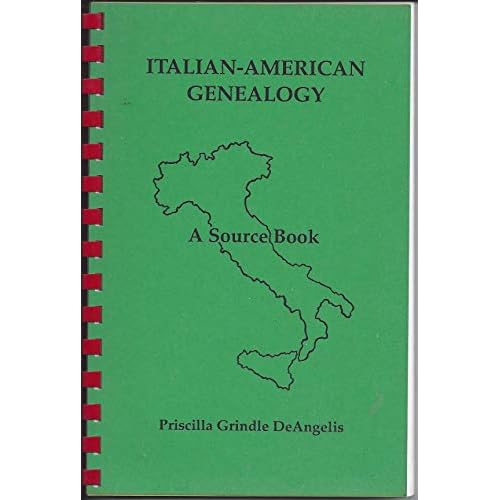
Two titles already included in our book selection are:
- Italian Genealogical Records: How to Use Italian Civil, Ecclesiastical and Other Records in Family History Research
- Finding Your Italian Ancestors
Check the edition and format before buying. Older genealogy books may still provide useful background, but website addresses, access procedures, and online collections should be checked against current sources.
Choose a book for the problem you are trying to solve: interpreting records, organizing evidence, or writing the family story.
Turn Your Discoveries Into a Connection With Italy
Research does not have to end with names on a chart.
You might create a small family album that pairs photographs with verified captions. You could record a relative explaining a recipe, preserve a letter with a translation, or learn more about the place named in an ancestor’s documents.
Label uncertainty honestly. “Believed to show Maria’s brother” is more useful than a confident identification that nobody can substantiate.
If you hope to visit Italy, let the research shape the trip. Confirm the town before booking accommodation, and contact any archive or parish you want to visit in advance.
Our guide to ancestry travel in Italy explains how to plan a visit around your family’s place of origin.
Leave time simply to walk, observe, and learn. A family-history trip can be meaningful even when it does not produce a new document or a meeting with relatives.
A Manageable Plan for Your First Week
Give yourself a small, achievable starting project:
- Choose one ancestor or family branch.
- Speak with a relative and write down the source of each memory.
- Scan a few relevant documents and photographs.
- Build a short timeline of known events.
- Search for one missing record.
- Compare what you find with the information you already have.
- Write down your next question.
The aim is not to build the biggest tree. It is to understand the people in it.
A carefully identified photograph, a documented birthplace, or a letter finally understood can give your Italian ancestry a depth that a long list of names cannot.
External Sources
- U.S. National Archives: Start Your Genealogy Research
- U.S. National Archives: Passenger Arrival Records
- FamilySearch: Italian Genealogy Research
- Italy’s Archival Administration: Antenati
- AncestryDNA: Reading Your Ethnicity Estimate