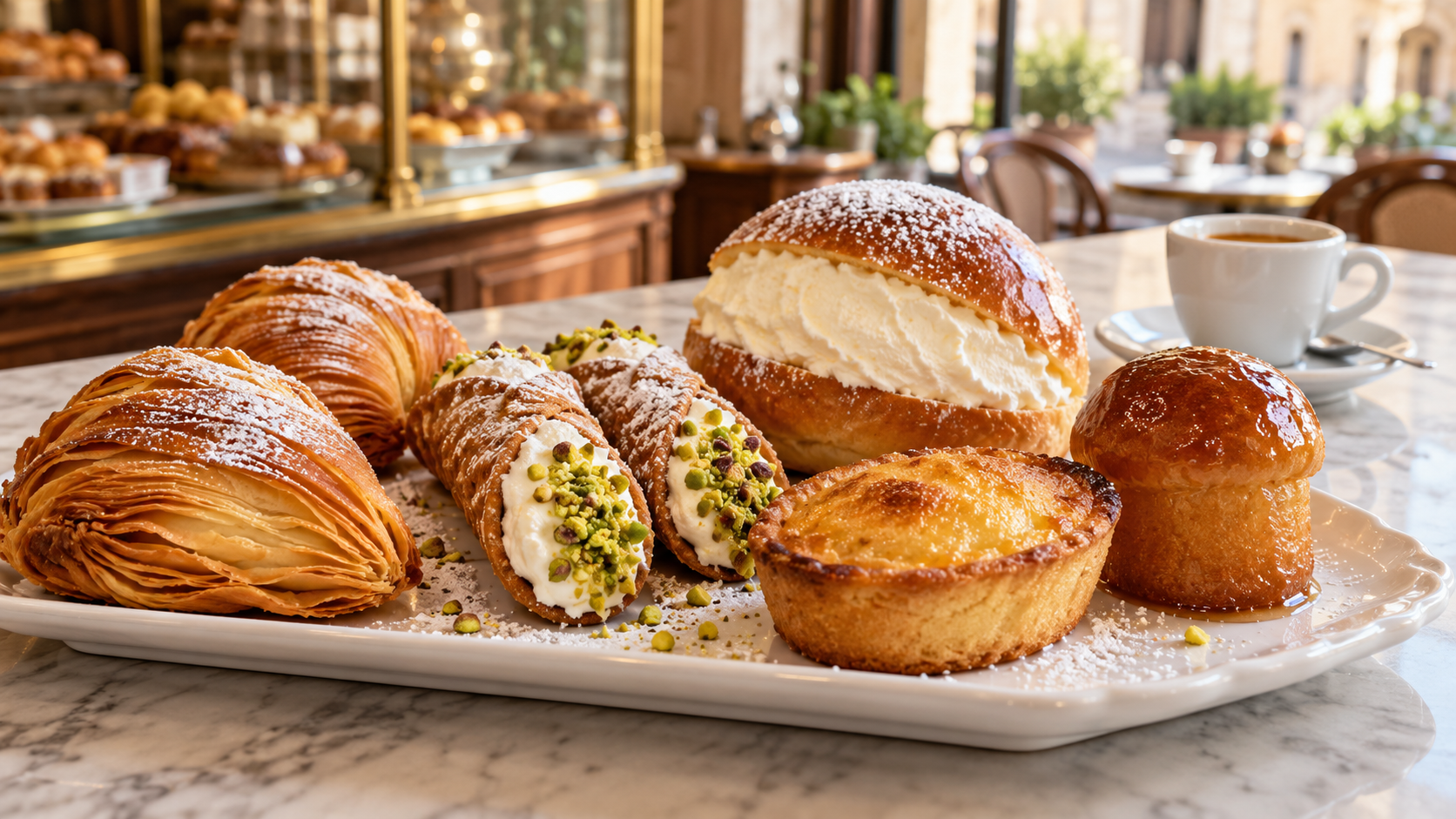
Choosing which Italian pastries to order can be one of the happiest decisions of a trip. Behind a café counter, familiar breakfast shapes sit beside local specialties: a cream-filled bun in Rome, a crisp shell of ricotta in Sicily, or a golden custard pastry in the Salento.
The most rewarding approach is to follow the place you are visiting. Start with its specialty, ask what has just been made, and leave room for something unfamiliar. This guide includes 15 choices from Italy’s wider pasticceria tradition: breakfast pastries, sweet buns, a tart, and small almond biscuits, plus a Sardinian pastry best ordered freshly cooked.
You do not need an elaborate tasting itinerary. One good pastry and a coffee can turn a short stop into a small discovery. Here is what to look for, where to try it, and how to ask for it.

1. Cornetto
Where to try it: Across Italy
The cornetto is a natural starting point for an Italian pastry tour: a curved breakfast pastry with a tender interior and a lightly crisp surface. Recipes vary, but it often tastes sweeter and softer than a French croissant. You will find plain versions alongside fillings such as pastry cream, jam, chocolate, or pistachio cream. In many northern cafés, the familiar counter name is simply brioche. Choose a plain one if you want to appreciate the dough, or start with classic custard.
How to order: Un cornetto alla crema, per favore.
Best moment: Breakfast with a cappuccino.

2. Maritozzo con la panna
Where to try it: Rome and Lazio
A maritozzo is a soft sweet bun split open and generously filled with whipped cream. The Roman version is wonderfully direct: fragrant bread, cool cream, and very little to distract from their contrast. It is larger and messier than many visitors expect, so a plate and napkin are useful companions. Contemporary pastry shops offer numerous variations, but the classic con la panna makes the best introduction. Plan a leisurely coffee break for this one rather than trying to eat it while walking.
How to order: Un maritozzo con la panna, per favore.
Best moment: A substantial breakfast or afternoon treat.

3. Sfogliatella
Where to try it: Naples and Campania
The shell-shaped sfogliatella riccia has tightly layered pastry that breaks into crisp flakes around a filling typically made with ricotta, semolina, and candied citrus. Its sister, the sfogliatella frolla, uses a smoother shortcrust shell and offers a gentler bite. Try them side by side if you have someone to share with. A freshly baked, slightly warm pastry brings out the contrast between the shell and fragrant filling. Make a pastry stop part of your visit to Naples.
How to order: Una sfogliatella riccia, per favore.
Best moment: Breakfast or a midmorning espresso stop.

4. Babà al rum
Where to try it: Naples and Campania
The babà is a small yeasted cake, often shaped like a mushroom, soaked in rum-flavored syrup. Although its wider history reaches beyond Italy, it has become a defining Neapolitan pastry-shop specialty. The texture should be springy and thoroughly moist. Plain babà lets you appreciate the syrup and delicate crumb, while versions with cream or fruit make a more elaborate dessert. It is usually best eaten from a plate. The traditional syrup contains alcohol; ask about the preparation if that matters to your choice.
How to order: Un babà al rum, per favore.
Best moment: Dessert or an afternoon pastry-shop visit.

5. Zeppola di San Giuseppe
Where to try it: Campania and other southern regions
This celebratory pastry usually takes the form of a choux ring crowned with pastry cream and an amarena cherry. You may find it fried or baked, with the fried version giving a richer bite. It is particularly associated with March 19, Saint Joseph’s Day and Father’s Day in Italy. Availability outside that season depends on the shop. Specify di San Giuseppe when ordering, since the word zeppole can also describe other kinds of fritters. The cherry adds a welcome tart note to the sweet cream.
How to order: Una zeppola di San Giuseppe, per favore.
Best moment: A seasonal treat around March 19.

6. Pasticciotto
Where to try it: Lecce, Galatina, and the Salento
Small, oval, and golden, the Salento pasticciotto encloses pastry cream in a substantial shortcrust shell. It looks modest beside elaborate display-case desserts, but the pleasure is in the contrast between crumbly pastry and soft filling. Try the classic cream version before exploring chocolate or other variations. Slightly warm is especially appealing, though a fresh-from-the-oven filling can be very hot. Many traditional recipes use lard in the pastry, so ask about ingredients if you follow a vegetarian diet. It makes a satisfying start to a morning in Lecce.
How to order: Un pasticciotto alla crema, per favore.
Best moment: Breakfast, perhaps with a local iced coffee.

7. Cannolo siciliano
Where to try it: Sicily
A cannolo combines a crisp fried shell with sweetened ricotta, traditionally sheep’s-milk ricotta in many Sicilian preparations. Chocolate chips, candied orange, or chopped pistachios may decorate the filling and ends. Ask whether the shell can be filled when you order: this helps preserve the crunch. One pastry is a cannolo; several are cannoli. Small versions are ideal if you are tasting several sweets, while larger ones deserve a proper pause. The best reason to seek out a fresh example is that unmistakable contrast between brittle shell and cool ricotta.
How to order: Un cannolo alla ricotta, per favore.
Best moment: A pastry-shop stop whenever fresh filling is available.

8. Brioche col tuppo
Where to try it: Sicily
Recognizable by the little round topknot that gives it its name, this soft Sicilian bun belongs to the island’s sweet breakfast tradition. It is particularly enjoyable with granita, tearing off pieces of brioche to alternate with spoonfuls of the icy dessert. Almond, coffee, or lemon granita each changes the experience. You can also find the bun split and filled with gelato. It is a sweet bread rather than a flaky pastry, but no tour of Sicilian pastry counters feels complete without it.
How to order: Una brioche col tuppo e una granita, per favore.
Best moment: A relaxed Sicilian breakfast or gelato break.

9. Genovese alla crema
Where to try it: Erice, western Sicily
Despite the name, the genovese featured here is a specialty associated with Erice in Sicily. Its rounded shortcrust shell holds a soft custard filling, usually finished with a dusting of powdered sugar. It is particularly inviting when still warm, making it a good excuse to stop during a walk through Erice’s stone streets. Ask for the cream-filled version rather than assuming every pastry with a similar name has the same center. This is a quieter alternative to a cannolo, with the emphasis on pastry and custard rather than decoration.
How to order: Una genovese alla crema, per favore.
Best moment: A warm pastry break while exploring Erice.

10. Bombolone
Where to try it: Tuscany and cafés across Italy
The bombolone is a pillowy fried doughnut, commonly rolled in sugar and filled with pastry cream. Chocolate and jam versions are also widespread, while shapes, names, and fillings vary locally. Tuscany is a particularly rewarding place to seek one out, including along the coast. Look for a recently made batch: the appeal lies in light, soft dough and a generous center. A bombolone is more substantial than a small pastry, making it an excellent choice when you want one sweet to carry you through a long morning.
How to order: Un bombolone alla crema, per favore.
Best moment: Breakfast or an afternoon snack.

11. Cannoncino alla crema
Where to try it: Northern Italian pastry shops
A cannoncino is a little tube or horn of puff pastry filled with cream. The exterior may be lightly caramelized, giving it a crisp sweetness that balances the smooth center. Miniature versions are common on mixed pastry trays, though larger examples can make a café breakfast. It differs from a Sicilian cannolo in both shell and filling, so pointing to the display can help if names overlap locally. Choose it when you want the pleasure of buttery, flaky pastry in a manageable size.
How to order: Un cannoncino alla crema, per favore.
Best moment: An espresso companion or a mixed pastry selection.

12. Bocconotto
Where to try it: Abruzzo, Calabria, and other southern areas
Bocconotti are small filled shortcrust pastries whose identity changes from place to place. In Abruzzo, chocolate-and-almond fillings are a familiar reference point; elsewhere, recipes may use preserves, nuts, or other combinations. The photograph shows a Calabrian version, a reminder that the name describes a family of local specialties rather than one fixed recipe. Ask the baker what is inside and try the version made in the town you are visiting. Their compact size makes them particularly convenient for a tasting stop.
How to order: Un bocconotto, per favore. Che ripieno ha?
Best moment: A regional bakery discovery; availability can be seasonal.

13. Seada
Where to try it: Sardinia
Often listed on menus in the plural as seadas or sebadas, this Sardinian specialty wraps fresh cheese in pastry, then fries it and finishes it with honey. The cheese can bring a pleasant tang, while citrus zest adds fragrance. It is more often a freshly cooked restaurant dessert than a ready-to-eat café pastry. Order it after a meal and enjoy it warm, while the filling is soft. The combination of pastry, cheese, and honey makes a memorable change from custard and whipped cream.
How to order: Una seada al miele, per favore.
Best moment: A freshly cooked dessert after lunch or dinner.

14. Torta della nonna
Where to try it: Tuscany and pastry shops nationwide
Order a slice of this shortcrust tart when you want a sit-down pastry break. A traditional version combines pastry cream, pine nuts, and powdered sugar, sometimes with a top layer of pastry enclosing the filling. The name means “grandmother’s cake,” but you do not need a family invitation to enjoy it: it appears in bakeries, cafés, and restaurant dessert selections. A small slice offers plenty of texture, from the crumbly crust to the creamy middle and pine nuts. Some shops also make individual tartlets.
How to order: Una fetta di torta della nonna, per favore.
Best moment: An afternoon coffee break or dessert.

15. Ricciarelli
Where to try it: Siena, Tuscany
These soft almond biscuits belong to the small-pastry side of the Italian pasticceria. Their pale, powdered-sugar surface gives way to a tender, chewy center with a pronounced almond flavor. They are closely associated with Siena and especially with Christmas, though you can find them at other times of year. Choose a couple with coffee, or buy a box as an edible souvenir. Unlike cream-filled pastries, they are a more practical travel purchase; ask the shop how to store them and when to eat them for the best texture.
How to order: Due ricciarelli, per favore.
Best moment: Coffee, a small dessert, or an edible souvenir.
How to order pastries in Italy
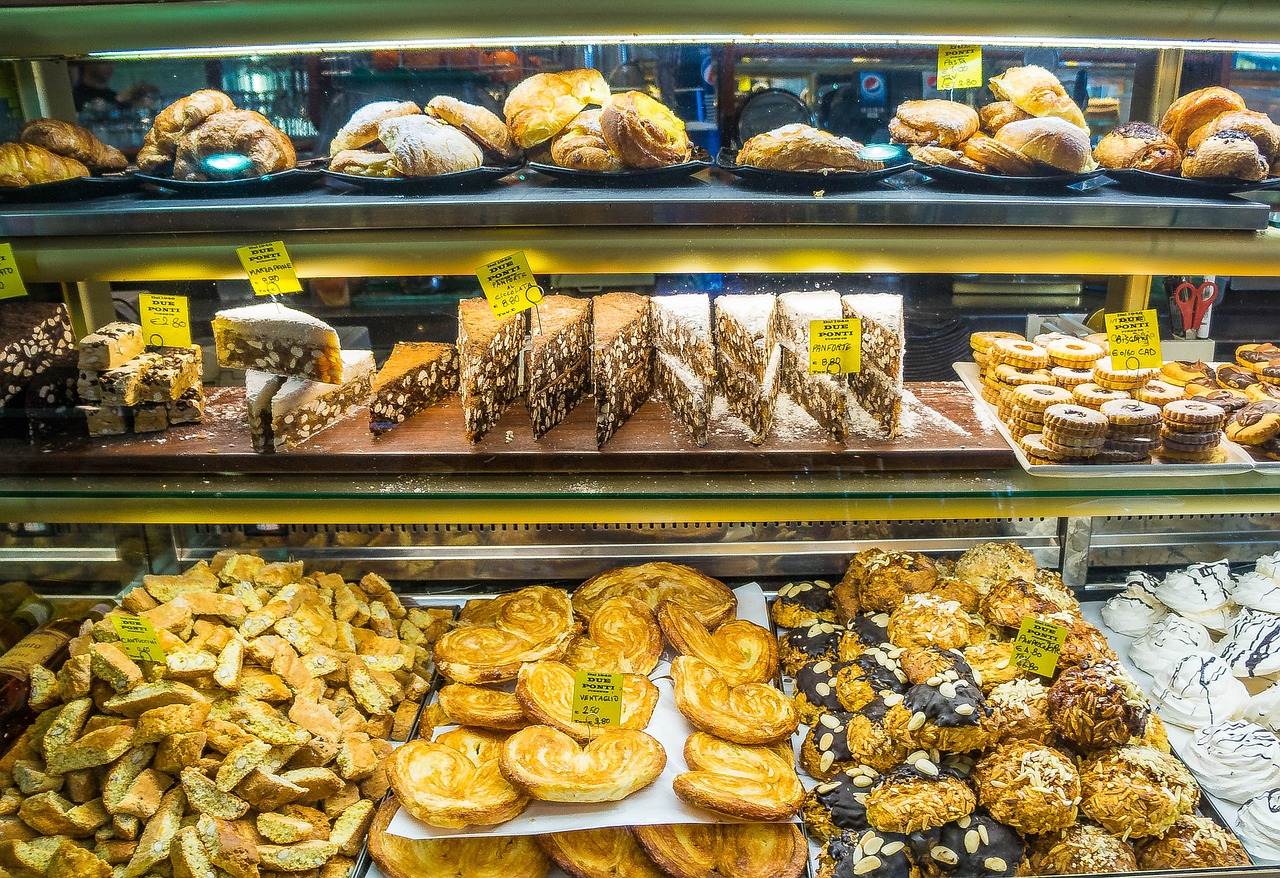
A pasticceria specializes in pastries and sweets; a bar-pasticceria combines them with café service. Look for mignon if you want miniature pastries that let you sample several flavors. Ask “Qual è la vostra specialità?”—“What is your specialty?”—or “Quali sono appena fatti?”—“Which have just been made?”
Payment routines differ. Some places ask you to pay at the till first and bring the receipt to the counter; others take your order before payment. If you are unsure, ask “Pago prima?” Seating and table service may have different prices from counter service, so check before sitting down.
For takeaway, say “Da portare via, per favore.” Cream- and ricotta-filled pastries are best enjoyed promptly rather than carried around on a warm day. If ingredients matter to you, ask directly: lard can appear in pastry dough, while nuts, milk, eggs, wheat, and alcohol occur in many traditional recipes.
Choose pastries that match your trip
For a first visit to Rome, start with a maritozzo. In Naples, compare sfogliatella riccia and frolla before trying a babà. In the Salento, make room for a warm pasticciotto; in Sicily, alternate cannoli with brioche and granita. Tuscany offers both a generous bombolone and smaller almond sweets, while Sardinia rewards a restaurant stop with a freshly fried seada.
You will not find every pastry in every town, and that is part of the pleasure. Ask what the place does well, order a small selection, and give yourself time to enjoy it.