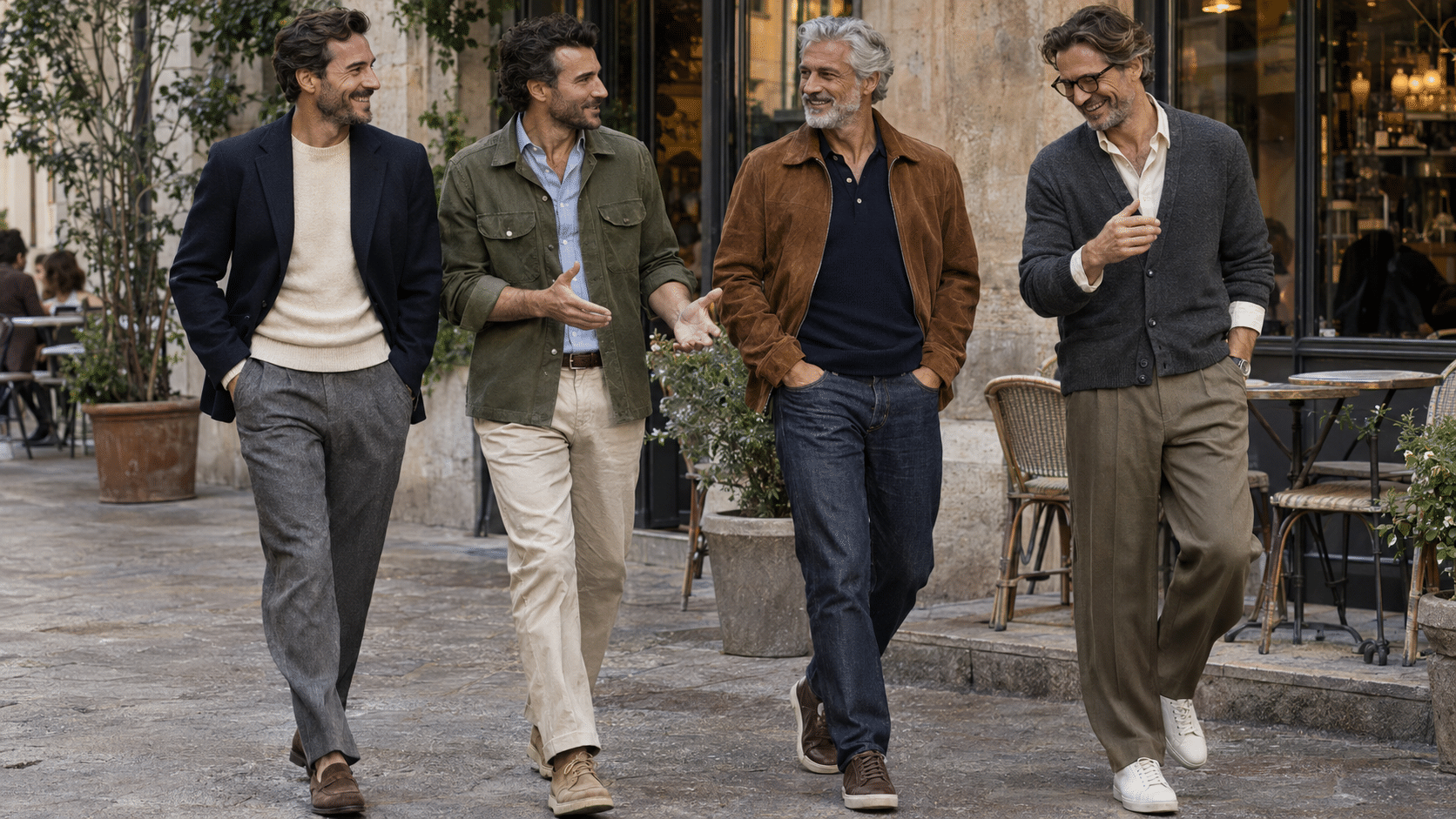
A good pair of trousers, a sweater that sits comfortably under a jacket, and shoes you can walk in: everyday style often begins with a few straightforward choices. The pleasure comes from finding pieces that work together so naturally that getting dressed becomes easier.
Italian menswear offers plenty of inspiration beyond formal tailoring. Think of a knitted polo with cotton trousers, a soft jacket over a crewneck, or dark denim worn with a suede shoe. These combinations borrow tailoring’s attention to proportion while leaving room for ordinary life.
There is no single way Italian men dress, and no reason to turn a national style into a uniform. This guide takes a practical approach: choose useful shapes, build a manageable color palette, and spend where fit and comfort make a difference.
Affiliate disclosure: Italia Mia may earn a commission if you purchase through the Italist links in this article, at no additional cost to you.
Start with the week you actually live
Before buying anything, think about where your clothes need to take you. An office with a relaxed dress code, a day spent walking, and dinner with friends ask different things of a wardrobe.
Look at what you wore last week. Which trousers felt comfortable after several hours? Which jacket stayed on the hanger because it was too stiff, too warm or difficult to combine? Which shoes looked good but made you wish you had chosen another pair?
Those answers are more useful than a generic essentials list.
For a flexible starting point, build around three kinds of trousers, a few simple tops, two different outer layers and footwear suited to your routine. Keep the pieces you already enjoy wearing. A coherent wardrobe rarely requires replacing everything at once.
Begin with trousers: they set the proportions
Trousers influence how the rest of an outfit falls into place. Their rise determines where a tucked shirt or short jacket meets the body; their width affects which shoes look balanced beneath them.
A straight or gently tapered leg is an adaptable starting point. There should be enough room through the seat and thighs to sit comfortably, with a waistband that stays in place without a tightly cinched belt.
Tailored trousers for everyday use
Try charcoal, medium gray or navy trousers in a fabric suited to your climate. A pressed crease brings definition to an outfit, even when the top is a simple knit.
For cooler weather, a textured wool cloth can work with a cardigan or overshirt. In warmer conditions, look for a lighter fabric and assess the lining as well as the outer material. “Wool” alone does not tell you how warm a pair will feel.
Pleats are an option, not an obligation. When properly fitted, they can give room through the upper leg. If they pull open while you are standing naturally, try a different size or cut.
Cotton trousers for the middle ground
Stone, olive and tobacco cotton trousers bridge the space between tailored wool and denim. Avoid choosing three pairs so similar that they all perform the same job.
Stone trousers brighten a navy sweater. Olive pairs easily with ecru, gray and brown. Tobacco introduces warmth without demanding a strongly patterned shirt.
Dark jeans for relaxed days
A clean, dark wash can anchor a casual wardrobe. Choose a cut that works with both your everyday jacket and your shoes, and check the fit while sitting.
If you rarely wear denim, substitute another pair of cotton trousers. The purpose is to have a relaxed option you use.
Explore men’s trousers on Italist.
Knitwear: give each piece a different job
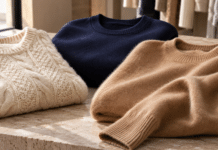
You can build a useful knitwear selection around three shapes: a crewneck, a knitted polo and a cardigan.
The crewneck is the simplest layer. Choose one with enough space to skim your torso and sleeves that fit beneath your usual jacket. Navy, gray or brown makes an easy first purchase; a second in burgundy or muted green adds variety.
The knitted polo gives the neckline a little structure. Wear it alone with cotton trousers or under a casual jacket. Check that the collar sits neatly and the button opening does not gape.
The cardigan works particularly well when temperatures change during the day. A fine version can replace a sweater under a jacket, while a heavier one can serve as the outer layer indoors or in mild weather.
Consider how the hem meets your trousers. A long, tight ribbed waistband can gather fabric around the middle; a slightly shorter or straighter shape may hang more comfortably. Try both rather than assuming a larger size will solve every fit issue.
For a closer look at composition and construction, see our guide to choosing Italian wool, merino and cashmere knitwear.
Browse men’s knitwear on Italist.
Casual jackets: choose two distinct shapes
A useful pairing is one softly tailored jacket and one more casual outer layer. This gives you different ways to finish the same trousers and knitwear.
A blazer that works as a separate
Look for a jacket whose texture and cut feel comfortable with everyday trousers. Navy with a visible weave, a brown textured cloth or muted olive can provide a useful starting point.
A very smooth, formal suit jacket may be harder to combine with faded denim or rugged shoes. If you want to wear a jacket from a suit separately, try the entire outfit and judge the result.
Fasten the jacket over the layer you intend to wear beneath it. The front should not strain, and you should be able to reach forward comfortably. Shoulder and chest fit deserve particular attention because correcting them can be more involved than shortening a sleeve.
An overshirt, bomber or field jacket
Choose according to the clothes you already own.
An overshirt works naturally with jeans and cotton trousers. A simple bomber gives a shorter outline that can suit fuller trousers. A field jacket offers a longer shape and practical pockets, although bulky contents can distort its line.
Think about where the jacket ends. A short jacket and low-rise trousers may leave an awkward gap when you move; a long overshirt over a long sweater can feel cumbersome.
For more ideas about combining removable layers, read The Italian Wardrobe Between Seasons.
Explore men’s jackets and coats on Italist.
Shoes: choose for the ground you cover
Footwear changes the character of an outfit, but it also has a practical job. Start with comfort, fit and the conditions in which you will wear it.
Loafers can work with cotton trousers, tailored separates and dark jeans. Try them with the socks you expect to wear. A pair that slips excessively at the heel or presses painfully across the foot is not a useful purchase.
Derbies or simple boots provide another option when you prefer laces or more coverage. Brown introduces a softer contrast with navy, olive and stone; black works well with charcoal and a darker palette.
Understated sneakers are useful for relaxed outfits. Choose a shape that suits your trousers and feet. A slim shoe can look lost below a very wide hem, while a substantial sole may dominate narrow trousers.
Leather or suede uppers do not establish waterproofing or grip. If rain and long walks are part of your routine, check the actual construction and sole.
Have trouser hems assessed while wearing the shoes you plan to use. A slight break or a clean finish just above the shoe can both work; excessive bunching makes the line harder to control.
Browse men’s shoes on Italist.
Build a palette that allows repetition
Choose two main neutrals, one lighter shade and an accent. For example:
- Navy and gray, with ecru and burgundy.
- Brown and olive, with stone and pale blue.
- Charcoal and black, with off-white and muted green.
These are starting points, not restrictions. The aim is to make most tops work with most trousers.
When an outfit feels flat, try changing texture before adding another color. A softly textured knit, smooth cotton trousers and suede shoes create variation within a quiet palette.
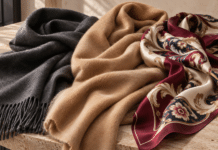
Accessories can introduce a small amount of pattern. A scarf is particularly useful when your jackets and sweaters are plain; our guide to Italian scarves in wool, cashmere and silk explores the options.
A practical 12-piece starting wardrobe
This example covers a core wardrobe for mild to cool weather. It excludes underwear, socks, belts and any specialist rainwear or heavy winter coat you need.
| Piece | Suggested color | Main role |
|---|---|---|
| Tailored trousers | Medium gray | Workdays, lunch and evenings |
| Cotton trousers | Stone or olive | Everyday combinations |
| Dark jeans | Indigo | Relaxed days |
| Crewneck sweater | Navy | Simple middle layer |
| Knitted polo | Ecru or brown | A top with a defined neckline |
| Cardigan | Gray or tobacco | Adjustable warmth |
| Casual shirt | Pale blue | Under knitwear or worn alone |
| Plain T-shirt | White or ecru | Base layer and casual top |
| Soft blazer | Navy or brown | More polished occasions |
| Overshirt or casual jacket | Olive or muted blue | Everyday outer layer |
| Loafers or derbies | Brown or black | Smarter footwear |
| Comfortable sneakers | Off-white or a dark neutral | Casual walking days |
Change the balance to suit your life. If you seldom wear jackets, replace the blazer with a second casual layer. If your work requires smarter clothing, another pair of tailored trousers may earn its place before jeans.
Five outfits to make from the same pieces
1. An ordinary day in town
Combine stone cotton trousers, a navy crewneck and comfortable sneakers. Add an olive overshirt when needed.
The contrast between the lighter trousers and darker top gives the outfit definition. Keep the sweater hem neat enough that it does not gather beneath the jacket.
2. A relaxed office or lunch meeting
Wear gray tailored trousers with a pale-blue shirt, a soft navy blazer and derbies.
If the setting allows, replace the shirt with the knitted polo. Check the workplace dress code rather than assuming every office treats knitwear the same way.
3. Aperitivo followed by dinner
Pair gray trousers with a brown knitted polo and loafers. Bring the blazer if you want another layer.
The collar and tailored trousers provide enough structure for many informal evening settings. For more occasion-specific suggestions, see what to wear in Italy at night.
4. A weekend train journey
Try dark jeans, a plain T-shirt, a cardigan and sneakers. Add the casual jacket for the journey to and from the station.
Test the waistband while seated and make sure your removable layer fits in your bag. Travel clothes should remain comfortable after the first photograph.
5. A cooler Sunday lunch
Wear olive cotton trousers with the ecru polo, brown or navy blazer and brown shoes.
If the polo is lightweight, substitute the crewneck when temperatures drop. The combination still works because the colors and proportions were chosen together.
Spend where fit makes the difference
A useful shopping order begins with the item causing the most difficulty.
If all your trousers pull at the waist or bunch over your shoes, address that first. If you already have good trousers but never wear your jackets, investigate the jackets’ fit and weight before buying another sweater.
Allow room in your budget for alterations. A corrected hem can make a well-fitting pair of trousers much more useful. Ask a tailor what is feasible before purchasing something that needs substantial work.
When comparing prices, think about expected use and care as well as the label. A manageable everyday sweater may provide more value than a delicate one you avoid wearing.
How to shop the wardrobe on Italist
Use the category links to compare silhouettes and materials, then read the individual product descriptions carefully.
Check measurements where available, fabric percentages, lining, care instructions and country of manufacture. An Italian brand, an Italian retailer and an item made in Italy are different things. If manufacturing origin matters to you, look for an explicit statement for that particular product.
Compare the complete checkout total for your delivery destination and review the current return conditions, including any applicable return charges. Sizes and stock change, so keep a second choice in mind rather than building an entire outfit around one listing.
Our guide to shopping clothing and accessories on Italist provides a useful companion.
Before ordering, identify three combinations the new piece will complete with clothes you own. Once it arrives, try those outfits, sit down, walk around and check the result in a full-length mirror. A wardrobe becomes dependable through wearing it.
External Links
- Italist men’s clothing — affiliate link
- Italist men’s trousers — affiliate link
- Italist men’s knitwear — affiliate link
- Italist men’s jackets and coats — affiliate link
- Italist men’s shoes — affiliate link