Italian style on a budget starts with a useful question: what would make the clothes you already own work better? Sometimes the answer is a pair of trousers that fits properly. Sometimes it is comfortable shoes, a simpler color palette or a jacket that brings several outfits together.
You do not need a wardrobe full of Italian labels. The approach is more practical: pay attention to proportions, choose clothes that suit your daily life and reserve extra money for the pieces you use most.
That connects with la bella figura, the Italian art of making a good impression. Thoughtful presentation includes how you behave and how comfortably you carry yourself; an expensive logo contributes very little if the clothes feel wrong.
Start With Your Wardrobe, Then Set a Budget
Before shopping, put together three outfits from what you own: one for everyday errands, one for work or a daytime meeting, and one for an evening out. Try everything on, including the shoes.
Look for the missing connection. Perhaps several shirts would work with a darker pair of trousers. Perhaps your best jacket needs shorter sleeves. Buying that one missing element can be more useful than collecting another four unrelated tops.
Set a spending limit for the gap you have identified. A €100 budget might cover trousers, a basic top and a simple alteration. It does not have to buy an entire outfit.
Choose two main colors already present in your wardrobe, then add a lighter shade and an accent you enjoy. Navy, gray, cream and burgundy are one possibility; brown, denim blue, white and olive are another. Black is equally useful if you actually like wearing it.
The point is to make new purchases easy to combine.
What a Realistic Budget Looks Like
These are planning ranges for shopping in Italy, rather than guaranteed prices or claims that every garment within a range offers equal quality. They mainly describe mainstream retail and selective sale shopping. Materials, size availability, construction and season can change the price considerably.
| Item | Useful planning range | What to prioritize |
|---|---|---|
| Plain T-shirt or simple jersey top | €10–€25 | Neckline, opacity and shape |
| Everyday shirt or blouse | €25–€60 | Comfortable movement and a collar or neckline that sits well |
| Chinos, jeans or everyday trousers | €30–€70 | Rise, waistband and leg shape |
| Cotton or basic merino knitwear | €30–€70 | Composition, drape and care requirements |
| Unstructured blazer or versatile jacket | €60–€150 | Shoulder fit and room for layers |
| Everyday sneakers | €50–€100 | Comfort, secure fit and suitability for your walking |
| Loafers or ankle boots | €80–€160 | Comfort, construction and sole |
| Everyday coat | €120–€250 | Warmth, fit over layers and fabric |
| Simple scarf or belt | €15–€40 | A useful color, appropriate size and finish |
| Straightforward trouser hem | Allow €10–€20 | Ask a local alterations shop for a quote first |
As a price check in November 2026, UNIQLO Italy listed a women’s merino ribbed turtleneck at €39.90, while Mango Italy displayed a fitted women’s blazer at €69.99. These examples help explain the budget levels; they are not promises of future prices or stock.
You can dress well below these ranges by using existing clothes and buying secondhand. You can also spend more where a particular fit or practical requirement justifies it.
Where to Spend: Shoes You Can Actually Wear
Shoes deserve a meaningful share of the budget if you walk regularly. A pair that rubs, slips or squeezes your toes is poor value, however attractive it looks.
Try shoes with the socks you expect to wear. Walk around, check that your heel stays secure and make sure your toes have room. Avoid assuming discomfort will disappear after a few outings.
A relatively simple sneaker can work with jeans, chinos and relaxed tailoring. Loafers or ankle boots may serve you better if your routine involves an office or frequent evenings out. Choose according to your life before choosing according to an imagined Italian dress code.
For a limited budget, one comfortable pair that works with most of your clothes is a sensible starting point. Leather alone does not guarantee quality, and a higher price does not guarantee comfort.
Where to Spend: Trousers That Fit
Trousers influence the proportions of the entire outfit. Pay attention to the rise, the seat and the way the fabric falls, rather than focusing only on the waist size.
Sit down, bend your knees and use the pockets. The waistband should remain comfortable, and the fabric should not pull sharply across the hips or thighs.
Straight and gently tapered cuts are useful starting points, but wide legs can work beautifully too. Choose the shape that suits your body and the shoes you wear.
A hem is often a manageable adjustment. Reworking an uncomfortable rise or a badly fitting seat can be much less straightforward. Ask for an alteration quote before buying an item that needs work.
Well-fitting €40 trousers with a modest hemming bill may contribute more to your wardrobe than a more expensive pair you keep adjusting throughout the day.
Where to Spend: One Jacket With Several Uses
If you wear jackets regularly, look for one that works over both a shirt and a fine sweater. Navy, charcoal, brown or an understated check can combine with several trouser colors.
For a blazer, check the shoulders first. Then assess the chest, sleeve length and overall balance. A relaxed cut should still look deliberate; oversized styling does not mean every oversized garment will work.
For outerwear, allow space for your usual layers. A coat that fits only over a T-shirt is a frustrating winter purchase.
You may not need both a blazer and a new coat. Buy the one that solves the larger problem in your current wardrobe, and postpone the other.
Where to Save: Simple Tops and Occasional Trends
Plain T-shirts, straightforward cotton tops and uncomplicated shirts offer plenty of opportunities to save.
Inspect the garment in daylight if possible. Check whether the fabric becomes transparent when stretched, whether seams sit comfortably and whether the neckline lies flat. Consider how it will look under your existing jacket.
Keep experiments inexpensive. If you are curious about a new color or silhouette, try it through a top or accessory before committing to costly outerwear.
There is also little reason to spend heavily on several versions of the same basic before testing one. Wear it, wash it according to the label and decide whether you still like it.
For places to compare options, see our guide to affordable fashion shops for men and women in Italy.
Read the Label Before Paying More
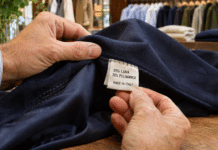
A soft sweater can be appealing in the shop, but the composition and care instructions help you decide whether it suits regular use.
Check the actual fiber percentages. A garment described informally as a wool sweater may contain only a small proportion of wool. Equally, a blend can be a sensible choice when it offers the comfort, durability or easy care you want.
Natural fibers are not an automatic quality guarantee. Examine the fabric, seams, finishing and fit together.
Our guide to reading an Italian clothing label explains fabric names, origin claims and care information. An Italian brand name, an Italian seller and manufacture in Italy describe different things.
Include maintenance in the decision. A low purchase price becomes less attractive if the item requires cleaning you will struggle to afford or arrange.
Three Practical Outfits With Clear Budgets
The following totals are illustrative shopping plans, not bundles currently offered by a retailer. Each includes one pair of shoes but excludes coats, bags, underwear, delivery and alterations.
| Occasion | Pieces and example allowances | Total bought from scratch |
|---|---|---|
| Everyday city outfit | Cotton T-shirt €15 + chinos €40 + simple sneakers €65 | €120 |
| Daytime meeting or aperitivo | Shirt or blouse €35 + trousers €45 + blazer €80 + loafers €90 | €250 |
| Cooler-weather casual outfit | Fine sweater €40 + dark jeans €45 + ankle boots €100 + scarf €20 | €205 |
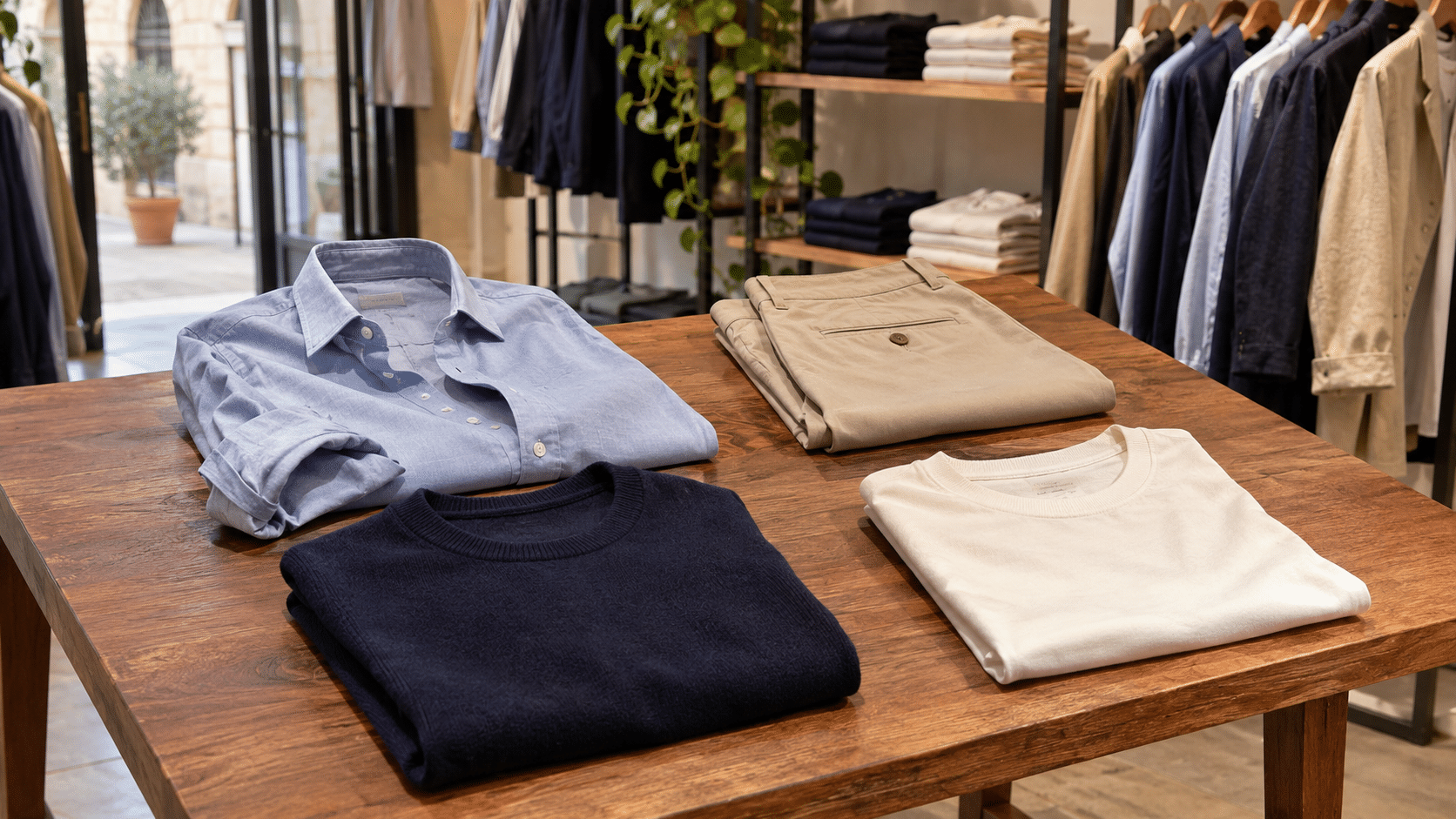
For the everyday outfit, try navy trousers, an off-white top and sneakers in a color you can maintain easily. A light shirt worn open can become an extra layer if you already own one.
For the smarter outfit, choose trousers and a jacket that work separately. A navy blazer can move between gray trousers and dark jeans; the shirt or blouse can be worn without the jacket on warmer days.
For cooler weather, choose knitwear thin enough to sit comfortably under your existing coat. Dark denim and simple boots give you a useful base, while the scarf adds color.
These formulas can be adapted across menswear and womenswear. Substitute a skirt for trousers, a cardigan for a blazer or comfortable flats for loafers where that better suits your preferences.
If you already own the jeans and boots in the third example, the new spending is €60 for the sweater and scarf. That is the more useful number when planning your own purchases.
Shop Sales and Secondhand With a Specific List
A discount helps only when the item meets an existing need. Before paying, picture at least three combinations using clothes already at home.
In secondhand shops, check underarms, cuffs, pockets, linings and fastening points. Look for moth damage in wool, excessive wear around trouser seams and soles that would need immediate work. Add cleaning and repairs to the asking price.
For online purchases, compare measurements with a garment that fits you well. Read the current return conditions, particularly when a discounted item is available in only one size.
Designer shopping deserves the same discipline. Our guide to shopping clothing and accessories on Italist explains what to check before buying. A reduced designer sweater may still cost more than your entire planned outfit, so keep your original limit in view.
Make Your Clothes Earn Their Place
Before adding anything else, clean your shoes, remove lint, deal with a loose button and press a shirt according to its care instructions. Small improvements can bring neglected clothes back into use.
A €90 item worn 60 times has a purchase cost of €1.50 per wear; a €30 item worn twice costs €15 per wear. That calculation is useful only if the higher upfront price is affordable and the expected wear is realistic.
The next worthwhile purchase is usually the one you can wear immediately, combine easily and care for without difficulty. Build from there, one useful piece at a time.
External Links
Retail references
- UNIQLO Italy: women’s merino ribbed turtleneck — a reference for the knitwear price example; check the current price and available sizes.
- Mango Italy: women’s blazers and jackets — compare cuts, materials and current prices.
Optional wardrobe-care shopping
A lint roller or suitable clothes brush can help maintain garments you already own. Choose a tool appropriate for the fabric and follow the garment’s care instructions.
Affiliate disclosure: Italia Mia may earn a commission from qualifying purchases through the Amazon links below. As an Amazon Associate, we earn from qualifying purchases.