Italian men have a reputation for dressing well, but what does good style actually mean after 50? Is it about tailored jackets, expensive shoes, and perfectly coordinated outfits? Or is it something more personal?
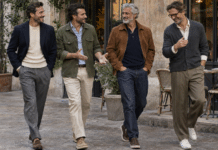
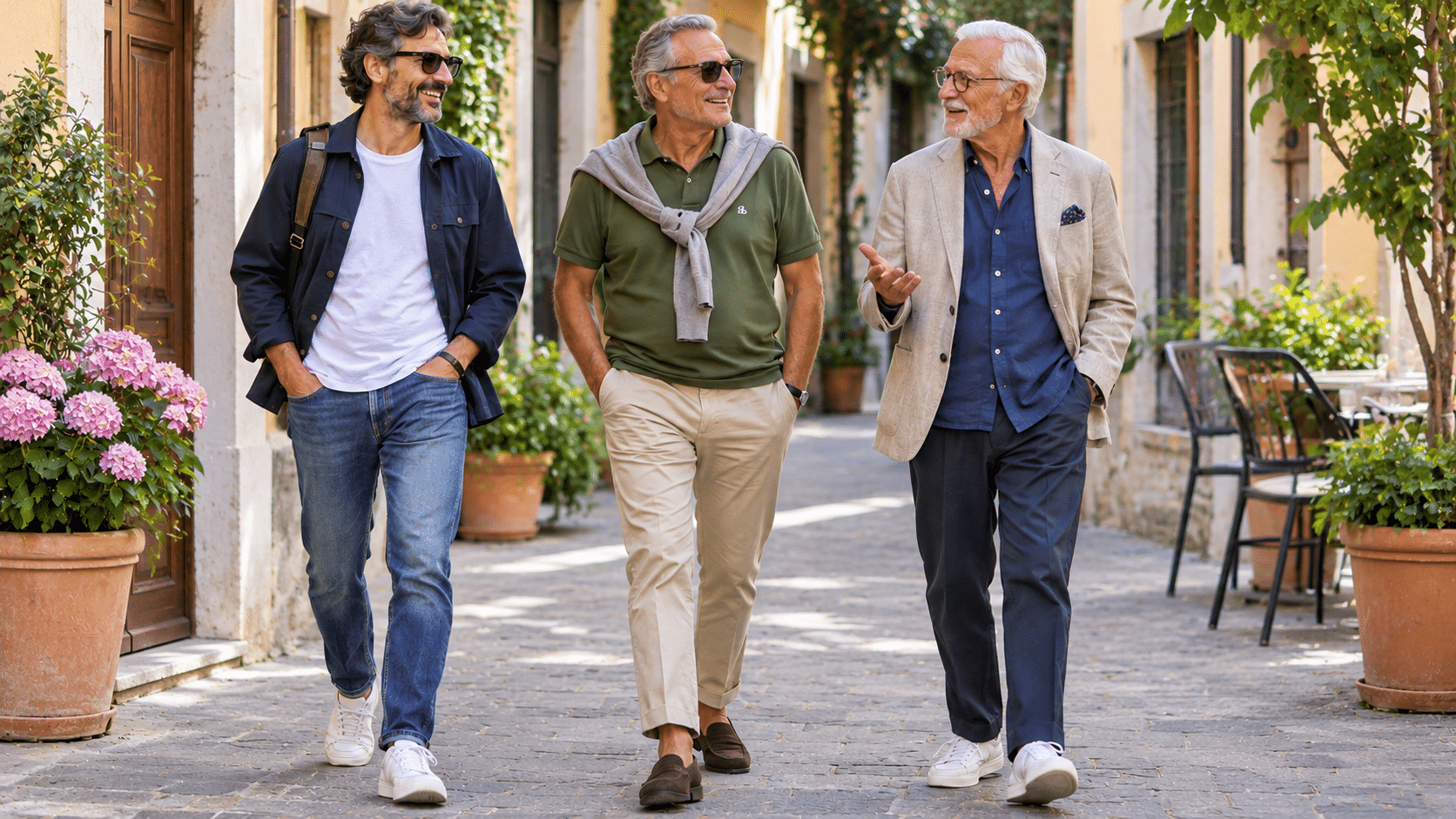
In Italy, men in their fifties, sixties, seventies, and beyond demonstrate that getting older doesn’t require abandoning contemporary fashion. Some prefer classic tailoring and traditional leather shoes. Others wear jeans, sneakers, polo shirts, and casual jackets. Many combine the two approaches.
There is no single uniform for mature Italian men, and that is precisely what makes the subject interesting.
The most successful approach to men’s fashion after 50 is not about looking younger. It is about finding clothes that fit well, feel comfortable, and reflect individual personality.
Italian fashion offers plenty of inspiration, but the most useful lessons often come from everyday clothing rather than designer runways.
Italian Style After 50: More Than Expensive Clothes
Italy’s international fashion identity is closely associated with luxury designers, fine tailoring, leather craftsmanship, and sophisticated accessories.
But most Italian men do not dress like models in a Milan fashion show.
Walk through an ordinary Italian town and you will encounter everything from traditional blazers and polished loafers to jeans, lightweight jackets, and contemporary sneakers.
The distinctions depend on personal taste, occupation, climate, and lifestyle rather than age alone.
A man working in Milan’s financial district may dress differently from someone spending his days in a coastal Tuscan town. A businessman in his sixties might enjoy traditional suits, while a retired teacher of the same age may prefer casual trousers and sweaters.
Both can look stylish.
The broader history of these clothing traditions is explored in Italia Mia’s guide to Italian Fashion: History, Style, Designers and the Meaning of Made in Italy.
One of the most recognizable qualities of Italian menswear is the attention given to proportions, materials, and the way garments work together.
A simple outfit can look considerably more attractive when those details are right.
Comfort Is Essential, but Fit Makes the Difference
Many men begin to reassess their wardrobes in their fifties.
Clothes that once seemed perfectly acceptable may become less appealing if they feel restrictive, require constant adjustment, or make everyday movement uncomfortable.
The solution is not necessarily buying larger clothes.
Oversized shirts, excessively loose trousers, and poorly proportioned jackets can make an outfit appear less considered.
Instead, the objective is to find clothing that provides room to move while maintaining a flattering silhouette.
Choosing the Right Trousers
Trousers are a good starting point.
Straight-leg or gently tapered styles provide versatility without the restrictions of extremely slim cuts.
Chinos are particularly useful because they can be dressed up or down depending on the occasion.
A navy pair can work with a casual shirt and loafers, while beige or olive chinos pair naturally with polo shirts and sneakers.
Comfort at the waist is important, but so are the rise and length.
Trousers that gather excessively around the ankles can make the legs appear shorter. A small alteration may improve the entire outfit.
Shirts That Fit Without Feeling Tight
Casual button-down shirts, linen shirts, and cotton polos are excellent choices for men over 50.
The shoulder seam should sit naturally, while the body should allow comfortable movement without excessive fabric.
T-shirts also remain perfectly appropriate at any age.
A plain, well-fitting T-shirt worn with good jeans can be more attractive than an expensive shirt that fits badly.
Jackets Without the Stiffness
Traditional tailoring is no longer the only way to look elegant.
Unstructured blazers, overshirts, lightweight field jackets, and casual zip-front jackets provide modern alternatives.
A soft navy blazer with jeans and clean sneakers, for example, can create an attractive combination without looking formal.
This balance between casual and polished clothing is central to the practical advice in our How to Look Like a Local in Italy: Clothing and Style Guide.
Six Wardrobe Essentials for Men Over 50
An effective wardrobe does not need to be extensive.
A relatively small collection of versatile clothing can cover work, travel, weekends, informal dinners, and everyday activities.
1. Jeans That Actually Fit
Jeans are among the most useful garments in contemporary menswear.
There is no reason to stop wearing them at 50, 60, or 70.
Dark blue, medium blue, and black denim are easy to combine with shirts, sweaters, and jackets.
Avoid choosing a cut simply because it is fashionable. The shape should complement the body and provide enough room for comfortable movement.
2. Chinos and Casual Trousers
Chinos offer a slightly more polished alternative to jeans.
Navy, beige, grey, and olive are particularly versatile colors.
Cotton trousers with a little stretch can be comfortable for everyday use, although the overall construction and fabric quality matter more than the presence of elastane alone.
3. Polo Shirts and Good T-Shirts
Polo shirts are ideal for men who want something more structured than a T-shirt without the formality of a traditional shirt.
A well-made polo in navy, white, burgundy, green, or another flattering color can work with both jeans and chinos.
Plain T-shirts are equally useful when their fit, neckline, and fabric are appropriate.
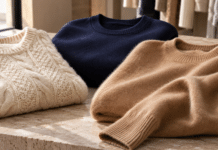
4. Lightweight Sweaters and Knitwear
Knitwear is one of the strengths of Italian menswear.
Fine wool sweaters, cotton knits, cardigans, and knitted polos can make casual clothing look more refined.
The important considerations are softness, weight, fit, and care requirements.
A sweater that feels wonderful in the shop but requires impractical maintenance may not be the right everyday purchase.
Italian brands such as Roberto Collina offer interesting examples of knitwear that combines traditional craftsmanship with contemporary shapes.
For more labels worth exploring, see Italian Fashion Labels Beyond the Biggest Names.
5. A Versatile Casual Jacket
A good jacket can transform an otherwise simple outfit.
An unstructured blazer, field jacket, or attractive overshirt works with many combinations.
Rather than buying several specialized jackets, consider choosing one or two that can be worn frequently.
The best option depends on the local climate and personal lifestyle.
6. Comfortable, Stylish Shoes
Footwear deserves particular attention.
Modern sneakers, casual loafers, walking shoes, and soft leather shoes can all be appropriate for mature men.
A stylish shoe is of limited value if it becomes uncomfortable after an hour.
Look for adequate toe room, a secure heel, appropriate cushioning, and a sole suitable for the intended activity.
Sneakers After 50: An Essential Part of Modern Italian Style
Sneakers are no longer exclusively associated with sports or younger generations.
They have become a normal part of Italian everyday fashion.
Simple leather sneakers can work with jeans, chinos, and casual jackets. Canvas sneakers provide a lighter alternative in warm weather, while technical walking shoes are more appropriate for long days on foot.
Italian brands offer a wide range of options.
Superga is known for its classic canvas styles, Diadora for its sporting heritage, and Geox for footwear that combines casual designs with comfort-oriented features.
The differences between individual models are important, particularly when considering materials, fit, and manufacturing origin.
Italia Mia compares these options in Italian Sneakers Beyond the Luxury Labels: Brands, Prices and Everyday Style.
Shop Casual Men’s Footwear
- Geox men’s shoes on Amazon Italy
- Skechers men’s casual shoes on Amazon Italy
- Ecco men’s casual shoes on Amazon Italy
Affiliate disclosure: As an Amazon Associate, Italia Mia earns from qualifying purchases, at no additional cost to readers.
Colors and Personal Style After 50
Men over 50 are sometimes encouraged to restrict themselves to navy, grey, brown, beige, and other neutral colors.
These shades are useful because they combine easily, but they should not become compulsory.
Color can make a wardrobe more expressive.
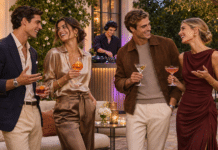
A burgundy sweater, olive jacket, patterned shirt, or pair of colorful sneakers can introduce personality without overwhelming an outfit.
One useful approach is to combine mostly neutral garments with one more distinctive piece.
For example, navy chinos and a simple jacket can provide a balanced foundation for a brighter shirt.
The objective is not to dress conservatively or extravagantly.
It is to find a combination that feels natural.
There is no age at which a man must abandon interesting colors or contemporary clothing.
Looking Modern Without Trying to Look Younger
There is a difference between wearing contemporary fashion and attempting to imitate someone half your age.
A modern jacket, attractive sneakers, well-cut jeans, or unusual sweater can suit a man in his sixties or seventies just as well as someone in his thirties.
The issue is usually not age but proportion, coordination, and personal preference.
Some fashion trends translate easily into mature wardrobes. Others are less practical.
Oversized trousers, exaggerated silhouettes, distressed denim, and highly decorative garments may appeal to certain individuals but are not universally flattering.
The best approach is selective.
Choose the contemporary elements that genuinely suit your appearance and everyday life.
Ignore the rest.
Personal style becomes more satisfying when fashion is treated as an opportunity rather than an obligation.
Dressing Well in Your 50s, 60s and 70s
Although age should not dictate clothing choices, changes in lifestyle may influence wardrobe priorities.
In Your 50s: Refining Your Wardrobe
Many men in their fifties still need clothing suitable for professional environments, business travel, and social occasions.
Versatile combinations become particularly valuable.
A soft blazer, attractive trousers, quality knitwear, and comfortable shoes can move between work and leisure without requiring a complete change of clothing.
This is often a good time to reconsider garments that no longer fit or suit current habits.
In Your 60s: Greater Versatility
Changes in work schedules and lifestyle may create opportunities for a more relaxed wardrobe.
Casual clothing can become more important without sacrificing elegance.
Comfortable trousers, lightweight jackets, contemporary sneakers, and adaptable layers provide plenty of flexibility.
Men who enjoy fashion can continue experimenting with colors, materials, and combinations.
In Your 70s and Beyond: Dressing for Yourself
At 70 and beyond, comfort and practicality may become increasingly important, but neither requires abandoning style.
Jeans, modern sneakers, colorful shirts, and casual jackets remain perfectly suitable.
Some men prefer classic tailoring. Others enjoy contemporary clothing.
There is no reason that a 75-year-old cannot be more adventurous in his clothing choices than someone in his fifties.
These distinctions are not rigid categories. Personal taste matters more than the number of birthdays celebrated.
Buying Clothes in Italy Without Spending a Fortune
Italy’s reputation for luxury fashion can make visitors assume that dressing well requires a large budget.
In reality, affordable clothing is widely available.
Chains such as OVS, Calliope, Piazza Italia, Alcott, and UPIM offer casual clothing, knitwear, shirts, jackets, and everyday essentials at accessible prices.
International retailers provide additional options.
Independent boutiques and local shops can also be worth exploring, particularly during seasonal sales.
The most important purchasing decision is whether a garment fits properly and will be worn regularly.
An inexpensive jacket that works with several existing outfits may provide better value than an expensive designer piece purchased impulsively.
Italia Mia’s Affordable Fashion Shops for Men and Women in Italy explains where to shop, what different retailers offer, and how to find better prices.
Is Designer Fashion Worth It After 50?
Luxury clothing can be satisfying, particularly when it offers excellent materials, thoughtful construction, or distinctive design.
But a recognizable label does not automatically guarantee superior quality.
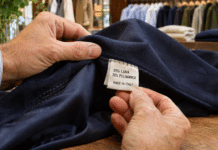
When buying more expensive clothing, examine the fabric composition, stitching, lining, fit, and care requirements.
Italian fashion includes many interesting labels beyond the familiar international names.
For shoppers interested in premium and designer pieces, Italia Mia’s guide to Made in Italy for Less: Where to Shop Clothing, Bags and Accessories on Italist offers a practical introduction to browsing Italian boutique fashion online.
The objective should be to buy better clothes, not simply more expensive ones.
Dressing for Travel and an Active Lifestyle
Travel is an important consideration when building a practical wardrobe.
Whether visiting Italian cities or traveling abroad, clothing needs to accommodate walking, public transportation, changes in temperature, and different social situations.
A versatile travel wardrobe might include jeans or chinos, comfortable shoes, several coordinated tops, a sweater, and a lightweight jacket.
The ideal pieces can be combined in different ways without requiring an entirely separate outfit for every occasion.
A simple shirt and casual blazer can make everyday trousers suitable for an evening restaurant visit.
Layering is particularly helpful when moving between indoor and outdoor environments.
The objective is to enjoy the journey without spending unnecessary time worrying about clothing.
The Italian Idea of Bella Figura
One of the most interesting concepts associated with Italian personal style is bella figura.
The expression is often translated as making a good impression, but its meaning extends beyond physical appearance.
It involves presentation, manners, dignity, and behaving appropriately in different social situations.
Clothing plays a part, but an expensive suit is not automatically evidence of good taste.
A man wearing clean, well-fitting jeans, comfortable shoes, and a simple shirt can make an excellent impression.
Conversely, someone dressed in expensive designer clothing may appear uncomfortable or inappropriately dressed for the occasion.
The ideal is not extravagance but consideration.
Italia Mia explores the cultural meaning of this tradition in La Bella Figura: The Italian Art of Making a Good Impression.
For men over 50, this idea offers a useful approach to fashion.
There is no need to impress people through conspicuous spending or exaggerated clothing.
Looking comfortable, well presented, and appropriately dressed can be far more effective.
Common Fashion Mistakes Men Over 50 Can Avoid
There are no universal rules for mature men’s clothing, but several habits can make a wardrobe less attractive or practical.
- Buying clothes that are too large. Relaxed clothing can be stylish, but excessive fabric may distort proportions.
- Wearing uncomfortable shoes. Footwear should suit daily activities rather than appearance alone.
- Following every trend. Contemporary fashion is worth exploring selectively.
- Avoiding color completely. Neutral clothing is useful, but personal expression should not disappear with age.
- Ignoring alterations. Adjustments to trouser length, sleeves, and waist fit can significantly improve clothing.
- Buying clothes for occasions that rarely happen. The wardrobe should reflect actual lifestyle needs.
- Assuming casual means careless. Jeans, T-shirts, and sneakers can look attractive when fit and coordination are considered.
Perhaps the greatest mistake is allowing age to dictate personal style.
Personal Style Is Not About Age
Fashion after 50 can be more enjoyable than fashion at 25.
Experience brings a clearer understanding of personal preferences, body proportions, and the clothing that works in everyday life.
Some men continue to enjoy traditional Italian tailoring. Others prefer relaxed casual clothing. Many combine classic pieces with contemporary styles.
There is room for all these approaches.
Dressing well does not require a large wardrobe, expensive labels, or a determination to appear younger.
It requires attention to fit, comfort, quality, and individual taste.
The best fashion advice for men over 50 is simple: wear clothes that suit the person you are today, not the age someone expects you to look.