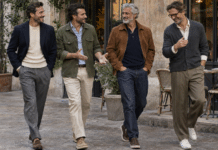
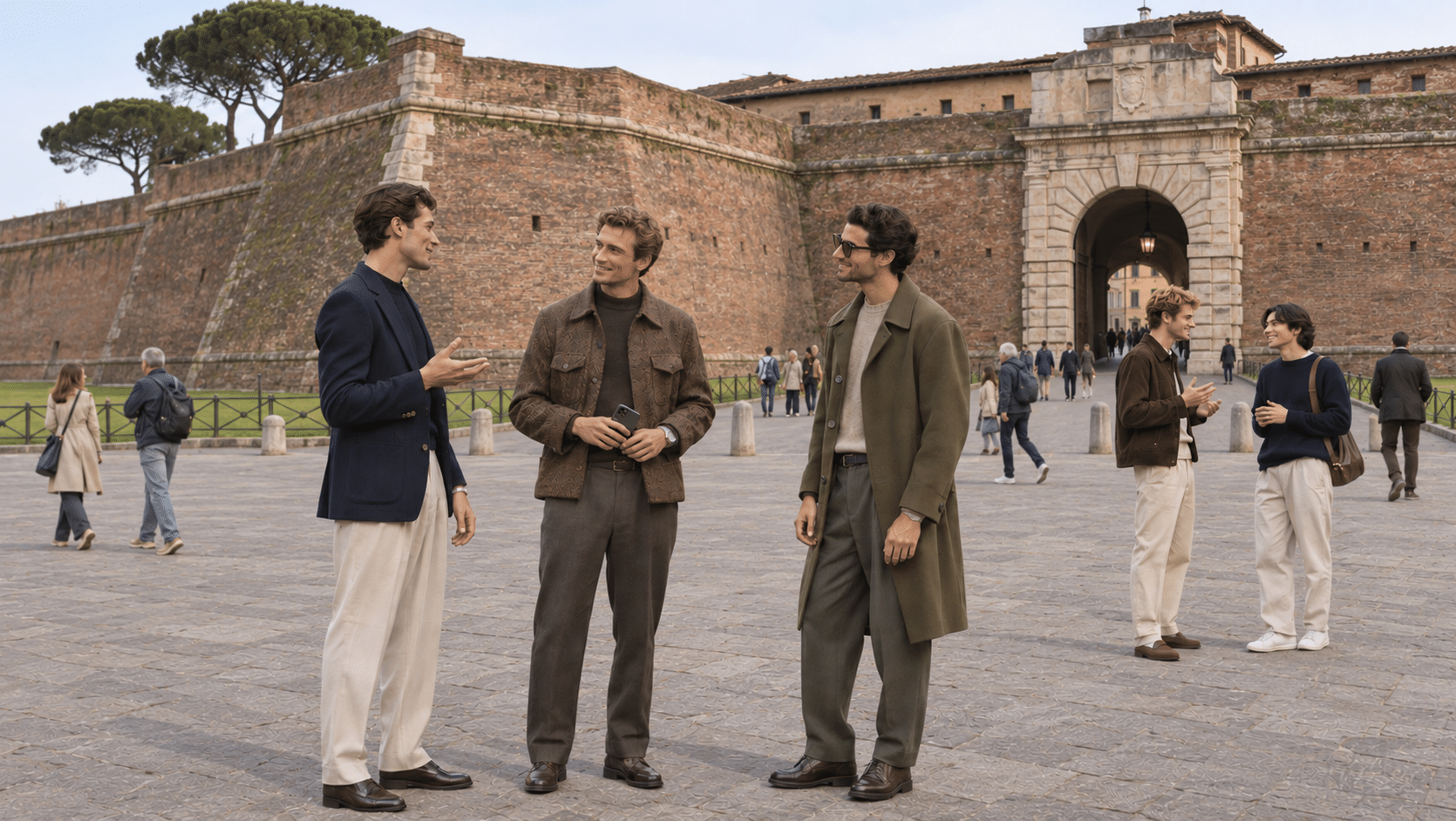
A photograph of Pitti Uomo can make the event look like an elaborate competition in dressing well. Men in beautifully cut jackets pause for cameras, coats are arranged over shoulders, and familiar wardrobe pieces appear in unexpected combinations.
Those images are part of its appeal. But the fair’s deeper influence comes from the meetings behind them: a retailer discovering a label, a designer explaining a fabric, or a buyer deciding which collection deserves space in a shop.
Held in Florence, Pitti Immagine Uomo connects the creative and commercial sides of menswear. Understanding that connection explains why the city remains important to fashion—and why visiting Florence during Pitti is different from attending the fair.
What Is Pitti Uomo?
Pitti Uomo is an international trade fair for men’s clothing, accessories and related lifestyle collections, organized by Pitti Immagine. Its main venue is the Fortezza da Basso, rather than the palace suggested by its name.
The fair takes place twice a year, normally in January and June. Exhibitors present collections to an international professional audience, while special projects and guest presentations give particular designers greater visibility.
It is useful to distinguish three things: the trade exhibition inside the Fortezza, separately controlled presentations and shows, and activities elsewhere in Florence. They can overlap in timing without sharing the same admission rules.
The main Pitti Uomo fair is not open to the general public. Its visibility on social media should never be mistaken for an invitation to buy a sightseeing ticket.
Why Florence Became a Fashion Meeting Place
Florence’s modern fashion story predates Pitti Uomo. In February 1951, Giovanni Battista Giorgini organized a presentation of Italian fashion at his Florence home for American buyers and journalists. From 1952, the Sala Bianca at Palazzo Pitti became a celebrated setting for Italian fashion shows.
Pitti Uomo itself began in September 1972. The organizer’s history describes its original purpose as promoting Italian menswear in major overseas markets, before the fair developed an increasingly international exhibitor base.
That distinction matters: the first Florence presentations and the first Pitti Uomo were separate milestones.
The enduring idea was to bring clothes and potential customers together in a setting that gave Italian design international attention. For the wider manufacturing background, see Italia Mia’s guide to Italy’s textile districts, including Como, Biella and Prato.
Florence gives that relationship a physical setting. Fashion is presented in a city where historic buildings and contemporary businesses share the same streets. Yet the clothes on show come from many countries: the host city provides a meeting place, rather than imposing a single national style.
How the Fair Influences What Men Wear
Pitti’s influence is easier to understand through a hypothetical example.
A shop owner discovers a small knitwear label, examines its samples, discusses prices and delivery, and later adds several pieces to the shop’s seasonal selection. Customers who have never heard of Pitti then encounter those clothes locally.
A journalist might notice the same label and include it in a report. Another retailer might recognize that its shapes or colors answer a gap in an existing collection.
This is how a trade fair can influence wardrobes without consumers following its daily coverage. Attention becomes commercially useful when it leads to distribution, relationships and repeat business.
Not every conversation produces an immediate order. In its published feedback from Pitti Uomo 104, the organizer included buyers describing both discovery and order-writing. The fair can be the start of a longer discussion rather than the final transaction.
Nor does appearing at Pitti guarantee success. A striking collection still needs appropriate pricing, dependable production and a clear customer. Its influence rests partly on bringing creative proposals into contact with those practical demands.
Tailoring Is Central, but Menswear Extends Beyond the Suit
Tailoring remains one of the most recognizable elements of Pitti’s identity. A jacket offers plenty to discuss: shoulder shape, lapel width, construction, length and the way the cloth moves.
For readers looking at photographs, those details are more useful than simply deciding whether an outfit looks expensive. Notice how a jacket sits over knitwear, how trousers balance the upper body, or how shoes change the formality of the whole combination.
An approachable lesson is to examine proportion before decoration. A comfortable jacket and well-chosen trouser length can do more for an outfit than several competing accessories.
But the official fair sections show how broad the wardrobe has become. Fantastic Classic focuses on formal menswear; Futuro Maschile explores contemporary clothing; Dynamic Attitude includes sportswear and streetwear; I Go Out considers outdoor apparel. Superstyling introduces more experimental aesthetics and silhouettes.
These categories create room for different answers to the same question: how do men want to dress now?
A tailored coat, technical jacket, knitted polo and practical shoe can all belong in that discussion. Italia Mia’s Italian Menswear Beyond the Suit turns that broader approach into everyday wardrobe choices.
Emerging Labels Need More Than a Beautiful Photograph
For an independent label, being noticed is only one challenge. The next is reaching people who can understand the collection, introduce it to customers and sustain a commercial relationship.
A focused trade environment gives buyers an opportunity to compare unfamiliar names with established brands. It also lets designers explain details that photographs can flatten: a textile’s texture, a garment’s weight or the reasoning behind an unusual shape.
Pitti’s current sections include A New Wardrobe, described by the organizer as a selection of small creative brands within Futuro Maschile. Its guest program provides another kind of platform, built around a particular designer’s vision.
The January 2027 announcement for Kartik Research offers a clear example. Founded by Kartik Kumra in New Delhi in 2021, the label emphasizes handwork, including handwoven textiles and hand embroidery. Pitti has announced a special Florence event for January 13.
The interesting point is how craftsmanship becomes a starting point for contemporary clothing. Readers can ask what the handwork contributes to the design, rather than treating it simply as a romantic story about production.
An emerging-label feature is most useful when it explains the clothes as well as the founder.
An International Conversation in an Italian City
Pitti’s identity includes international exchange alongside Italian manufacturing.
For January 2027, the announced guests also include Dunhill, the British menswear house under creative director Simon Holloway. Its planned Florence salon show on January 14 brings a different perspective from Kartik Research’s textile-led approach.
Reading those announcements together suggests why the fair remains interesting: heritage can lead to different contemporary results. British tailoring and Indian handwork do not need to become alike to belong in the same conversation.
It also helps to keep three ideas separate when shopping: the nationality of a brand, the location of a retailer and the manufacturing origin of a garment. Participation in an Italian fair does not mean every exhibited item was made in Italy.
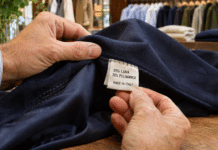
Our guide to reading an Italian clothing label explains what fabric, origin and care information can tell you.
How to Read Pitti Uomo Street Style
Street-style coverage is an accessible way to follow Pitti from home. It lets readers study clothing in movement and in combinations chosen by the wearer, rather than only as individual products.
But the photographs are a selection. A memorable outfit earns attention precisely because it stands out. It should not be treated as a survey of what Florentine residents—or Italian men generally—wear each day.
Use the images as a source of questions:
- Does a longer coat improve the balance of the outfit?
- How does a textured sweater change a formal jacket?
- Would that color combination work with clothes already in your wardrobe?
- Is the outfit comfortable enough for your own day?
The word sprezzatura often accompanies this kind of dressing: an appearance of ease that may involve careful choices. You can borrow an idea without recreating an entire look.
There is also a connection with la bella figura, the Italian art of making a good impression. That wider cultural concept includes behavior and appropriateness, giving personal presentation meaning beyond the photograph.
Can Anyone Attend Pitti Uomo?
No. The organizer’s visitor rules reserve the fair for eligible trade professionals and explicitly exclude fashion lovers and end customers. Registration requires approval and supporting documentation; buying a ticket is part of that process.
Press and exhibitors follow their respective procedures. Working somewhere in fashion does not automatically establish eligibility under the buyer rules.
For everyone planning a visit, these distinctions are essential:
| Activity | Access |
|---|---|
| Main trade fair at the Fortezza da Basso | Restricted professional access under the organizer’s rules |
| Guest-designer show or special presentation | Separate arrangements; check the specific organizer |
| Private brand appointment, dinner or party | Access determined by the host |
| An event explicitly advertised as public | Follow its stated booking, capacity and admission conditions |
| Florence’s shops and fashion museums | Ordinary opening and admission rules apply |
A city-center venue does not make an event public. Likewise, photographs taken in an outdoor area inside the fair do not mean that area is freely accessible.
Check the official visitor requirements before making plans.
Enjoying Florence’s Fashion Culture Without a Trade Pass
Visitors can still build an enjoyable fashion-focused stay around Florence’s public institutions and shops.
The Museum of Costume and Fashion at Palazzo Pitti offers historical context. The Ferragamo Museum provides another perspective through the company’s fashion heritage and exhibitions. Check current displays, opening arrangements and tickets before visiting. uffizi.it
Neither museum ticket provides entry to Pitti Uomo.
For activities specifically associated with fair week, wait for an explicit public-access announcement. Confirm the date, address and booking conditions directly with the venue. A listing or social-media photograph alone is not enough.
As of November 17, 2026, Pitti lists its next editions for January 12–15, 2027, and June 15–18, 2027. Those dates describe the fair calendar; they do not establish a public program.
Bring the Ideas Into Your Own Wardrobe
You do not need a trade badge to benefit from the clothing conversation.
Choose one idea worth trying: a more comfortable trouser shape, a textured layer beneath a jacket, or a coat that works with both formal and casual clothes. Then assess it against your own routine.
Affiliate disclosure: The following shopping links are affiliate links. Italia Mia may earn a commission if you make a purchase, at no additional cost to you.
For comparisons, browse men’s knitwear on Italist or men’s jackets and coats on Italist. These retail categories offer a way to compare wardrobe pieces, without implying that every listed brand exhibits at Pitti.
Check measurements, fabric composition, manufacturing information, the complete checkout price and current return conditions. Italia Mia’s guide to shopping on Italist offers further practical advice.
The strongest purchase is one you can already imagine wearing in several combinations. Pitti can supply the inspiration; your daily life supplies the test.
External Links
- Pitti Immagine Uomo: official dates, news and program
- Pitti Uomo: professional visitor requirements
- Pitti Immagine: official history
- Pitti Uomo: exhibition sections
- Kartik Research: January 2027 guest announcement
- Dunhill: January 2027 guest announcement
- Museum of Costume and Fashion: official information
- Ferragamo Museum: opening and ticket information