
In 1861, Italy acquired a national parliament and a king. Making the new country work would take considerably longer. A government could remove customs barriers and appoint officials; it could not immediately give every village a school, every household a reliable income or every citizen a voice.
The decades between unification and the First World War transformed Italy. Railways connected markets, education spread, factories expanded and millions of people sought work abroad. Political participation widened, but poverty, regional inequalities and the use of force against protest repeatedly challenged the monarchy’s claim to represent the nation.
Our earlier article, The Risorgimento: How Italy Became a Nation, follows the struggle for unity. This continuation asks what happened after that struggle produced a state: who governed it, how people experienced it and why its achievements remained contested.
A Kingdom Built Around Piedmont’s Institutions
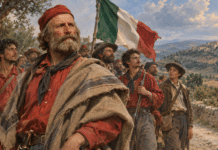
The Kingdom of Italy was proclaimed on March 17, 1861, under Victor Emmanuel II of the House of Savoy. Turin was its first capital; Florence followed in 1865, and Rome in 1871. Venetia joined the kingdom in 1866, while Italian troops entered Rome in September 1870.
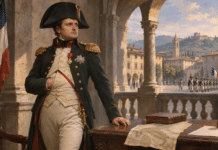
The new country retained the Statuto Albertino, the constitution granted to the Kingdom of Sardinia in 1848. It had an elected Chamber of Deputies and a Senate appointed by the king. The crown retained substantial powers, including the appointment of ministers, although governments increasingly depended on parliamentary support.
This was constitutional government with a narrow social base. Property, tax and literacy qualifications restricted the national electorate to a small minority of men. Women had no parliamentary vote.
Extending Piedmontese institutions offered administrative continuity, but it also encouraged the feeling that one former state had imposed its arrangements on the others. Officials had to reconcile different legal traditions and local expectations while creating a functioning national administration.
The State Arrives: Taxes, Soldiers and Officials
For many families, the kingdom first became tangible through obligations. Taxes had to be paid, young men could be called into the army, and officials enforced rules issued far from home.
The governments known as the Historical Right, dominant until 1876, prioritized administrative consolidation and public finances. Their leaders faced the cost of wars, inherited debts and the construction of national infrastructure.
The tax on milling grain, legislated in 1868 and applied from 1869, became an especially bitter symbol of the burden on ordinary people. Because it affected basic food production, it helped provoke unrest. It was eventually abolished in 1884.
Balancing the national accounts could be presented as responsible government. To a household struggling to buy bread, the same policy could look like evidence that national unity served somebody else.
Southern Resistance and the Limits of Unification
In parts of the south, the early kingdom confronted an armed conflict commonly called post-unification brigandage. The label covered overlapping phenomena: Bourbon loyalism, rural grievances, resistance to conscription, local feuds and criminal violence.
The Pica Law of 1863 established exceptional measures, including military jurisdiction in designated areas. The campaign against armed bands involved harsh repression and placed rural communities under intense pressure.
Neither a simple story of bandits defeated by progress nor one of a wholly united southern resistance explains the conflict adequately. Motives differed, and civilians could suffer from both armed groups and state forces.
The broader “Southern Question” concerned unequal opportunities, landholding, infrastructure, education and the relationship between local power and central government. Southern Italy itself was diverse. Its difficulties cannot be reduced to a single cause, and regional inequality remained a central problem long after the fighting subsided.
Schools and the Slow Spread of Italian
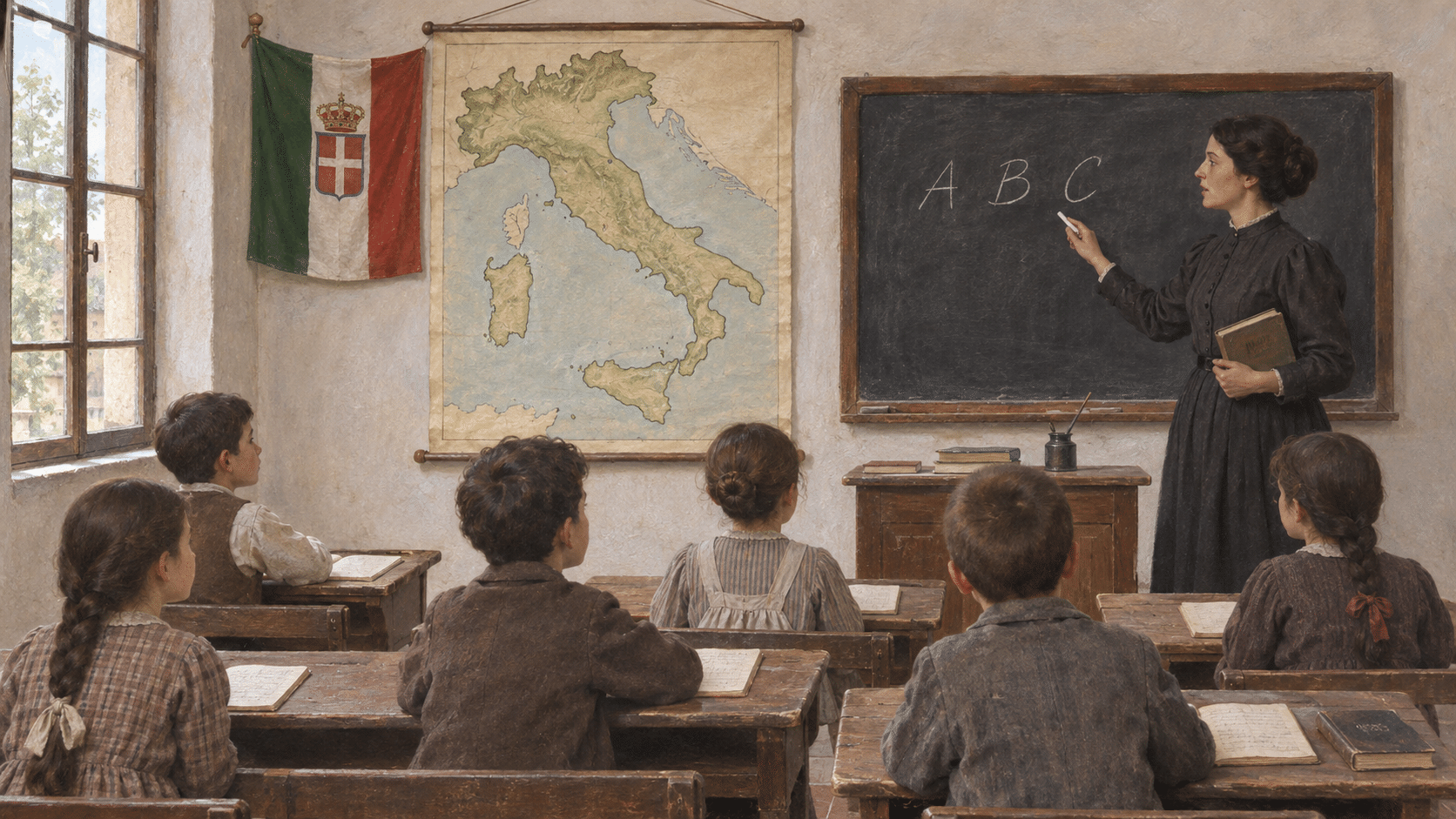
National identity had to be learned as well as proclaimed. Most inhabitants used regional languages or dialects in everyday life, while standard Italian was more established in writing and among educated groups.
Literacy figures show the scale of the challenge. Istat’s historical series puts illiteracy among people aged six and over at about 75 percent in 1861 and 37.6 percent in 1911. The improvement was substantial, but access to education remained uneven.
Schools were essential to change. Yet compulsory attendance meant little where classrooms were inadequate, teachers poorly supported or children’s work necessary to household survival. The Coppino Law of 1877 strengthened elementary schooling requirements, without instantly overcoming these obstacles.
Military service, administration, newspapers and movement between regions also brought people into contact with Italian beyond their home communities. National belonging gradually accumulated through repeated experiences: reading a schoolbook, writing a letter, meeting fellow soldiers or dealing with an unfamiliar official.
Local identities survived. Becoming Italian did not require forgetting one’s town, region or mother tongue.
Rome and the Catholic Church
Making Rome the capital fulfilled a central nationalist ambition, but created a lasting conflict with the papacy. Pius IX rejected the loss of his temporal sovereignty, and the kingdom’s attempts to regulate relations did not produce a mutually accepted settlement.
The papal policy known as the Non expedit discouraged, and subsequently prohibited, Catholic participation in national electoral politics. Its application evolved, and it never meant that Catholics withdrew from all public life.
Parishes, charitable institutions, associations and later Catholic social organizations remained deeply influential. The state could control the machinery of government without displacing these networks of trust and belonging.
The Roman Question was still unresolved in 1914. It would be formally settled through the Lateran agreements in 1929, under a very different political regime.
Parliament, Compromise and Trasformismo
The Historical Left’s arrival in government in 1876 brought a different parliamentary leadership, rather than a modern socialist government. Agostino Depretis became associated with reforms and with the practice called trasformismo.
This involved assembling broad parliamentary support across existing political groupings. Supporters saw a means of stabilizing the constitutional state; critics saw patronage, opportunism and the erosion of meaningful alternatives.
The problem reached beyond individual politicians. Where political influence depended on local notables and personal connections, formal representative institutions could coexist with limited accountability.
As workers’ organizations, socialist movements and Catholic associations developed, politics increasingly escaped the narrow world in which parliamentary leaders had originally operated. The kingdom had to respond to people who wanted to organize for themselves.
Railways, Factories and Uneven Prosperity
Economic integration changed the country’s possibilities. Railways helped move goods and workers, while a national market created opportunities that the old patchwork of states had constrained.
Industrial growth became especially visible around Milan, Turin and Genoa. Textiles, engineering and other manufacturing activities expanded, with electricity opening further possibilities. Yet the transformation was neither geographically uniform nor complete: agriculture remained central to Italian life.
The distinction between a modern north and an unchanging south is too crude. Poverty existed in northern rural districts, and southern cities had their own commercial and industrial activity. Nevertheless, the concentration of much new industry in the northwest helped reinforce regional disparities.
Modernization also changed social relationships. Wage workers could organize around shared workplaces; employers confronted collective demands; and government increasingly had to decide whether a strike was a dispute to be negotiated or a threat to public order.
Why So Many Italians Left
The new nation was also a country of departures. Mass emigration accelerated in the late nineteenth century and reached a prewar peak in 1913.
People left for the United States, Argentina, Brazil and European destinations, among others. Migration involved different regions at different times; it was never exclusively southern or exclusively transatlantic.
For families, departure could be a strategy to repay debts, buy land or diversify income. Some migrants settled permanently, while others returned or travelled repeatedly. Money sent home linked Italian households to wages earned abroad.
National migration totals require care: recorded departures are not necessarily counts of distinct individuals, because the same person might leave more than once.
Emigration exposed the kingdom’s difficulty in providing livelihoods at home, but it also expanded families’ choices and created enduring international connections. For many descendants of Italian emigrants, the history of these decades survives in letters, passenger records and the story of a relative who crossed an ocean.
Protest and the Crisis of the 1890s
Social conflict tested the liberal state. Francesco Crispi’s government suppressed the Sicilian Fasci, a movement of workers and peasants, in 1894. These organizations should not be confused with the later Fascist movement: fascio meant a group or association.
In Milan in May 1898, troops commanded by General Fiorenzo Bava Beccaris fired on crowds during unrest associated with high bread prices. The bloodshed became a defining example of the state treating social protest as a military problem.
King Umberto I’s decoration of the general sharpened hostility to the monarchy. In July 1900, the anarchist Gaetano Bresci assassinated the king at Monza. Victor Emmanuel III succeeded him.
The crisis made a fundamental question harder to avoid: could the constitutional monarchy accommodate mass participation, or would it defend itself through repression?
Giolitti and the Expansion of Political Life
Giovanni Giolitti dominated much of the political period from 1901 to 1914, although he was not continuously prime minister. His approach sought to broaden support for the liberal state and to avoid treating every organized labour dispute as an insurrection.
Reform and negotiation coexisted with patronage and electoral manipulation. The opportunities available to organized workers did not necessarily extend equally to rural labourers or to communities where local power remained coercive.
The electoral reform of 1912 greatly widened male voting rights. It included men aged thirty and over regardless of literacy, while retaining qualifications for younger men. The enlarged electorate voted in 1913. Women remained excluded.
The Gentiloni electoral arrangements that year helped many liberal candidates secure Catholic support in return for commitments on issues important to Catholic voters. They demonstrated both the growing importance of organized constituencies and the strain on the old parliamentary system.
A Nation Seeking an Empire
Italy’s leaders also sought recognition abroad. The Triple Alliance with Germany and Austria-Hungary, concluded in 1882, placed the kingdom within Europe’s great-power diplomacy, despite Italian nationalist claims to territories still ruled by Austria-Hungary.
Colonial expansion exposed the distance between the language of national liberation and the practice of ruling other peoples. Italy established the colony of Eritrea in 1890 and expanded its position in Somalia. At Adwa in 1896, Ethiopian forces defeated an Italian invasion, a major victory for Ethiopian independence and a severe blow to Crispi’s government.
In 1911, Italy attacked the Ottoman Empire to seize Tripolitania and Cyrenaica, the territories associated with modern Libya. The 1912 peace settlement did not mean that Italy securely controlled the interior: local resistance continued.
Colonial warfare brought violence to African populations and consumed resources while many Italians remained poor. Empire was part of liberal Italy’s history well before Mussolini came to power.
1914: An Unfinished Political Project
By 1914, Italy had stronger national institutions, a larger electorate and a more developed economy than in 1861. It also faced sharp disputes over work, religion, inequality and the meaning of patriotism.
Giolitti left office in March. The protests and clashes of Red Week in June revealed continuing social tensions. When the European war began that summer, Italy initially remained neutral, despite its membership in the Triple Alliance. It entered the conflict on the Allied side in May 1915.
The kingdom did not end in 1914; it survived until 1946. What ended was the long prewar setting in which its liberal institutions had developed.
Its achievements were real, but shared citizenship remained incomplete. A child learning to read, a worker organizing a union and an emigrant sending money home all participated in making Italy. Their experiences explain the nation’s development as much as royal ceremonies, parliamentary bargains or military campaigns.
Books for Further Reading
As an Amazon Associate, Italia Mia earns from qualifying purchases. The links below open Amazon searches so you can compare editions and formats.
Christopher Duggan, The Force of Destiny: A History of Italy Since 1796. A broad history that places the liberal kingdom within the longer development of Italian nationalism and political life.
Find on Amazon.com · Find on Amazon.it
R. J. B. Bosworth, Italy, the Least of the Great Powers: Italian Foreign Policy Before the First World War. A more specialized choice for understanding the kingdom’s international ambitions and the politics behind them.
Find on Amazon.com · Find on Amazon.it
External Links
- Istat: The Long Journey of Education in Italy — Historical literacy and schooling data, in Italian.
- Treccani: Government and Parliament after Unification — Institutions and parliamentary politics, in Italian.
- Treccani: Giuseppe Pica — Background to the 1863 legislation against brigandage, in Italian.
- Treccani: Giovanni Giolitti — A detailed political biography, in Italian.
- Centro Studi Emigrazione: A Statistical History of Italian Emigration — Historical migration series and their limitations, in Italian, PDF.
- Treccani: Italy — Historical Dictionary — Broader historical context, in Italian.