
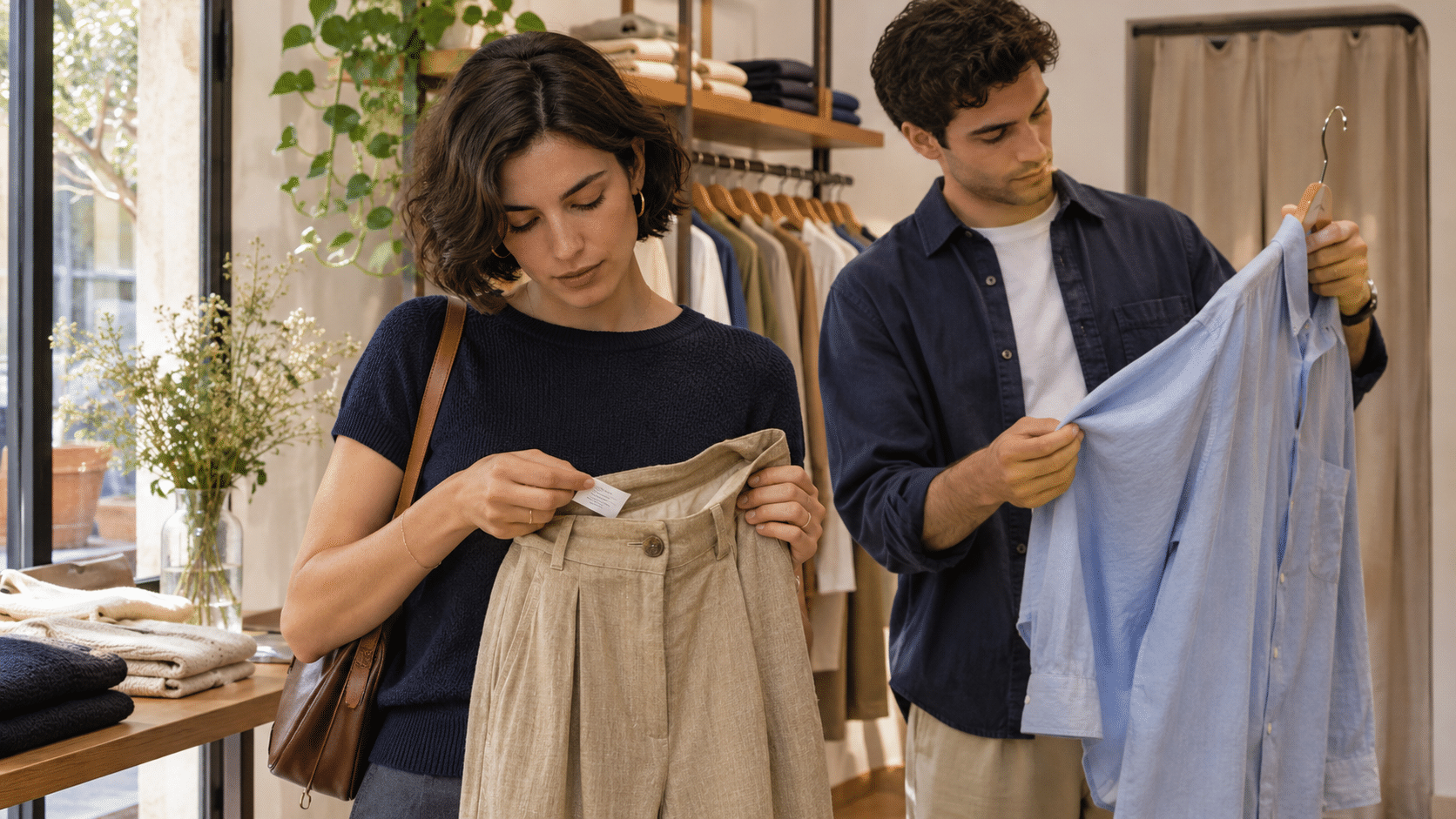
A pale linen trouser can look perfect on the rail and turn sheer as soon as the fabric stretches across the knees. A beautiful wool jacket can feel surprisingly restrictive once a sweater goes underneath. And a pair of jeans that looks slightly loose in the mirror may be the only pair that feels comfortable after an hour on a train. Shopping for clothes in Italy gets easier when every garment has a job and every fitting-room visit includes a little movement.
Where to start shopping for clothes in Italy
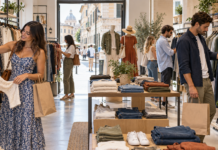
Choose the shop according to what the wardrobe needs. A chain such as OVS is a practical first stop for comparing several cuts of jeans at once. An independent boutique is worth trying when the problem is more specific, such as finding trousers that sit higher at the waist or a jacket that fits over knitwear. Ask the assistant to bring two cuts in the same approximate size. Trying those back to back often tells you more than trying three sizes of one cut.
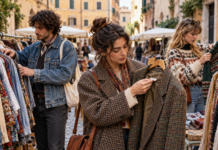
A street market or vintage shop can reward a slower look. Check under the arms, around the collar and at the seat of trousers, where wear can show first. Open and close the zip and look for small holes in knitwear, especially around folds and seams. At a market stall, ask whether there is somewhere to try things on. If there is no fitting room, bring the waist and inside-leg measurements of a pair of trousers that already fits, or compare the measurements of a favourite jacket laid flat.
For a designer outlet, go with a maximum price and a specific use in mind. A discounted coat still has to fit over layers, and an awkward jacket can become expensive if it needs work at the shoulders and sleeves. Keep the outlet trip for pieces worth comparing across shops. For locations and transport, see the Italia Mia guide to shopping outlets in Italy.
Which fabrics work for the way you dress?
Look for composizione on the label. The EU’s textile labelling rules require fibre composition to be shown for covered products sold in the EU. When the label lists a separate fodera (lining), check that too. A coat’s outer fabric and the fabric next to the arms can behave quite differently. European Commission textile-labelling guidance
| Fabric | When it makes sense | What to check in the shop |
|---|---|---|
| Linen or linen–cotton | Warm days, holidays and relaxed summer outfits | Hold pale colours up to the light, then sit down in the garment to see how it creases and whether pockets show through. |
| Cotton denim with elastane | Everyday jeans for commuting, travel and long stretches of sitting | Bend both knees, stand up and see whether the fabric recovers. Check whether the waistband digs in when seated. |
| Merino wool | Fine layers for cool weather, offices and travel | Try it against the neck or wrists, then check the care label and see whether it fits comfortably under a jacket. |
| Viscose or a viscose blend | A fluid blouse, dress or skirt | Check whether the fabric clings, whether seams pull under movement and how the label says to wash and dry it. |
| Wool blends and lined fabrics | Jackets and coats that need structure | Feel the fabric at the collar, look for puckering at seams and reach forward to check how much give the lining allows. |
Weight, weave and finish also matter. A dense cotton shirt can feel warm in July, and a loosely knitted wool sweater can let wind through on a platform. If comfort is hard to judge under shop lighting, put on the piece with the layer that would go underneath it and keep it on while checking the fit. For outfit ideas built around colder weather, see Italia Mia’s guide to Italian fall and winter fashion.
What to check in the fitting room
Take a normal step, sit down and reach for an imaginary shelf. Then look at the garment from the side and back. A front-facing mirror can hide a neckline that slips backward, a waistband that gaps or a jacket that rides up whenever the arms move.
- Trousers and jeans. The waistband should feel comfortable when seated. Look for pocket openings that pull apart, fabric pulling across the fly and a rise that feels too short when bending. Bring the shoes that will usually go with the trousers if hem length matters.
- Shirts and blouses. Cross the arms and reach forward. Watch for the button placket opening across the chest or the armholes digging in. Try a partial tuck if that is how the shirt will be worn.
- Jackets and coats. Button or zip the garment over a realistic layer. Check the shoulder line and collar, then reach forward as if holding a steering wheel. With a deliberately dropped shoulder, judge the overall balance and room to move.
- Dresses and skirts. Take a full stride and sit down. Check where the hem or slit ends in both positions, whether the lining shifts and whether a bra strap or pocket bag becomes visible.
- Knitwear. Watch what happens to the neckline and cuffs after moving. If a knit feels scratchy around the neck during a short try-on, consider whether the outfit will always allow a layer underneath.
If you regularly shop between brands or online after trying something in Italy, use a flexible tailor’s tape measure on Amazon.it to record the dimensions of clothes that already fit. Compare garment measurements with garment measurements. When a retailer provides a body-size chart, compare it with body measurements instead.
Three real examples of what to compare
- Linen-blend trousers at Uniqlo Italia. Its striped straight-leg model 487481 lists a main fabric of 53% linen and 47% cotton, with a separate polyester–cotton pocket fabric. Use this kind of listing to check which fabric the headline describes. In the fitting room, look at the pocket outline in bright light and see how much room the straight leg gives when sitting. See the Uniqlo Italia product listing
- Stretch jeans at OVS. The Italian retailer groups several women’s cuts under stretch jeans, including a regular-fit cotton stretch denim example. Try a regular cut and a wider one at a similar rise. If both feel snug when standing, sit down in both before deciding whether a different cut or a different size solves the problem. Browse stretch jeans at OVS
- A full-zip merino jumper at Boggi Milano. The retailer lists the yarn composition as 100% wool and describes the garment as merino. Try this type of knit over a shirt, then add a jacket. The test is whether the collar, zip and extra layer sit comfortably together without bunching. See the Boggi Milano product listing
Decide what is worth altering before paying
A straightforward trouser hem may make sense if the waist, rise and seat already fit. Shortening a jacket sleeve can be more involved when the cuffs have working buttonholes or the sleeve is lined. Ask the shop whether alterations are available, what they cost and when the garment will be ready. If visiting Italy for a few days, allow time to try the finished garment with the right shoes or layers before leaving.
Si può accorciare l’orlo? asks whether the hem can be shortened. Posso cambiarlo se non va bene? asks whether an exchange is possible. Confirm the shop’s policy before paying, especially with sale items or anything due for alteration. Keep the receipt and tags while deciding.
Before buying, name two outfits the piece will work with using clothes you already own. Check how often it will need cleaning and include alterations in the real price. A jacket that can cover work, dinner and weekend travel may earn its place quickly. A bargain that needs new shoes, a new shirt and a better-fitting coat before it can be worn asks more of the wardrobe than the price tag suggests.
This article contains paid Amazon links. Italia Mia earns from qualifying purchases.
External Links
- European Commission guide to textile labels
- Uniqlo Italia linen-blend trousers
- OVS women’s stretch denim
- Boggi Milano merino jumper