 Moving to Italy can mean living in a Renaissance city, retiring near the sea, working remotely from a medieval town or building a new career in one of Europe’s largest economies. The lifestyle is appealing, but a successful move requires more than finding a beautiful home and booking a flight.
Before relocating, you must understand your immigration status, residence requirements, housing options, healthcare access, taxes and realistic living costs. This guide brings those subjects together in one place while directing readers to more detailed Italia Mia resources when necessary.
Important: Immigration, tax and residence rules can change. Requirements may also vary by nationality, visa category and Italian consulate. Confirm current information with the appropriate Italian authority before making financial or legal commitments.
Can You Legally Move to Italy?
The first question is not where you would like to live. It is whether you have the legal right to establish residence in Italy.
The answer depends primarily on your citizenship and reason for moving.
EU, EEA and Swiss Citizens
Citizens of the European Union, European Economic Area and Switzerland generally do not need an Italian visa to live, work or study in Italy.
They can enter with a valid passport or identity card. However, someone remaining longer than three months may need to register their residence with the local Comune, or municipal authority, and demonstrate the basis for their stay.
Depending on the circumstances, this may include employment, self-employment, study or sufficient financial resources and health coverage. EU guidance explains that registration may be required after the first three months.
Non-EU Citizens
Americans, Canadians, British citizens and other non-EU nationals generally need an appropriate Italian national visa if they intend to live in Italy for more than 90 days.
Italy does not have one universal “expat visa.” The correct route depends on what you intend to do:
- Work for an Italian employer
- Work remotely for a foreign employer
- Operate as a qualified freelancer
- Study
- Retire or live from passive income
- Join a family member
- Establish a qualifying business
- Make a qualifying investment
A tourist stay does not automatically provide the right to establish residence or work in Italy. Buying an Italian property does not grant immigration status either.
For a detailed comparison of the available routes, read Visas to Move to Italy: Digital Nomad and Expat Guide.
The Principal Italian Visa Routes
Although each application must be evaluated individually, prospective expats commonly investigate the following options.
Digital Nomad and Remote Worker Visa
This route is intended for qualifying highly skilled non-EU professionals who can perform their work remotely.
It distinguishes between independent digital nomads and employees working remotely for a company. Applicants must satisfy requirements involving professional qualifications or experience, income, accommodation, health insurance and the nature of their work.
It is not simply a general visa for anyone earning money online.
Elective Residence Visa
The Elective Residence Visa is designed for people who can support themselves through stable passive financial resources, such as pensions, investments, annuities or qualifying rental income.
It is especially relevant to retirees, but it does not permit employment in Italy. Someone intending to continue professional or freelance work should investigate another category.
Employment Visa
Most non-EU citizens who want to work for an Italian employer need an employment-based immigration route. The employer normally has an important role in obtaining the required authorization before the worker applies for a visa.
Employment entry can also be affected by the Decreto Flussi, Italy’s quota system for certain categories of non-EU workers.
Learn more in Finding a Job in Italy: Jobs, Requirements and Advice for Expats.
Self-Employment Visa
Traditional self-employment visas can apply to entrepreneurs, professionals and other independent workers, but requirements vary considerably. Professional recognition, authorizations, financial resources and entry quotas may apply.
Do not assume that freelance work automatically qualifies for either a self-employment visa or the Digital Nomad Visa.
Student and Family Visas
Students admitted to qualifying Italian educational programs may apply for a study visa. Family reunification and family-member routes are available in certain circumstances, but eligibility depends on the relationship and the status of the person already residing in Italy.
Investor Visa
Italy also offers a specialized program for non-EU citizens making qualifying investments or philanthropic contributions. This is intended for applicants with substantial capital and should not be confused with purchasing a private home.
What to Do After Arriving in Italy
Receiving a visa is not the final step.
A non-EU citizen entering Italy with a national long-stay visa generally must apply for the corresponding Permesso di Soggiorno, or residence permit, within eight working days of arrival. The Italian Ministry of Foreign Affairs confirms this requirement.
Depending on the permit, the process may begin through a designated post office using the appropriate application kit, followed by an appointment at the Questura, the provincial police authority.
Keep copies of:
- Your passport and visa
- Proof of accommodation
- Health-insurance documents
- Employment or financial evidence
- Photographs
- Application receipts
- Every document submitted with the original visa application
The postal receipt can be important while the residence-permit application is being processed.
Registering Your Residence
The Permesso di Soggiorno and municipal residence registration are related but different.
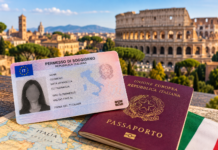
The residence permit authorizes a qualifying non-EU citizen to remain in Italy. Residenza anagrafica records the person as a resident of a particular Italian municipality.
Registration is completed through the local Comune. The municipality may verify that the applicant genuinely lives at the declared address.
Documents commonly requested include:
- Passport or identity document
- Codice fiscale
- Residence permit or application documentation
- Registered rental contract or property deed
- Evidence supporting the applicant’s right of residence
Exact requirements can vary, so check with the Comune where you will live.
Obtaining a Codice Fiscale
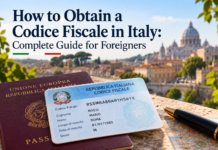
The codice fiscale is Italy’s personal tax-identification code. It is needed for many ordinary activities, including signing certain contracts, dealing with public authorities, accessing healthcare services and completing financial transactions.
Foreign citizens may receive it through immigration procedures, an Italian consulate or the Italian Revenue Agency, depending on their circumstances. The Revenue Agency describes the codice fiscale as an identification number used by foreign citizens in their dealings with public bodies and administrations.
The official code is issued free of charge. Be cautious of unofficial websites charging unnecessary fees.
Finding a Home: Rent Before You Buy
For most newcomers, renting first is the safest approach. A town that feels perfect during a summer holiday may be very different in January, and daily life can reveal practical issues that are not apparent during a short visit.
Renting gives you time to evaluate:
- Public transportation
- Healthcare services
- Traffic and parking
- Summer crowds
- Winter weather
- Noise
- Internet reliability
- Distance from airports and railway stations
- Access to supermarkets and other services
- Whether you can function comfortably without a car
Common residential arrangements include traditional long-term leases and shorter transitional contracts. Before signing, confirm the duration, renewal rules, deposit, notice period, utilities, condominium charges and maintenance responsibilities.
Make sure the rental agreement is properly registered.
Buying Property in Italy
Foreign citizens can purchase property in Italy in many circumstances, but nationality, reciprocity rules and residency status can affect the process.
A purchase normally involves:
- Selecting and inspecting the property
- Making an offer
- Conducting legal, cadastral and planning checks
- Signing a preliminary contract
- Paying a deposit
- Completing the final deed before an Italian notary
- Paying the applicable taxes and professional fees
An estate agent’s listing should never substitute for independent due diligence. Confirm that the property corresponds with cadastral records and authorized planning documents, particularly if it has been renovated or extended.
Most importantly, owning a house does not give a non-EU citizen the automatic right to reside in Italy.
Read the specialized Italy Moving Guide to Buying or Renting a Home before committing to a property.
Where Should Expats Live in Italy?
Italy offers radically different lifestyles. The right location depends on your income, employment, health, language ability and transportation needs.
Milan
Milan offers Italy’s strongest concentration of international companies, finance, fashion, technology and professional employment. It also has excellent national and international transportation.
The principal disadvantage is cost, particularly housing.
Rome
Rome combines government, tourism, media, healthcare, education and international organizations. It offers major-city services and extraordinary cultural attractions, but traffic, bureaucracy and housing costs can be challenging.
Florence and Tuscany
Florence attracts students, artists, tourism professionals, retirees and English-speaking residents. Smaller Tuscan cities may provide a slower pace while maintaining reasonable railway connections.
Central Florence and famous countryside destinations can be expensive, however. Explore the Italia Mia Tuscany travel guides before choosing a base.
Bologna and Emilia-Romagna
Bologna is a major railway hub with a respected university, excellent food and a strong regional economy. Emilia-Romagna also offers employment in manufacturing, engineering, food production and logistics.
Liguria
Liguria appeals to people seeking coastal living with access to cities such as Genoa. Towns along the Riviera can be beautiful but crowded and costly during the summer, while steep terrain may be difficult for residents with limited mobility.
Abruzzo
Abruzzo offers mountains, Adriatic beaches and comparatively affordable towns. It can be attractive to retirees and remote workers, although transportation and healthcare access should be evaluated carefully outside the main population centers.
Explore the Region of Abruzzo before deciding where to settle.
Puglia and Southern Italy
Puglia, Calabria, Basilicata, Sicily and other southern areas can offer lower housing costs, warmer weather and a slower pace of life.
The trade-offs may include fewer professional opportunities, less frequent public transportation and greater distances from certain specialist services.
See Italia Mia’s guide to the Best Places to Visit in Puglia and Least Expensive Places to Live for Expats in Italy.
Small Town or Major City?
Small-town Italy can be rewarding, but it usually requires more Italian and may require a car. A major city offers more services, employment and international connections but generally costs more.
Before choosing a small town, check:
- Hospital and specialist access
- Railway and bus connections
- Grocery stores and pharmacies
- Internet speed
- Banking and postal services
- Winter population
- Distance from an airport
- Accessibility of the property
- Availability of long-term rentals
Working in Italy
The Italian employment market varies significantly by region.
Milan and northern industrial regions generally offer the largest number of corporate and technical opportunities. Rome is important for tourism, services, media, government and international organizations. Tourism, hospitality and seasonal work are available in many destinations, while manufacturing, food production, healthcare, logistics and skilled trades remain important across the country.
Speaking Italian greatly expands the number of positions available. English can be enough for some international companies, universities, technology businesses and tourism roles, but it should not be treated as a universal working language.
Foreign professional qualifications may need formal recognition, especially in regulated occupations such as healthcare, education, engineering and law.
Employment conditions should always be documented in a written contract. Understand whether the proposed position is permanent, fixed-term, seasonal, part-time or self-employed before accepting it.
Healthcare in Italy
Italy’s public healthcare system is called the Servizio Sanitario Nazionale, or SSN. Eligibility and registration depend on citizenship, residence and immigration status.
Some residents qualify for mandatory SSN registration, while others may need voluntary registration or private coverage. Certain visa applications require appropriate health insurance before arrival.
After SSN registration, residents normally receive a health card and select a local family doctor where available. Foreign nationals applying for an Italian health card must first be registered with the SSN.
Public healthcare does not necessarily mean that every service is completely free. Some appointments, examinations and prescriptions involve a regional co-payment known as a ticket. Waiting times and access can also differ between regions.
Read Italian Healthcare System: Hospitals, Waiting Lists, Costs and Benefits for a fuller explanation.
Taxes and Financial Planning
Immigration residence, municipal residence and tax residence are different concepts. Becoming an Italian tax resident can bring Italian reporting and taxation obligations involving worldwide income and foreign financial assets.
Questions may arise concerning:
- Employment income
- Foreign pensions
- Dividends and interest
- Capital gains
- Rental income
- Foreign bank accounts
- Investment accounts
- Property ownership
- Social-security contributions
- Double-taxation treaties
United States citizens require particular care because American federal filing obligations generally continue after moving abroad.
Italy also has specialized tax regimes for certain new residents and qualifying foreign pensioners. These rules contain important eligibility conditions and can change. Obtain personalized advice from a professional experienced in both Italian taxation and the tax system of your previous country.
Do this before selling investments, transferring substantial funds, purchasing property or changing your official residence.
Cost of Living and Relocation Budget
The cost of living varies greatly between central Milan and a small town in southern Italy. Housing is usually the largest variable, but it is not the only one.
Prepare a budget covering:
- Rent or mortgage payments
- Condominium charges
- Electricity, gas and water
- Internet and mobile service
- Food and household expenses
- Transportation
- Healthcare and insurance
- Taxes
- Property maintenance
- Travel to your home country
- Emergency expenses
Your initial relocation budget should also include deposits, agency commissions, temporary accommodation, document translations, apostilles, visa fees, residence-permit costs and basic furnishings.
Visa financial minimums should not be treated as a complete cost-of-living budget.
Driving and Transportation
Italy’s major cities are connected by an extensive high-speed railway network, but many villages, beaches and rural areas remain difficult to reach without a car.
Before bringing or buying a vehicle, investigate:
- Whether your foreign driving licence is valid
- Whether an International Driving Permit is required
- Whether your licence can be exchanged
- Insurance requirements
- Vehicle registration
- Parking permits
- Limited Traffic Zones, known as ZTLs
- Annual ownership and maintenance expenses
ZTL cameras can issue fines automatically when an unauthorized vehicle enters a restricted historic center.
If you prefer not to drive, choose a town with a railway station, frequent local buses and essential services within walking distance.
Learning Italian and Building a Social Life
Italian language ability affects almost every part of relocation.
English is widely understood in some tourist centers and international workplaces, but local government offices, medical appointments, rental negotiations, utilities and neighborhood life often operate primarily in Italian.
Begin studying before the move and continue after arrival. Even modest conversational ability can make daily life easier and help establish local relationships.
Useful ways to integrate include:
- Joining a language exchange
- Taking classes at a local school
- Participating in cultural associations
- Shopping regularly at neighborhood businesses
- Volunteering
- Joining sports or walking groups
- Attending local festivals
- Building relationships with both Italians and other international residents
Expat groups can provide practical support, but relying exclusively on an English-speaking community can limit integration.
Italian Work and Social Culture
Personal relationships matter in Italy. Introductions and trust can be important in professional environments, particularly in smaller businesses.
Work culture varies by company and region, but newcomers may notice greater formality in dress and professional titles than in some English-speaking countries.
August remains a major holiday period. Some businesses, offices and professional services operate reduced schedules, particularly around Ferragosto on August 15. Plan important appointments and administrative work accordingly.
Social life often revolves around family, meals, cafés, town events and local associations. Accepting invitations and showing a genuine interest in the community can make the transition considerably easier.
Preparing Your Documents
Start gathering documents several months before moving. Depending on the application, you may need:
- Passport
- Birth certificate
- Marriage or civil-status documents
- Criminal-record certificates
- Financial statements
- Pension documentation
- Tax returns
- Employment contracts
- Professional qualifications
- Academic records
- Proof of accommodation
- Health-insurance documentation
- Passport photographs
Some documents may need an apostille, legalization, certified translation or formal recognition.
Request the exact checklist from the Italian consulate responsible for your legal place of residence before paying for translations or certifications.
A Practical Moving Timeline
Nine to Twelve Months Before Moving
- Decide whether you will work, retire, study or join family
- Identify the correct immigration route
- Compare several Italian regions
- Calculate a realistic budget
- Consult an international tax professional
- Begin studying Italian
Six to Nine Months Before Moving
- Obtain the consulate’s current checklist
- Gather civil, financial and professional documents
- Research healthcare and insurance
- Visit possible destinations outside peak tourist season
- Investigate schools if moving with children
- Decide whether you need a car
Three to Six Months Before Moving
- Complete translations and apostilles
- Apply for the appropriate visa
- Arrange qualifying accommodation
- Prepare health-insurance documentation
- Organize finances and international transfers
- Keep digital and paper copies of every document
Immediately After Arrival
- Apply for the Permesso di Soggiorno when required
- Obtain or confirm your codice fiscale
- Register your residence with the Comune when applicable
- Register for healthcare or activate private coverage
- Open essential utility and communication accounts
- Learn local transportation and municipal procedures
During the First Year
- Review your tax position
- Improve your Italian
- Build relationships outside the expat community
- Experience the area during every season
- Rent before making a permanent property decision
- Keep residence and immigration documents current
Common Mistakes to Avoid
Moving Before Confirming the Correct Visa
A tourist stay is not a substitute for an immigration plan.
Assuming That Buying Property Grants Residency
Property ownership and immigration status are separate matters.
Choosing a Town Seen Only During Summer
Visit during the quieter season and evaluate transportation, heating, services and community life.
Underestimating Setup Costs
Deposits, professional fees, translations, insurance and temporary accommodation can substantially increase the initial budget.
Ignoring International Tax Consequences
Obtain advice before establishing tax residence or restructuring investments.
Expecting Every Office to Follow the Same Procedure
Italian administration can vary locally. Confirm requirements with the authority actually processing your application.
Relying Exclusively on English
Learning Italian will improve employment prospects, administration, healthcare access and integration.
Recommended Books About Moving to Italy
Living and Working in Italy
A practical reference for readers interested in housing, employment and adapting to Italian daily life.
Find Living and Working in Italy on Amazon
Italian Phrase Books
A compact phrase book can be useful during appointments, apartment searches and early interactions with local services.
Browse Italian phrase books on Amazon
Books About Retiring in Italy
These guides can help retirees compare locations, budgets and the practical realities of establishing a new life abroad.
Browse books about retiring in Italy
Final Thoughts
Moving to Italy can provide an exceptional quality of life, but successful relocation depends on preparation.
Begin with your legal right to reside in the country. Then evaluate taxation, healthcare, housing, transportation and cost of living before choosing a destination.
Renting initially allows you to experience daily life without making an immediate long-term commitment. Learning Italian and participating in the local community will also make the difference between simply staying in Italy and genuinely living there.
Italy rewards patience. Its bureaucracy can be demanding, but the country offers remarkable cultural richness, diverse landscapes, strong communities and many different ways to build a fulfilling life.
Related Italia Mia Guides
- Visas to Move to Italy: Digital Nomad and Expat Guide
- Finding a Job in Italy: Jobs, Requirements and Advice for Expats
- Italy Moving Guide: Buying or Renting a Home
- Italian Healthcare System: Hospitals, Waiting Lists, Costs and Benefits
- The Least Expensive Places to Live for Expats in Italy
- The Main Differences Between Living in the USA and Italy
- Retiring to Italy
External Links
- Visa for Italy – Official Visa Database
- Italian Ministry of Foreign Affairs – Visa Information
- European Union – Residence Rights
- Italian Revenue Agency – Tax Identification Number for Foreign Citizens
- Italian Revenue Agency – Information for Individuals
- Italian Ministry of Health