
 Italy in November and December can be one of the year’s most rewarding trips—if you plan for short days, changeable weather and a very different rhythm from summer. November is generally quieter and less expensive in the major art cities. December begins calmly, becomes festive as Christmas markets open, and grows much busier around Christmas and New Year.
These months are best for museums, food, historic cities, seasonal traditions and mountain trips. They are less suitable for a classic coastal vacation, an itinerary dependent on ferries, or travelers who want reliably warm and sunny weather.
The essential point is that winter in Italy is not one climate. Milan may be cold and foggy, Bolzano may be snowy, Rome may alternate between rain and bright mild afternoons, and Sicily may feel more like late autumn than winter.
Italy in November or December: Which Month Is Better?
Choose November if your priority is fewer visitors, lower accommodation rates in many cities, autumn food and a quieter cultural trip. Choose December if you want lights, Nativity scenes, Christmas markets and a livelier atmosphere—and are prepared for higher prices and larger crowds during the holidays.
| Factor | November | December |
|---|---|---|
| Crowds | Usually low, especially on weekdays | Moderate early; high around Christmas and New Year |
| Prices | Often among the year’s best in art cities | Variable; holiday and ski destinations can be expensive |
| Weather | Cool, often wet and changeable | Colder; rain in cities and possible snow in the mountains |
| Seasonal atmosphere | Truffles, chestnuts, new olive oil and late-autumn festivals | Christmas lights, markets, Nativity scenes and holiday food |
| Best for | Museums, food trips, Rome, Florence, Bologna, Turin, Naples | Christmas towns, city breaks, South Tyrol, Naples and early ski trips |
| Main disadvantage | Short days and fewer seasonal coastal services | Holiday crowds, closures and higher festive-period prices |
For a broader comparison with the rest of the year, see the best time to visit Italy.
Weather in Italy in November
November is late autumn rather than deep winter in most Italian cities, but it is often one of the wetter months. Conditions can change quickly: a pleasant afternoon may follow a cold, rainy morning.
Northern cities such as Milan, Turin and Venice are commonly cool and damp, with daytime temperatures often around the upper 40s to mid-50s Fahrenheit. Fog is possible across the Po Valley. In the Alpine areas, colder conditions and early snow can occur, although November is too early to assume that every ski area will be operating.
Florence, Bologna and much of central Italy are somewhat milder, but rain is a serious possibility. Rome often has daytime temperatures in the upper 50s or low 60s, while Naples, Puglia, Calabria, Sardinia and Sicily are generally milder. Even in the south, however, November is not dependable beach weather.
Approximate daytime ranges are useful for planning, but they are not forecasts:
| Area | Typical November daytime feel | What to expect |
|---|---|---|
| Alps and Dolomites | Cold; freezing at altitude | Early snow possible; many lifts may be between seasons |
| Milan, Turin and Venice | About 48–56°F / 9–13°C | Damp air, rain and occasional fog |
| Florence and Bologna | About 54–61°F / 12–16°C | Cool mornings, rain and some mild afternoons |
| Rome | About 59–65°F / 15–18°C | Changeable weather with mild sunny spells |
| Naples and the southern mainland | About 61–68°F / 16–20°C | Generally mild but rain and wind are possible |
| Sicily | About 64–70°F / 18–21°C | Often the mildest option, but not guaranteed beach weather |
Weather in Italy in December
December is colder almost everywhere, although temperatures still vary dramatically by region and altitude. Northern cities can feel wintry, especially after sunset. Central Italy is cool and can be wet. Southern cities and Sicily remain comparatively mild, but evenings require a coat.
In broad terms, expect daytime temperatures around the low-to-upper 40s Fahrenheit in much of the north, the upper 40s to upper 50s in central Italy, and the mid-50s to low 60s in the south and Sicily. Nights are colder, and mountain temperatures can fall well below freezing.
Snow is possible in the Alps, Dolomites and higher Apennines, but a white Christmas is never guaranteed. Ski-area opening dates depend on altitude, natural snowfall, snowmaking and local decisions. Check lift and snow reports shortly before committing to a mountain itinerary.
Daylight is limited. Sunset comes before 5 p.m. in much of Italy in December, so schedule outdoor sightseeing early and reserve late afternoons for museums, churches, cafés and aperitivo.
Crowds and Prices in November and December
November is one of the quietest months for Rome, Florence, Venice and many other cultural destinations. Famous museums are not empty, but the experience can be substantially calmer than in spring or summer. Accommodation prices often soften, especially from Sunday through Thursday.
There are exceptions. The beginning of November includes All Saints’ Day, a national holiday on November 1. Major exhibitions, football matches, trade fairs and local festivals can also fill hotels for particular weekends.
December should be divided into three periods:
- Early December is often manageable in the art cities, although the December 8 Feast of the Immaculate Conception creates a holiday weekend when it falls near Saturday or Sunday.
- Mid-December becomes busier as Christmas markets, shopping and school events intensify.
- From roughly December 20 through January 6, expect stronger demand in Rome, Naples, Venice, mountain resorts and celebrated Christmas-market towns.
Do not assume winter always means bargains. A room in Florence on a quiet November Tuesday may be excellent value; a room in Bolzano on an Advent weekend or in Cortina during the holidays may cost more than it would in shoulder season.
The Best Christmas Markets in Italy
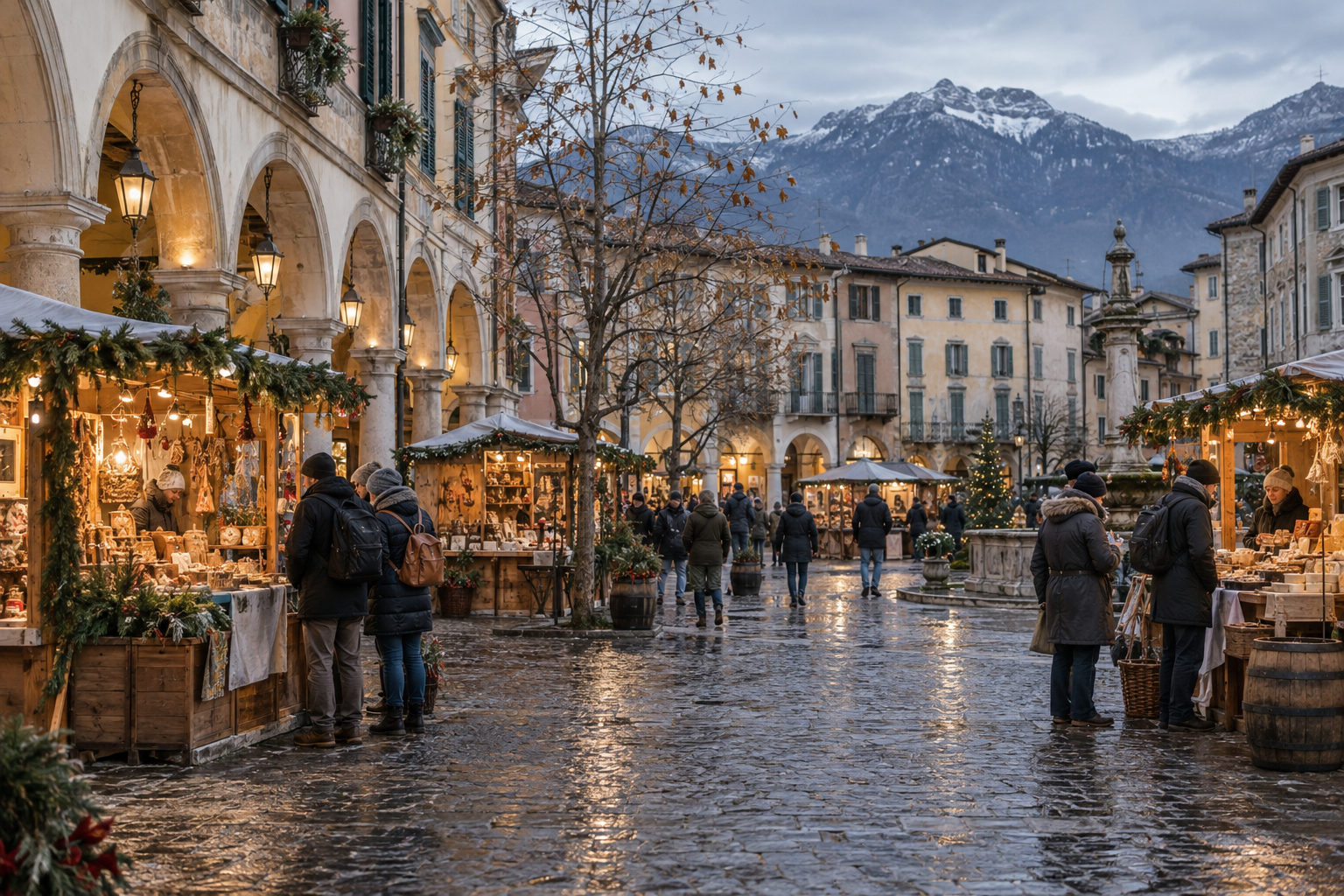
Italian Christmas markets usually begin in the second half of November and run through December; some continue until Epiphany on January 6. Exact dates, opening hours and Christmas Day closures change every year, so always check the official event site before booking.
Bolzano: Italy’s Classic Alpine Christmas Market
Bolzano is the best-known Italian destination for a Central European-style Christmas market. Wooden stalls fill Piazza Walther with South Tyrolean crafts, decorations, sweets, speck, cheeses and vin brulé. The city is easy to reach by train, and nearby towns make it possible to build a longer South Tyrol itinerary without driving.
For the 2026–27 season, the official Bolzano Christmas Market is scheduled from November 27 through January 6. Advent weekends are popular, so reserve accommodations and trains early.
Merano: Markets, Mountain Scenery and a Spa Town
Merano combines an elegant historic center, riverside walks, thermal baths and a Christmas market. It feels more like a winter resort than a simple day trip. Visitors can use Bolzano as a transport hub, but an overnight stay gives more time to enjoy the town after day-trippers leave.
Consult the official Merano tourism website for the current season’s dates and opening hours.
Trento: A Lively Market in a Historic City
Trento’s market spreads the festive atmosphere through its historic center, pairing Alpine foods and crafts with Renaissance buildings, museums and a walkable old town. It works well for travelers who want a market experience without devoting the entire trip to a small mountain resort.
The official Trento Christmas website publishes current events, locations and practical details.
Verona: Christmas Lights and Santa Lucia Traditions
Verona combines seasonal stalls with an attractive historic center and a particularly strong local devotion to Santa Lucia, celebrated on December 13. Its rail connections make it easy to combine with Milan, Venice, Bologna or Lake Garda, although some lakeside businesses operate reduced winter schedules.
Check Visit Verona’s Christmas information before traveling because market locations and dates can change.
Arezzo: A Festive Tuscan Alternative
Arezzo is one of central Italy’s most appealing Christmas destinations. Its medieval streets, Piazza Grande, lights and seasonal events create a warmer Tuscan interpretation of the Christmas-market experience. It is also easier to combine with Florence than the Alpine markets.
Use the official Arezzo City of Christmas website for the current program.
Other Christmas Destinations Worth Considering
- Bressanone and Vipiteno for smaller South Tyrolean markets and Alpine atmosphere
- Turin for elegant arcades, lights, cafés and museums
- Bologna for food, covered porticoes and a convenient rail location
- Florence for lights, museums and seasonal stalls in an art-city itinerary
- Gubbio for its enormous illuminated “Christmas tree” arranged on Mount Ingino
- Naples for Nativity-scene workshops along Via San Gregorio Armeno
- Matera for a dramatic southern setting and seasonal Nativity events
The national tourism portal’s guide to Christmas events in Italy is useful for comparing traditions beyond the Alpine markets.
Where to Go in Italy in November
Rome for Museums, Archaeology and Neighborhood Life
Rome is one of the strongest November choices. Cooler weather makes long walks more comfortable, museums provide shelter on rainy days, and restaurants feel more local after the high season. Build flexibility into the schedule so outdoor sites such as the Roman Forum can be moved to the driest day.
Florence and Bologna for Art and Food
Florence is ideal for a museum-centered trip, while Bologna offers porticoes, food markets and rewarding day trips by train. Combining the two creates a compact itinerary that is less dependent on weather than a rural driving tour.
Piedmont for Truffles, Wine and Elegant Cities
November is truffle season in Piedmont. Turin makes a sophisticated base, while Alba and the Langhe attract travelers interested in white truffles and wine. Reserve celebrated restaurants and special events well ahead, even though the wider region is in low season.
Naples for Energy, Food and Indoor-Outdoor Flexibility
Naples remains lively year-round and is generally milder than northern Italy. Archaeological museums, churches, underground sites and pizzerias balance outdoor walks. Pompeii can be excellent on a dry, cool day, but exposed ruins are unpleasant in heavy rain.
Sicily for the Mildest Broadly Useful Itinerary
For the best chance of mild weather, consider Palermo, Catania, Syracuse or a multi-city Sicilian trip. November is well suited to markets, architecture and archaeological sites. Coastal resorts can be extremely quiet, however, and some seasonal hotels or restaurants may be closed.
Where to Go in Italy in December
South Tyrol and Trentino for Christmas Atmosphere
Bolzano, Merano, Bressanone and Trento are the leading choices for markets, Alpine food and winter scenery. They are also among the destinations most likely to be busy and expensive on Advent weekends.
Naples for Italy’s Nativity-Scene Tradition
Naples is especially compelling in December. The workshops of Via San Gregorio Armeno display presepi—Nativity scenes—and hand-made figures, while the historic center becomes intensely festive. Visit early in the day on weekdays if you want to see the street before the densest crowds arrive.
Rome for Christmas and Major Sights
Rome combines decorations, church music, seasonal foods and globally important religious celebrations. The Vatican area can be extremely busy around Christmas, and tickets for high-demand museums and events should be arranged in advance.
Turin for Lights, Cafés and Museums
Turin’s covered arcades are useful in poor weather. The Egyptian Museum, royal residences, historic cafés and seasonal light installations make the city a strong winter destination even without snow.
Sicily for a Milder December
Palermo, Catania and Syracuse are practical for travelers who want history, food and a more temperate climate. Pack a warm layer and rain protection; “mild” does not mean warm every day, and older accommodations can feel cool indoors.
Venice for Atmosphere—With Weather Risks
Venice can be hauntingly beautiful in winter, with mist, subdued light and fewer visitors outside holiday weekends. It can also be cold, damp and affected by acqua alta, or high water. Check the local forecast and official tide information, and choose water-resistant footwear.
Christmas and Holiday Closures
December 25 and 26 are public holidays. Many museums, shops and attractions close or reduce hours, and public transportation follows holiday schedules. Restaurants that open for Christmas lunch may require reservations and offer a fixed menu.
December 24 is not a national public holiday, but many businesses close early. On December 31, museums and shops may shorten their hours; evening restaurants and events often require advance booking. January 1 is a public holiday, while January 6, Epiphany, marks the traditional end of the Christmas season.
Never build a holiday itinerary around ordinary opening hours. Verify each essential museum, church, train and restaurant directly.
What to Eat in November and December
November is excellent for seasonal cooking. Depending on the region, look for white truffles, porcini mushrooms, chestnuts, pumpkin, polenta, game, radicchio, new olive oil and vino novello.
December brings Christmas specialties. Panettone is associated with Milan, while pandoro comes from Verona. Torrone appears across the country in regional forms. In Naples and Campania, look for struffoli and roccocò; in Tuscany, panforte and ricciarelli; in Sicily, buccellati and other sweets made with dried fruit, nuts and spices.
Christmas Eve traditions vary by family and region, but seafood is common. Christmas Day lunch is often long and elaborate, with filled pasta, baked dishes, roasts and regional desserts.
What to Pack for Italy in November and December
Pack layers rather than one extremely heavy garment unless the trip is entirely Alpine. A water-resistant outer layer, warm sweater, scarf and shoes with good traction cover most city itineraries. Add gloves and a hat for the north and mountains.
Useful items include:
- A waterproof or water-resistant coat
- A warm mid-layer such as wool or fleece
- Comfortable water-resistant walking shoes
- A compact umbrella
- Warm socks
- A scarf, gloves and hat
- A small day bag that closes securely
- A portable charger, because cold weather and long sightseeing days can drain a phone battery
For a more detailed seasonal list, use Italia Mia’s practical packing guide.
Some links in this article are affiliate links. Italia Mia may earn a commission if you make a purchase or booking, at no additional cost to you.
Travelers who need rain gear can compare a compact travel umbrella on Amazon.com. Choose a model that is light enough to carry all day but sturdy enough for wind.
Getting Around Italy in Late Autumn and Winter
Trains are usually the best way to connect Rome, Florence, Bologna, Milan, Turin, Verona, Venice and Naples. They avoid winter driving, parking and restricted-traffic zones. Read Italia Mia’s first-time guide to traveling by train in Italy before booking.
Allow extra time during severe weather and around major holidays. Strikes can occur at any time of year, so confirm journeys shortly before departure.
A rental car is useful for rural Tuscany, Piedmont wine country, inland Sicily and mountain villages, but winter adds complications. Snow tires or chains may be required on designated roads, mountain passes can close, and historic centers remain subject to ZTL restricted-traffic zones. Confirm winter equipment with the rental company in writing and check road conditions before setting out.
Ferries and tourist boats often operate reduced schedules. Do not design a November or December trip around summer-frequency services to islands or small coastal towns.
Three Practical Itinerary Ideas
Seven Days for Art Cities and Food
Spend three nights in Rome, two in Florence and two in Bologna. Travel by high-speed train, schedule outdoor ruins for the best-weather day and use rainy periods for museums and markets.
Seven Days for Christmas Markets
Base yourself for three nights in Bolzano, take day trips to Merano or Bressanone, then spend two nights in Trento and two in Verona. Book Advent weekends well in advance and travel by train where practical.
Seven Days for a Milder Southern Winter
Choose Palermo and eastern Sicily, or combine Naples with Matera. Emphasize food, archaeology and city life rather than beaches. Leave some flexibility for rain and reduced seasonal transportation.
Is November or December a Good Time to Visit Italy?
Yes—particularly for travelers who value culture, food and seasonal atmosphere more than warm weather. November is the better bet for low crowds and value. December is more festive, but it requires earlier reservations and more careful planning around holidays.
The most successful winter itineraries avoid trying to imitate a summer vacation. Choose cities with excellent indoor attractions, accept that rain may change the day’s order, and treat Christmas markets or mountain snow as regional experiences rather than something found everywhere in Italy.
Frequently Asked Questions
Is Italy very cold in November?
It depends on the region. Northern Italy can be cold and damp, while Rome and the south are generally milder. Mountain areas may experience freezing temperatures and snow.
Does it snow in Italy in December?
Snow is common in high mountain areas and possible in parts of the north and central Apennines, but it is uncommon in many lowland cities. Do not assume that Milan, Florence or Rome will have snow.
Is everything closed in Italy in November?
No. Major cities remain active year-round. Some coastal hotels, restaurants, ferries, mountain lifts and small-town attractions reduce hours or close between seasons, so verify anything essential.
Are Christmas markets open in November?
Many major markets open during the second half of November, but dates vary. Smaller markets may operate only on Advent weekends.
Is December expensive in Italy?
Early December can offer reasonable city rates, but Christmas-market weekends, ski resorts and the Christmas-to-New-Year period can be expensive. Book trains and hotels early for those dates.
Can I visit the Amalfi Coast or Cinque Terre in winter?
You can, but expect reduced services, fewer open businesses, limited ferry schedules and weather-related disruption. Winter is better for quiet scenery and local life than for a classic coastal vacation.
External Sources
- Italy’s official tourism guide to Christmas markets
- Official Bolzano Christmas Market
- Official Trento Christmas program
- Official Verona tourism Christmas guide
- Official Arezzo City of Christmas program
- Italy’s official tourism events calendar