

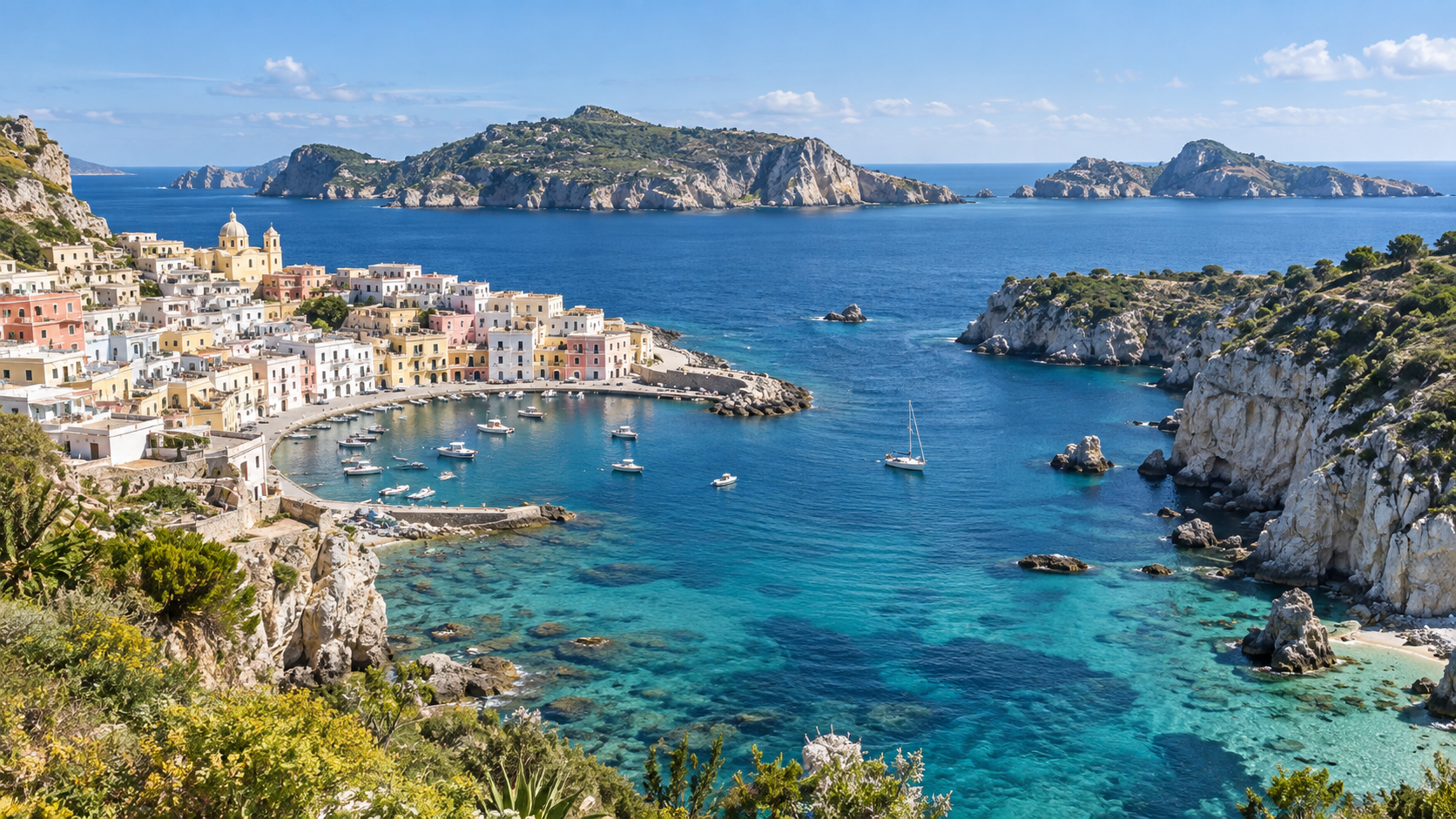
 Italy’s two largest islands receive most of the attention, but some of the country’s most memorable coastal experiences are found on much smaller islands. These places have no sprawling cities or long sightseeing lists. Their appeal lies in fishing harbors, volcanic landscapes, clear water, coastal paths and evenings that become noticeably quieter after the last day-trippers leave.
Some, such as Procida and Elba, are simple to reach. Others, including Pantelleria and Lampedusa, require a flight or a long ferry journey. Choosing the right island therefore depends not only on its beaches, but also on how much time you have, whether you are traveling with a car and how much isolation you actually want.
For broader trip planning, see Italia Mia’s guides to Italy without a car and where to stay in every Italian region.
Quick Comparison: Which Italian Island Is Right for You?
Procida: Best for a short escape from Naples, colorful villages and car-free exploration.
Ponza: Best for boat trips, dramatic coves and a fashionable Roman summer atmosphere.
Favignana: Best for cycling between turquoise swimming coves.
Lipari: Best for first-time visitors to the Aeolian Islands and travelers who want services and ferry connections.
Salina: Best for food, wine, green landscapes and a quieter Aeolian experience.
Elba: Best for families, hikers, drivers and travelers wanting a complete island holiday.
Giglio: Best for a compact Tuscan island with beaches, a medieval village and good public buses.
Pantelleria: Best for volcanic scenery, dammusi, thermal waters and a remote atmosphere.
Ventotene: Best for history, diving and a genuinely slow island stay.
Ustica: Best for snorkeling and scuba diving close to Palermo.
Lampedusa: Best for exceptional beaches and clear southern Mediterranean water.
Tremiti Islands: Best for an Adriatic island break combined with Puglia or Molise.
Capraia: Best for hiking, wilderness and escaping conventional beach resorts.
Procida: Colorful Harbors Near Naples
Procida is small, densely inhabited and full of ordinary island life. Its best-known view is Marina Corricella, where pastel-colored houses rise above a fishing harbor lined with restaurants. Terra Murata, the island’s elevated historic settlement, provides broad views across the Bay of Naples.
The island’s beaches are less dramatic than those of Favignana or Lampedusa, but Procida offers something different: atmosphere. Narrow streets, fishing boats, neighborhood shops and weathered buildings make it feel lived in rather than designed for tourism.
How to get there: Ferries and hydrofoils operate from Naples and Pozzuoli, with additional connections from Ischia. Fast services from Naples generally take around 40 minutes, while conventional ferries take approximately an hour. Services operate throughout the year, although frequency changes seasonally.
Where to stay: Marina Corricella is the most atmospheric choice, but reaching some properties involves steps. Marina Grande is more convenient for the ferry, buses and luggage. Chiaiolella suits visitors prioritizing beaches and a quieter evening setting. Compare accommodation in Procida through Trip.com.
Best for: Two or three nights, couples, photographers and travelers combining the island with Naples.
Ponza: Cliffs, Caves and Hidden Coves
Ponza is the largest of the Pontine Islands and one of the favorite summer escapes of residents of Rome. Its landscape is unusually theatrical: pale volcanic cliffs, sea caves, natural arches and coves accessible mainly by boat.
The harbor town is attractive and lively, but the real reason to visit Ponza is the coastline. A boat excursion reveals places that cannot be reached safely by road or foot. Palmarola, an almost uninhabited neighboring island, is one of the most rewarding boat trips.
How to get there: Formia provides the most dependable connection and is reachable by train from Rome or Naples. Seasonal ferries and hydrofoils may also depart from Anzio and Terracina. Journey times vary considerably according to the departure port and type of vessel.
Where to stay: Ponza Porto is best for restaurants, boat departures and visitors without transportation. Santa Maria is quieter but still reasonably convenient. Le Forna offers a more local atmosphere and access to northern coves, although buses become crowded in summer. Compare places to stay in Ponza through Trip.com.
Best for: Boat lovers, romantic stays and travelers willing to visit outside the busiest weeks of July and August.
Favignana: Turquoise Water and Easy Cycling
Favignana, the largest of Sicily’s Egadi Islands, is famous for water so clear that boats appear to float above the seabed. Cala Rossa and Cala Azzurra are the best-known swimming areas, but there are many smaller rocky entries and former limestone quarries around the coast.
The island is mostly flat, making bicycles and electric bicycles the preferred way to explore. Beaches are not always traditional stretches of sand: many of Favignana’s most beautiful swimming places are rocky coves where water shoes are useful.
The former Florio tuna-processing plant explains the island’s long connection with the Mediterranean tuna trade and adds a cultural stop to a beach-focused stay.
How to get there: Hydrofoils run frequently from Trapani, with the quickest crossings taking approximately 30 minutes. There are also connections from Marsala and slower vehicle ferries on selected services.
Where to stay: Favignana town is the best base for restaurants, bicycle rental and the port. Properties outside town offer more peace, but confirm whether transportation is included. Compare Favignana accommodation through Trip.com.
Best for: Swimming, snorkeling, cycling and a two- or three-night addition to western Sicily.
Lipari: The Practical Base for the Aeolian Islands
Lipari is the largest and most populated of the Aeolian Islands. It does not feel as exclusive as Panarea or as isolated as Alicudi, but it offers the archipelago’s widest selection of accommodation, restaurants, shops and transportation.
Lipari town contains a fortified citadel, archaeological museum and lively harbor. Around the island, visitors find pumice cliffs, volcanic scenery, viewpoints and beaches such as Canneto. Its greatest advantage is connectivity: it is easy to take day trips to Vulcano, Salina, Panarea or Stromboli.
How to get there: Milazzo is the principal mainland-Sicily gateway, with frequent hydrofoils and ferries. Seasonal services may operate from Messina, Palermo, Naples and other ports. Check the return schedule carefully when planning independent island-hopping.
Where to stay: Lipari town is the most convenient base without a car. Canneto is better for regular beach access, while rural properties suit travelers with scooters or arranged transfers. Compare hotels and apartments in Lipari through Trip.com.
Best for: First visits to the Aeolian Islands, longer stays and travelers who want to explore several islands from one base.
Salina: Vineyards, Capers and Green Volcanic Slopes
Salina is greener and calmer than Lipari. Two extinct volcanic peaks dominate the landscape, while vineyards, caper plants and small communities spread across the lower slopes. The island is associated with Malvasia dessert wine and some of the finest capers in Italy.
Santa Marina Salina is the principal port and most convenient base. Malfa feels more rural and sophisticated, while Pollara is known for its volcanic amphitheater and its connection with the film Il Postino. Rinella, on the southwestern coast, has a smaller port and a particularly relaxed atmosphere.
How to get there: Hydrofoils and ferries connect Salina with Milazzo and the other Aeolian Islands. Some services call at Santa Marina, others at Rinella and some at both, so check the arrival port before reserving accommodation.
Where to stay: Choose Santa Marina for convenience, Malfa for food and countryside, Pollara for seclusion or Rinella for a peaceful coastal village. Find accommodation on Salina through Trip.com.
Best for: Food and wine travelers, walkers and couples seeking a quieter alternative to Lipari.
Elba: Beaches, History and Mountain Trails
Elba is larger and more varied than most islands in this guide. It combines beach resorts, historic towns, mountain roads, forests and sites connected with Napoleon’s exile. Visitors can spend a week here without running out of places to explore.
Portoferraio has the main harbor and a historic center enclosed by imposing fortifications. Marciana Marina has an attractive waterfront, while Marina di Campo suits families seeking a long sandy beach. Capoliveri provides hill-town atmosphere and access to the island’s southeastern coast.
Elba’s beaches vary greatly. Fetovaia and Cavoli offer sand and clear water, while Sansone is known for white pebbles. Hikers can explore the island’s interior and climb or take the cableway toward Monte Capanne.
How to get there: Ferries leave Piombino for Portoferraio throughout the year. Some services continue to Rio Marina or Cavo. The fastest crossings to Portoferraio take around 40 minutes, although conventional services may take approximately an hour.
Where to stay: Portoferraio is practical for short stays without a car. Marina di Campo works well for families, Capoliveri for evening atmosphere and western Elba for scenery and quieter coves. A car is useful for a longer island-wide visit. Compare accommodation on Elba through Trip.com.
Best for: Families, hikers, road trips and stays of five nights or longer.
Giglio: A Compact Tuscan Escape
Isola del Giglio lies off the Argentario coast in southern Tuscany. Despite its small size, it contains three distinctly different communities: colorful Giglio Porto, medieval Giglio Castello and beach-oriented Giglio Campese.
Giglio Campese has the island’s broadest beach, while Cannelle and Arenella offer clear water closer to the port. Giglio Castello, surrounded by defensive walls, is especially atmospheric in the evening.
How to get there: Vehicle and passenger ferries connect Porto Santo Stefano with Giglio Porto throughout the year. The crossing takes approximately one hour. Buses link the port with Giglio Castello and Campese, making a car unnecessary for many visitors.
Where to stay: Giglio Porto is most convenient for short visits and ferry access. Giglio Campese is best for a beach holiday, while Giglio Castello provides history, views and cooler evenings. Search for accommodation on Isola del Giglio through Trip.com.
Best for: A peaceful Tuscan seaside break, families and travelers visiting Monte Argentario.
Pantelleria: Italy’s Volcanic Island Near Africa
Pantelleria lies closer to Tunisia than to mainland Italy. Dark volcanic rock, low stone walls, vineyards and white-domed dammusi give it an appearance unlike any conventional Italian beach resort.
There are few sandy beaches. Swimming usually means descending from rocks into intensely blue water at places such as Arco dell’Elefante, Cala Gadir and Balata dei Turchi. Inland, Lago di Venere offers thermal mud and warm water surrounded by a volcanic landscape.
Pantelleria is also known for Passito di Pantelleria, produced from Zibibbo grapes dried in the sun. Food, wine and the distinctive rural architecture are as important as the sea.
How to get there: Flights from Sicily are the easiest option, with additional seasonal services from other Italian cities. Ferries operate from Trapani, but the crossing is long and weather can affect schedules.
Where to stay: Pantelleria town is convenient for the port and services. Scauri offers restaurants and sunset views, while rural dammusi provide the most characteristic experience. A rental car is strongly recommended. Compare Pantelleria accommodation through Trip.com.
Best for: Couples, food and wine, volcanic landscapes and travelers seeking something genuinely different.
Ventotene: History and Slow Island Life
Ventotene is smaller and quieter than Ponza. Its Roman harbor, excavated from volcanic rock, remains one of the most distinctive sights in the Pontine Islands. Roman ruins, diving sites and a compact village make it suitable for visitors who value history and calm more than nightlife.
The nearby island of Santo Stefano contains a remarkable former Bourbon prison and can be visited only under regulated conditions, normally with an authorized guide.
How to get there: Ferries and hydrofoils connect Ventotene with Formia, with additional seasonal services from other ports. Bad weather can disrupt crossings, particularly outside summer.
Where to stay: Most accommodation is in or above Ventotene town, within walking distance of the Roman port, restaurants and ferry landing. Reserve early because the number of rooms is limited. Search for Ventotene accommodation through Trip.com.
Best for: History, diving, quiet swimming and an unhurried three-night stay.
Ustica: A Diving Island Near Palermo
Ustica rises from the Tyrrhenian Sea north of Palermo. Its protected waters, underwater caves and marine life have made it one of Italy’s best-known diving destinations.
The island’s coastline is predominantly rocky, with swimming platforms and coves rather than long sandy beaches. Boat excursions, snorkeling and scuba diving are the main attractions. Inland walking routes reveal dry-stone walls, archaeological remains and broad sea views.
How to get there: Ferries and hydrofoils depart from Palermo. Fast services generally take around 90 minutes, depending on the vessel and conditions.
Where to stay: Ustica town is the practical choice for restaurants, dive centers and port transfers. More isolated properties can be appealing, but confirm how you will reach the sea and town. Compare places to stay in Ustica through Trip.com.
Best for: Divers, snorkelers and travelers combining a small-island stay with Palermo.
Lampedusa: Brilliant Water at Italy’s Southern Edge
Lampedusa is geographically remote but famous for some of Italy’s clearest water. Spiaggia dei Conigli, reached by a downhill footpath through a protected area, is the island’s signature beach. Cala Pulcino, Cala Creta and other coves provide alternatives when conditions or crowds make the most famous beach less appealing.
The island has a dry, low landscape and little monumental sightseeing. A visit is primarily about swimming, boat excursions, coastal walks and the marine environment.
How to get there: Flying is the most convenient choice, with year-round connections to Sicily and additional seasonal routes. Ferries from Porto Empedocle take much longer and are more vulnerable to sea conditions.
Where to stay: Lampedusa town offers restaurants, shops and transportation. The Guitgia area is convenient for a beach within walking distance, while Cala Creta and more rural locations suit travelers seeking quiet. A scooter or small rental car is useful. Compare Lampedusa accommodation through Trip.com.
Best for: Beach-focused holidays, boat trips and warm-water swimming into early autumn.
Tremiti Islands: Adriatic Water and Pine-Covered Shores
The Tremiti archipelago lies off the Gargano peninsula. San Domino has the greatest concentration of accommodation, pine woodland and swimming coves. San Nicola contains the principal historic complex, while Capraia and the smaller islands are generally explored by boat.
The islands become busy with day visitors during summer, but evenings are far quieter once boats return to the mainland.
How to get there: Termoli offers the most established connections, with additional seasonal departures from ports along the Gargano coast. Service frequency declines significantly outside the main travel season.
Where to stay: San Domino is the best choice for accommodation, beaches and practical services. San Nicola offers history and atmosphere but fewer lodging options. Search for Tremiti Islands accommodation through Trip.com.
Best for: A two- or three-night extension to Puglia or Molise and travelers who enjoy boat excursions.
Capraia: The Wild Side of the Tuscan Archipelago
Capraia is far less developed than Elba. Its volcanic cliffs, former agricultural terraces and extensive walking paths make it an island for hikers and nature lovers rather than conventional resort visitors.
Most life is divided between the small port and the village above it. Cala Rossa, a dramatic red-and-black volcanic cove, is usually appreciated from the sea during a boat excursion.
How to get there: Ferries connect Capraia with Livorno, with frequency varying by season. The journey is considerably longer than the Piombino–Elba crossing, so Capraia deserves at least two or three nights.
Where to stay: Choose accommodation near the port for restaurants and boat trips or in the upper village for views and a quieter setting. The selection is limited, making early reservations essential. Search for Capraia accommodation through Trip.com.
Best for: Hiking, nature, solitude and visitors who do not need a conventional sandy beach.
When to Visit Italy’s Small Islands
Late May, June and September usually provide the best balance of warm weather, functioning ferry services and manageable crowds. Sea temperatures are warmer in September, while June offers long days and greener landscapes.
July is lively but expensive. August brings the largest crowds, especially around Ferragosto on August 15. Accommodation, ferries, scooters and boat excursions should be reserved well in advance.
April, May and October can be rewarding for walking and quiet travel, but seasonal restaurants and ferry routes may operate on reduced schedules. From November through March, islands with permanent communities—including Procida, Lipari, Elba and Favignana—remain inhabited, but they should not be approached as conventional beach destinations.
Practical Transportation Advice
Do not plan an important international flight immediately after an island ferry. Wind and rough seas can delay or cancel hydrofoils, particularly on exposed routes.
Check which port your ferry uses. Naples, Palermo and the Aeolian Islands have multiple terminals or arrival ports, and they are not always interchangeable.
Reserve vehicles separately. A passenger ticket does not guarantee space for a car, and some islands restrict the arrival of non-resident vehicles during summer.
Pack light. Hydrofoils, steep streets, harbor steps and accommodations without elevators make large suitcases inconvenient.
Verify the final crossing before booking accommodation. A hotel reservation is of little use if your train or flight arrives after the last ferry.
Stay overnight whenever possible. Procida, Favignana, Ponza, Lipari and Giglio feel very different after day-trippers have departed.
Which Island Should You Choose?
For the easiest island trip from a major city, choose Procida.
For spectacular coves explored by boat, choose Ponza.
For turquoise water and bicycle exploration, choose Favignana.
For an introduction to the Aeolian archipelago, choose Lipari.
For food, wine and a slower Aeolian experience, choose Salina.
For a complete week-long holiday with beaches and hiking, choose Elba.
For a compact Tuscan island without needing a car, choose Giglio.
For volcanic landscapes and a remote character, choose Pantelleria.
For diving, choose Ustica or Ventotene.
For the most celebrated beach experience, choose Lampedusa.
For wild nature and hiking, choose Capraia.
Italy’s small islands reward travelers who slow down. The best visit is rarely the one that tries to see the greatest number of places. Choose one island that matches your interests, allow time for the weather to change and stay long enough to experience the harbor after the final ferry has disappeared over the horizon.
External Sources
Italia.it – Official Italian Tourism Website
Liberty Lines – Aeolian, Egadi and Sicilian Island Services
Caremar – Ferries in the Bay of Naples
Laziomar – Ponza and Ventotene Ferry Services
Toremar – Tuscan Archipelago Ferries
Maregiglio – Giglio and Giannutri Services
Visit Sicily – Official Regional Tourism Website
Visit Procida – Ferry and Island Information
Disclosure: This article contains affiliate links. Italia Mia may receive a commission from qualifying reservations, at no additional cost to the reader.