
Part of Unexpected Italy: Stories from My Recent Travels
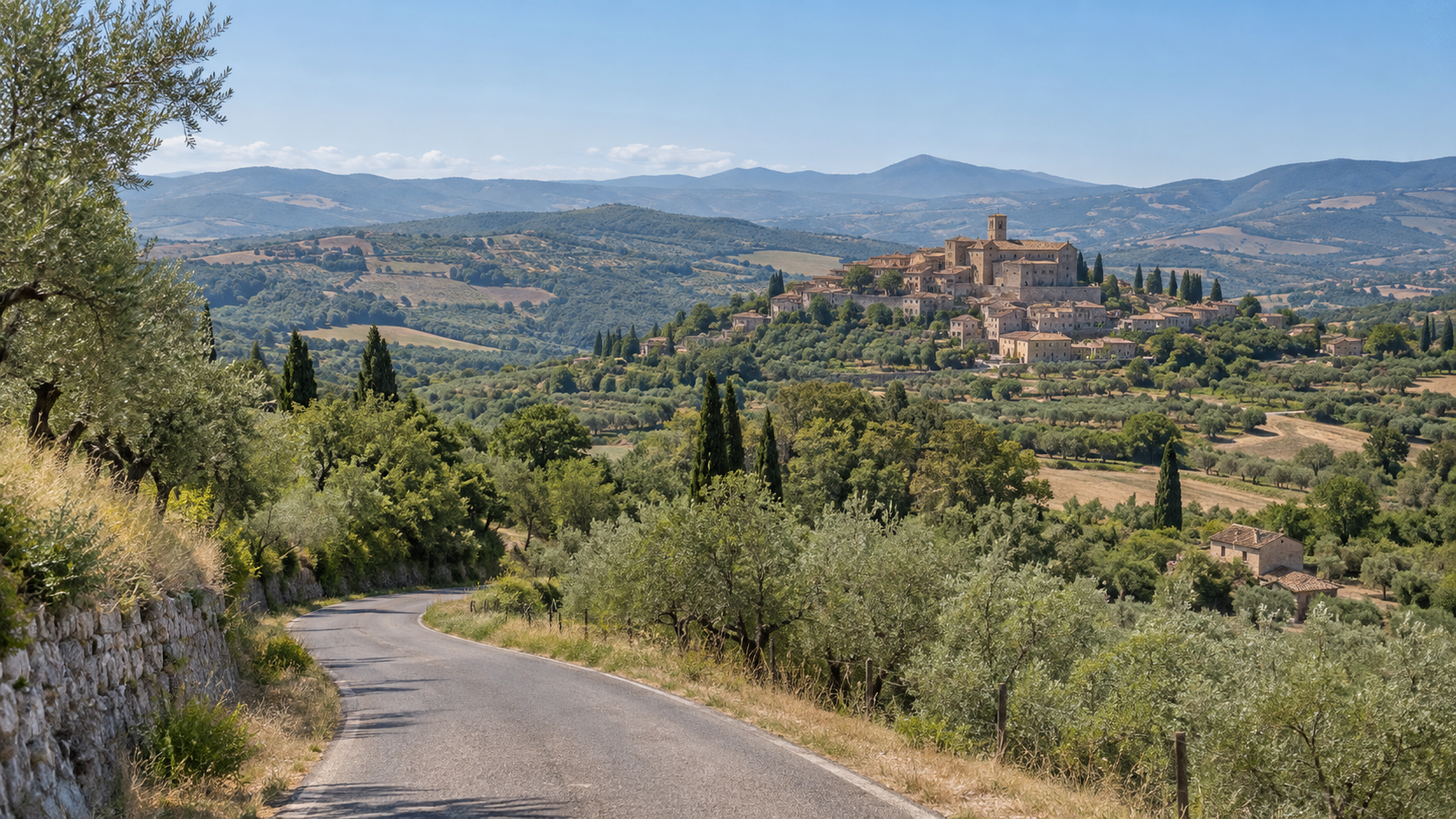
I left Florence with five nights set aside for southern Maremma. On the map, the towns looked close together. Once I reached the smaller roads, I was glad I had given them more than a long weekend. The pleasure of this trip came from stopping the car, walking into each village, and noticing how much changed over a relatively short distance.
Scansano introduced me to the wine hills. Manciano gave me a view across the countryside. Montemerano drew me into a church for a painting I had nearly overlooked. Saturnia slowed the journey down, while Pitigliano and Sorano revealed an older landscape cut directly into the rock.
The surprise on this Unexpected Italy journey was a series of discoveries in the places themselves. I followed a route through the towns I had come to see, then found that some of their most memorable details sat beyond the main square or below the familiar viewpoint.
The road from Florence to Scansano
I picked up the car outside the busiest part of Florence and headed toward Scansano. I had deliberately left the first day light. After the city, I wanted time to adjust to the smaller roads and arrive with enough of the afternoon left to walk around.
Scansano is closely associated with Morellino di Scansano wine, but I began in the old center rather than at a tasting room. Its streets gave me my first sense of the scale of the towns on this route: places where I could leave the car and spend the next hour on foot.
Palazzo Pretorio houses both the Museum of Vine and Wine and the Archaeological Museum. Together, they put the wine landscape into a longer local history. I checked their visiting hours and chose how much of my first afternoon to spend indoors. There was no need to see everything immediately; I was staying nearby that night.
At dinner, I ordered local food and a glass of Morellino. Staying around Scansano kept the start of the trip relaxed. It also meant I did not have to continue driving toward Saturnia after dark simply to reach the next hotel.
Manciano and the approach to Montemerano
The following morning, I drove toward Manciano. Its hilltop position made it a natural place to stop before going farther east. I walked through the center and paused for the broad view across the surrounding countryside. From there, the towns ahead began to feel like parts of the same landscape rather than separate names on my itinerary.
Manciano also has a Museum of Prehistory and Protohistory in Palazzo Nardelli. It is a useful stop for anyone who wants more context before reaching the Etruscan sites around Pitigliano and Sorano. I kept that possibility in mind while leaving enough time for Montemerano, where I wanted to spend the afternoon.
Montemerano rewarded a slow arrival. I parked outside the old center and walked toward Piazza del Castello through narrow streets and archways. The square was reason enough to visit, but it was not the place that held me longest.
I went into the Church of San Giorgio to see the Madonna della Gattaiola. The fifteenth-century painted panel has a hole cut through its lower section—the unusual detail behind its name. I had read about it before the trip, yet the research had not prepared me for finding such a peculiar work inside a small village church. I was glad I had looked up from the route and made time to go inside.
That became the first real discovery of my five nights in Maremma. It required no detour to an obscure site. It only required staying in Montemerano long enough to move beyond its beautiful square.
I spent the second night in the Montemerano and Saturnia area. Two nights in the same base gave me a welcome break from packing and let me choose dinner without planning another long drive afterward.
A full day in Saturnia
On the third day, I stayed close to Saturnia. Many visitors come directly for the Cascate del Mulino, take a photograph, bathe, and leave. I wanted to give both the village and the thermal landscape some time.
I started in Saturnia itself. The town stands above the springs and has a history that extends well beyond its present reputation as a spa destination. I walked through the center and considered the archaeological museum before heading toward the water.
The Cascate del Mulino and the Terme di Saturnia resort are separate experiences. The cascades are the open-air natural pools, with free access to the bathing area. The resort offers a more structured, paid spa visit. I had allowed a whole afternoon so I could choose the pace that suited me instead of treating the springs as a quick stop between towns.
Around the cascades, I paid attention to the practical details that photographs leave out: where to park, what to carry, and how to move over wet, uneven ground. I kept valuables to a minimum and wore suitable footwear. Anyone planning the same visit should check current parking arrangements before setting out.
I spent my third night at the same lodging. After a day centered on Saturnia, returning to a familiar room and going out for dinner nearby felt like the right decision. I had already traveled through several towns, but the trip still had its most dramatic landscapes ahead. My earlier Unexpected Italy story about the road through Maremma to Saturnia follows a different journey through this area.
Pitigliano beyond the famous view
On day four, I drove to Pitigliano. Before entering the center, I stopped at a safe viewpoint to take in the town rising from its long ridge of tuff. The buildings and the rock beneath them seemed almost continuous. It is an extraordinary first sight, but I did not want the photograph to become my whole visit.
After parking, I walked into the historic center. Pitigliano’s Jewish quarter gave me a reason to take the town street by street. The synagogue and related spaces tell an important part of the history behind Pitigliano’s nickname, “Little Jerusalem.” I checked access before visiting and gave the area more time than I had originally expected.
I continued past Palazzo Orsini, the aqueduct, churches, shops, and residential streets. There was enough here to occupy a full day without hurrying from one attraction to the next. Pitigliano was also where I looked for sfratto, the pastry associated with the town’s Jewish heritage.
I stayed in the Pitigliano area for the final two nights. That choice made the evening part of the visit. I could have dinner without leaving immediately afterward, and I had another morning if a museum or street I wanted to see had escaped me on arrival.
For a road trip, the choice between a room in the old center and a countryside property matters. Walking out to dinner is appealing; easy parking is appealing too. I checked the actual parking arrangements rather than assuming that a central address meant I could drive to the door.
The unexpected paths below the towns
The next morning, I turned from the view above Pitigliano toward the vie cave below. These deep passages were cut through the tuff in the area around Pitigliano, Sovana, and Sorano. Their original purpose remains a subject of debate, which made me more interested in seeing one for myself.
I chose a documented walking route, checked its condition, and wore shoes suited to uneven ground. The change in perspective was immediate. From the road, I had seen towns perched on rock. On foot, I was moving through the rock itself, with high walls rising beside the path.
That was the moment when the journey came together for me. The painting in Montemerano had asked me to step inside an unassuming church. The vie cave asked me to leave the hilltop viewpoint and go below the town. Neither discovery depended on inventing an encounter or waiting for something dramatic to happen.
The paths are not a compulsory part of the trip. Their condition and difficulty vary, and I would choose a route only after checking local information. For someone who prefers to spend the day in the villages, Pitigliano, Sovana, and Sorano offer more than enough to see.
Sovana and Sorano
After the walk, I continued to Sovana. It is a small place, but I did not want to pass through simply because it lay between two better-known towns. I walked its center and considered the archaeological area, where the Etruscan tombs include the Tomba Ildebranda. Visiting that area takes more time than a quick village stop, so I treated it as a choice for the day rather than an item to squeeze in.
Sorano filled the later part of the afternoon. Its setting in the tuff landscape is impressive from outside, but I again found that the view was an invitation to enter, not the conclusion of the visit. I walked its streets and made my way toward the Fortezza Orsini. The fortress and its civic archaeological museum added another layer to the places I had crossed over the previous days.
Pitigliano and Sorano belonged to the same landscape, yet they had felt distinct to me. Pitigliano’s long ridge had announced itself on arrival. Sorano had revealed itself in stages as I moved through the town.
I returned to my Pitigliano-area lodging for the fifth and final night. I was pleased not to be checking into a new room. The two-night stay had given me the freedom to spend the day on a walk, two villages, and an archaeological visit without also managing luggage.
The return to Florence
I kept the last morning open. It gave me time for one more walk in Pitigliano before starting the drive back to Florence. I checked the return route, allowed a generous margin for the car, and left Maremma without trying to add another town for the sake of it.
The five nights had fallen into a comfortable pattern: one around Scansano, two around Montemerano and Saturnia, and two around Pitigliano. From those bases, I had visited Manciano, Sovana, and Sorano without changing hotels every day.
A car made this particular route possible at my own pace. Before renting one, I recommend reading Italia Mia’s guide to driving in Italy, especially its advice on parking and restricted traffic zones. I also checked current hours for churches, museums, archaeological sites, and spa facilities rather than assuming they would be open when I arrived.
I began the trip looking forward to Maremma’s hill towns. What stayed with me were the details I found after I parked: a painting behind a church door, a town beyond its celebrated photograph, and a path cut deep into the rock below it.
Book Your Maremma Stay and Experiences
For this five-night route, I stayed one night around Scansano, two around Montemerano or Saturnia, and two around Pitigliano. I recommend checking parking, the distance to the historic center, and cancellation terms before choosing each property.
For the first night, compare stays in Scansano on Trip.com. For nights two and three, look at Manciano and Saturnia-area stays on Trip.com. For the last two nights, compare Pitigliano stays on Trip.com.
You can also search for a Maremma stay through Expedia. This Expedia link opens the booking service generally, so enter the town that matches the night you are planning.
Affiliate disclosure: If you book through these links, Italia Mia may earn a commission at no extra cost to you.
External Links
- Visit Tuscany’s guide to Scansano — the town, its museums, and Morellino wine.
- Montemerano’s Church of San Giorgio — information about the church and the Madonna della Gattaiola.
- Visit Tuscany’s guide to the Cascate del Mulino — the natural thermal pools near Saturnia.
- Visit Tuscany’s walking guide to the vie cave — background on the paths through the tuff.
- Visit Tuscany’s guide to Sorano — sights and ideas for a visit.