
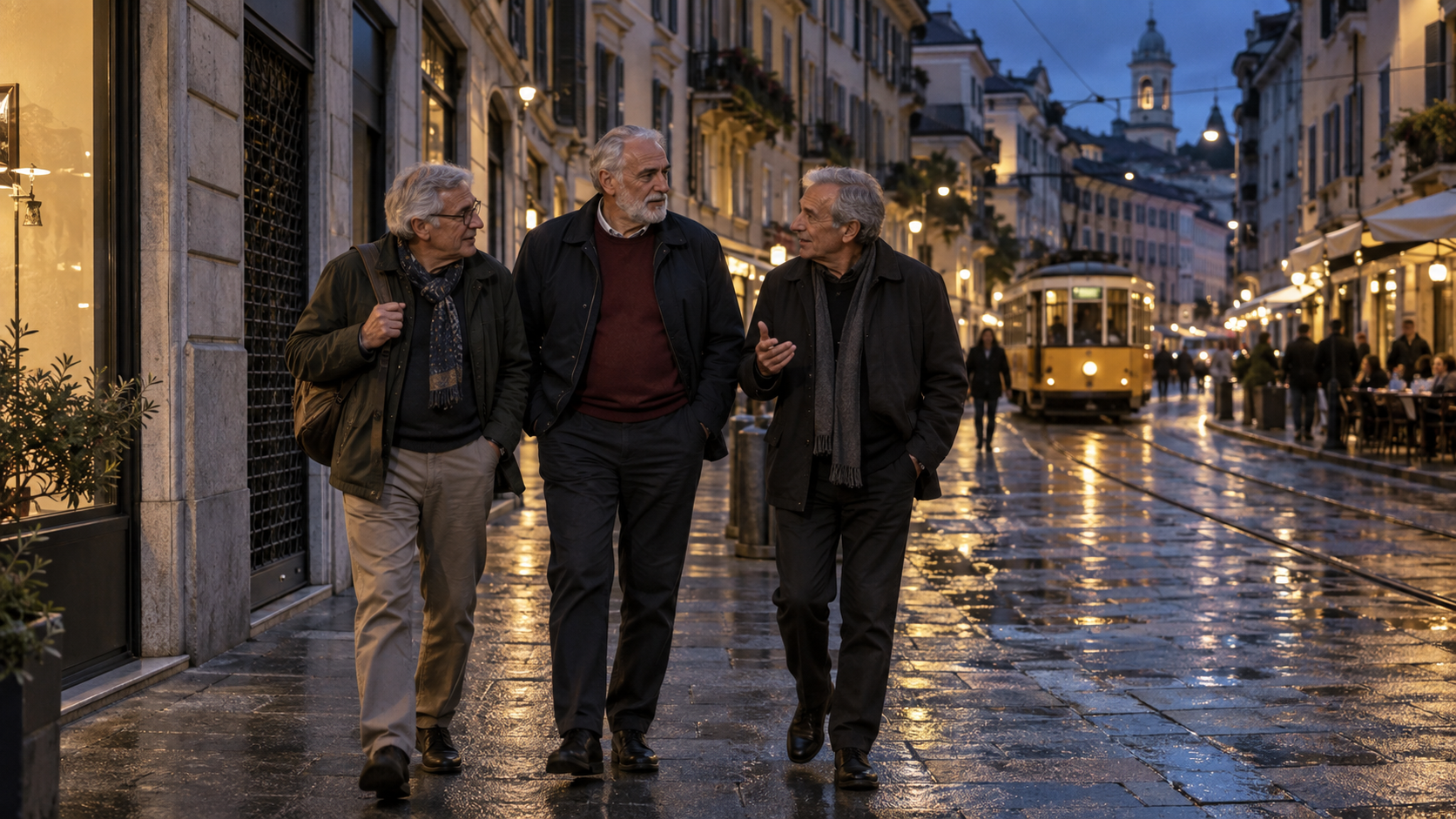
 We travelled to Milan by train from northern Tuscany in October. There were three of us, all men, carrying enough luggage for three nights but moving at the slower pace that develops after travelling together for several weeks.
One of my friends had been in Italy for a month. Milan was the final stop before his return to the United States. We had not planned the visit as a farewell trip, and none of us described it that way. Nevertheless, the approaching departure affected how we used our time. There would be no promise that we could return the following weekend and finish what we had missed.
The train arrived at Milano Centrale beneath its enormous steel roof. Even after repeated visits, the station still seems designed to make an arrival feel more important than it is. The platforms are high above street level, the main hall is monumental, and every direction involves escalators, corridors and people moving faster than necessary.
Outside, Milan was conducting an ordinary weekday afternoon. Taxis waited beneath the station façade. Trams crossed Piazza Duca d’Aosta. Office workers moved around us while we stood with our luggage deciding whether to walk, take the Metro or admit that we had already lost our sense of direction.
We took the Metro.
Milan in Working Hours
After leaving our bags at the hotel, we went directly to the center. With only three nights, there seemed little reason to postpone the obvious.
We emerged near Piazza del Duomo into the part of Milan that presents itself most efficiently. The cathedral occupied the square, the Galleria Vittorio Emanuele II opened beside it, and almost everyone appeared to be photographing one or the other. Police vehicles stood near the pedestrian area. Pigeons worked the crowd with the confidence of permanent residents.
The square was impressive, but it was not personal. Milan in the middle of the afternoon belonged to organized groups, shoppers, delivery workers, business appointments and people passing through the center with a purpose.
We entered the Galleria, looked up at the glass roof and continued toward La Scala. The distance was short, but the atmosphere changed several times between the cathedral and the theatre. Luxury storefronts gave way to banks, offices and side streets where the city appeared less interested in being admired.
From Piazza della Scala, we walked toward the Quadrilatero della Moda. Via Montenapoleone was busy without looking crowded. Cars waited while passengers entered or left shops. Security staff stood inside immaculate doorways. Window displays presented shoes, watches and handbags as though they belonged in private collections rather than on human bodies.
We were interested enough to walk the street and practical enough not to enter most of the shops.
Milan’s fashion district can make an ordinary visitor feel like an observer at a commercial ceremony. Everything is controlled: lighting, entrances, clothing, gestures and even the apparent casualness of the people arriving. The city’s reputation for reserve seemed reasonable there.
By early evening, I thought I understood Milan. It was elegant, efficient and slightly distant.
Then the shops began to close.
After the Doors Were Locked
The change was not dramatic. No bell announced the end of business. One shop lowered its lights, another locked its door, and employees appeared on the pavement carrying coats, helmets and bags that had been hidden during working hours.
Delivery vans departed. The slow parade of shoppers diminished. People who had spent the day representing companies, brands and professional roles began walking toward trams, bars and Metro stations.
Milan did not become empty. It became less formal.
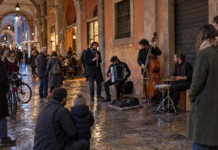
We continued along Corso Venezia toward Porta Venezia. The October air had cooled quickly, and the polished daytime city was being replaced by a more practical evening version. Bicycles passed us. Dogs were taken out. Residents stopped at small supermarkets. Friends met outside bars without appearing to have selected them from a travel guide.
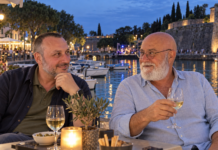
We found a place for an aperitivo that was busy but not theatrical. There was no rooftop, no view of the cathedral and no elaborate explanation of the drinks. We ordered three glasses and accepted whatever food arrived with them.
The conversation returned to our friend’s flight.
He had been in Italy for a month, long enough to develop temporary routines and to accumulate things that would have to fit into a suitcase. He was already thinking about check-in times, baggage weight and the work waiting for him in America. We offered advice that he did not need.
There was no solemn discussion about friendship or distance. We talked about airport trains, misplaced chargers and whether he had bought enough gifts. That was more natural for us.
Later, we walked toward Brera.
Brera Without the Afternoon Performance
Brera is hardly an undiscovered part of Milan. Its streets are filled with restaurants, galleries and people who know perfectly well that the neighborhood is attractive. During the day, it can feel carefully arranged for visitors.
At night, the same arrangement works differently.
The entrances to galleries were dark. Tables had replaced shoppers along the narrower streets. Residents leaned from doorways to speak with restaurant staff. Waiters moved through spaces that had become increasingly difficult to cross.
We passed the Pinacoteca di Brera and continued without entering. Museum hours were over, and for once that did not feel like a failure of planning. Without a list to complete, we paid more attention to Via Brera, Via Fiori Chiari and the smaller streets connecting them.
We eventually chose a restaurant because a table was available, not because it had been recommended. The meal was good and straightforward. We remained longer than necessary, dividing another bottle of wine while the tables around us changed occupants.
Outside, the city had lost the defensive quality I had noticed in the fashion district. Milanese reserve had not disappeared; it had simply been misidentified. During working hours, many people were busy and expected everyone else to be busy as well. In the evening, when the transactions stopped, the city allowed more room for conversation.
We walked back to the hotel rather than taking the Metro. It was farther than we remembered. Nobody objected.
A City Built for Movement
The following morning, Milan returned to work.
We began at Castello Sforzesco and crossed its courtyards before entering Parco Sempione. The castle gave us the scale and historical authority expected from a major Italian city, but the park behind it was more revealing. People ran beneath the trees, parents pushed strollers, and office workers crossed diagonally rather than following the paths intended for visitors.
The October light was flat and useful. It did not improve the buildings or ask us to admire the season. Leaves had started to gather along the paths, but autumn had not yet transformed the park into a decorative landscape.
From the Arco della Pace, we moved back toward the center and later continued north to Porta Nuova. The transition was abrupt: old apartment buildings, railway infrastructure, new towers, construction sites and the controlled open space of Piazza Gae Aulenti.
We looked at the Bosco Verticale from below. Photographs usually isolate the two residential towers against the sky, making them appear like a complete answer to the problem of modern urban living. At street level, they were part of a much larger district of offices, expensive apartments, traffic and ongoing development.
Milan did not conceal its ambition. It expected to be judged as a contemporary European city, not preserved as evidence of Italy’s past.
That attitude distinguished it from many places we knew in Tuscany. In smaller Italian towns, change is often treated as damage until proven otherwise. Milan appeared willing to demolish, rebuild and argue about the result later.
For three visitors without appointments, this constant movement was occasionally exhausting. It was also the reason the city remained interesting after its principal monuments had been seen.
The Navigli and an Unnecessary Decision
That evening we went to the Navigli.
The canals are regularly presented as the relaxed alternative to central Milan, although very little about them is relaxed on a busy night. The pavements were crowded, restaurant menus competed for attention, and groups repeatedly stopped in the narrowest possible places.
We walked along the Naviglio Grande, crossed to the opposite bank and rejected several restaurants before admitting that none of us knew what we were looking for.
This had happened throughout our month of travelling together. Three friends can make important decisions quickly and spend half an hour debating where to eat.
We finally chose a place on a side street, away from the canal. It lacked the view we had supposedly come to enjoy, but we could hear one another speak.
Our friend described what he would do during his first days back in the United States. We compared the habits he would immediately resume with those he claimed he would change. After a month in Italy, he had formed strong opinions about coffee, bread, railway stations and the correct time to eat dinner.
We did not believe all of these opinions would survive the return flight.
When we came out, the canal was still crowded. We walked as far as the Darsena and watched trams pass the end of the water. Milan’s nightlife was active, commercial and sometimes noisy, but it did not feel designed exclusively for outsiders. Students, residents and visitors were all using the same limited space.
The city was warmer at night, but not because it became quieter. It became easier to enter.
The Last Full Day
On our final full day, rain arrived intermittently.
We had no desire to stand in another museum line, so we moved through the city according to the weather. When it rained, we stopped for coffee or entered a church. When it cleared, we continued walking.
We passed Sant’Ambrogio and later reached the Columns of San Lorenzo. Around the ancient Roman columns, scooters, trams and apartment buildings made it impossible to separate historical Milan from the present one. The monuments had not been isolated for contemplation. They were surrounded by traffic, conversations and ordinary errands.
That mixture suited the city better than the immaculate storefronts had.
In the afternoon, we returned toward the Duomo. The square was as busy as it had been on our first day, but we no longer treated it as the center of the visit. We used it as a point of reference, crossed it and continued.
Our friend wanted to buy one final gift. We followed him into several shops, offering contradictory suggestions. He eventually chose something he could easily have bought two weeks earlier.
By then, the light was fading and the shops were approaching closing time again.
We recognized the signs: staff reorganizing displays, customers making final decisions and security guards moving closer to the doors. Within an hour, the shopping streets would once again surrender to people going home or meeting for the evening.
This time, the transformation did not surprise us. We were waiting for it.
Dinner Before Departure
For our last dinner, we avoided the fashionable districts and chose a traditional restaurant on an ordinary street. It was not empty, but nobody appeared to have crossed Milan to be there.
We ordered without much discussion. After nearly a month together, we had already repeated our best stories and settled several old arguments without reaching agreement. The conversation moved between travel expenses, train times and people we all knew.
The next morning, our routes would separate. Our friend would begin the journey toward the airport and the United States. The other two of us would return south to northern Tuscany.
We did not make speeches. Long friendships rarely improve when forced into ceremonial language.
At the end of the meal, we divided the bill, checked the time and walked back through streets where cleaning crews were already working. Chairs were being stacked outside bars. A tram passed almost empty.
Our friend walked slightly ahead of us, checking something on his phone. For a few seconds, the scene looked like every other night of the trip. That was preferable to treating it as a final image.
Leaving from Centrale
The next morning, Milano Centrale was again full of departures.
People studied the electronic boards, pulled suitcases across the concourse and bought food they would eat before the train had properly left the station. Announcements overlapped beneath the high ceiling.
Our friend’s luggage had closed, although only after some pressure. He had his passport, ticket and the various documents that travellers check repeatedly even when they know nothing has changed.
The goodbye was brief. It had to be. Stations impose their own schedule on emotion.
We watched him move toward the next stage of his journey, then turned toward our train. Three nights in Milan had ended without a major revelation, a dramatic incident or a carefully planned farewell.
What remained was a change in how I understood the city.
During the day, Milan had shown us its recognized face: the Duomo, the Galleria, the fashion district, museums, offices and ambitious new architecture. It was impressive, but much of it seemed occupied with proving what Milan already was.
After the shops closed, the argument stopped.
Employees came onto the streets. Friends met for drinks. Residents bought groceries, walked dogs, complained about the weather and waited for trams. Restaurants filled without needing to become destinations. The city became less polished and more specific.
That was the Milan I remembered on the train back to Tuscany—not the city displayed behind glass, but the one that appeared after the doors were locked.