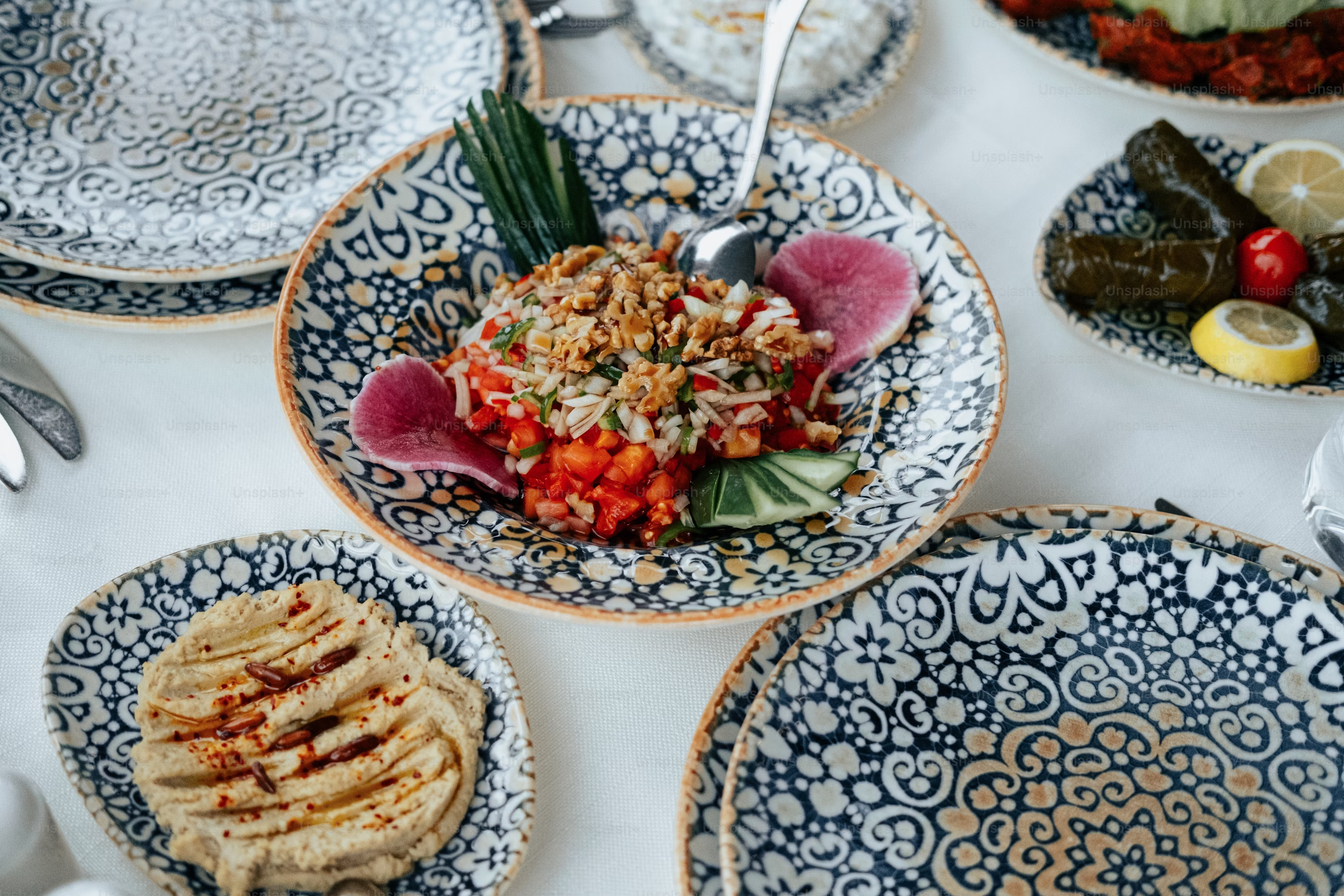

Italy’s greatest restaurants offer far more than technically accomplished food. They interpret landscapes, family histories, local ingredients and regional traditions through highly personal cooking.
Choosing the “best” restaurant is inevitably subjective. A seafood restaurant overlooking the Adriatic cannot be judged in quite the same way as an experimental dining room in the Dolomites or a family restaurant rooted in the Lombardy countryside.
For this guide, I have used the Michelin Guide’s highest distinction as a clear and verifiable starting point. The restaurants below are Italy’s 15 current three-Michelin-star establishments, presented geographically rather than ranked from best to worst.
Three Michelin stars signify exceptional cuisine considered worth a special journey. Reservations are normally essential, tasting menus can last several hours, and prices place most of these restaurants firmly in the special-occasion category.
For a broader introduction to the country’s extraordinary food culture, visit Italia Mia’s guide to Italian cuisine and regional food traditions or explore our dedicated Italian restaurant section.
Northern Italy
1. Atelier Moessmer Norbert Niederkofler — Brunico, South Tyrol
Norbert Niederkofler has built one of Italy’s most distinctive culinary philosophies around the mountains of South Tyrol. His “Cook the Mountain” approach prioritizes Alpine ingredients, seasonal availability and close relationships with local producers.
Instead of importing luxury ingredients merely for prestige, the kitchen explores what can be found in the surrounding territory: mountain herbs, freshwater fish, vegetables, dairy products, grains and carefully selected meats.
The restaurant occupies part of the historic Moessmer textile complex in Brunico, creating an industrial-cultural setting unlike that of a conventional luxury hotel.
Best for: Sustainability, Alpine ingredients and diners fascinated by the relationship between food and landscape.
Address: Via Walther von der Vogelweide 17, 39031 Brunico, South Tyrol
Website: Atelier Moessmer Norbert Niederkofler
2. Da Vittorio — Brusaporto, Lombardy
Da Vittorio is one of Italy’s most celebrated family-run restaurants. Founded by Vittorio Cerea and his wife Bruna, it is now operated by the Cerea family at a country estate outside Bergamo.
The cooking combines Italian generosity with the precision of international haute cuisine. Seafood has always been particularly important, but the restaurant is equally admired for its pasta, meat dishes, elaborate desserts and polished hospitality.
Despite its international reputation, Da Vittorio retains the warmth of a family establishment. This balance between luxury and conviviality distinguishes it from more austere fine-dining experiences.
Best for: Celebratory meals, seafood, impeccable service and refinement without excessive formality.
Address: Via Cantalupa 17, 24060 Brusaporto, Bergamo
Website: Da Vittorio
Travelers can combine their meal with time in Bergamo or a longer exploration of Milan and Lombardy.
3. Dal Pescatore Santini — Runate, Lombardy
Dal Pescatore is located in the countryside near Canneto sull’Oglio, between Mantua and Cremona. The Santini family transformed a rural trattoria into one of Europe’s most respected restaurants without abandoning its connection to local traditions.
Nadia Santini became internationally renowned for her elegant interpretation of Italian family cooking. Pumpkin-filled tortelli, freshwater fish, risotto and carefully prepared meats express the agricultural culture of the Po Valley.
The restaurant’s longevity is part of its appeal. This is not a fashionable dining room built around a passing trend, but a multigenerational institution grounded in hospitality, family and place.
Best for: Traditional Italian cuisine elevated through extraordinary technique and consistency.
Address: Località Runate 17, 46013 Canneto sull’Oglio, Mantua
Website: Dal Pescatore Santini
4. Enrico Bartolini al Mudec — Milan, Lombardy
Located on the third floor of Milan’s Museum of Cultures, Enrico Bartolini al Mudec brings contemporary Italian fine dining into one of the country’s most dynamic cultural settings.
Bartolini’s cooking is creative but generally remains recognizable and grounded in Italian flavors. His dishes frequently explore contrasts between soft and crisp textures, acidity and richness, memory and innovation.
The restaurant is especially convenient for travelers who want to combine an important meal with Milan’s museums, design districts and fashion culture.
Best for: Modern Italian cuisine, urban sophistication and a special evening in Milan.
Address: Via Tortona 56, 20144 Milan
Website: Enrico Bartolini al Mudec
Use Italia Mia’s complete Milan travel guide to plan the rest of your visit.
5. Casa Perbellini 12 Apostoli — Verona, Veneto
Casa Perbellini 12 Apostoli occupies one of Verona’s most historic restaurant spaces, close to Piazza delle Erbe. Giancarlo Perbellini combines the heritage of the celebrated 12 Apostoli address with precise, theatrical and highly personal contemporary cooking.
The experience brings together Verona’s architectural history, refined presentation and carefully constructed cuisine. The kitchen pays particular attention to sauces, pasta, seasonal ingredients and desserts—an area in which Perbellini has long excelled.
Its central location makes it particularly attractive for travelers planning a cultural visit to Verona.
Best for: Culinary history, elegant contemporary cooking and a memorable evening in Verona.
Address: Vicolo Corticella San Marco 3, 37121 Verona
Website: Casa Perbellini 12 Apostoli
6. Le Calandre — Rubano, Veneto
Le Calandre, near Padua, is led by chef Massimiliano Alajmo and forms part of the influential Alajmo family restaurant group.
Alajmo’s cuisine is cerebral but also deeply concerned with aroma, texture and emotion. Familiar Italian ideas are reconstructed in unexpected ways without losing their original identity.
The restaurant’s interior, tableware and service are integrated into the culinary experience. It is an excellent choice for diners seeking experimental food that still communicates warmth and pleasure.
Best for: Inventive tasting menus, sophisticated presentation and the work of one of Italy’s most influential contemporary chefs.
Address: Via Liguria 1, Sarmeola di Rubano, 35030 Rubano, Padua
Website: Le Calandre
Piedmont
7. Villa Crespi — Orta San Giulio, Piedmont
Villa Crespi occupies an ornate Moorish-style villa beside Lake Orta, one of northern Italy’s most romantic destinations.
Chef Antonino Cannavacciuolo draws on his origins in Campania while incorporating ingredients and influences from Piedmont. The resulting cuisine creates a conversation between southern intensity and northern precision.
The villa also operates as a luxury hotel, making it possible to build an entire gastronomic escape around the restaurant.
Best for: Romantic celebrations, a luxurious overnight stay and cuisine connecting northern and southern Italy.
Address: Via Giuseppe Fava 18, 28016 Orta San Giulio, Novara
Website: Villa Crespi
8. Piazza Duomo — Alba, Piedmont
Piazza Duomo stands in the center of Alba, surrounded by the gastronomic landscape of the Langhe.
Chef Enrico Crippa works closely with dedicated gardens that supply herbs, flowers, leaves and vegetables. His food is visually intricate and intimately connected to the seasons.
The restaurant is especially compelling during Piedmont’s autumn truffle season, although reservations during that period can be particularly difficult to obtain.
Best for: Vegetable-focused creativity, artistic presentation and exploring the food and wine of the Langhe.
Address: Piazza Risorgimento 4, 12051 Alba, Cuneo
Website: Piazza Duomo
Italia Mia’s Piedmont travel guide can help you plan a wider journey through Alba, Turin and the Langhe wine country.
9. La Rei Natura by Michelangelo Mammoliti — Serralunga d’Alba, Piedmont
La Rei Natura is the newest member of Italy’s three-star group. It is located at Il Boscareto Resort in Serralunga d’Alba, surrounded by the vineyards of the Langhe.
Michelangelo Mammoliti builds his cuisine around nature, memory and the rhythm of the restaurant’s garden and greenhouses. Plants are not simply decorative additions: they frequently determine the identity and structure of each dish.
The panoramic setting reinforces the connection between the dining room and the surrounding landscape.
Best for: Nature-led contemporary cuisine, garden ingredients and a luxurious Langhe experience.
Address: Strada Roddino 21, 12050 Serralunga d’Alba, Cuneo
Website: La Rei Natura at Il Boscareto
Emilia-Romagna
10. Osteria Francescana — Modena, Emilia-Romagna
Massimo Bottura’s Osteria Francescana helped transform international perceptions of modern Italian food.
Bottura takes familiar elements of Emilia-Romagna’s culinary heritage—Parmigiano Reggiano, balsamic vinegar, tortellini and ragù—and reinterprets them through art, memory, humor and storytelling.
The restaurant is not intended to replace traditional Emilian cooking. Instead, it asks what those traditions mean in contemporary Italy.
Best for: Conceptual cuisine, culinary storytelling and one of the world’s most influential modern Italian restaurants.
Address: Via Stella 22, 41121 Modena
Website: Osteria Francescana
Anyone visiting Modena should also experience the region’s trattorias, markets and traditional products. Italia Mia’s Emilia-Romagna guide provides additional ideas.
Central Italy
11. Enoteca Pinchiorri — Florence, Tuscany
Enoteca Pinchiorri is one of Florence’s great fine-dining institutions.
Giorgio Pinchiorri and Annie Féolde developed a restaurant celebrated for both its cuisine and extraordinary wine collection. The kitchen combines Tuscan foundations with French-influenced refinement and contemporary presentation.
Wine is central to the experience, making this an especially compelling destination for serious collectors and enthusiasts.
Best for: Exceptional wine, formal service and a grand Florentine dining experience.
Address: Via Ghibellina 87, 50122 Florence
Website: Enoteca Pinchiorri
You can incorporate the restaurant into a longer journey using Italia Mia’s guide to the best places to visit in Tuscany.
12. Uliassi — Senigallia, Marche
Mauro Uliassi’s restaurant stands beside the sea in Senigallia on the Adriatic coast.
Its tasting menus draw heavily on seafood while also incorporating wild herbs, meat and playful references to familiar Italian food. The cooking can be technically complex, yet many dishes retain an immediate and recognizable pleasure.
The restaurant’s seaside position is not merely scenic. The Adriatic is fundamental to its identity, ingredients and culinary philosophy.
Best for: Innovative seafood, Adriatic flavors and a destination meal on Italy’s eastern coast.
Address: Banchina di Levante 6, 60019 Senigallia, Ancona
Website: Uliassi
13. Reale — Castel di Sangro, Abruzzo
Reale, led by Niko Romito, is housed within the former Casadonna monastery in the mountains of Abruzzo.
Romito’s food is known for its apparent simplicity. Plates may contain relatively few elements, but each ingredient is subjected to intense research and refinement. Bread, vegetables, broths and essential flavors receive the same attention normally reserved for expensive luxury ingredients.
The remote setting encourages diners to treat the visit as a complete destination rather than simply an evening meal.
Best for: Minimalist presentation, intellectual precision and an immersive culinary retreat.
Address: Contrada Piana Santa Liberata, 67031 Castel di Sangro, L’Aquila
Website: Reale at Casadonna
Explore more of the surrounding region through Italia Mia’s guide to the best places to visit in Abruzzo.
14. La Pergola — Rome, Lazio
Located at the Rome Cavalieri hotel, La Pergola combines Heinz Beck’s refined Mediterranean cuisine with sweeping views across Rome.
The restaurant is known for polished service, an extensive wine collection and carefully constructed tasting menus. Its atmosphere is formal and luxurious, making appropriate dress and advance planning advisable.
La Pergola is especially attractive for visitors seeking a memorable conclusion to a stay in the Italian capital.
Best for: Panoramic views, luxury hospitality and sophisticated Mediterranean cooking.
Address: Via Alberto Cadlolo 101, 00136 Rome
Website: La Pergola
Southern Italy
15. Quattro Passi — Nerano, Campania
Quattro Passi is located in Nerano, near Marina del Cantone on the Sorrento Peninsula, within easy reach of the Amalfi Coast and Bay of Naples.
The Mellino family’s cuisine celebrates the products of Campania, particularly seafood, tomatoes, citrus fruits, vegetables and pasta. Its elegant Mediterranean cooking feels inseparable from the coastal landscape.
This is an excellent destination for travelers who want to combine fine dining with time in Sorrento, Capri, Positano or the quieter villages of the peninsula.
Best for: Mediterranean seafood, coastal atmosphere and a gastronomic journey through Campania.
Address: Via Amerigo Vespucci 13/N, 80061 Nerano, Massa Lubrense
Website: Quattro Passi
How to Choose the Right Restaurant
The most famous restaurant is not automatically the best choice for every traveler.
Choose Atelier Moessmer or Reale if you are fascinated by landscape, sustainability and culinary research.
Choose Dal Pescatore or Da Vittorio if family heritage and warm hospitality matter to you.
Choose Uliassi or Quattro Passi for seafood and a strong relationship with the coast.
Choose Osteria Francescana, Piazza Duomo or Le Calandre if you want some of Italy’s most experimental and influential cooking.
Choose Villa Crespi or La Pergola for a romantic luxury experience.
Choose Enoteca Pinchiorri if wine is an essential part of the meal.
Reservations, Prices and Practical Advice
Reserve as early as possible, particularly for weekends, holidays, truffle season and the most popular travel months. Some restaurants release tables according to a fixed booking calendar, while others accept reservation requests several months ahead.
Book through the restaurant’s official website whenever possible. This gives you access to the correct menus, reservation conditions, cancellation policies and seasonal closures.
Most of these restaurants offer one or more tasting menus, while some also provide à-la-carte options. Prices and menu formats change regularly, so consult the official website before making non-refundable travel arrangements.
Inform the restaurant about allergies or dietary restrictions when reserving—not after arriving. Highly structured tasting menus may require advance notice to accommodate substitutions.
Allow sufficient time. A complete tasting menu can occupy much of an afternoon or evening, and remote restaurants may require a car, private transfer or overnight stay.
Dress codes vary, but smart attire is the safest choice for formal dining rooms. Jackets are not universally obligatory, although beachwear and excessively casual clothing are rarely appropriate.
Several restaurants—including Villa Crespi, Da Vittorio, La Rei Natura, Reale and La Pergola—are connected to hotels or luxury properties. Staying on-site can make the experience more relaxing, particularly when the restaurant is outside a city center.
For other accommodation near these restaurants, search hotels in Italy through Trip.com.
Finally, remember that Italy’s culinary greatness is not confined to starred restaurants. Some of the most memorable meals can be found in family trattorias, village osterias, pizzerias, markets and agriturismi. Fine dining represents one extraordinary expression of Italian food culture—not its only one.
External Links
Michelin Guide: Three-Star Restaurants in Italy
Michelin Guide Italy: Current Selection and Awards
Gambero Rosso: Italy’s Tre Forchette Restaurants
Italia.it: Official Italian Tourism Website