 Best Places to Visit in Tuscany: 25 Cities, Hill Towns and Hidden Gems
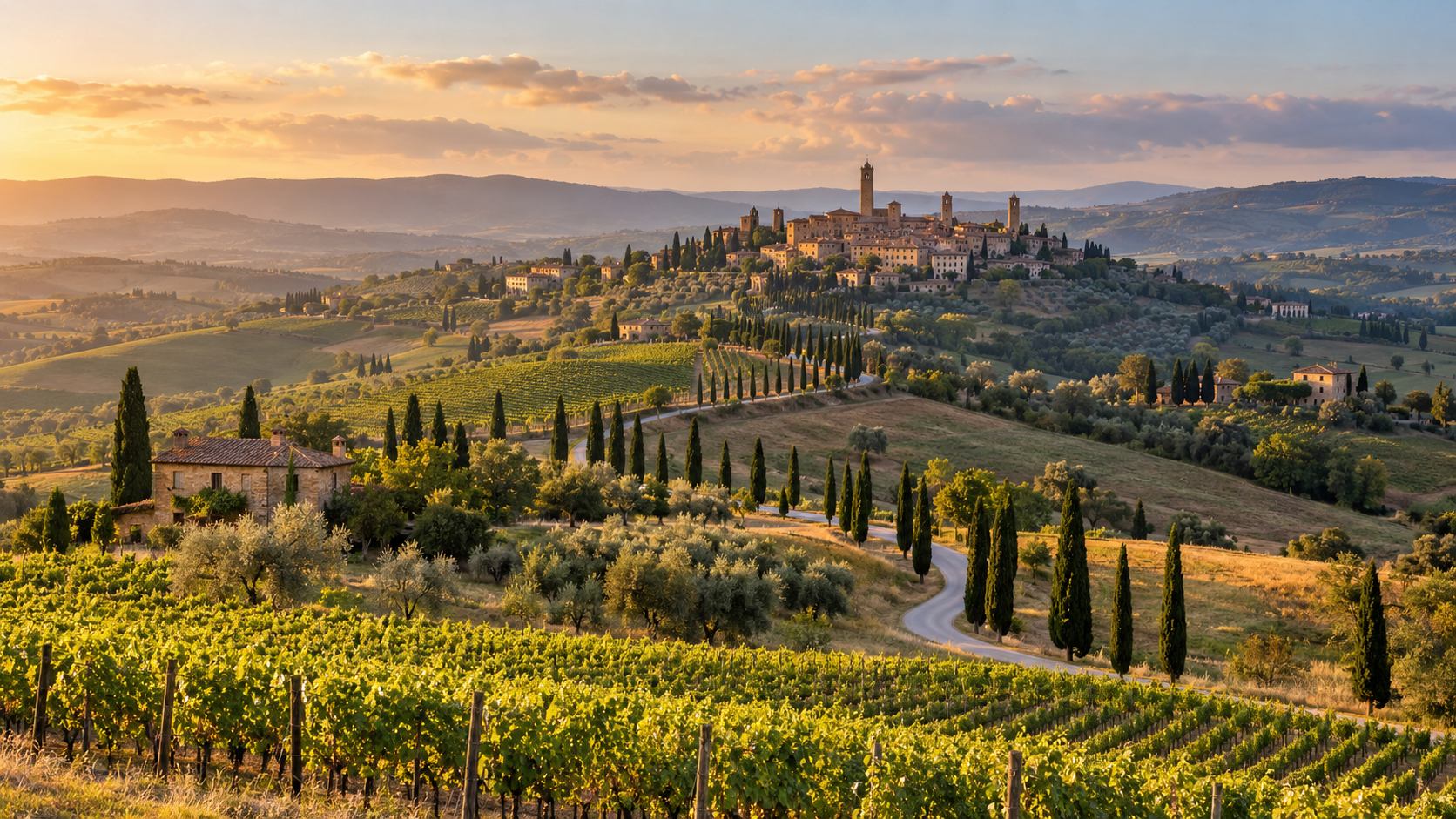
Tuscany is the Italy many travelers imagine before they arrive: Renaissance cities filled with art, medieval towns balanced on hills, vineyards extending toward the horizon and country roads lined with cypress trees.
Yet Tuscany is not a single landscape or experience. Florence offers world-famous museums and architecture. Siena preserves the atmosphere of a medieval city-state. Pisa and Lucca reveal two very different sides of northwestern Tuscany, while the Val d’Orcia presents the region’s most recognizable countryside.
Travel farther south and Tuscany changes again. The Maremma has wild landscapes, ancient Etruscan settlements and a beautiful coastline. In eastern Tuscany, Arezzo, Cortona and Anghiari offer art, history and fewer crowds. The region even contains mountain villages, island communities and fashionable seaside resorts.
Our comprehensive Region of Tuscany travel guide introduces the region’s geography, history, food and principal attractions. This guide takes a closer look at 25 of the best individual places to visit.
Tuscany at a Glance
Best for: Renaissance art, medieval towns, wine, food, countryside, photography and road trips
Regional capital: Florence
Major airports: Florence and Pisa
Best months to visit: April–June and September–October
Best for train travel: Florence, Pisa, Lucca, Arezzo and other principal cities
Best explored by car: Val d’Orcia, Chianti, Maremma and smaller hill towns
Ideal length of stay: At least 7–10 days
Most famous landscape: Val d’Orcia
Most useful bases: Florence, Siena, Lucca, Montepulciano and the Tuscan countryside
The official Tuscany tourism website provides current destination information, itineraries and regional events.
Hotels and accommodation in Tuscany — Compare hotels, apartments, villas and countryside stays across Florence, Siena, Pisa, Lucca and other Tuscan destinations.
Find hotels throughout Tuscany with Expedia
1. Florence
Florence is the cultural heart of Tuscany and one of the great art cities of the world.
The historic center is dominated by the Cathedral of Santa Maria del Fiore and Brunelleschi’s enormous dome. Nearby stand Giotto’s Bell Tower, the Baptistery and Piazza della Signoria, where sculptures, palaces and public life come together.
The Uffizi Galleries contain masterpieces by Botticelli, Leonardo da Vinci, Raphael, Titian and Caravaggio. Michelangelo’s original David is displayed at the Accademia Gallery, while Santa Croce, Santa Maria Novella and the Medici Chapels reveal different periods of Florence’s artistic development.
Cross the Ponte Vecchio to explore Oltrarno, an area known for artisan workshops, quieter streets, Palazzo Pitti and the Boboli Gardens. For a panoramic view, walk or take a bus to Piazzale Michelangelo.
Florence is also an excellent destination for Italian leather, gold jewelry and fashion. Our guide to shopping for leather goods, jewelry and fashion in Florence explains what to look for and where to shop carefully.
Do not miss: Florence Cathedral, Uffizi Galleries, Accademia, Ponte Vecchio and Oltrarno
Ideal stay: Three or four days
Best for: Art, architecture, history, food and shopping
2. Siena
Siena offers one of Italy’s most complete medieval urban experiences.
Its historic center unfolds around Piazza del Campo, the distinctive shell-shaped square that hosts the Palio horse race twice each summer. Rising above it are the Palazzo Pubblico and Torre del Mangia.
Siena Cathedral is equally extraordinary. Its striped marble exterior introduces an interior filled with sculpture, mosaics and works associated with artists including Nicola Pisano, Donatello, Pinturicchio and Michelangelo.
The city is divided into 17 historic districts called contrade. These are not merely decorative neighborhoods created for tourists: they remain part of Siena’s social identity and are central to the traditions surrounding the Palio.
Siena is compact enough to explore on foot, although its sloping streets make comfortable shoes essential. The city also makes a useful base for visiting Monteriggioni, San Gimignano, Chianti and the Val d’Orcia.
Do not miss: Piazza del Campo, Siena Cathedral, Torre del Mangia and the contrade
Ideal stay: One or two days
Best for: Medieval history, architecture and Tuscan traditions
The official Visit Siena website provides practical information about attractions and transportation.
3. Pisa
The Leaning Tower makes Pisa internationally famous, but the city deserves more than a hurried photograph.
The tower is part of the monumental complex in Piazza dei Miracoli, together with Pisa Cathedral, the Baptistery and the Camposanto. These buildings reflect Pisa’s medieval power and its former importance as a maritime republic.
Beyond the famous square, walk through Piazza dei Cavalieri, once the political center of medieval Pisa, and continue through Borgo Stretto toward the Arno. The Lungarni—the streets lining the river—are especially attractive in the evening.
Santa Maria della Spina, Palazzo Blu and the lively Piazza delle Vettovaglie provide additional reasons to remain in the city after tour groups leave.
Read our expanded introduction to the history and culture of Pisa and browse our images of Pisa before your visit.
Do not miss: Leaning Tower, Cathedral, Baptistery, Piazza dei Cavalieri and the Lungarni
Ideal stay: One full day
Best for: Architecture, photography and medieval history
4. Lucca
Lucca is one of Tuscany’s most pleasant and walkable cities.
Its historic center remains enclosed by remarkably well-preserved Renaissance walls. The broad path along the top is now used by walkers and cyclists, creating a green circuit around the old city.
Inside the walls, highlights include Piazza dell’Anfiteatro, San Martino Cathedral and the Guinigi Tower, recognizable by the trees growing from its rooftop garden. Lucca is also the birthplace of composer Giacomo Puccini, whose former home is now a museum.
The city feels calmer than Florence or Pisa and rewards travelers who stay overnight. Early mornings and evenings are especially atmospheric after most day visitors have departed.
Do not miss: Lucca’s walls, Piazza dell’Anfiteatro, Guinigi Tower and Puccini Museum
Ideal stay: One or two days
Best for: Walking, cycling, music and a relaxed city break
5. San Gimignano
San Gimignano’s surviving medieval towers create one of Tuscany’s most recognizable skylines.
Wealthy families once built towers as expressions of prestige and power. Although only a fraction of the original towers remain, they still give the town its unmistakable vertical character.
The principal square is Piazza della Cisterna, connected to Piazza del Duomo and the Collegiate Church of Santa Maria Assunta. Climbing Torre Grossa provides a panoramic view over the town and surrounding countryside.
San Gimignano can become very busy during the middle of the day. Arrive early, remain into the evening or spend the night to experience its quieter side.
The town is also associated with Vernaccia di San Gimignano, a historic Tuscan white wine.
Do not miss: Piazza della Cisterna, Collegiate Church, Torre Grossa and the town walls
Ideal stay: Half a day or overnight
Best for: Medieval architecture, views and photography
6. Volterra
Volterra combines Etruscan origins, Roman remains, medieval streets and a long tradition of alabaster craftsmanship.
The town occupies a dramatic hilltop position overlooking the Cecina Valley. Its Etruscan heritage can be explored at the Guarnacci Etruscan Museum and through surviving sections of ancient walls and gates.
Volterra also contains a Roman theater, an imposing medieval fortress and Piazza dei Priori, one of Tuscany’s most impressive civic squares. Artisan shops continue to sell locally carved alabaster objects.
Although Volterra is popular, its relative distance from the main railway lines means it often feels less overwhelmed than San Gimignano.
Do not miss: Guarnacci Museum, Roman Theater, Piazza dei Priori and Etruscan Gate
Ideal stay: One day
Best for: Archaeology, crafts and dramatic landscapes
7. Arezzo
Arezzo is an elegant art city that receives fewer international visitors than Florence or Siena.
Piero della Francesca’s fresco cycle, The Legend of the True Cross, in the Basilica of San Francesco is the city’s greatest artistic treasure. Reservations are advisable.
Piazza Grande is surrounded by medieval and Renaissance buildings and hosts Arezzo’s celebrated antiques fair. The sloping square also becomes the setting for the Giostra del Saracino, a historic jousting festival.
Other attractions include Arezzo Cathedral, the Church of San Domenico and the home associated with artist and biographer Giorgio Vasari.
Learn more about the city’s famous market in our guide to the Fiera Antiquaria in Arezzo.
Do not miss: Piero della Francesca frescoes, Piazza Grande, Cathedral and antiques fair
Ideal stay: One or two days
Best for: Renaissance art, antiques and uncrowded city travel
8. Cortona
Cortona rises steeply above the Val di Chiana near Tuscany’s border with Umbria.
Its stone streets, small piazzas and expansive views have made it one of eastern Tuscany’s most appealing towns. The Etruscan Academy Museum preserves important archaeological objects, while the Diocesan Museum contains works by Fra Angelico and Luca Signorelli.
The Basilica of Santa Margherita and the fortress above the town require an uphill walk but reward visitors with excellent views.
Cortona became especially familiar to international audiences through Frances Mayes’ memoir Under the Tuscan Sun, but its history extends far beyond its modern literary fame.
Do not miss: Piazza della Repubblica, Etruscan Museum, Diocesan Museum and Santa Margherita
Ideal stay: One day or overnight
Best for: Views, archaeology and romantic atmosphere
9. Pienza
Pienza is one of the essential stops in the Val d’Orcia.
Pope Pius II commissioned the rebuilding of his birthplace during the 15th century according to Renaissance ideals of harmonious urban design. The result is a compact town centered on Piazza Pio II, where the cathedral, papal palace and civic buildings form a beautifully balanced ensemble.
Walk along the panoramic streets behind the cathedral for unforgettable views across the Val d’Orcia. Pienza is also famous for pecorino cheese, sold at shops throughout the town.
The historic center and the surrounding Val d’Orcia are both recognized by UNESCO, making Pienza an exceptional meeting point between architecture and landscape.
Do not miss: Piazza Pio II, Palazzo Piccolomini, Cathedral and panoramic walk
Ideal stay: Half a day or overnight
Best for: Renaissance architecture, scenery and pecorino cheese
10. Montepulciano
Montepulciano occupies a long ridge overlooking vineyards and the Val di Chiana.
The town’s steep main street leads toward Piazza Grande, surrounded by Renaissance palaces, the cathedral and the Palazzo Comunale. Several historic wine cellars extend beneath buildings in the center.
Montepulciano is associated with Vino Nobile di Montepulciano, a prestigious red wine that should not be confused with Montepulciano d’Abruzzo, which is made from a different grape in another region.
The town makes an excellent base for exploring Pienza, Monticchiello, Chianciano Terme and the wider Val d’Orcia.
Do not miss: Piazza Grande, historic wine cellars, San Biagio and the panoramic viewpoints
Ideal stay: One day or two nights
Best for: Wine, Renaissance architecture and countryside excursions
11. Montalcino
Montalcino is known internationally as the home of Brunello di Montalcino.
The hill town is crowned by a 14th-century fortress whose walls provide broad views of southern Tuscany. Its compact historic center contains wine shops, small restaurants, churches and quiet streets.
Wine enthusiasts can visit producers in the surrounding countryside, but appointments are often necessary. Travelers should arrange a driver or organized tour if they plan to taste wine at several estates.
The nearby Abbey of Sant’Antimo, set among olive groves and vineyards, is one of the most atmospheric religious sites in Tuscany.
Our guide to touring Tuscany’s wine country offers additional ideas for wine-focused travel.
Do not miss: Montalcino Fortress, Brunello wine and Sant’Antimo Abbey
Ideal stay: One day or overnight
Best for: Wine, countryside and medieval atmosphere
12. San Quirico d’Orcia
San Quirico d’Orcia is a smaller and often quieter alternative to nearby Pienza and Montalcino.
The town developed along the Via Francigena, the historic pilgrimage route connecting northern Europe with Rome. Its principal sights include the Romanesque Collegiate Church and the Horti Leonini Renaissance garden.
Just outside town are some of the most photographed landscapes in Tuscany, including cypress-lined roads and the small Chapel of the Madonna di Vitaleta.
San Quirico’s central location makes it one of the best bases for exploring the Val d’Orcia.
Do not miss: Collegiate Church, Horti Leonini, Vitaleta Chapel and nearby cypress landscapes
Ideal stay: Half a day or two nights as a base
Best for: Slow travel, photography and Val d’Orcia exploration
13. Bagno Vignoni
Bagno Vignoni is unlike any other village in Tuscany.
Instead of a conventional piazza, its center contains a large rectangular pool fed by thermal water. Bathing is not permitted in the historic pool, but spas and thermal facilities operate nearby.
Water from the springs has attracted visitors since ancient times. Medieval pilgrims traveling along the Via Francigena stopped here, and the village later became associated with figures including Saint Catherine of Siena and members of the Medici family.
Visit in the evening or early morning, when mist sometimes rises above the water and the village becomes especially atmospheric.
Do not miss: Piazza delle Sorgenti, the old water channels and nearby thermal facilities
Ideal stay: Several hours or a spa overnight
Best for: Wellness, history and romantic atmosphere
14. Monteriggioni
Monteriggioni is a tiny fortified village encircled by medieval walls and towers.
Built by Siena during the 13th century, the settlement occupied a strategic position on the route toward Florence. Its remarkably intact profile remains visible from the surrounding countryside.
Inside the walls, the village consists of a central square, church, small museum, restaurants and a handful of lanes. Walking sections of the defensive walls provides views toward the Chianti countryside.
Monteriggioni is easily combined with Siena or San Gimignano, but visiting early or late helps avoid tour-bus crowds.
Do not miss: Medieval walls, towers and Piazza Roma
Ideal stay: Two or three hours
Best for: Medieval history and families
15. Pitigliano
Pitigliano appears to rise directly from a ridge of volcanic tuff in southern Tuscany.
Its dramatic position is only part of its appeal. The historic center contains narrow lanes, arches, underground spaces and panoramic terraces. Pitigliano also preserves an important Jewish heritage and is sometimes called “Little Jerusalem.”
Visitors can explore the synagogue, Jewish museum, ritual bath and historic bakery traditions. Outside the town, ancient pathways known as vie cave were cut deeply into the surrounding tuff by the Etruscans.
Pitigliano combines naturally with Sovana and Sorano as part of a southern Tuscany itinerary.
Do not miss: Old town, Jewish quarter, Orsini Palace and vie cave
Ideal stay: One day or overnight
Best for: Hidden history, photography and Etruscan landscapes
16. Sovana
Sovana is a small village with a history far greater than its present size suggests.
Once an important Etruscan and medieval settlement, it has a beautiful central square lined with stone buildings. The Romanesque cathedral stands at the edge of the village.
The surrounding archaeological park contains Etruscan tombs, including the monumental Tomba Ildebranda, as well as sections of the mysterious sunken roads carved through volcanic rock.
Sovana is quieter than many famous Tuscan towns and is best appreciated slowly.
Do not miss: Piazza del Pretorio, Sovana Cathedral and Etruscan necropolis
Ideal stay: Half a day
Best for: Archaeology, solitude and medieval architecture
17. Sorano
Sorano is another remarkable tuff-stone town in the southern Maremma.
Houses seem to merge with the rocky cliff, while alleys, stairways and terraces create an almost labyrinthine historic center. The massive Orsini Fortress dominates the town from above.
Sorano is less polished and less visited than many central Tuscan destinations, which is precisely part of its attraction. It offers a glimpse of a more remote Tuscany shaped by Etruscan roads, medieval fortifications and rugged terrain.
For more ideas in this part of the region, read our guide to Maremma, Tuscany’s wild and historic south.
Do not miss: Orsini Fortress, historic center and panoramic viewpoints
Ideal stay: Half a day or overnight
Best for: Hidden Tuscany, history and unusual landscapes
18. Anghiari
Anghiari is a beautifully preserved medieval town in the Tuscan Valtiberina.
It is historically associated with the Battle of Anghiari, fought in 1440 and later depicted in a famously lost mural by Leonardo da Vinci. The town’s steep streets, stone houses and defensive walls create an intimate atmosphere.
Anghiari is officially recognized among I Borghi più Belli d’Italia, an association celebrating particularly beautiful historic villages.
The surrounding valley is also connected to Renaissance artist Piero della Francesca, whose works can be seen in nearby Sansepolcro and Arezzo.
Do not miss: Medieval walls, Palazzo Taglieschi and views over the Valtiberina
Ideal stay: Half a day or overnight
Best for: Art history, quiet streets and eastern Tuscany
19. Barga
Barga brings a distinctive mountain character to Tuscany.
Located in the Serchio Valley north of Lucca, the town overlooks the forested Apennines and the dramatic peaks of the Apuan Alps. Its historic center contains colorful buildings, narrow lanes and a Romanesque cathedral occupying the highest point.
Barga also has longstanding connections with Scotland, created by generations of local emigrants and their descendants. These cultural ties contribute to the town’s unusual identity.
The surrounding Garfagnana is ideal for travelers interested in hiking, traditional food and villages beyond Tuscany’s standard tourist circuit.
Do not miss: Barga Cathedral, historic center and mountain views
Ideal stay: One day or a countryside weekend
Best for: Mountains, walking and lesser-known Tuscany
20. Collodi
Collodi is associated with Carlo Lorenzini, the author better known by his pen name Carlo Collodi, who wrote The Adventures of Pinocchio.
The village climbs steeply along a hillside, with houses appearing to form a stone cascade. Below it is Pinocchio Park, an artistic and literary attraction inspired by the famous story rather than a conventional amusement park.
Nearby Villa Garzoni has an elaborate historic garden with terraces, fountains and monumental staircases.
Collodi works especially well for families or as an excursion between Lucca and Pistoia.
Do not miss: Pinocchio Park, Villa Garzoni garden and the hillside village
Ideal stay: Half a day
Best for: Families, gardens and Italian literature
21. Vinci
Vinci is the birthplace of Leonardo da Vinci and an appealing destination for travelers interested in Renaissance science and invention.
The Leonardo Museum occupies several buildings in the historic center and displays models inspired by the artist’s technical drawings. A short distance outside town, visitors can see the traditional house identified as Leonardo’s birthplace in Anchiano.
The surrounding landscape of vineyards and olive groves helps place Leonardo’s early life within its Tuscan setting.
Vinci is reachable as a day trip from Florence, although having a car makes the surrounding countryside easier to explore.
Do not miss: Leonardo Museum, Church of Santa Croce and Leonardo’s birthplace
Ideal stay: Half a day
Best for: Leonardo da Vinci, families and Renaissance history
22. Bolgheri
Bolgheri is a small village with an international reputation among wine lovers.
The approach along Viale dei Cipressi—a long road lined with thousands of cypress trees—is almost as famous as the village itself. Inside the walls are wine shops, restaurants and intimate stone streets.
The surrounding territory produces prestigious wines often called Super Tuscans, including labels associated with Sassicaia, Ornellaia and other renowned estates.
Bolgheri can be combined with the Etruscan Coast, Castagneto Carducci or the beaches around Marina di Bibbona.
Do not miss: Viale dei Cipressi, castle gateway and local wine shops
Ideal stay: Half a day or overnight in the countryside
Best for: Wine, food and scenic drives
23. Castiglione della Pescaia
Castiglione della Pescaia demonstrates that Tuscany is much more than inland hills and art cities.
The town combines a medieval upper settlement with a lively seaside community and sandy beaches. Climb toward the castle for views over the coast, harbor and surrounding wetlands.
The nearby Diaccia Botrona Nature Reserve protects an important coastal habitat and can be explored through walking routes, boat excursions and wildlife observation.
Castiglione is one of several destinations covered in our guide to Tuscany’s beaches and coastal towns.
Do not miss: Medieval upper town, castle views, beach and Diaccia Botrona
Ideal stay: Two or three days
Best for: Beaches, families, nature and summer vacations
24. Massa Marittima
Despite its name, Massa Marittima is located inland on a hill overlooking the Maremma countryside.
Its magnificent Piazza Garibaldi is dominated by the Cathedral of San Cerbone, approached by a broad staircase. The asymmetrical square also contains medieval civic buildings and creates one of Tuscany’s finest architectural ensembles.
The town’s museums explore mining history, archaeology and sacred art. Its elevated position provides views extending toward the distant coast.
Massa Marittima offers substantial history and architecture without the crowd levels commonly found in central Tuscany.
Do not miss: Cathedral of San Cerbone, Piazza Garibaldi and medieval city walls
Ideal stay: One day
Best for: Architecture, museums and uncrowded Tuscany
25. Peccioli
Peccioli presents an unexpected combination of medieval Tuscany and contemporary art.
The village retains its historic center and panoramic position, but modern installations, sculptures and architectural projects appear throughout the town and surrounding landscape.
This deliberate relationship between heritage and contemporary culture has transformed Peccioli into one of Tuscany’s most interesting lesser-known destinations. It is particularly appealing to travelers who have already visited the region’s famous cities and want to encounter something different.
Our complete Peccioli travel guide explores its medieval streets, contemporary artworks and surrounding attractions.
Do not miss: Historic center, contemporary art installations and panoramic terraces
Ideal stay: Half a day
Best for: Contemporary art, architecture and hidden gems
How to Choose Where to Go in Tuscany
With so many possible destinations, the best choices depend on the kind of trip you want.
For a First Visit
Choose Florence, Siena, San Gimignano, Lucca, Pisa and the Val d’Orcia. These destinations provide a balanced introduction to Tuscany’s art, architecture, countryside and medieval history.
For Renaissance Art
Base yourself in Florence and add Arezzo, Pienza and Vinci.
For Medieval Towns
Prioritize Siena, San Gimignano, Volterra, Monteriggioni, Anghiari and Massa Marittima.
For Wine
Visit Chianti, Montalcino, Montepulciano, San Gimignano and Bolgheri.
For the Classic Tuscan Landscape
Explore Pienza, San Quirico d’Orcia, Monticchiello, Montalcino and the roads of the Val d’Orcia. UNESCO describes the Val d’Orcia as a cultural landscape whose layout and character preserve Renaissance ideals of good government and harmonious land use.
For Hidden Gems
Consider Peccioli, Anghiari, Barga, Sovana, Sorano and Massa Marittima.
For the Coast
Choose Castiglione della Pescaia, the Etruscan Coast, Monte Argentario, Versilia or the island of Elba.
For Mountains and Nature
Explore Barga, the Garfagnana, the Apuan Alps and Monte Amiata, the highest mountain in southern Tuscany.
How Many Days Do You Need in Tuscany?
A traveler could spend several weeks in Tuscany without exhausting its possibilities.
Three days: Concentrate on Florence, perhaps with one excursion.
Five days: Combine Florence with Siena and one countryside destination.
Seven days: Add Lucca, Pisa, San Gimignano or several Val d’Orcia towns.
Ten days: Combine Florence, central Tuscany, Val d’Orcia and either the coast or eastern Tuscany.
Two weeks: Travel more slowly and include the Maremma, Garfagnana, Elba or lesser-known villages.
If this is your first journey to the country, our complete guide to Italy for first-time visitors can help with broader planning.
Traveling Around Tuscany
Trains connect Florence efficiently with Pisa, Lucca, Arezzo, Prato, Pistoia and several other cities. Siena can also be reached by public transportation, although the bus from Florence may be more convenient than the train for reaching its historic center.
Smaller towns and rural areas are more difficult to explore without a car. A vehicle is particularly useful in the Val d’Orcia, Chianti, Maremma and Garfagnana.
Remember that historic centers commonly have restricted traffic zones called ZTLs. Entering one without authorization can result in a fine detected by camera. Parking outside the historic center and walking inward is usually the safest approach.
Never leave luggage visible inside a parked vehicle, and allow extra time for narrow roads and unfamiliar parking systems.
Best Time to Visit Tuscany
Spring and autumn generally offer the best combination of comfortable temperatures, attractive countryside and manageable visitor numbers.
April and May: Green landscapes, spring flowers and pleasant sightseeing weather.
June: Long days and generally favorable conditions, although popular towns become busier.
July and August: Hot weather, crowded art cities and high accommodation prices. This is nevertheless an important season for festivals, beaches and evening events.
September and October: Grape harvest, warm colors, food festivals and excellent conditions for countryside travel.
November through March: Quieter cities and lower prices, but shorter days, variable weather and reduced activity in some rural destinations.
Florence, Pisa, Lucca, Siena and Arezzo remain worthwhile throughout the year.
Tuscany Travel Books
A good printed guidebook is especially useful in Tuscany, where mobile reception can be unreliable in rural areas and spontaneous detours often become part of the trip.
- Rick Steves Florence & Tuscany travel guides
- Lonely Planet Florence & Tuscany travel guides
- DK Eyewitness Florence and Tuscany travel guides
- Fodor’s Florence and Tuscany travel guides
- Tuscany road maps and driving guides
- Tuscan cooking and regional recipe books
- Under the Tuscan Sun by Frances Mayes
As an Amazon Associate, Italia Mia may earn from qualifying purchases made through these links, at no additional cost to the reader.
Final Thoughts
Tuscany’s fame can sometimes make the region seem familiar even before a traveler arrives. Yet its real character becomes apparent only when its different territories are experienced individually.
Florence and Siena contain extraordinary concentrations of art and history. Pisa and Lucca offer contrasting urban experiences. San Gimignano and Volterra preserve powerful medieval identities, while the Val d’Orcia demonstrates how agriculture, architecture and landscape can form a unified work of culture.
Beyond these celebrated destinations are places that reveal a quieter Tuscany: Anghiari’s stone streets, Barga’s mountain views, Pitigliano’s tuff cliffs, Peccioli’s contemporary art and the coastal landscapes of the Maremma.
The best Tuscany itinerary is not necessarily the one that includes the greatest number of towns. Choose a few complementary destinations, allow time for the countryside and resist turning every day into a race between monuments.
In Tuscany, the road between two famous places can be every bit as memorable as the places themselves.
Related Italia Mia Articles
- Region of Tuscany: Complete Travel Guide
- Discovering Maremma: A Hidden Gem of Tuscany
- Peccioli: Medieval Village, Contemporary Art and Hidden Gems
- The City of Pisa: History and Culture
- Images of Tuscany
- Tuscany Beaches and Coastal Towns
- Monte Amiata: Southern Tuscany’s Highest Mountain
- How to Tour Tuscany’s Wine Region
- Shopping for Leather, Jewelry and Fashion in Florence
External Sources
- Visit Tuscany — Official Tourism Website
- Must-See Destinations for First-Time Visitors — Visit Tuscany
- Tuscany — Italia.it, the Official Italian Tourism Website
- Val d’Orcia — UNESCO World Heritage Centre
- Visit Siena — Official Tourist Information
- Val d’Orcia Official Tourism Website