There are many reasons to visit Tuscany: Renaissance masterpieces in Florence, medieval towers in San Gimignano, Etruscan history in Volterra, the monumental architecture of Pisa and the unforgettable landscapes of the Val d’Orcia.
But Tuscany also has another side—smaller towns where history, agriculture, art and contemporary culture come together in unexpected ways.
Peccioli is one of them.
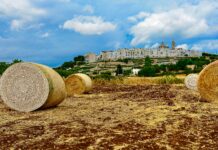
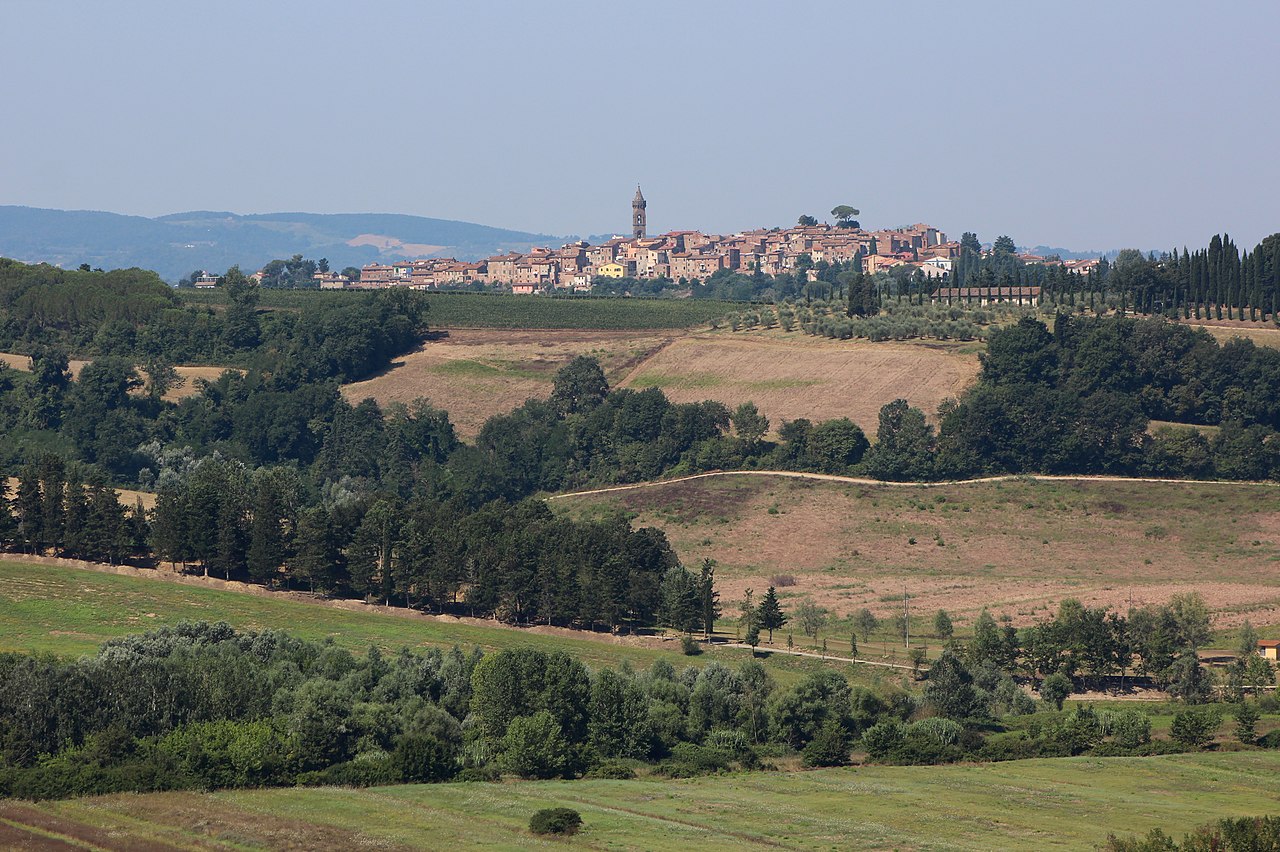
Perched on a hill in the Valdera, in the Province of Pisa, Peccioli combines a medieval historic center with Etruscan archaeological heritage, Renaissance art, traditional Tuscan food and an extraordinary collection of contemporary art installed throughout the town and surrounding countryside.
The result is one of the most unusual small-town experiences in Tuscany. You can walk along medieval streets, visit an 11th-century church, examine Etruscan archaeological discoveries and then encounter enormous contemporary sculptures in the countryside.
Peccioli has been awarded the Orange Flag by the Touring Club Italiano for its landscape, hospitality and cultural heritage, and in 2024 it won the Borgo dei Borghi competition broadcast by Rai 3’s Kilimangiaro.
For travelers who want to discover a different side of Tuscany, Peccioli deserves serious consideration.
Where Is Peccioli?
Peccioli is located in western Tuscany, in the Province of Pisa, approximately midway between several of the region’s major attractions.
Its position in the Valdera makes it an excellent destination for a road trip. Pisa, Volterra, San Gimignano and other Tuscan towns can all be incorporated into a broader itinerary.
For an introduction to the region, the Italia Mia Region of Tuscany: A Complete Travel Guide provides an overview of Tuscany’s major cities, landscapes, history, food and wine.
Peccioli itself sits above the surrounding countryside, giving the town an elevated position from which the vineyards, olive groves and rolling hills of the Valdera spread out in every direction.
The municipality includes several smaller settlements, including Ghizzano, Fabbrica, Legoli, Libbiano, Cedri and Montecchio. These hamlets are important because some of Peccioli’s most interesting artistic and historical attractions are outside the main town.
Hotels and accommodation in Tuscany — Compare hotels, apartments, villas and countryside stays across Florence, Siena, Pisa, Lucca and other Tuscan destinations.
Find hotels throughout Tuscany with Expedia
A Town Built on Layers of History
Peccioli’s story goes back much further than its medieval appearance suggests.
The surrounding territory contains evidence of Etruscan settlement, and archaeological excavations have uncovered important material from the Etruscan sanctuary of Ortaglia and the archaeological site of Santa Mustiola.
Artifacts discovered in the area can be seen in Peccioli’s Archaeological Museum.
This makes Peccioli particularly interesting for anyone fascinated by the ancient civilizations of central Italy.
Italia Mia’s Ultimate Travel Guide to Visiting Etruscan Towns in Italy is a natural companion to a visit because it explores the wider Etruscan world, including nearby Tuscan destinations such as Volterra, Chiusi, Populonia and Vetulonia.
Peccioli’s location means that visitors can easily turn a trip into a broader exploration of Etruscan Tuscany.
The Medieval Heart of Peccioli
The historic center retains the compact, defensive character typical of Tuscan hill towns.
Peccioli developed around its elevated position and fortress, and the ruins associated with the Rocca di Castruccio Castracani remain reminders of its medieval past.
One of the most characteristic features of the historic center is its network of narrow, steep streets known locally as chiassi. These passages give Peccioli much of its medieval atmosphere and are best explored slowly on foot.
The architecture is not monumental on the scale of Florence or Siena. Instead, the attraction lies in the intimacy of the streets, stone buildings, small squares and changing views across the countryside.
This is one of the qualities that makes Peccioli particularly enjoyable for visitors who prefer smaller towns to major tourist centers.
Pieve di San Verano
The most recognizable landmark in Peccioli is the Pieve di San Verano, whose bell tower dominates the town’s skyline.
The church dates from the 11th century, and its interior contains works associated with the Pisan artistic tradition. The bell tower was designed by architect Bellincioni and has become one of Peccioli’s defining visual features.
The church is also significant because contemporary art has been integrated into the area around it.
One of the best-known examples is Lo sguardo di Peccioli, by Vittorio Corsini, which incorporates photographic images of the eyes of local residents.
The juxtaposition is typical of Peccioli: medieval architecture and contemporary artistic interpretation exist within the same space.
Piazza del Popolo and Palazzo Pretorio
Piazza del Popolo is the principal square of the historic center and one of the places where visitors should begin exploring.
The Palazzo Pretorio occupies a prominent position in the square. Its façade displays the coats of arms of the podestà who governed Peccioli over the centuries.
Today, the building houses the Palazzo Pretorio Museum, with collections including Russian icons, wooden and bronze icons, engravings and lithographs.
The museum is part of the wider Peccioli museum system, which also includes the Archaeological Museum, Museum of Sacred Art and the Bell Tower.
The Archaeological Museum
The Archaeological Museum of Peccioli is essential for understanding the ancient history of the area.
Its collections include discoveries from the Etruscan sanctuary of Ortaglia and the archaeological site of Santa Mustiola.
For visitors who associate Tuscany primarily with Renaissance art and medieval architecture, the archaeological collection provides an important reminder that the region’s history stretches back thousands of years.
It also makes Peccioli a logical stop on a route through the Etruscan towns of Tuscany.
The Italia Mia guide to Italy’s Museums and Historic Sites provides additional context for travelers interested in Italy’s archaeological and artistic heritage.
The Museum of Sacred Art
The Museum of Sacred Art forms another part of Peccioli’s museum network.
Together with the Archaeological Museum, Palazzo Pretorio and Bell Tower, it creates a surprisingly substantial cultural offering for a town of Peccioli’s size.
This concentration of museums is one reason that Peccioli works better as a full-day destination than as a quick stop on a driving tour.
The Contemporary Art Revolution
This is what makes Peccioli truly different.
Over the past several decades, the town has developed an ambitious relationship with contemporary art, turning the surrounding territory into an open-air museum.
The MACCA – Museo d’Arte Contemporanea a Cielo Aperto brings together more than 70 works, many of them large-scale installations distributed through Peccioli and its hamlets.
Instead of entering a conventional museum and viewing works on white walls, visitors discover the art while walking through streets, squares and countryside.
Art becomes part of the landscape.
MACCA: Museo d’Arte Contemporanea a Cielo Aperto
The MACCA collection includes works by numerous contemporary artists and is continually evolving.
One of the best-known installations is Endless Sunset by Patrick Tuttofuoco, a colorful walkway wrapped by a sinuous ribbon-like structure that connects parts of the town while framing views of the surrounding valley.
Another is Lo sguardo di Peccioli by Vittorio Corsini, which uses photographs of local residents’ eyes as part of an installation near the Pieve di San Verano.
The concept is important: the artwork is not simply placed in Peccioli. It interacts with the town.
The architecture, landscape, people and artwork become part of a single visual experience.
The Giant Presenze Sculptures
Some of the most dramatic works in Peccioli are the monumental human figures known as Presenze.
Four large sculptures, ranging from approximately three to nine meters high, are located around the Fonte Mazzola amphitheater and the Legoli waste treatment and disposal facility.
The figures appear to emerge from the earth.
Their symbolism relates to regeneration and transformation, making their location particularly significant.
Peccioli has taken an unconventional approach to environmental infrastructure, incorporating contemporary art and cultural activity into an area that would normally be considered purely industrial.
The result has become one of the town’s most distinctive attractions.
Peccioli and the Transformation of Legoli
The Legoli facility is perhaps the clearest example of Peccioli’s philosophy.
What might ordinarily be an invisible piece of infrastructure has been incorporated into a broader cultural and artistic project.
The Italian national tourism portal describes the Legoli facility as an example of how waste management can generate positive economic, cultural, social and tourism-related effects for the local area.
The presence of monumental art in such a setting forces visitors to think differently about the relationship between environment, technology, landscape and culture.
That is a very different tourism proposition from simply looking at another medieval church.
Ghizzano: The Colorful Village of Art
One of the most rewarding excursions from Peccioli is to Ghizzano.
The tiny village has become internationally recognizable because of the work of British artist David Tremlett, who transformed the façades along Via di Mezzo with shades of green and brown inspired by the surrounding Tuscan landscape.
The colors make the buildings appear to grow naturally from the hills around them.
Ghizzano also contains permanent works by artists including Alicja Kwade and Patrick Tuttofuoco.
For photographers, Ghizzano is one of the most visually striking places in the Peccioli municipality.
It is also an excellent example of how contemporary art can revive interest in a small historic village without destroying its identity.
Legoli and Benozzo Gozzoli
Legoli offers an entirely different artistic experience.
Inside the Chapel of Santa Caterina is a tabernacle created by the celebrated Renaissance painter Benozzo Gozzoli, dating from around 1480.
This is another reason Peccioli is so fascinating.
Within a relatively small area, visitors encounter:
- Etruscan archaeology
- Medieval architecture
- Renaissance art
- Sacred art
- Modern public art
- Contemporary sculpture
- Environmental installations
Peccioli is therefore not simply an art town. It is a town where different periods of Italian art coexist.
Fabbrica and Libbiano
The other hamlets of the municipality are also worth exploring.
Fabbrica contains remnants of its former castle and the ancient Church of Santa Maria Assunta.
Libbiano is home to an astronomical observatory, adding yet another dimension to the area’s attractions.
These small settlements are particularly enjoyable for travelers who like exploring beyond the obvious tourist route.
The countryside between them is part of the experience.
The Landscape Around Peccioli
The Valdera landscape is classic Tuscany.
Vineyards and olive groves cover the hills, while farmhouses, agricultural estates and small villages occupy the ridges.
Unlike some of the more famous photographic landscapes of the Val d’Orcia, the countryside around Peccioli can feel more intimate and less familiar.
It is a landscape designed for slow travel.
Stop at a viewpoint. Walk along a country road. Visit a small village. Have lunch at a local restaurant. Continue driving.
This is the kind of Tuscany that rewards travelers who don’t try to see everything in a single day.
For more inspiration, Italia Mia’s 5 Fascinating Places You Have to See in Italy looks at the distinctive character of Italy’s historic landscapes and hill towns.
Cycling Around Peccioli
Peccioli is also suitable for travelers who prefer to explore by bicycle.
Visit Tuscany identifies several cycling routes in the area, including the “Constellation” route around Peccioli, a ring route connecting Ghizzano, Libbiano and Legoli, and a route between Fabbrica and Montelopio.
The rolling terrain means that cycling here is not necessarily easy, but it provides an excellent way to experience the countryside at a slower pace.
The combination of hills, vineyards, olive groves and small villages makes this an attractive destination for cyclists who prefer scenery over speed.
Food and Wine in Peccioli
The agricultural landscape around Peccioli is still productive.
Local farms produce wine, olive oil and fruit, while the area is particularly associated with the Colombana grape.
The grape is known for its sweet, sugary flavor and intense aroma.
Another local specialty is the bastoncello, a traditional anise-flavored waffle with a characteristic wavy shape.
Food in Peccioli follows the broader Tuscan tradition of simple ingredients prepared with care.
Expect dishes based around:
- Local olive oil
- Pecorino
- Seasonal vegetables
- Fresh pasta
- Tuscan breads
- Local meats
- Wild game
- Tuscan wines
- Traditional sweets
For travelers exploring Tuscany by car, local restaurants and agriturismi provide an excellent opportunity to experience the agricultural character of the region rather than simply eating in tourist-oriented city centers.
A Taste of Traditional Tuscany
One of the pleasures of visiting Peccioli is that the town does not feel like a museum.
People live here.
Agricultural businesses continue to operate. Local restaurants serve residents as well as visitors. Festivals and cultural events bring the community together.
This combination of everyday life and tourism gives Peccioli an authenticity that can be difficult to find in some of Tuscany’s most famous destinations.
Peccioli and the Tuscan Road Trip
A car is probably the best way to experience Peccioli and its surrounding villages.
The town itself is compact enough to explore on foot, but the municipality covers a larger territory, and attractions such as Ghizzano, Legoli, Fabbrica and Libbiano are easier to reach by car.
If you are driving in Tuscany, Italia Mia’s Driving in Italy: A Complete Guide to Italian Roads, Drivers, Traffic, and Survival Tips covers important issues including ZTL zones, parking, speed cameras, Italian road rules and the differences American visitors may encounter.
For broader road-trip planning, see The Best Driving Routes in Italy: Scenic Roads, Hidden Gems, and Culinary Delights.
A small or midsize rental car is generally more practical than a large vehicle when exploring historic Tuscan villages.
Peccioli, Pisa and Volterra
Peccioli’s location makes it easy to combine with several major destinations.
Pisa is an obvious companion.
The city is famous for the Leaning Tower, but its history extends from the Etruscan period through the Roman era and the powerful medieval maritime republic. Italia Mia’s The City of Pisa: A Historical and Cultural Marvel provides a more detailed look at the city.
Volterra is another particularly good combination.
Both towns have connections with Etruscan history, but Volterra is much larger and has major archaeological and alabaster traditions.
A route such as:
Pisa → Peccioli → Volterra → San Gimignano
would provide an excellent mixture of architecture, archaeology, art and countryside.
Peccioli and San Gimignano
San Gimignano is one of Tuscany’s most famous medieval destinations, known for its extraordinary towers and historic center.
Peccioli offers something different.
San Gimignano is essentially a spectacular preserved medieval town. Peccioli is a living town where medieval heritage has been deliberately combined with contemporary culture.
Visiting both allows travelers to experience two different interpretations of the Tuscan hill town.
Peccioli and the Via Francigena
The wider Tuscan landscape is closely associated with the Via Francigena, the historic pilgrimage route connecting northern Europe with Rome.
Peccioli is not one of the principal canonical stops of the modern route, so it should not be presented as a direct Via Francigena stage. However, its landscape, medieval heritage and position within Tuscany make it an interesting detour or complementary destination for slow travelers exploring the region.
Italia Mia’s Via Francigena: Ultimate Guide to the Best Stops in Italy explores the historic route through Tuscany and the rest of Italy.
For travelers interested in medieval landscapes, walking and slow travel, the two experiences complement each other well.
Events and Cultural Life
Peccioli’s cultural program extends well beyond its museums.
The town’s Fonte Mazzola amphitheater hosts performances and cultural events, particularly during the summer.
The 11Lune cultural program is among the best-known events associated with Peccioli and has helped strengthen the town’s reputation as a cultural destination.
Because annual programs and dates change, visitors should consult the municipality and Fondazione Peccioliper before planning a trip around a particular performance or festival.
The official Comune di Peccioli website provides current municipal news and event information.
When Is the Best Time to Visit Peccioli?
Spring
Spring is one of the best seasons for exploring Peccioli.
The countryside is green, temperatures are generally comfortable and the landscape is particularly attractive for walking and cycling.
Summer
Summer offers long days, outdoor dining and cultural performances.
July and August can be hot, however, so sightseeing is more comfortable in the morning and late afternoon.
Autumn
September and October are particularly appealing.
The countryside takes on warmer colors, agricultural activities become more visible and the temperatures are generally more pleasant than during the height of summer.
Winter
Winter is the quietest season.
Some attractions may have reduced opening hours, but travelers who enjoy peaceful historic villages can find Peccioli particularly atmospheric during the colder months.
How Long Should You Spend in Peccioli?
You can walk around the historic center in several hours, but that would not do the municipality justice.
One full day is a better minimum.
A good itinerary could include:
Morning
- Historic center
- Pieve di San Verano
- Piazza del Popolo
- Palazzo Pretorio
- Archaeological Museum
Afternoon
- MACCA installations
- Panoramic viewpoints
- Ghizzano
- Legoli
Evening
- Dinner in Peccioli
- Sunset over the Valdera
- Cultural performance if one is scheduled
With two days, you can explore more of the surrounding countryside and smaller hamlets without rushing.
Peccioli for Photography
Photographers will find an unusually wide range of subjects.
The historic center provides:
- Medieval streets
- Bell towers
- Stone buildings
- Historic squares
- Panoramic views
The surrounding territory adds:
- Vineyards
- Olive groves
- Farmhouses
- Rolling hills
- Contemporary sculpture
Ghizzano adds another dimension with its colorful architecture.
The best light is usually early morning and late afternoon, when the low sun emphasizes the contours of the Tuscan landscape.
Peccioli Compared With Other Tuscan Hill Towns
Peccioli should not be viewed simply as a smaller version of San Gimignano or Volterra.
Each town has a different identity.
San Gimignano is famous for its medieval towers and exceptionally preserved historic center.
Volterra is one of Tuscany’s great destinations for Etruscan and medieval history.
Pienza is celebrated for Renaissance urban planning and its Val d’Orcia setting.
Montepulciano is strongly associated with wine and Renaissance architecture.
Peccioli stands apart because of its relationship with contemporary art, environmental projects and public space.
That makes it particularly appealing to repeat visitors who have already explored Tuscany’s traditional destinations.
Why Peccioli Is One of Tuscany’s Most Interesting Hidden Gems
The phrase “hidden gem” is overused in travel writing, but Peccioli genuinely fits the description better than many destinations.
It is not unknown—particularly in Italy—and its popularity has increased considerably since winning Borgo dei Borghi in 2024.
But it remains much less internationally famous than Florence, Pisa, Siena or San Gimignano.
That gives visitors the opportunity to experience a genuine Tuscan community while discovering an ambitious cultural project.
The town’s greatest achievement may be that it has not treated history and modernity as opposing forces.
Instead, Peccioli has connected them.
Why You Should Visit Peccioli
Peccioli offers an unusual combination of experiences:
Ancient history: Etruscan archaeological discoveries and museum collections.
Medieval Tuscany: Historic streets, the remains of the fortress, Piazza del Popolo and the Pieve di San Verano.
Renaissance art: The Benozzo Gozzoli tabernacle in Legoli.
Contemporary art: More than 70 works forming the MACCA open-air collection.
Landscape: Vineyards, olive groves and rolling Valdera hills.
Food: Local wine, olive oil, Colombana grapes and traditional bastoncelli.
Small villages: Ghizzano, Legoli, Fabbrica and Libbiano.
Slow travel: Walking, cycling, photography and scenic driving.
That combination is difficult to find elsewhere in Tuscany.
Final Thoughts
Peccioli demonstrates that the future of the Italian borgo does not necessarily depend on preserving the past exactly as it was.
The town has maintained its medieval identity while embracing contemporary art, environmental innovation and cultural tourism.
Its historic center remains unmistakably Tuscan. Its surrounding countryside retains the vineyards, olive groves and farmhouses that define the region. Yet enormous contemporary sculptures, colorful installations and redesigned village façades give the landscape a distinctly modern character.
That tension between old and new, tradition and innovation, agriculture and art is what makes Peccioli so compelling.
For travelers who have already visited Tuscany’s famous cities—or for anyone planning a first trip who wants to see something beyond the standard itinerary—Peccioli is a destination worth putting on the map.
It may not have the towers of San Gimignano or the international fame of Florence, but it offers something increasingly valuable in modern travel: a genuine sense of discovery.
External Links
- Visit Tuscany — Peccioli — official regional tourism information.
- Italia.it — Peccioli — Italy’s official tourism portal.
- Comune di Peccioli — official municipal website.
- MACCA — Open-Air Museum of Contemporary Art — information about the contemporary-art collection.
- Visit Tuscany — MACCA — official regional information about the open-air museum.