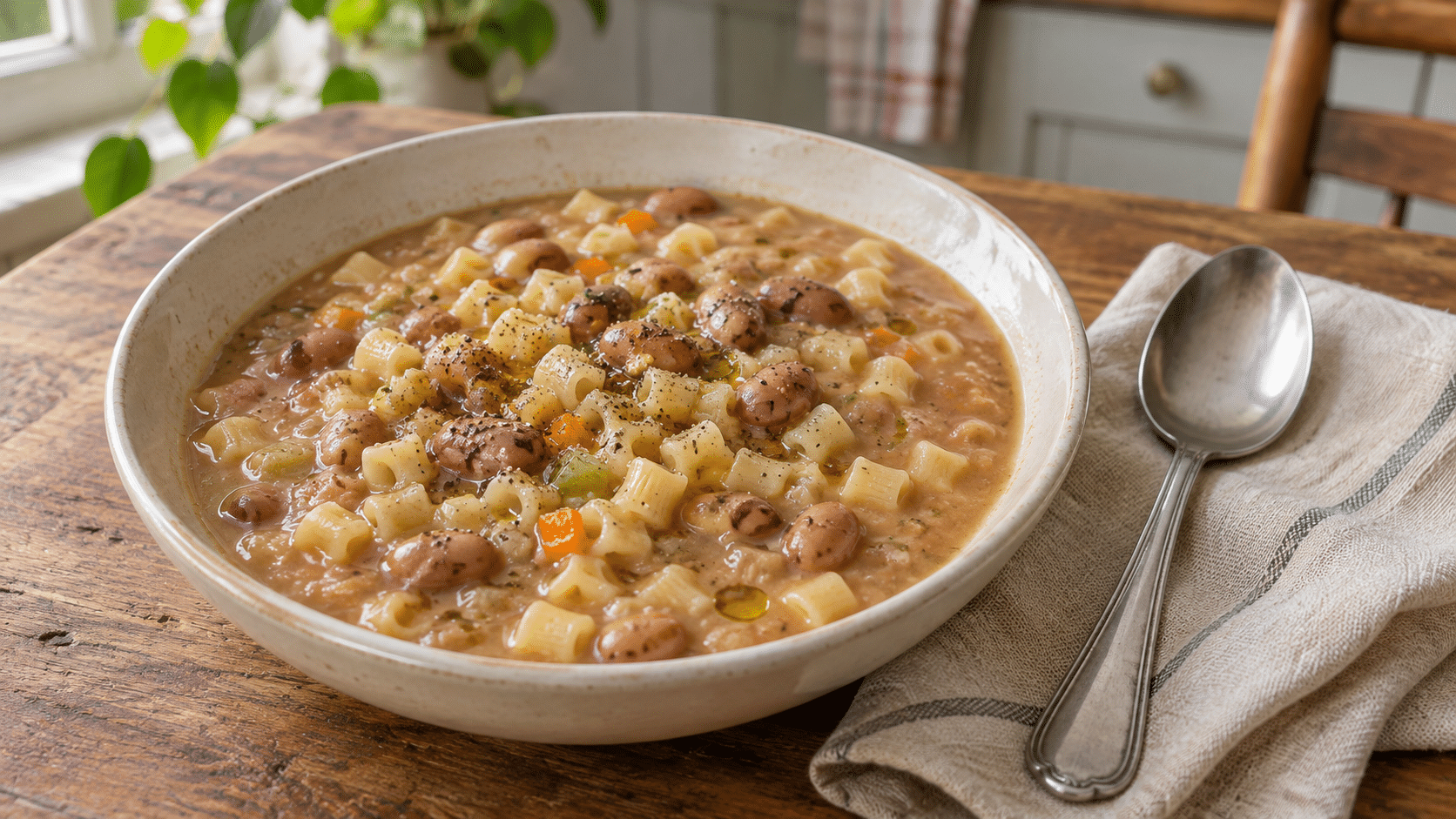
On a cold evening, a pot of pasta e fagioli needs little introduction. The beans soften into a creamy broth, small pieces of pasta catch between them, and olive oil and rosemary bring everything together. It is a generous meal made from ordinary ingredients—and one that rewards attention more than expense.
The name simply means “pasta and beans.” Calling it a soup is useful, although some versions are thick enough to eat with a fork. Between those two extremes lies a particularly satisfying bowl: soft beans, pasta with a little bite, and just enough liquid to bring each spoonful together.
This home-style pasta e fagioli recipe uses cooked beans, a vegetable soffritto, and a small amount of tomato. It is a practical winter supper, with room to adjust the texture to your taste.
A Familiar Dish with Many Regional Accents
Pasta e fagioli belongs to Italy’s tradition of economical home cooking, but there is no single recipe that represents every region.
In Veneto, borlotti beans are a familiar choice, with Lamon beans especially associated with the region. Florentine versions often use cannellini. Around Naples, pasta mista—mixed pasta shapes—reflects the habit of using up small quantities rather than wasting them. Some Neapolitan preparations also include pork rind, or cotiche.
In Emilia-Romagna, maltagliati, irregular pieces of flat egg pasta, provide another approach. These differences affect the character of the dish: beans may be earthy or delicate, pasta may be firm or tender, and the finished bowl may be brothy or very thick.
The recipe below is a flexible meat-free version, rather than a claim to reproduce one particular regional tradition.
Choosing the Beans and Pasta
Borlotti beans give the soup an earthy flavor and a warm, brownish color. Cannellini beans produce a paler bowl with a gentler flavor. Either works well; choose beans you enjoy eating on their own.
Canned beans make this an achievable weeknight meal. Look at the drained weight on the label: a 400 g can commonly provides about 240 g of drained beans, so three such cans supply approximately the amount needed here.
For pasta, ditalini or tubetti are easy to manage and distribute evenly through the soup. Small elbows also work. If using pasta mista, choose a packaged mixture designed to cook together, or combine shapes with similar cooking times.
Avoid adding extra pasta simply because the pot initially looks liquid. It absorbs a surprising amount as it cooks and continues absorbing broth after the heat is turned off.
Pasta e Fagioli Recipe
Serves: 4 as a generous main course
Preparation: 15 minutes
Cooking: approximately 35–40 minutes with cooked beans
Total: approximately 50–55 minutes
Diet: vegan when prepared with vegetable stock and without cheese
Ingredients
- 3 tablespoons extra virgin olive oil, plus a little to serve
- 1 medium onion, finely chopped
- 1 medium carrot, finely chopped
- 1 celery stalk, finely chopped
- 2 garlic cloves, finely chopped
- 1 tablespoon tomato paste
- 720 g cooked borlotti or cannellini beans, drained; rinse if canned
- 1 small rosemary sprig
- 1 bay leaf
- 1.2 liters hot vegetable stock or water, plus 300–500 ml extra as needed
- 200 g dried ditalini, tubetti, or another small pasta
- Salt and freshly ground black pepper
Optional at the table: grated Parmigiano Reggiano or a small pinch of chili flakes. Omit the cheese for a vegan version; for a vegetarian topping, choose a cheese made with vegetarian rennet.
1. Soften the vegetables
Warm the olive oil in a large, heavy-bottomed saucepan over medium-low heat. Add the onion, carrot, and celery with a small pinch of salt.
Cook for 10–12 minutes, stirring occasionally, until the vegetables soften. They should become sweet and fragrant without browning heavily. Add the garlic and cook for about 30 seconds.
2. Add tomato, beans, and broth
Stir in the tomato paste and cook for 1 minute.
Add the beans, rosemary, bay leaf, and 1.2 liters of hot stock or water. Bring to a gentle simmer and cook for 10 minutes, allowing the flavors to come together.
If using water, taste and season the liquid before adding the pasta. If using salted stock, be more cautious with additional salt.
3. Make the base creamy
Remove the rosemary stem and bay leaf. Transfer about one-third of the beans, along with a little liquid, to a bowl and mash thoroughly with a fork or potato masher. Return them to the saucepan.
For a smoother result, briefly use an immersion blender in the pot, leaving plenty of beans whole. Keep its blade submerged to avoid splashing.
The mixture should still be quite loose at this stage. The pasta will thicken it further.
4. Cook the pasta in the soup
Bring the soup to a steady, gentle simmer and add the pasta.
Cook uncovered, stirring frequently and scraping gently across the bottom of the saucepan. Use the package cooking time as a guide, but taste the pasta: it can take a little longer in a thick bean broth.
Add extra hot stock or water a ladle at a time whenever the mixture becomes too thick for the pasta to move freely. Keep the heat moderate to prevent the bean puree from catching.
5. Rest briefly and serve
When the pasta is just cooked, turn off the heat. Taste and adjust the salt and black pepper.
Rest for 2–3 minutes, then check the consistency again. Add a final splash of hot water if needed.
Ladle into warm bowls and finish with a small drizzle of extra virgin olive oil. Serve immediately, with optional cheese or chili at the table.
Starting with Dried Beans
For this recipe, start with approximately 300 g dried borlotti or cannellini beans, aiming for about 720 g once cooked and drained. The yield varies.
Soak according to the packet instructions, typically overnight, then drain and rinse. Cover with fresh water in a large saucepan. Bring to a full boil and follow the packet’s boiling and simmering instructions until the beans are completely tender. Depending on their age and variety, they may take 60–90 minutes or longer.
Do not add the pasta while the beans are still firm: the pasta will finish cooking long before the beans do. Cook the beans fully first, then continue with the recipe above.
The liquid from the fully cooked beans can replace some of the stock. Taste it first and adjust the seasoning accordingly. Add the tomato paste at the soup-making stage, after the beans are tender.
How to Get the Texture Right
For a thicker bowl: mash a little more of the beans and use less of the additional liquid. Avoid reducing the soup for a long time after adding pasta, which can leave it overcooked.
For a brothier soup: add more hot stock near the end. Check the seasoning again after diluting.
For creaminess without cream: use the mashed beans and the starch released by pasta cooked directly in the pot. Cream is unnecessary in this recipe and would change its flavor.
For a tomato-free version: omit the tomato paste. The result will be paler, with the flavor of the beans more prominent.
If the soup tastes flat, check the salt before adding more ingredients. A little fresh black pepper and a good finishing olive oil can make a noticeable difference.
Making It Ahead and Using Leftovers
For the best make-ahead result, prepare the bean base through step 3 and add the pasta only when you are ready to eat. Reheat the base to a simmer, loosen it with hot water or stock, and continue with step 4.
If you expect leftovers, another option is to cook the pasta separately and add it to individual servings. The result will be slightly less integrated, but the pasta will not absorb all the broth during storage.
Cool leftovers promptly in shallow containers and refrigerate within two hours. Use within 3–4 days, reheating until steaming hot throughout and adding water as needed. The pasta will be softer the next day.
For freezing, the bean base without pasta gives the best texture. Freeze in portions and use within about three months for best quality; thaw in the refrigerator before reheating and adding freshly cooked pasta.
What to Serve with Pasta e Fagioli
A generous portion needs little alongside it. A salad of radicchio, fennel, or other crisp seasonal vegetables provides a welcome contrast. Bread is optional: there is already pasta in the bowl.
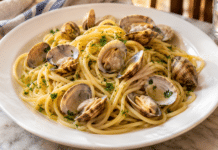
For another evening, explore a different side of Italian pasta cooking with our Spaghetti alle Vongole recipe, where clams and their cooking juices create a much lighter sauce.
Pasta e fagioli is a recipe worth making more than once. The first pot teaches you how much liquid your pasta needs; the next lets you adjust the beans, herbs, and thickness until it becomes the winter supper you want to return to.
Frequently Asked Questions
Is pasta e fagioli the same as minestrone?
No. Pasta and beans are the central ingredients here. Minestrone generally includes a wider selection of vegetables and may contain beans, pasta, or rice, depending on the version.
Can I make it without meat?
Yes. This recipe uses olive oil and vegetable stock. Pork appears in some traditional versions, but it is not essential to every pasta e fagioli.
Can I use gluten-free pasta?
Yes. Check the stock and other packaged ingredients too if avoiding gluten. Gluten-free pasta varies considerably in texture; cooking it separately and adding it shortly before serving gives you more control.
Why has my soup become too thick?
Both pasta and mashed beans thicken the liquid, especially as the soup stands. Stir in hot water or stock a little at a time until it reaches the consistency you prefer.
External Links
- La Cucina Italiana: Pasta e fagioli and regional differences
- La Cucina Italiana: Neapolitan pasta e fagioli
- La Cucina Italiana: Pasta e fagioli for winter