
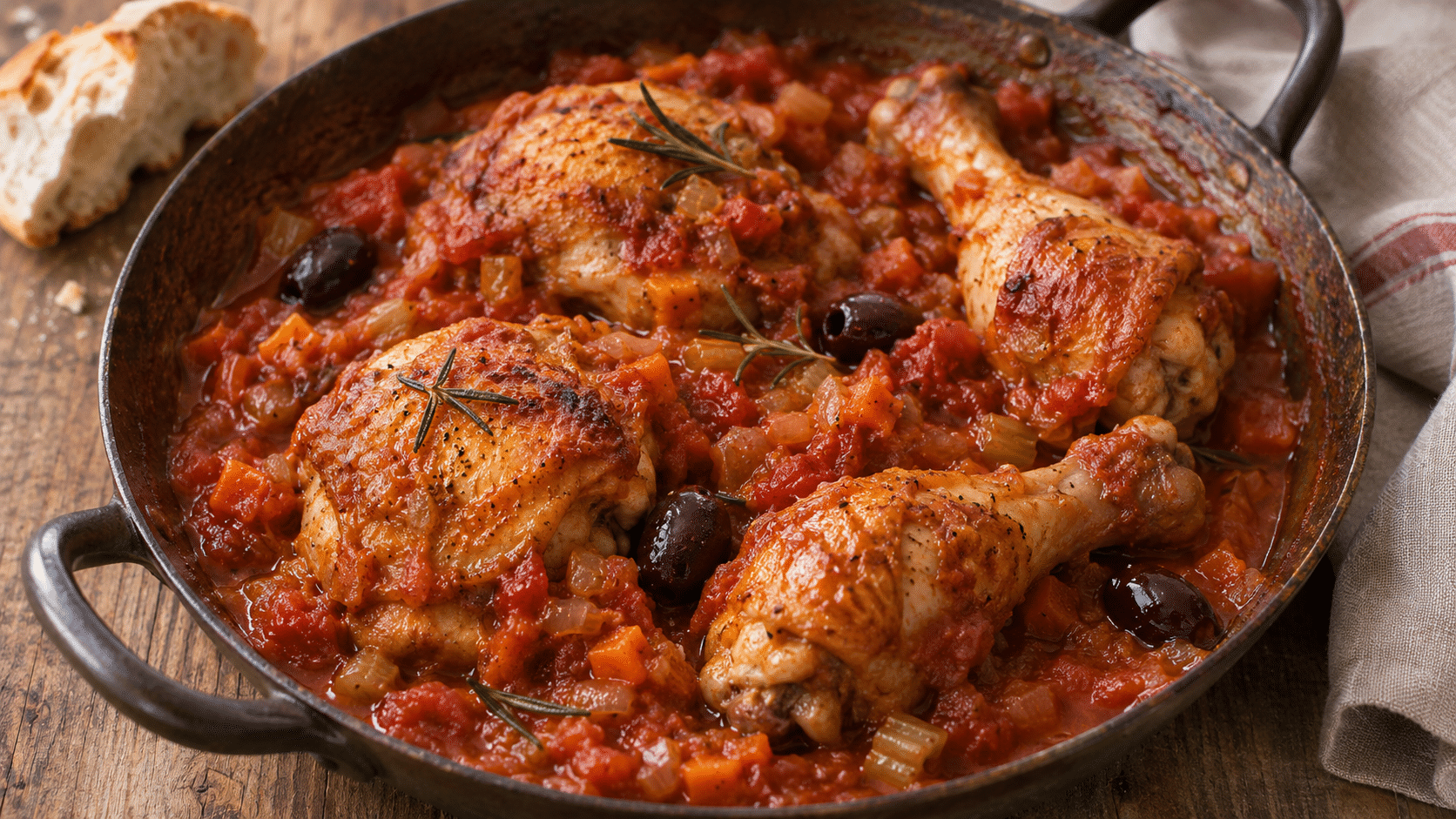
Pollo alla cacciatora brings together golden chicken, fragrant herbs and a tomato sauce worth saving every last piece of bread for. It is generous, comforting food: the chicken browns first, then cooks gently until tender while the vegetables soften into the sauce.
This recipe uses bone-in thighs and drumsticks, rosemary, red wine and tomatoes. A wide pan and an unhurried simmer do most of the work, making it a practical choice for a family lunch or a dinner you can prepare ahead.
What Is Pollo alla Cacciatora?
“Alla cacciatora” means hunter-style. In Italian cooking, the name describes a family of rustic preparations rather than one fixed ingredient list. Chicken is a familiar example, but the seasoning and sauce vary between households and regions.
Tomato-based versions are often associated with Tuscany, while preparations in bianco leave out the tomatoes. Olives, mushrooms and peppers appear in some recipes; none needs to be included in every version.
The recipe below follows a tomato-and-herb approach, with optional olives for a briny finish. For more dishes to build an Italian menu around, explore our collection of famous Italian recipes.
Recipe at a Glance
| Detail | Information |
|---|---|
| Serves | 4 |
| Preparation | 20 minutes |
| Cooking | About 65–75 minutes |
| Total time | About 1 hour 30 minutes |
| Difficulty | Easy |
| Course | Secondo / main course |
| Equipment | Wide, heavy pan with a lid |
Ingredients
- 1.2 kg bone-in, skin-on chicken thighs and drumsticks
- 2 tablespoons extra virgin olive oil
- 1 medium onion, finely chopped
- 1 medium carrot, finely chopped
- 1 celery stalk, finely chopped
- 2 garlic cloves, lightly crushed
- 2 small sprigs fresh rosemary
- 1 bay leaf
- 150 ml dry red wine
- 400 g canned peeled tomatoes, crushed by hand, with their juice
- 100–150 ml hot water or unsalted chicken stock, only as needed
- 60 g pitted black olives, optional
- Salt and freshly ground black pepper
- 1 tablespoon chopped flat-leaf parsley, optional, to finish
Choosing the chicken: Thighs and drumsticks are forgiving cuts for a braise. Choose pieces of roughly similar size so they finish cooking together. A jointed whole chicken also works, but breast pieces may be ready earlier.
Choosing the wine: Use a dry red wine you enjoy drinking. An unoaked or lightly oaked wine works well; avoid sweet wine, which changes the balance of the sauce.
How to Make Pollo alla Cacciatora
1. Dry and season the chicken
Pat the chicken dry with kitchen paper and season with salt and pepper. Removing surface moisture helps it brown. Have the vegetables chopped before you begin.
2. Brown in batches
Heat the olive oil in the pan over medium-high heat. Add the chicken skin-side down, leaving space between the pieces.
Cook for about 6–8 minutes on the skin side, then turn and brown the other side for 3–4 minutes. Work in batches if necessary and transfer the chicken to a plate. You are developing color at this stage, not cooking it through.
If the chicken releases a lot of fat, spoon some out, leaving about 2 tablespoons in the pan.
3. Soften the vegetables
Reduce the heat to medium-low. Add the onion, carrot and celery and cook for 8–10 minutes, stirring regularly, until softened.
Add the garlic, rosemary and bay leaf. Stir for another minute, keeping the garlic from burning.
4. Add the wine
Pour in the wine and scrape up the browned cooking juices with a wooden spoon. Let it bubble for 3–5 minutes, until reduced by roughly half.
5. Simmer gently
Add the crushed tomatoes and their juice. Return the chicken and any juices from the plate to the pan, arranging the pieces skin-side up.
Bring to a gentle simmer and cover partially. Cook over low heat for about 35–45 minutes, checking occasionally. Add hot water or stock a little at a time only if the sauce starts to catch or becomes too thick.
The chicken should braise in a shallow sauce rather than disappear beneath a large volume of liquid.
6. Finish the sauce
If using olives, add them during the final 10 minutes. Check the thickest part of the chicken with a food thermometer, avoiding the bone: it must reach at least 74°C. Dark meat may benefit from a little more gentle cooking to become tender.
If the chicken is ready but the sauce is watery, lift it onto a warm plate and simmer the sauce uncovered until it coats a spoon. Return the chicken to the pan.
Remove the rosemary stems and bay leaf, taste before adding more salt, and finish with parsley if desired. Rest for 5 minutes before serving.
Small Details That Make a Better Cacciatora
Give the chicken room. Crowding traps steam and makes browning more difficult. Two batches are better than forcing everything into a small pan.
Keep the simmer gentle. Vigorous boiling can tighten the meat and reduce the sauce before the chicken is tender.
Expect tender skin. Browning adds flavor, but the skin softens during braising. This is a saucy chicken dish rather than a crisp-skinned roast.
Reduce before adjusting the seasoning. As water evaporates, salt and acidity become more concentrated. Make the final adjustment when the sauce has reached the texture you want.
Variations and Substitutions
Without wine: Replace the wine with 150 ml unsalted stock. Skip the wine-reduction stage, add the tomatoes and use additional liquid sparingly. A teaspoon of red wine vinegar at the end is optional if the sauce needs brightness.
With mushrooms: Brown 200–250 g sliced mushrooms separately and add them during the final 15–20 minutes. Cooking them first keeps their released water from diluting the sauce.
With peppers: Add one sliced red pepper to the softened vegetables and cook for 5 minutes before continuing.
In bianco: Tomato-free cacciatora is another established preparation. It commonly uses white wine, herbs and sometimes olives. It needs its own liquid balance; simply removing the tomatoes from this recipe would leave too little sauce.
Using boneless thighs: They can be used, but begin checking them earlier. Their cooking time depends on size, so use a thermometer rather than relying on the timing for bone-in pieces.
What to Serve with Hunter’s Chicken
Crusty bread is the simplest accompaniment, especially for scooping up the sauce. Soft polenta, mashed potatoes or boiled potatoes also work well.
For vegetables, choose sautéed greens, green beans or a crisp salad. The chicken already has a flavorful sauce, so the rest of the plate can stay simple.
In a traditional Italian meal, chicken is served as a secondo, with vegetables as a contorno. Pasta need not share the plate: if you want a multi-course lunch, serve a modest primo beforehand.
Making Ahead and Storing
Cacciatora reheats well. Cool leftovers promptly in shallow containers and refrigerate within 2 hours. Keep covered in the refrigerator and use within 3 days.
Reheat gently in a covered pan with a splash of water, turning the pieces occasionally, until the chicken reaches 74°C throughout.
For longer storage, freeze the chicken with its sauce for up to 3 months for best quality. Thaw overnight in the refrigerator before reheating.
Italian Cookbooks for Your Kitchen
As an Amazon Associate, Italia Mia earns from qualifying purchases. The links below open Amazon searches; check the language, edition and format before ordering.
Essentials of Classic Italian Cooking by Marcella Hazan is a useful reference for cooks who want to understand Italian techniques as well as follow recipes, with coverage of meat, vegetables, pasta and more.
Find it on Amazon.com · Find it on Amazon.it
The Silver Spoon / Il Cucchiaio d’Argento offers a broad collection of Italian home cooking. Look for The Silver Spoon for an English-language edition or Il Cucchiaio d’Argento for Italian editions.
Find The Silver Spoon on Amazon.com · Find Il Cucchiaio d’Argento on Amazon.it
External Links
- La Cucina Italiana: pollo alla cacciatora with and without tomatoes
- GialloZafferano: white chicken cacciatore
- Pan Macmillan: The Essentials of Classic Italian Cooking
- Phaidon: The Silver Spoon