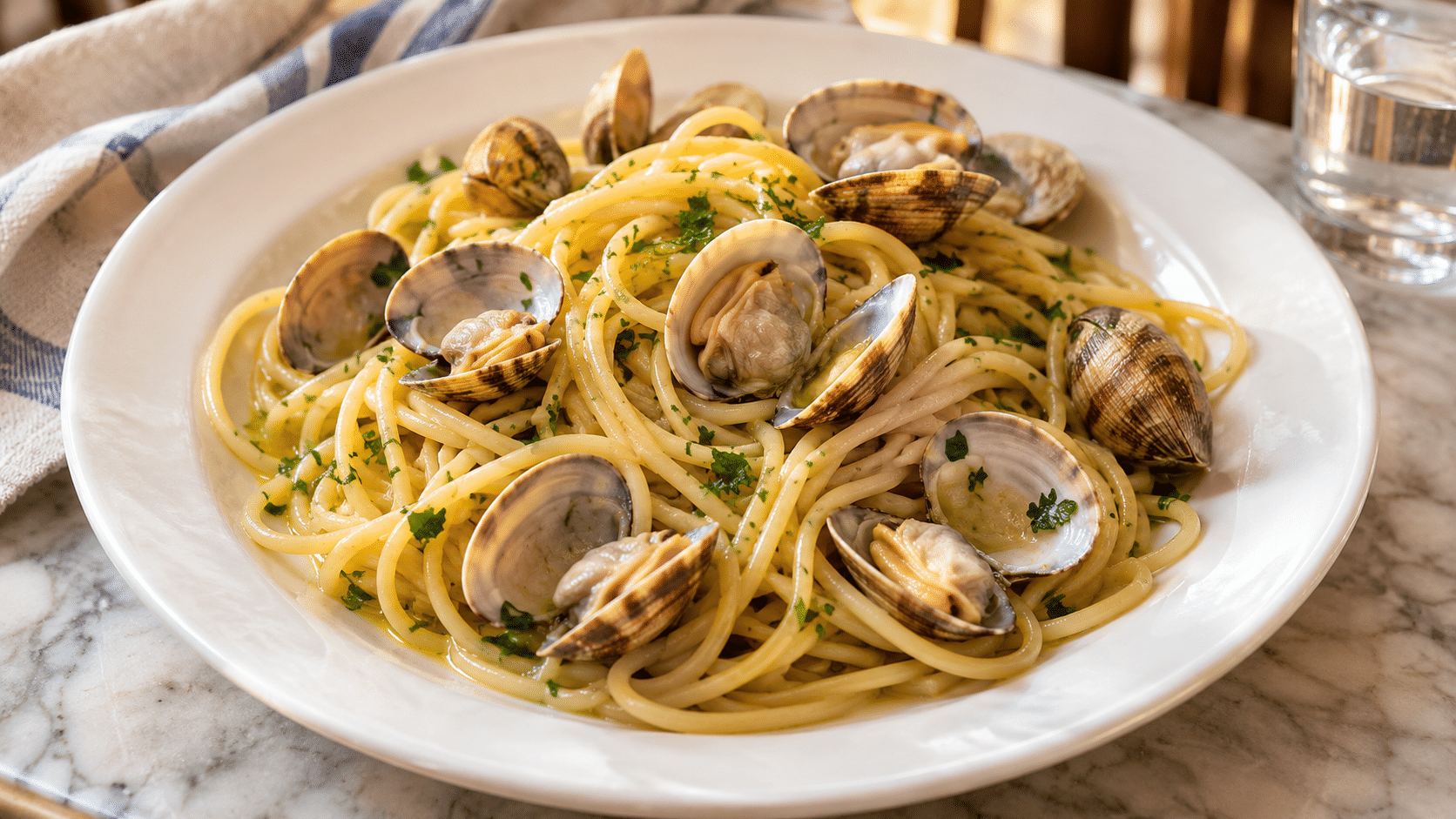
Spaghetti alle vongole brings together briny clams, olive oil, garlic and pasta in a dish that feels special without needing a complicated sauce. The pleasure is in the balance: tender shellfish, spaghetti with a little bite, and just enough glossy cooking liquid to coat each strand.
Closely associated with Naples and Campania, clam pasta appears in many Italian coastal kitchens. This home version is made in bianco, without tomatoes. White wine is optional, chili is a matter of taste, and the clams provide most of the seasoning.
For more dishes to cook alongside this one, explore our collection of famous Italian recipes.
Recipe at a Glance
- Serves: 4 as a first course
- Preparation: about 15 minutes, plus any cleaning or purging required
- Cooking: about 20 minutes
- Difficulty: easy, with attention to timing
- Style: Italian seafood pasta, in bianco
- Allergens: molluscs and wheat; wine may contain sulfites
Ingredients
- 360 g dried spaghetti
- 1.2 kg fresh live clams in their shells
- 4 tablespoons extra virgin olive oil, divided
- 2 garlic cloves, lightly crushed
- 80 ml dry white wine, optional
- 2 tablespoons finely chopped flat-leaf parsley
- A small pinch of dried chili flakes, optional
- Salt for the pasta water, used sparingly
- About 250 ml reserved pasta cooking water, to use as needed
You will also need a wide sauté pan with a lid, a large pasta pot, tongs and a fine sieve lined with clean food-safe muslin.
Choosing and Preparing the Clams
Buy clams from a reputable fishmonger and ask whether they have already been purged of sand. Small clams work particularly well because they are easy to distribute through the spaghetti.
Before cooking, discard cracked or broken shells. Live hard-shell clams that are open should close when tapped; discard those that do not respond. Keep them refrigerated at 4°C or below, in a breathable container, and follow the supplier’s storage instructions. Do not store live clams sealed in an airtight container or submerged in fresh water.
Rinse the shells under cold running water and scrub away surface dirt. If your fishmonger says additional purging is needed, follow their instructions for the particular clams you bought. Purging removes grit; it does not make shellfish from an unsafe source safe.
Even well-cleaned clams can release a little sand during cooking, so filtering the cooking liquid is an important part of this recipe.
How to Make Spaghetti alle Vongole
1. Prepare the Pasta Water
Bring a large pot of water to the boil. Salt it lightly: the clam juices will add more salt later.
Have the parsley chopped and your sieve ready before you start cooking the clams. Once the pasta goes into the sauce, everything moves quickly.
2. Gently Flavor the Oil
Heat 3 tablespoons of the olive oil in the wide sauté pan over medium-low heat. Add the crushed garlic and optional chili.
Cook for about 1–2 minutes, until fragrant. Keep the garlic pale; if it burns, replace the garlic and oil before continuing.
3. Cook the Clams
If using wine, add it carefully and simmer for about 1 minute. If omitting it, add 3 tablespoons of water.
Add the cleaned clams, cover and raise the heat to medium-high. Cook until the shells open and the meat is opaque and cooked through, usually about 5–8 minutes depending on size and heat. Shake the pan occasionally, keeping the lid in place.
Transfer cooked clams to a bowl with a slotted spoon. Discard any that remain closed after cooking; do not force them open to eat.
4. Filter the Clam Liquid
Pour the cooking liquid through the muslin-lined sieve into a bowl, leaving any heavy sediment behind. Wipe any grit from the sauté pan, then return the filtered liquid to it.
Taste a small spoonful once it has cooled enough. If it is very salty, use only part of it to begin with and dilute with a little hot unsalted water.
Remove the garlic if you prefer. Shell about half the clams for easier eating, keeping the others in their shells for serving.
5. Cook the Spaghetti Just Short of Al Dente
Cook the spaghetti for about 2 minutes less than the packet’s suggested al dente time. Before draining, reserve at least 250 ml of the cooking water.
The pasta should still have a firm center because it will finish cooking in the clam liquid.
6. Finish the Pasta in the Pan
Bring the filtered clam liquid to a lively simmer. Add the spaghetti and toss for about 1–2 minutes, adding reserved pasta water a small splash at a time.
As the pasta cooks, its starch helps the liquid and olive oil come together into a light sauce. Stop adding water when the spaghetti is coated but there is no large pool beneath it.
If the sauce is already salty, use hot unsalted water instead of pasta water.
7. Return the Clams and Serve
Return the clams to the pan and toss briefly, just long enough to heat them through. Turn off the heat, add the parsley and the remaining tablespoon of olive oil, then toss again.
Taste before adding any salt. Divide among warm bowls and serve immediately, with an empty bowl on the table for the shells.
How to Get a Glossy Sauce Without Cream
The finishing stage matters more than adding extra ingredients. Pasta starch, olive oil and clam liquid form a light coating when tossed together.
If the spaghetti looks dry, add a tablespoon or two of hot water and toss again. If it looks watery, let it bubble briefly while moving the pasta around the pan. Avoid reducing the liquid so aggressively that the spaghetti becomes overcooked or the sauce too salty.
The finished dish should look moist and glossy, with loose strands that are easy to lift with a fork.
Common Mistakes to Avoid
Salting the water too heavily. Clam juices can be surprisingly salty. Start cautiously and adjust at the end.
Skipping the filtering step. A few grains of sand can spoil an otherwise excellent plate of pasta.
Leaving the clams in the pan throughout the pasta’s final cooking. Keeping them aside helps prevent a rubbery texture.
Using too much garlic or chili. Both should support the shellfish rather than dominate it.
Letting the finished pasta wait. Set the table first. The sauce thickens as the spaghetti stands.
Wine, Tomatoes and Other Variations
Without wine: Use the water specified in the method. The clam liquid provides plenty of flavor.
With tomatoes: For a variation, soften a handful of halved cherry tomatoes in a little olive oil in the cleaned pan before adding the filtered clam liquid.
With linguine: Substitute the same weight of linguine and adjust the cooking time to the packet instructions.
With frozen clams: Choose a product intended for cooking and follow its thawing and cooking directions. Raw and precooked frozen clams need different handling; the live-clam tap test does not apply to them.
Grated cheese is usually left off this preparation so the delicate shellfish flavor stays clear. Parsley and a little good olive oil are enough to finish it.
Serving Suggestions
Serve spaghetti alle vongole as the first course of a leisurely meal, followed by vegetables or a simple salad. Bread is useful for the small amount of sauce left in the bowl.
For a more substantial pasta main course, increase the spaghetti to 400 g for four people. Keep the clams generous and use a pan large enough to toss everything comfortably.
This dish is best cooked immediately before eating. Clean the clams as directed, chop the parsley and set out the equipment beforehand, but leave the final cooking until everyone is ready.
Italian Cookbooks for Your Kitchen
As an Amazon Associate, Italia Mia earns from qualifying purchases. The links below lead to Amazon searches, where you can compare editions and languages.
For a broad Italian cooking reference, look for The Silver Spoon, or its Italian counterpart, Il Cucchiaio d’Argento. For English-language explanations of Italian home-cooking techniques, consider Essentials of Classic Italian Cooking by Marcella Hazan.
- The Silver Spoon: Find editions on Amazon.com
- Il Cucchiaio d’Argento: Find editions on Amazon.it
- Essentials of Classic Italian Cooking: Find editions on Amazon.com
External Links
- GialloZafferano: spaghetti with clams
- Sonia Peronaci: spaghetti alle vongole
- FDA: selecting and serving fresh and frozen seafood safely