A film can introduce a novel to millions of new readers. Italian literature offers striking examples, from Luchino Visconti’s lavish Sicily to the intimate Naples of Elena Ferrante. These ten books inspired screen adaptations worth seeing—and stories worth returning to on the page.
- The Leopard by Giuseppe Tomasi di Lampedusa
Book: The Leopard (Il Gattopardo, 1958)
On screen: The Leopard (1963), directed by Luchino Visconti; a television series followed in 2025.
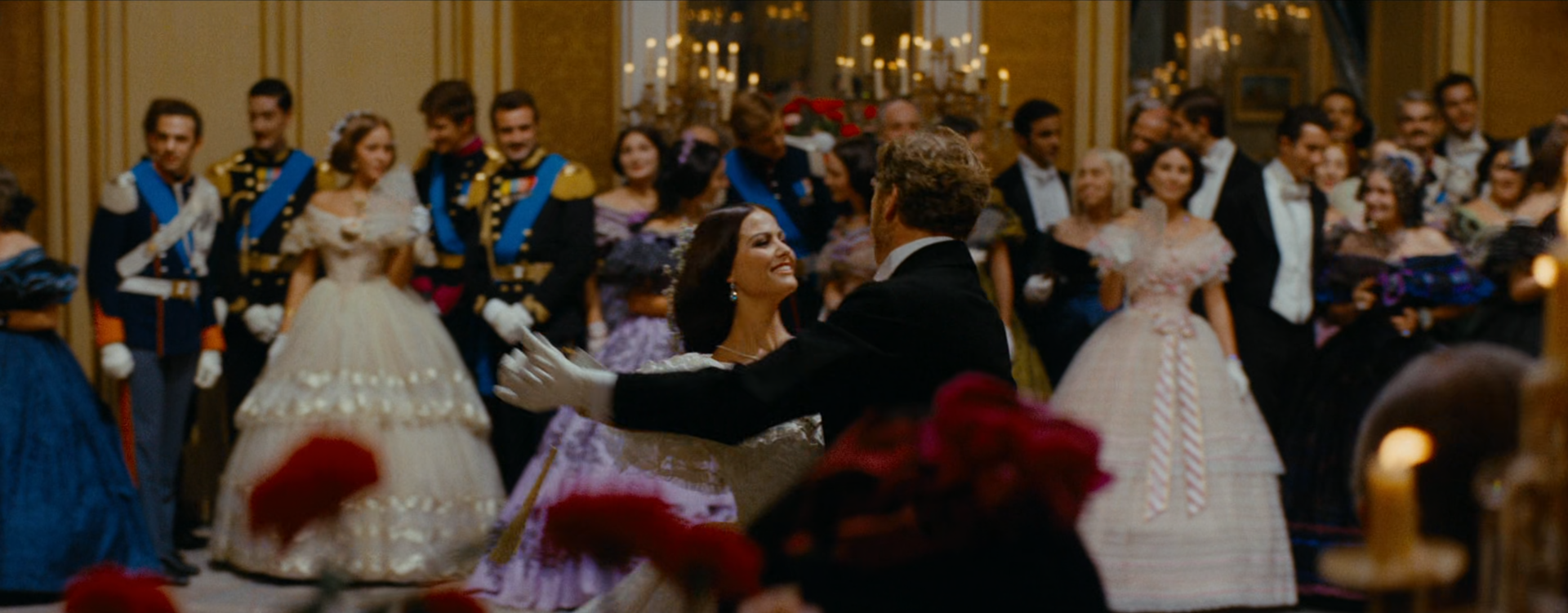
As Garibaldi’s campaign transforms Sicily, Prince Fabrizio Salina watches the world of the aristocracy give way to a new political order. Visconti turns the novel’s sense of change and loss into grand cinema, culminating in its celebrated ballroom sequence. The later series offers another interpretation of the same book. Read more in ItaliaMia’s guide to Visconti and postwar Italian cinema.
- My Brilliant Friend by Elena Ferrante
Book: My Brilliant Friend (L’amica geniale, 2011)
On screen: My Brilliant Friend (2018–2024), a four-season television series.
Ferrante begins with two girls, Elena and Lila, growing up in a working-class neighborhood of Naples. Their friendship becomes the thread running through four novels about education, ambition, marriage, class and the city’s changing life. The television series follows the entire quartet, with its fourth and final season based on The Story of the Lost Child. ItaliaMia’s Italian women writers guide places Ferrante alongside other authors who reshaped Italian literature.
- The Conformist by Alberto Moravia
Book: The Conformist (Il conformista, 1951)
On screen: The Conformist (1970), directed by Bernardo Bertolucci.
Marcello Clerici wants an ordinary, respectable life so badly that he accepts a role in Fascist political violence. Moravia examines the fear and self-deception behind that choice. Bertolucci’s film tells the story through striking images, architecture and shifting memories, making it a compelling companion to the novel.
- Gomorrah by Roberto Saviano
Book: Gomorrah (Gomorra, 2006)
On screen: Gomorrah (2008), directed by Matteo Garrone; a television drama ran from 2014 to 2021.
Saviano’s investigative book follows the Camorra’s reach into business, labor and everyday life around Naples. Garrone’s film draws on its world and episodes without attempting to reproduce the book chapter by chapter. The later television series develops fictional characters and storylines inspired by the same criminal environment. It is best understood as a related adaptation, rather than a direct retelling of Saviano’s nonfiction work.
- The Garden of the Finzi-Continis by Giorgio Bassani
Book: The Garden of the Finzi-Continis (Il giardino dei Finzi-Contini, 1962)
On screen: The Garden of the Finzi-Continis (1970), directed by Vittorio De Sica.
Behind the walls of a family estate in Ferrara, young friends play tennis and imagine a future together. Outside, Fascist antisemitic laws are closing in. Bassani’s novel gives the remembered world of the Finzi-Continis its emotional depth; De Sica’s film makes the contrast between their sheltered garden and the surrounding danger painfully visible.
- The Betrothed by Alessandro Manzoni
Book: The Betrothed (I promessi sposi, first published in 1827)
On screen: Among its many adaptations are Mario Camerini’s 1941 film and Salvatore Nocita’s 1989 television series.
Renzo and Lucia plan to marry, but threats from a local nobleman send them into a much larger story of power, war, famine and plague in seventeenth-century Lombardy. Manzoni’s novel is a landmark of Italian literature, and its broad cast and dramatic events have attracted generations of filmmakers. Each adaptation has to decide what to preserve from a book whose narrator is as memorable as its plot.
- Christ Stopped at Eboli by Carlo Levi
Book: Christ Stopped at Eboli (Cristo si è fermato a Eboli, 1945)
On screen: Christ Stopped at Eboli (1979), directed by Francesco Rosi.
Exiled by the Fascist regime to a village in southern Italy, Levi came to know people whose lives were largely ignored by the state. His account combines memoir, observation and political reflection. Rosi’s patient adaptation, starring Gian Maria Volontè, gives time to the landscapes and encounters that changed Levi’s understanding of Italy.
- Fantozzi by Paolo Villaggio
Book: Fantozzi (1971)
On screen: Fantozzi (1975), directed by Luciano Salce.
Ugo Fantozzi is an office worker battered by absurd rules, humiliating bosses and his own terrible luck. Villaggio created the character in prose before playing him on screen. The film’s physical comedy made Fantozzi a familiar face, while the book reveals the sharp social satire beneath his disasters.
- The Tartar Steppe by Dino Buzzati
Book: The Tartar Steppe (Il deserto dei Tartari, 1940)
On screen: The Desert of the Tartars (1976), directed by Valerio Zurlini.
A young officer arrives at a remote fortress expecting that a great event will eventually give his life meaning. Years pass while he waits. Buzzati turns that simple premise into a haunting novel about time, hope and opportunities surrendered. Zurlini’s stark landscapes make the fortress and its endless horizon central to the film’s atmosphere.
- The Name of the Rose by Umberto Eco
Book: The Name of the Rose (Il nome della rosa, 1980)
On screen: The Name of the Rose (1986), directed by Jean-Jacques Annaud; a television miniseries followed in 2019.
When monks begin dying at a medieval abbey, William of Baskerville and the young Adso investigate. Eco makes their mystery a story about books, religious authority and the danger of controlling knowledge. Annaud’s film, starring Sean Connery and Christian Slater, concentrates on the investigation and the abbey’s unsettling atmosphere. For the writer behind the novel, read ItaliaMia’s Umberto Eco biography.
Where to Begin
For a sweeping historical drama, begin with The Leopard. For a long story of friendship, choose My Brilliant Friend. If you prefer a mystery, read The Name of the Rose before watching the film and see how each version leads you through the abbey.
The books and their adaptations need not deliver the same experience. Reading reveals the voices, ideas and details that cinema sometimes compresses; watching shows how directors give those stories a new shape. For more reading ideas, visit ItaliaMia’s guide to Italian literature and fiction and its Italian cinema section.
Some book links are Amazon affiliate links. ItaliaMia may earn a commission from qualifying purchases at no additional cost to you.
External Sources
The Criterion Collection: The Leopard
Netflix: The Leopard series
Warner Bros. Discovery: My Brilliant Friend’s final season
The Criterion Collection: Christ Stopped at Eboli