
Italy’s poetic tradition spans more than two thousand years, but it did not begin in a single language. Virgil and Ovid wrote in Latin for the Roman world. Medieval poets later wrote in the regional languages of the Italian peninsula, and their work helped establish the literary Italian that readers recognize today.
The poets below did different things with verse: they told stories of empires and imagined afterlives, examined desire and political exile, and found words for war, grief, faith, and ordinary life. Read together, they show how often Italian poetry has reinvented itself.
Roman Poets: Italy’s Classical Inheritance
Virgil (70–19 BCE)
Born near Mantua, Virgil became one of ancient Rome’s defining poets. His Aeneid follows the Trojan survivor Aeneas toward Italy, where his descendants are destined to found Rome. The poem gives imperial Rome a grand origin story, but its battles, losses, and difficult choices also complicate that story.
Virgil mattered deeply to later Italian writers. In Dante’s Divine Comedy, he becomes the guide who leads Dante through Hell and Purgatory: an ancient poet given a new role in a medieval Christian work. Virgil wrote in Latin, centuries before Italian emerged as a literary language, yet his influence runs through Italian poetry.
Ovid (43 BCE–17 or 18 CE)
Ovid brought wit and invention to Roman poetry. His Metamorphoses gathers stories of gods, mortals, desire, violence, and transformation into a long narrative poem. Its characters and images became a lasting source for European writers and artists.
He also wrote playful and provocative poems about love. Exiled by Emperor Augustus to Tomis on the Black Sea, Ovid spent his final years writing about separation from Rome. The movement from dazzling myth to personal displacement is part of what makes his work so varied.
The Birth of Italian Vernacular Poetry
Giacomo da Lentini (13th century)
Giacomo da Lentini was a notary and poet at the court of Frederick II, where the Sicilian School developed one of the first major traditions of literary poetry in an Italian vernacular. Its poets adapted the language of courtly love to explore longing, admiration, and the contradictions of desire.
Giacomo is traditionally credited with inventing the sonnet, the fourteen-line form that later traveled across Europe. Petrarch did not invent it. He became its most influential later practitioner, which is why readers often call it the “Petrarchan sonnet.” For more on the Sicilian School, see ItaliaMia’s guide to the origins of Italian literature.
Dante Alighieri (1265–1321)
Dante’s Divine Comedy follows a pilgrim through Hell, Purgatory, and Paradise. Along the way, the poem brings together theology, politics, classical learning, personal memory, and sharply observed human lives. Its punishments and encounters can be terrifying, tender, or surprisingly funny.
Writing in a Tuscan vernacular rather than Latin, Dante demonstrated how much a language associated with everyday speech could accomplish. His earlier Vita nuova also combines poems and prose in an account of love and loss. Read more about his life and exile in ItaliaMia’s Dante biography.
Francesco Petrarch (1304–1374)
Petrarch’s Canzoniere traces desire, doubt, memory, and spiritual unease across a carefully arranged collection of poems, many addressed to Laura. The speaker’s feelings rarely settle into a simple declaration of love. He questions his motives, revisits earlier emotions, and finds himself divided between worldly attachment and religious aspiration.
The sonnet existed before Petrarch, but his use of it proved enormously influential. Poets across Europe studied and adapted his treatment of love and his command of the form. His scholarship and interest in classical texts also made him a central figure in early humanism. ItaliaMia follows that wider period in its guide to Italian literature and the early Renaissance.
Giovanni Boccaccio (1313–1375)
Boccaccio is best known for The Decameron, a work of prose storytelling, but poetry was also an important part of his career. His narrative poems include Filostrato and Teseida, which draw on love, classical subjects, and chivalric traditions.
Including Boccaccio among Italy’s poets reveals something easily missed when he is treated only as a prose writer. Medieval and early Renaissance authors often worked across forms. Boccaccio’s friendship with Petrarch and his admiration for Dante also place him near the heart of a remarkable literary generation.
Renaissance Epics and Imagination
Matteo Maria Boiardo (c. 1441–1494)
Boiardo’s Orlando Innamorato takes the knight Orlando, familiar from medieval heroic stories, and makes him fall in love. Battles and quests remain, but romance repeatedly interrupts the claims of duty and honor. The resulting poem is expansive, inventive, and often playful.
Boiardo left the work unfinished. That opening gave Ludovico Ariosto a story to continue, making the two poets part of one of Italian literature’s most memorable conversations.
Ludovico Ariosto (1474–1533)
Ariosto’s Orlando Furioso continues Boiardo’s story and sends its many characters across a world of warfare, enchantment, mistaken identity, and restless desire. The poem rarely stays with one adventure for long. It leaves readers at a moment of suspense, turns to another character, then circles back.
Its narrative skill is as striking as its fantasy. Ariosto can treat heroism with admiration in one passage and gentle irony in the next. His famous account of Orlando’s madness gives emotional force to a poem that can otherwise seem delightfully impossible.
Torquato Tasso (1544–1595)
Tasso’s Jerusalem Delivered tells a fictionalized story of the First Crusade. He sought the scale of a classical epic while bringing religious conflict, love, temptation, and individual suffering into the narrative.
Where Ariosto’s poem is freewheeling, Tasso’s often feels more troubled by competing obligations. Warriors face desires that pull against their mission; moments of beauty carry a sense of danger or loss. That tension helped make his work influential long after the Renaissance.
Poetry, Memory, and the Modern Self
Ugo Foscolo (1778–1827)
For Foscolo, poetry could keep memory alive when history offered little comfort. His poem Dei Sepolcri asks why graves and monuments matter if the dead can no longer experience them. Its answer lies partly with the living: remembrance can sustain affection, civic identity, and the example of earlier generations.
Foscolo’s writing also reflects the political upheavals of his era and his experience of exile. Private grief and public history meet throughout his work.
Giacomo Leopardi (1798–1837)
Leopardi’s poems make vast questions feel immediate. In L’infinito, a familiar hill and a hedge become the starting point for an imagined encounter with boundless space and time. Elsewhere, his poems examine disappointed hopes, childhood memories, nature, and the fragile comfort people offer one another.
Leopardi is often described as a pessimist, but that label alone misses the movement of his writing. His poems can be severe and compassionate at once. Their musical language gives shape to thoughts that resist easy reassurance.
Giovanni Pascoli (1855–1912)
Pascoli often begins with something small: a sound in the countryside, a bird, a household object, a passing change in the weather. Beneath these details lie grief, uncertainty, and a longing for shelter. The deaths and disruptions in his family life helped shape his recurring image of the nido, or nest.
Collections such as Myricae gave Italian poetry a new attentiveness to ordinary things. Pascoli’s images and sounds can make a scene feel familiar before revealing how strange or vulnerable it is.
Gabriele D’Annunzio (1863–1938)
D’Annunzio made language intensely physical. In poems such as “La pioggia nel pineto,” rain, trees, bodies, and voices seem to merge through rhythm and sound. His verse rewards being read aloud.
His public life and nationalism remain controversial, and they should not be set aside when discussing his legacy. His lasting literary importance lies especially in the reach of his style and his influence on writers who followed him.
Three Essential Voices of the Twentieth Century
Giuseppe Ungaretti (1888–1970)
Ungaretti served as a soldier in the First World War, and the experience transformed his poetry. Poems first gathered in Il porto sepolto and later associated with L’allegria often use few words, widely spaced on the page. A brief poem may hold an entire moment of fear, exhaustion, friendship, or survival.
That spareness was a deliberate artistic choice. Ungaretti stripped away familiar poetic ornament so that a single word or image could carry unusual weight. His later work broadened its scope to include memory, faith, and grief, but the intensity of his early wartime poems remains an accessible place to begin.
Eugenio Montale (1896–1981)
Montale’s first major collection, Ossi di seppia (Cuttlefish Bones), appeared in 1925. Its dry landscapes, sea air, walls, and worn objects resist the comforting beauty readers might expect from a lyric poem. Montale often suggests a longing for revelation while doubting that any clear answer will arrive.
His later collections, including Le occasioni and La bufera e altro, respond to private relationships and the pressures of history through dense, allusive language. He received the Nobel Prize in Literature in 1975. Start with the landscapes and objects in his poems, then notice how much emotional and philosophical pressure they bear.
Alda Merini (1931–2009)
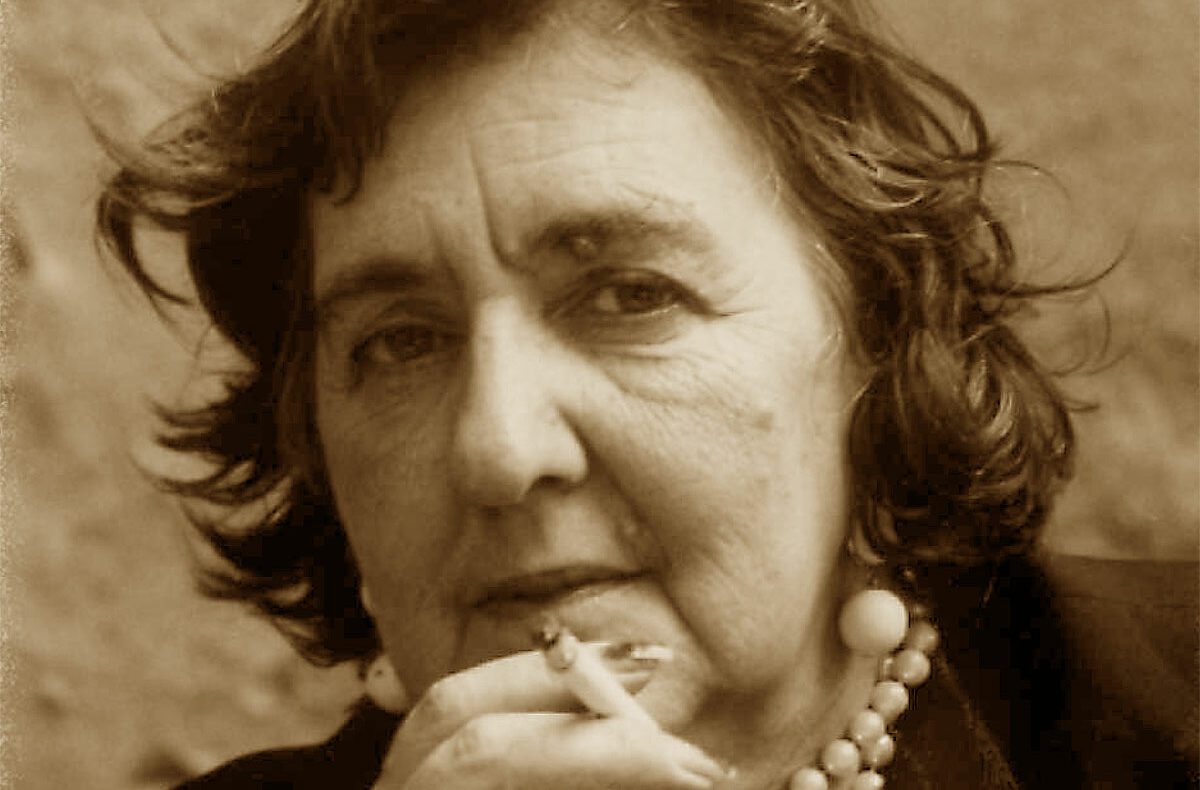
Alda Merini gave Italian poetry a voice at once intimate, sensual, spiritual, and defiant. Born in Milan, she began publishing young. Love, motherhood, suffering, faith, and her experiences of psychiatric hospitalization all entered her work, though no single part of her life can explain or contain it.
Her collection La Terra Santa draws on the years she spent in psychiatric institutions. Its poems do more than record pain: they insist on imagination, desire, and the dignity of the person speaking. Merini later reached a wide audience with poetry that could feel immediate and conversational without losing its force. She is also included in ItaliaMia’s guide to Italian women writers.
Where to Begin Reading
A reader new to Italian poetry need not start at the beginning of this timeline. Dante offers an immense narrative world; Petrarch rewards close attention to a single speaker’s changing feelings. Leopardi turns a landscape into a philosophical question. For a shorter first encounter with twentieth-century poetry, try Ungaretti, then move to Montale and Merini to hear how differently three poets can approach loss and hope.
English translations are useful entry points, and bilingual editions let you hear more of the original language as you read. You can look for editions of Dante’s Divine Comedy on Amazon.com, Petrarch’s Canzoniere, Leopardi’s poems, Ungaretti’s poetry, Montale’s poetry, and Alda Merini in English. As an Amazon Associate, ItaliaMia may earn from qualifying purchases.
External Sources
Poetry Foundation: Learning the Sonnet
Poetry Foundation: Giuseppe Ungaretti
Nobel Prize: Eugenio Montale
Poetry Foundation: Alda Merini