
In the late eighteenth and nineteenth centuries, Italian writers faced two questions at once: what should literature inherit from the classical past, and how could it speak to people living through revolution, foreign rule and the movement toward unification? Classicism and Romanticism were competing answers, but individual writers often drew from both.
The debate followed an eighteenth-century culture shaped by reform, theatre and contact with other European literatures. For that background, read Italian Literature: The Foreign Influence.
A Literary Debate Takes Shape
A turning point came in 1816, when Madame de Staël urged Italian writers to read and translate modern European literature. Her article helped ignite a public argument between defenders of classical models and writers seeking new subjects, audiences and forms. The Romantic journal Il Conciliatore appeared in Milan in 1818.
The division was rarely simple. A writer could favor classical form and support political change, or embrace Romantic themes without agreeing with every nationalist cause. Italian Romanticism developed amid the struggle over who could speak for a country that was not yet unified.
Vincenzo Monti and the Classical Inheritance
Vincenzo Monti’s career crossed the upheavals of the revolutionary and Napoleonic years. His political allegiances shifted, but his literary reputation rests especially on the musical Italian verse of his translation of Homer’s Iliad. For Monti, ancient poetry remained a living model for ambitious modern writing.
His work shows why classicism could not simply be dismissed as an outdated set of rules. Its command of language, form and cultural memory continued to shape writers who disagreed sharply about politics.
Ugo Foscolo: Exile, Love and Memory
Ugo Foscolo brought personal grief and political disappointment into dialogue with classical ideals. In The Last Letters of Jacopo Ortis, first published in an authorized edition in 1802, a young man’s frustrated love unfolds alongside despair over Italy’s political condition. The novel recalls European epistolary fiction, especially Goethe’s The Sorrows of Young Werther, while responding to Foscolo’s own historical moment.
In Dei Sepolcri (1807), Foscolo asks what the living gain from remembering the dead. Tombs matter because they preserve affection, exemplary lives and a shared cultural memory. His unfinished poem Le Grazie turns again toward the ancient world. Across these works, classical beauty and intensely modern feeling coexist.
Find The Last Letters of Jacopo Ortis on Amazon.com
Carlo Porta and the Voice of Milan
Carlo Porta took a different route. Writing in Milanese dialect, he gave vivid voices to people often kept outside formal literary culture. His satire exposed pretension and abuses of authority, while his sympathy for vulnerable characters brought everyday urban life into poetry.
Porta’s achievement also complicates the idea of a single national literary language. Even as writers debated how Italians might communicate across regions, dialect could produce some of the period’s most original literature.
Giacomo Leopardi Between the Classics and Romanticism
Giacomo Leopardi studied ancient Greek and Latin literature closely, yet his poetry asks urgent questions about desire, suffering, nature and the limits of human hope. Poems such as “L’infinito” and “A Silvia” find enormous emotional and philosophical reach in precise language.
The first edition of his Canti appeared in 1831; an expanded edition followed in 1835, with further poems included after his death. His philosophical dialogues, Operette morali, first appeared in book form in 1827. The Zibaldone was a vast private notebook, published posthumously, rather than a collection he issued during his lifetime.
Leopardi resisted easy literary labels. His formal discipline and engagement with antiquity connect him to classicism; his attention to inward experience places him in conversation with Romantic writing. Neither label alone explains his work.
Find Leopardi’s Canti on Amazon.com · Find Leopardi’s Zibaldone on Amazon.com
Alessandro Manzoni and the Historical Novel
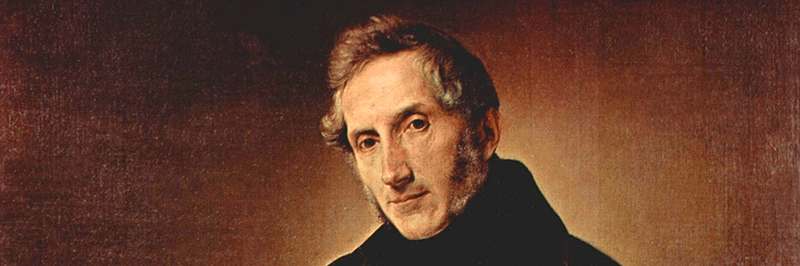
Alessandro Manzoni made history, faith and the lives of ordinary people central to his writing. His tragedies Il conte di Carmagnola (1820) and Adelchi (1822) challenged inherited dramatic conventions. His ode “Il cinque maggio” responded to Napoleon’s death in 1821.
Manzoni’s defining work is I promessi sposi, or The Betrothed. Published in 1827 and extensively revised for the illustrated edition issued from 1840 to 1842, the novel follows Renzo and Lucia through the hardships of seventeenth-century Lombardy. Its account of power, famine and plague gives the story historical depth, while its concern with injustice and providence gives it lasting force.
The revisions also reflected Manzoni’s attention to language. He looked to educated spoken Florentine as a model for prose that readers across Italy could share. His influence reached beyond the novel into the discussion of a common national language.
Find The Betrothed by Alessandro Manzoni on Amazon.com
Writing and the Risorgimento
Literature and the movement for Italian unification intersected in poems, novels, journalism and political essays. Giuseppe Mazzini’s writing helped give the nationalist cause a moral and civic vocabulary. Yet the Risorgimento did not produce a single literary style: classicists and Romantics alike took part in the political arguments of their age.
The Kingdom of Italy was proclaimed in 1861; Rome became part of it in 1870. Those dates frame a long process rather than a neat endpoint for literature. Writers continued to disagree about religion, regional identity and the meaning of a national culture.
Giosuè Carducci and a Renewed Classicism
Later in the century, Giosuè Carducci drew on ancient and Italian literary traditions while writing about public life, history and personal memory. Rime nuove and Odi barbare show the range of his poetry. In the latter, he experimented with Italian verse designed to evoke classical meters.
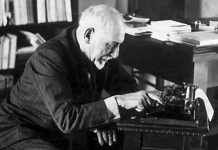
Carducci’s classicism was a fresh artistic choice for his own time, not a return to Monti’s world. He received the Nobel Prize in Literature in 1906.
As the century went on, other writers turned more insistently toward regional society and the material conditions of daily life. That shift leads to Italian Literature: Verismo and the Move Toward Modernism.
External Sources
Treccani: Classicism and Romanticism in Italy · Treccani: Ugo Foscolo · Treccani: Leopardi’s Canti · Casa Manzoni: Manzoni’s Works · The Nobel Prize: Giosuè Carducci