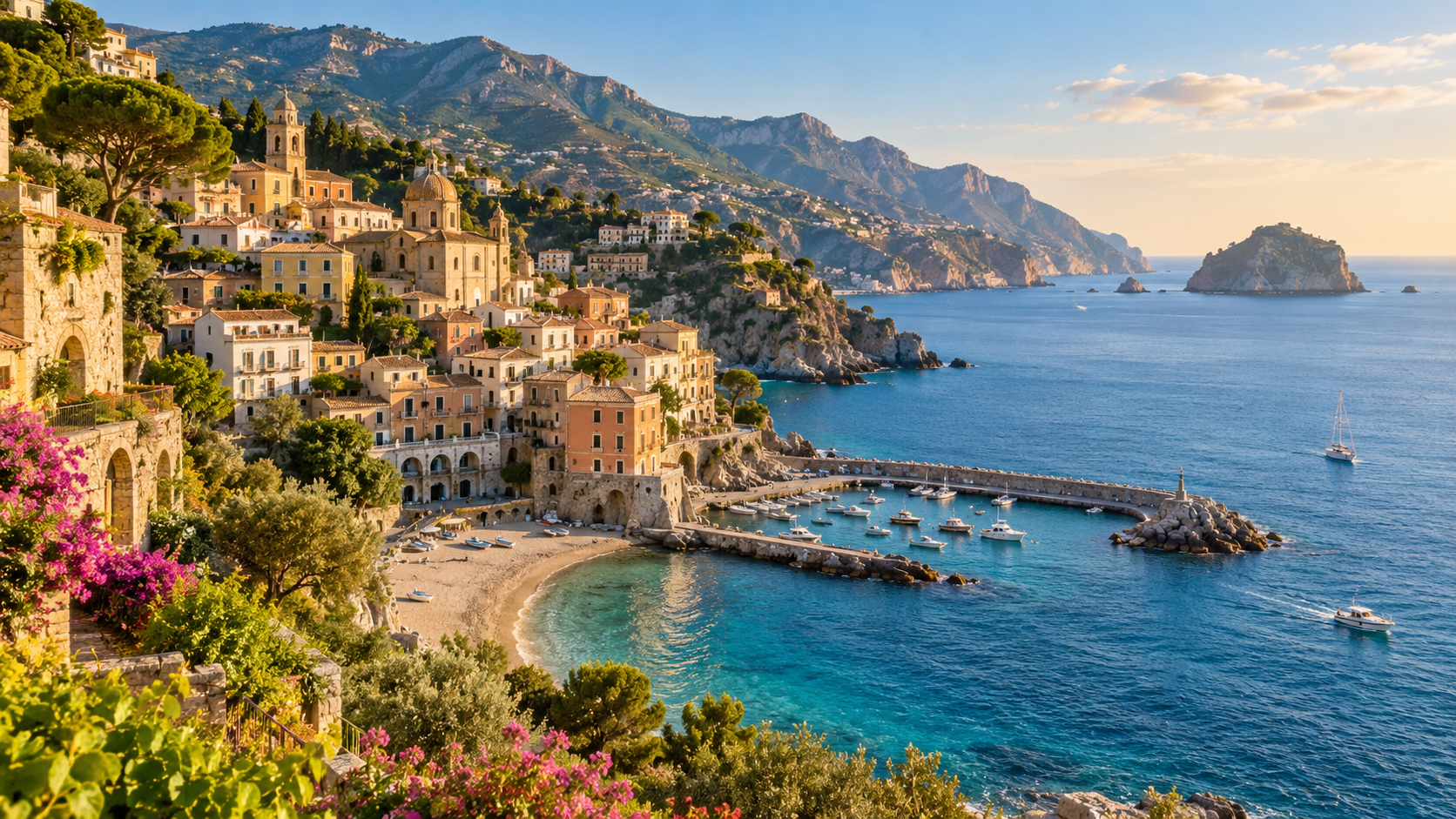
 Italy’s coastline stretches for approximately 7,600 kilometers, embracing the Ligurian, Tyrrhenian, Ionian and Adriatic seas. Along the way, travelers encounter glamorous resorts, historic maritime cities, colorful fishing villages, sandy family beaches, volcanic islands and some of Europe’s most dramatic coastal scenery.
This guide follows mainland Italy in a great coastal journey: beginning in Liguria, traveling south along the western coast to Calabria, rounding the heel of Puglia and continuing north along the Adriatic to Friuli-Venezia Giulia. Sicily and Sardinia receive separate sections because each island has enough outstanding coastal destinations to fill an entire vacation.
Rather than ranking places solely by their beaches, this selection considers scenery, historic character, cultural attractions, food, transportation and the overall experience of staying beside the sea.
Italy’s Coastline at a Glance
| Coastal area | Best for | Standout destinations |
|---|---|---|
| Ligurian Coast | Colorful villages, hiking and elegant resorts | Sanremo, Camogli, Portofino, Cinque Terre |
| Tuscan Coast | Sandy beaches, islands and nature | Viareggio, Castiglione della Pescaia, Porto Ercole |
| Lazio Coast | Ancient ruins and escapes from Rome | Santa Marinella, Sperlonga, Gaeta |
| Campania Coast | Dramatic cliffs, islands and celebrated cuisine | Sorrento, Positano, Amalfi, Procida |
| Basilicata and Calabria | Rugged scenery and clear water | Maratea, Tropea, Scilla |
| Puglia | Whitewashed towns, beaches and road trips | Gallipoli, Otranto, Monopoli, Vieste |
| Central Adriatic | Family beaches and historic centers | Vasto, Sirolo, Senigallia |
| Northern Adriatic | Resorts, lagoons and cultural cities | Cesenatico, Ravenna, Venice, Grado |
| Sicily | Archaeology, volcanic landscapes and varied beaches | Cefalù, Taormina, Syracuse |
| Sardinia | Exceptional water, coves and natural landscapes | Alghero, Villasimius, Cala Gonone |
Liguria and the Italian Riviera
Liguria is where mountains meet the Mediterranean, leaving only a narrow strip of land for seaside towns, terraced gardens and historic ports. Its combination of colorful villages and dramatic cliffs makes it a natural starting point for this journey.
For a more detailed introduction, read Italia Mia’s complete guide to Liguria.
Sanremo
Sanremo combines an elegant resort atmosphere with a working Ligurian town. Visitors come for its waterfront, historic La Pigna quarter, Art Nouveau villas, casino and celebrated flower market.
It is an appealing base for exploring the western Riviera, particularly for travelers arriving from Nice or the French Riviera.
Best for: gardens, elegant architecture and a relaxed resort stay.
Finalborgo and Finale Ligure
Finale Ligure offers sandy beaches and a lively seaside center, while nearby Finalborgo is an atmospheric medieval settlement surrounded by walls.
This combination makes it one of Liguria’s best choices for travelers who want both a beach and a historic village. The surrounding hills are also popular for hiking, climbing and mountain biking.
Best for: active vacations and a beach-and-village combination.
Genoa
Italy’s great Ligurian port deserves more than a quick stop. Genoa has an immense historic center, grand palaces, old maritime neighborhoods and one of Europe’s most important aquariums.
It does not provide the conventional resort experience of smaller Ligurian towns, but it is the strongest coastal destination for museums, history, food and urban culture.
Best for: maritime history, architecture and authentic city life.
Camogli
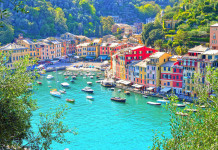
Pastel-colored houses rise above Camogli’s waterfront, creating one of the most recognizable views on the Italian Riviera. The town retains its fishing traditions while providing restaurants, cafés and ferry connections.
Camogli is also a gateway to San Fruttuoso and the Portofino promontory. A scenic trail crosses the natural park between Camogli, San Fruttuoso and Portofino.
Best for: romance, coastal walks and a quieter Ligurian base.
Portofino and Santa Margherita Ligure
Tiny Portofino is internationally famous for its harbor, luxury boutiques and hillside villas. Its setting is undeniably beautiful, although accommodation and restaurants can be expensive.
Nearby Santa Margherita Ligure is larger, better connected and generally more practical as an overnight base. Travelers can reach Portofino by boat, bus or coastal walk while enjoying a broader choice of hotels and restaurants.
Best for: classic Riviera glamour and scenic day trips.
Sestri Levante
Sestri Levante occupies a narrow peninsula between two bays. The Baia del Silenzio, enclosed by colorful buildings and low hills, is one of Liguria’s most attractive urban beaches.
The town is easier to explore than many cliffside villages and has direct rail connections along the Ligurian coast.
Best for: swimming, couples and train-based itineraries.
Cinque Terre
Monterosso, Vernazza, Corniglia, Manarola and Riomaggiore form the Cinque Terre. Together, the five villages offer terraced vineyards, coastal trails, small harbors and memorable views.
Monterosso has the most conventional beach, while Vernazza and Manarola provide some of the most famous village panoramas. Cars are inconvenient here, so arriving and traveling between the villages by train is usually the simplest option.
Best for: hiking, photography and car-free coastal travel.
Portovenere
Portovenere sits beyond the Cinque Terre at the entrance to the Gulf of La Spezia. Its harbor, narrow lanes, waterfront church and views toward the islands give it a distinct identity.
Although it does not have a railway station, it can be reached by bus or seasonal boat from La Spezia.
Best for: dramatic views and a less hurried alternative to the Cinque Terre.
Tuscany: Beaches, Islands and Coastal Nature
Tuscany’s coastline is less vertical than Liguria’s and offers longer sandy beaches, pine forests and protected natural areas. Italia Mia’s guide to the best beaches on the Tuscan coast covers the region in greater detail.
Viareggio
Viareggio is the classic resort of Versilia, known for its long promenade, extensive beaches and Liberty-style architecture. Its railway station makes it one of the easiest Tuscan seaside towns to reach without a car.
The town becomes especially lively during its famous Carnival, but it remains a convenient beach base throughout the warmer months.
Best for: traditional resort vacations and travelers without a car.
Castiglione della Pescaia
This attractive Maremma town combines a fishing harbor, sandy beaches and a medieval upper village. Climbing toward the historic center rewards visitors with broad views over the coast.
Castiglione della Pescaia is a good base for exploring southern Tuscany, although a car is helpful for reaching nearby nature reserves and secluded beaches.
Best for: families, couples and a balanced Tuscan seaside holiday.
Porto Santo Stefano and Porto Ercole
These two towns occupy opposite sides of Monte Argentario. Porto Santo Stefano is the principal port and departure point for ferries to Giglio, while Porto Ercole has a smaller harbor and a more intimate atmosphere.
Nearby beaches include the long sandy stretches of Feniglia and Giannella.
Best for: boating, island excursions and scenic road trips.
Lazio: Coastal Escapes Near Rome
Lazio’s coast is sometimes overlooked by international visitors, but it offers archaeological sites, medieval quarters and convenient escapes from Rome.
Santa Marinella
Santa Marinella is one of the most accessible beach towns from Rome, with direct trains from the capital. Its beaches make it suitable for a day trip or a short coastal stay.
Combine it with the castle of Santa Severa or the Etruscan sites around Cerveteri.
Best for: an easy seaside break from Rome.
Sperlonga
Whitewashed buildings cascade down a hill toward the sea in Sperlonga. Below the historic center are sandy beaches, while outside town visitors can explore the archaeological museum and the remains of Emperor Tiberius’s villa.
Sperlonga combines the visual character of a southern Italian village with relative proximity to Rome and Naples.
Best for: couples, beaches and historic atmosphere.
Gaeta
Gaeta has a substantial historic center, waterfront promenades, churches and broad beaches. The Montagna Spaccata sanctuary and surrounding cliffs add natural drama to the destination.
It is larger and more varied than Sperlonga, making it a better base for a longer stay.
Best for: history, food and a complete seaside town.
Campania: Naples, Islands and the Amalfi Coast
Campania contains some of Italy’s most celebrated coastal landscapes, from the Bay of Naples to the Amalfi and Cilento coasts. Learn more in Italia Mia’s guide to the region of Campania.
Naples
Naples is not primarily a beach resort, yet no guide to Italy’s coastal cities would be complete without it. Its waterfront faces Vesuvius, Capri and the Bay of Naples, while ferries connect the city with Ischia, Procida, Capri and the Sorrentine Peninsula.
Choose Naples for archaeology, street life, museums and extraordinary food rather than for a conventional beach vacation.
Best for: culture, food and island connections.
Procida
Smaller and less theatrical than Capri, Procida is known for its pastel-colored fishing harbor at Marina Corricella. Its compact size and lived-in atmosphere make it especially attractive to travelers seeking a slower island experience.
Best for: color, fishing-village atmosphere and short island stays.
Sorrento
Sorrento stands on cliffs overlooking the Bay of Naples. It has only limited beach space, but its hotels, transportation links and historic center make it one of the most convenient bases in the area.
From here, visitors can reach Capri, Pompeii, Naples and the Amalfi Coast without changing hotels constantly.
Best for: first-time visitors and excursions around Campania.
Positano
Positano’s houses descend steeply toward the sea, creating one of Italy’s defining coastal views. The town is beautiful but crowded, expensive and filled with stairs.
Staying overnight allows visitors to experience its lanes early in the morning and after many day-trippers have departed.
Best for: iconic scenery, romance and luxury stays.
Amalfi and Atrani
Amalfi offers an impressive cathedral, maritime history and useful ferry and bus connections. Immediately beside it, Atrani provides a smaller and more residential coastal atmosphere.
Travelers who want to explore the wider coast often find Amalfi a more practical base than Positano.
Best for: history, transportation and exploring the central Amalfi Coast.
Vietri sul Mare
Vietri sul Mare marks the eastern gateway to the Amalfi Coast and is celebrated for its brightly decorated ceramics. It is close to Salerno and easier to reach by road and rail than many towns farther west.
Best for: ceramics, local character and shorter stays.
Castellabate and Acciaroli
Farther south, the Cilento Coast becomes quieter and more natural. Castellabate combines a hilltop historic center with coastal villages such as Santa Maria di Castellabate.
Acciaroli has a small harbor, beaches and a relaxed evening passeggiata. These destinations suit visitors who find the Amalfi Coast too congested.
Best for: a slower vacation and traditional southern Italian atmosphere.
Basilicata and Calabria: Italy’s Wild Southern Coast
Maratea
Basilicata has only a short stretch of Tyrrhenian coastline, but Maratea makes it memorable. The area combines wooded mountains, rocky coves, small beaches and a historic town above the sea.
The monumental Christ the Redeemer statue overlooks the coast from Monte San Biagio.
Best for: mountain-and-sea scenery and road trips.
Tropea
Tropea is one of southern Italy’s most spectacular coastal towns. Its historic center stands on cliffs above pale beaches and clear water, with the sanctuary of Santa Maria dell’Isola occupying a rocky promontory nearby.
Read more about the surrounding region in Italia Mia’s complete Calabria travel guide.
Best for: beaches, sunsets and historic surroundings.
Scilla
Scilla faces the Strait of Messina and Sicily. Its most atmospheric district is Chianalea, where houses and restaurants stand directly beside the water.
The town also has a beach overlooked by Castello Ruffo, making it a rewarding stop between Tropea and Reggio Calabria.
Best for: seafood, legends and fishing-village character.
Reggio Calabria
Reggio Calabria has an attractive waterfront facing Sicily and is home to the National Archaeological Museum, where the Riace Bronzes are displayed.
It works especially well as a cultural stop before crossing the Strait of Messina.
Best for: archaeology, city amenities and views of Sicily.
Puglia: Around the Heel of Italy
Puglia connects Italy’s Ionian and Adriatic coasts. Whitewashed towns, limestone cliffs, sandy beaches and historic ports make it one of the country’s best regions for a coastal road trip.
Use Italia Mia’s complete Puglia travel guide, 20 best places to visit in Puglia and guide to Puglia’s best beaches to plan a longer stay.
Gallipoli
Gallipoli’s old town occupies an island connected to the mainland by a bridge. Historic churches, defensive walls and waterfront restaurants create an evocative setting.
The surrounding Ionian coast contains some of Salento’s longest sandy beaches.
Best for: beaches, sunsets and summer nightlife.
Santa Maria di Leuca
At the southern end of Salento, Santa Maria di Leuca is traditionally associated with the meeting of the Ionian and Adriatic seas. Its lighthouse, sanctuary and seafront villas make it a scenic road-trip stop.
Best for: coastal drives and boat trips to sea caves.
Otranto
Otranto has a compact walled center, a waterfront promenade and a cathedral famous for its medieval mosaic floor. Its location also provides access to Baia dei Turchi and the rocky coves south of town.
Best for: history, swimming and exploring eastern Salento.
Monopoli
Monopoli combines a working port, whitewashed streets, a castle and small beaches within walking distance of its historic center.
It is one of Puglia’s most versatile coastal bases and is connected by train with Bari, Polignano a Mare and Lecce.
Best for: car-free travel, restaurants and authentic coastal life.
Polignano a Mare
Polignano a Mare stands on limestone cliffs above the Adriatic. Lama Monachile, the small beach between the cliffs, creates the town’s most recognizable view.
The beach can become extremely crowded, so Polignano is often most enjoyable early in the morning, in the evening or outside July and August.
Best for: dramatic views, short stays and photography.
Trani
Trani’s pale stone cathedral stands directly beside the Adriatic, overlooking a graceful harbor. The historic center, castle and waterfront restaurants make the town much more than a beach destination.
Best for: architecture, seafood and an elegant overnight stop.
Vieste
Vieste is the leading coastal base on the Gargano Peninsula. Its whitewashed old town rises above beaches, cliffs and sea caves, while the Pizzomunno sea stack dominates the southern shoreline.
Best for: beaches, boat excursions and exploring Gargano.
The Central Adriatic Coast
The central Adriatic offers long beaches, smaller crowds and seaside towns where everyday Italian life remains visible beyond the tourist season.
Termoli, Molise
Termoli’s old town occupies a compact promontory enclosed by defensive walls. Its castle, trabucco fishing structures and sandy beaches make it an unexpectedly appealing coastal destination.
The port also provides seasonal connections to the Tremiti Islands.
Best for: an uncrowded historic seaside town.
Vasto, Abruzzo
Vasto’s historic center overlooks the Adriatic from a hill, while Marina di Vasto provides a long beach and summer resort facilities.
South of town, the coastline becomes more rugged as it approaches the Costa dei Trabocchi. Italia Mia’s guide to the best beaches in Abruzzo explores this area in detail.
Best for: views, beaches and discovering southern Abruzzo.
Ortona and the Costa dei Trabocchi
Ortona combines wartime history, a castle overlooking the sea and access to the Costa dei Trabocchi. Along this stretch, traditional wooden fishing platforms project over rocky water.
The converted coastal railway provides an increasingly attractive route for walking and cycling.
Best for: cycling, local food and coastal landscapes.
Sirolo and Numana, Marche
Sirolo occupies a hill above the beaches of the Conero Riviera, while Numana extends closer to the sea. Limestone cliffs and Mediterranean vegetation distinguish this section from the flatter Adriatic coast to the north and south.
Best for: coves, hiking and natural scenery.
Senigallia
Senigallia is known for its long Velvet Beach, historic center and famous Rotonda a Mare. It offers a traditional Adriatic resort experience with good restaurants and convenient rail access.
Best for: families and travelers relying on trains.
Emilia-Romagna and the Northern Adriatic
Cesenatico
Cesenatico developed around a canal harbor associated with a design by Leonardo da Vinci. Traditional boats, a maritime museum and seafood restaurants give it more historic character than many nearby resorts.
Best for: families, cycling and maritime heritage.
Ravenna and the Romagna Riviera
Ravenna lies slightly inland but belongs on a coastal itinerary because its UNESCO-listed mosaics can be combined with nearby beaches at Marina di Ravenna and Punta Marina.
It is the best choice on this part of the coast for travelers who want major art and history alongside the sea.
Best for: Byzantine mosaics and culture near the beach.
Comacchio
Comacchio is a small lagoon town of canals, bridges and pastel-colored buildings near the Po Delta. Its surrounding lidi provide wide beaches, while the wetlands are excellent for cycling and birdwatching.
Best for: lagoons, nature and slow travel.
Veneto and Friuli-Venezia Giulia
Chioggia
Sometimes described as a smaller relative of Venice, Chioggia has canals, fishing boats, an active market and a genuine maritime identity. The neighboring district of Sottomarina provides a long sandy beach.
Best for: Venetian atmosphere with fewer crowds.
Venice
Venice is one of the world’s great maritime cities rather than a conventional beach town. Its relationship with the lagoon, islands and Adriatic shaped its history and remains central to its character.
Travelers wanting beach time can combine the historic center with the Venice Lido.
Best for: architecture, art and maritime history.
Caorle
Caorle’s colorful historic center, cylindrical bell tower and waterfront sanctuary distinguish it from the larger purpose-built resorts of the northern Adriatic.
Best for: families and a historic center beside the beach.
Grado
Grado occupies a lagoon setting near Italy’s northeastern border. Its old town, thermal traditions, beaches and proximity to Aquileia make it an excellent final destination on a journey up the Adriatic.
Italy’s official tourism portal includes Grado among its recommended family seaside destinations.
Best for: families, lagoons and combining beaches with archaeology.
Special Section: Sicily’s Best Coastal Cities and Towns
Sicily deserves its own itinerary. Its coast includes Greek and Roman archaeological sites, Baroque cities, fishing villages, volcanic islands and beaches ranging from long sandy bays to rocky coves.
Cefalù
Cefalù combines a Norman cathedral, medieval lanes and a sandy beach immediately beside the historic center. It is one of Sicily’s most complete coastal destinations and can be reached by train from Palermo.
Best for: first-time visitors, history and car-free beach stays.
San Vito Lo Capo
San Vito Lo Capo is known for a broad pale beach framed by Monte Monaco. It is an excellent base for boat trips and visits to the Zingaro Nature Reserve.
The official Italian tourism portal highlights its approximately three-kilometer beach and shallow water as particularly suitable for families.
Best for: families, swimming and nature.
Trapani
Trapani’s historic center projects into the sea between two coastlines. The city is a useful base for visiting Erice, the salt pans, Favignana and the Egadi Islands.
Italia Mia’s guide to Erice and western Sicily can help plan the surrounding area.
Best for: island excursions and exploring western Sicily.
Sciacca
Sciacca is a working fishing port with ceramics, thermal traditions and a layered historic center. It receives fewer international visitors than Taormina or Cefalù and retains a distinctly local character.
Best for: authenticity, ceramics and seafood.
Syracuse and Ortigia
Ortigia, the historic heart of Syracuse, occupies a small island connected to the mainland. Baroque streets, ancient remains, markets and waterfront promenades make it one of Sicily’s most rewarding urban destinations.
Nearby beaches are best reached by car, taxi or boat.
Best for: history, architecture and longer cultural stays.
Marzamemi
Marzamemi developed around a historic tuna fishery. Its honey-colored buildings, small harbor and waterfront restaurants have made it one of southeastern Sicily’s most atmospheric villages.
Best for: food, photography and an evening excursion.
Taormina
Taormina stands above the sea rather than directly on it. Its Greek theater, historic center and views of Mount Etna explain its international fame.
A cable car connects the town with Mazzarò, near Isola Bella and the surrounding coves.
Best for: iconic views, culture and upscale stays.
Lipari
Lipari is the most practical base for exploring the Aeolian Islands. Its town has a castle complex, archaeological museum, harbor and frequent boat connections to the other islands.
Best for: island hopping and volcanic landscapes.
Special Section: Sardinia’s Best Coastal Cities and Towns
Sardinia has some of Italy’s clearest water and most striking beaches, but its distances should not be underestimated. Choosing one or two areas is usually better than attempting to circle the entire island in a short vacation.
Alghero
Alghero’s fortified historic center reflects centuries of Catalan influence. Visitors can walk along the sea walls, explore narrow lanes and make excursions to Capo Caccia and Neptune’s Grotto.
Best for: history, sunsets and a walkable coastal base.
Stintino
Stintino is the gateway to La Pelosa, one of Sardinia’s most photographed beaches. Summer access and parking restrictions can change, so reservations and local rules should be checked before traveling.
Best for: exceptional water and beach-centered vacations.
Santa Teresa Gallura
At Sardinia’s northern tip, Santa Teresa Gallura combines a small town, harbor, beaches and granite landscapes. Ferries connect it with Bonifacio in Corsica.
Best for: scenic driving and two-island itineraries.
La Maddalena
La Maddalena town is the base for exploring its surrounding archipelago. Visitors can tour the principal island by car or join boat excursions to protected coves and smaller islands.
Best for: boating, snorkeling and island landscapes.
Cala Gonone
Cala Gonone is the principal departure point for exploring the Gulf of Orosei. Boats reach beaches and caves that are difficult or impossible to access by road.
Best for: sea excursions, hiking and dramatic natural scenery.
Villasimius
Villasimius lies near numerous beaches and protected marine environments in southeastern Sardinia. It has a broad selection of accommodation, restaurants and excursion services.
Best for: resort vacations, snorkeling and beach variety.
Cagliari
Sardinia’s capital combines an elevated historic district, archaeological attractions, restaurants and the long Poetto beach.
It is the island’s best coastal destination for visitors who want city life and sea access without depending entirely on a resort.
Best for: food, history and year-round travel.
Which Italian Coastal Destination Should You Choose?
| If you want… | Consider… |
|---|---|
| The most dramatic village scenery | Cinque Terre, Positano or Tropea |
| A coastal trip without renting a car | Sestri Levante, Cefalù, Monopoli or Senigallia |
| History and beaches together | Gaeta, Otranto, Cefalù or Syracuse |
| A quieter alternative to famous resorts | Camogli, Termoli, Acciaroli or Sciacca |
| Family-friendly sandy beaches | Viareggio, San Vito Lo Capo, Senigallia or Grado |
| Exceptional swimming and snorkeling | Sardinia, Salento or the Gulf of Orosei |
| Food and city culture | Genoa, Naples, Cagliari or Trapani |
| A scenic coastal road trip | Argentario, Calabria, Puglia or northern Sardinia |
| Luxury and romance | Portofino, Positano, Taormina or Costa Smeralda |
| Nature and hiking | Cinque Terre, Monte Conero, Gargano or Cala Gonone |
When to Visit Italy’s Coast
May, June, September and early October are generally the most rewarding periods for a multi-region coastal trip. The weather is often warm, services are operating and the most famous destinations are usually less congested than during July and August.
July and August provide the liveliest resort atmosphere and warmest sea temperatures, but they also bring higher prices, heavy traffic and crowded beaches.
Spring and autumn are especially suitable for coastal cities, cultural sightseeing and hiking. Some smaller resorts, beach clubs and seasonal ferry services may operate on reduced schedules outside summer, so verify transportation before finalizing the itinerary.
Italia Mia’s month-by-month guide to the best time to visit Italy provides additional seasonal advice.
Find Hotels Along the Italian Coast
Accommodation varies enormously along Italy’s coastline, from family-run guesthouses and historic palazzi to beach resorts and luxury cliffside hotels. Reserve early for the Amalfi Coast, Cinque Terre, Taormina, Sardinia and the most popular Puglia destinations if traveling between June and September.
Search and compare hotels throughout Italy on Expedia
Before booking, check whether the property has parking, air conditioning, elevators and direct beach access. In steep destinations such as Positano and parts of Liguria, also verify how many stairs separate the hotel from the road, harbor or railway station.
Recommended Books for Exploring Coastal Italy
Rick Steves Italy
A practical general guide covering transportation, accommodation, cultural attractions and several of Italy’s principal coastal destinations.
Find Rick Steves Italy on Amazon
Lonely Planet Italy
Useful for travelers planning a longer journey through multiple regions, with extensive destination and transportation information.
Find Lonely Planet Italy on Amazon
DK Eyewitness Italy
A visually oriented guide with maps, photographs and regional introductions that help readers understand the country’s geography.
Find DK Eyewitness Italy on Amazon
Lonely Planet Sicily
A dedicated island guide is particularly helpful for planning routes between Palermo, Cefalù, western Sicily, Syracuse, Taormina and the smaller islands.
Find Lonely Planet Sicily on Amazon
Lonely Planet Sardinia
This regional guide provides more detailed coverage of Sardinia’s beaches, coastal roads, archaeological sites and inland destinations.
Find Lonely Planet Sardinia on Amazon
External Links
- Italy’s Official Tourism Portal
- Official guide to Italy’s beaches and seaside destinations
- Italy’s seaside towns, beaches and smaller islands
- Italian regional travel information
- Trenitalia train schedules and tickets
- UNESCO World Heritage Centre: Italy