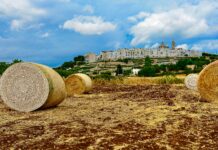

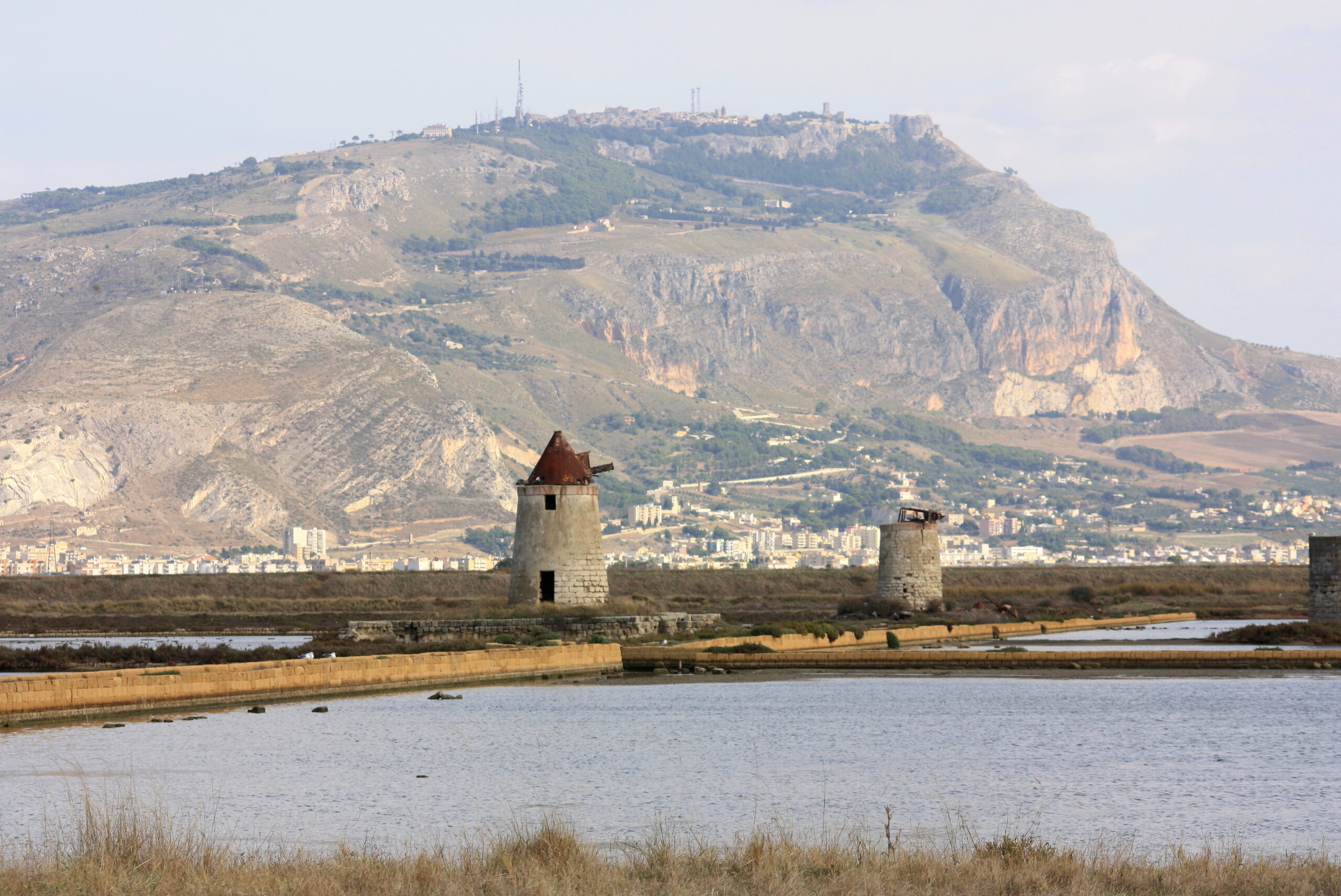
Perched high above the western coast of Sicily, Erice is one of Italy’s most atmospheric hill towns. Rising to approximately 751 metres above sea level on Mount Erice, the town seems to float between the mountains and the Mediterranean, with spectacular views stretching across Trapani, the salt pans, the Egadi Islands and, on exceptionally clear days, toward distant North Africa.
Erice is a destination where history, mythology, architecture, food and landscape come together. Its origins reach back to the ancient Elymians, while Greeks, Carthaginians, Romans, Normans and Spanish all left their mark on the mountain. The modern visitor encounters a remarkably well-preserved medieval town of stone-paved lanes, churches, defensive walls, gates and small piazzas.
Yet Erice is more than a historical monument. It is a place to wander without a strict itinerary, stop for a coffee or a traditional pastry, look through an ancient doorway and suddenly discover a view of the Mediterranean far below.
For travelers planning a broader journey through the island, Italia Mia’s comprehensive guide to the Region of Sicily is a useful starting point for understanding how Erice fits into the extraordinary diversity of Sicily.
Why Erice Is So Special
There are many beautiful medieval towns in Sicily, but Erice has a character of its own.
Its first great advantage is its position. The mountain rises dramatically above the western Sicilian landscape, making Erice visible from a considerable distance. From the town and especially from the area around the Castle of Venus, visitors can look down toward Trapani and the coast, while the Egadi Islands appear offshore.
The second attraction is its medieval atmosphere. Unlike larger Sicilian cities, Erice is compact enough to explore largely on foot. Its narrow streets frequently turn into stairways or open onto small squares. Stone buildings, churches and defensive structures create a setting that feels remarkably removed from modern life.
The third is the extraordinary combination of mythology and history.
Ancient Erice was associated with the cult of Aphrodite and later Venus Ericina. According to tradition, a sanctuary dedicated to the goddess occupied the summit long before the Norman castle that visitors see today. The Romans continued the cult of Venus, helping establish Erice’s reputation throughout the ancient Mediterranean.
The result is a town where mythology is not simply something found in a museum. It is embedded in the landscape.
The History of Erice
The history of Erice stretches back thousands of years.
The ancient settlement was known as Eryx, and its origins are associated with the Elymians, an ancient people whose history remains partly surrounded by legend. Greek influence subsequently became important, while the town’s sanctuary attracted attention throughout the Mediterranean.
The Romans connected the mountain with Venus Ericina, and the sanctuary became one of the most famous religious sites associated with the goddess.
Over the centuries, Erice passed through different political and cultural spheres. The medieval period was particularly important because the Normans transformed the summit into a powerful defensive position. The castle that now dominates the highest point was constructed during the Norman period using, in part, material associated with earlier structures.
The medieval town developed behind defensive walls, with churches, monasteries, houses and public buildings occupying the limited space available on the mountain.
Later Spanish influence added another layer to the town’s history, including the unfinished structure known as the Spanish Quarter.
Erice therefore represents an extraordinary architectural palimpsest. Ancient religious traditions, medieval military architecture, Christian churches and later civic buildings coexist within a relatively small area.
The Castle of Venus
The Castello di Venere, or Castle of Venus, is unquestionably Erice’s most famous landmark.
Standing on the summit above the town, the Norman fortress occupies the site associated with the ancient sanctuary of Venus. Its position was strategically ideal: the cliffs offered natural protection while the height provided an enormous advantage for observation.
Today, the castle is partly ruined, but its location is more impressive than almost any reconstruction could be.
Standing near the fortress, you can look across the western Sicilian landscape and the sea. The relationship between the ruins and the panorama is what makes the site memorable.
The castle was connected to the Towers of the Balio, forming part of the defensive system. Later restoration work, particularly under Count Agostino Pepoli in the late nineteenth century, helped transform the surrounding area and contributed to the creation of the public gardens.
The castle is also the perfect place to appreciate the unusual character of Erice: the visitor is simultaneously looking at an archaeological site, a medieval fortress and one of the finest viewpoints in western Sicily.
The Giardini del Balio
Next to the castle are the Giardini del Balio, a landscaped garden that provides another excellent place to enjoy the scenery.
The gardens are particularly attractive because they soften the severity of the medieval fortress. Trees, pathways, stone structures and panoramic viewpoints create a pleasant contrast with the castle walls.
The nearby Torretta Pepoli was constructed in the nineteenth century by Count Agostino Pepoli, who played an important role in the restoration and development of this part of Erice.
From the gardens, the landscape opens toward Trapani, the sea and the islands. On a clear day, the panorama can be extraordinary.
This is one of those places where it is worth putting the camera away for a few minutes and simply looking.
The Cathedral of Erice
Near Porta Trapani, one of the principal entrances to the historic center, stands the imposing Chiesa Matrice, commonly known as the Cathedral of Erice.
The church dates from the fourteenth century and was commissioned during the reign of Frederick of Aragon. Its exterior is immediately recognizable for its Gothic character, defensive-looking architecture and impressive bell tower.
The building demonstrates an important feature of Erice: religious architecture frequently had a defensive as well as spiritual function.
The bell tower itself was originally conceived partly as a lookout structure, while the church’s elevated position reinforces its importance within the medieval town.
Inside, visitors can appreciate the contrast between the relatively austere exterior and the religious art and architectural details of the interior.
The cathedral should be one of the first stops after entering Erice through Porta Trapani.
Walking Through Erice’s Medieval Streets
The best way to experience Erice is simply to walk.
There is no need to rush from monument to monument. The town is small enough that you can explore it slowly, following streets that appear to lead nowhere and discovering that they eventually open onto another piazza.
The paving stones can be uneven, and some streets are steep, so comfortable shoes are essential.
Look for:
- Ancient stone doorways
- Small courtyards
- Medieval arches
- Defensive walls
- Church façades
- Traditional Sicilian houses
- Views through narrow streets toward the sea
- Small artisan shops
- Pastry shops selling traditional Erice specialties
The atmosphere changes with the weather. On a clear day, Erice is dominated by brilliant Mediterranean light and huge views. When clouds settle over Mount Erice, the town can become mysterious and almost cinematic.
Fog is not unusual because of the mountain’s elevation. In fact, the changing weather is part of Erice’s personality.
The Spanish Quarter
One of the more unusual places to visit is the Quartiere Spagnolo, or Spanish Quarter.
Despite the name, this is not a conventional neighborhood. It is an unfinished building complex that was intended to house Spanish soldiers during the period of Spanish rule. The project was never completed, leaving behind a fascinating structure in a dramatic location.
Today, the area is particularly interesting because of its panoramic position.
It is also a reminder that Erice’s history was not simply a succession of grand churches and castles. The town was a strategic military location, and its population lived within a fortified environment shaped by the political realities of medieval and early modern Sicily.
Erice’s Churches
Erice has traditionally been associated with an extraordinary number of churches, sometimes earning the description “the city of a hundred churches.” The actual number is considerably smaller, but the nickname reflects the extraordinary religious heritage concentrated within the town.
Among the churches worth seeking out are San Martino, San Giovanni Battista, San Cataldo and Sant’Orsola.
The Church of San Giovanni Battista is particularly notable for its architectural details and position overlooking the landscape.
The Church of San Martino has Norman origins and was subsequently modified over the centuries.
The churches are important not only for their art but also because they demonstrate how Erice evolved architecturally. Medieval, Renaissance, Baroque and later interventions can be found within the same small historic center.
The Museo Civico Antonio Cordici
For visitors who want to understand the history of Erice rather than simply admire its buildings, the Museo Civico Antonio Cordici is an important stop.
The museum occupies the former convent of San Francesco and contains archaeological, artistic and historical material connected with the town.
It provides context for the objects, traditions and civilizations that shaped Erice over the centuries. Italy’s official tourism portal also highlights the museum as an important place for understanding the history of the town.
A visit here can make the rest of the town considerably more meaningful because you begin to recognize the layers of history behind the stones.
The Ettore Majorana Centre
One of the most surprising aspects of Erice is its importance in the world of modern science.
The Ettore Majorana Centre for Scientific Culture operates from historic buildings in the town and has hosted international scientific meetings and conferences.
This creates a fascinating contrast. Ancient religious traditions and medieval architecture coexist with a center dedicated to contemporary scientific culture.
Erice has therefore developed an identity that extends well beyond tourism. It is simultaneously a medieval village, a cultural destination and an international meeting place for scientists.
Erice’s Famous Pastries
You should not visit Erice without trying its traditional pastries.
The town has a particularly strong confectionery tradition associated with the old convents and monasteries.
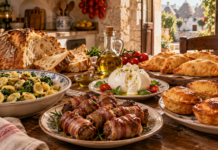
Among the specialties are genovesi, small pastry parcels filled with cream and traditionally served warm. There are also almond-based sweets, mustazzoli, ripostetti and colorful marzipan creations known as frutta martorana.
The famous pastry tradition is one of the reasons Erice is such an enjoyable destination for travelers who combine sightseeing with gastronomy.
One of the best-known names associated with Erice’s pastry culture is Maria Grammatico, whose pastry shop has become an institution in the town.
For anyone interested in Italian food traditions more generally, Italia Mia’s article on authentic Italian gelato and the history of Italian gelato traditions provides another perspective on the importance of regional food traditions.
What to Eat in Erice
Erice is not only about desserts.
The broader Trapani area has one of Sicily’s most distinctive culinary traditions, strongly influenced by its position at the crossroads of the Mediterranean.
One of the signature dishes of western Sicily is couscous di pesce, a seafood couscous reflecting the historic relationship between Sicily and North Africa.
You will also encounter:
- Pasta with local seafood
- Fresh fish
- Caponata
- Pane cunzato
- Sicilian cheeses
- Almond-based desserts
- Cannoli
- Genovesi
- Cassatelle and other traditional pastries
- Marsala wine from the nearby area
The cuisine of the region is a good example of why Sicilian food cannot simply be described as “Italian food.” Centuries of Greek, Arab, Norman, Spanish and North African connections have produced an exceptionally distinctive culinary culture.
Italia Mia’s article on Italian cuisine and the differences between Italian and Italian-American food provides useful background for understanding this broader culinary tradition.
Trapani: The City Below Erice
Erice and Trapani are natural companions on a western Sicily itinerary.
Trapani sits at sea level beneath the mountain, and the contrast between the two destinations is striking. Erice offers medieval streets, mountain air and panoramic views, while Trapani offers a historic coastal city, seafood restaurants, waterfront promenades and access to the Egadi Islands.
The relationship between the two is also practical. Visitors can reach Erice by road, while the Trapani-Erice cable car provides one of the most enjoyable approaches to the mountain. The journey offers increasingly impressive views as the cabins climb toward Erice.
A good strategy is to visit Erice during the day and spend the evening in Trapani, or base yourself in Trapani and make Erice a half-day or full-day excursion.
The Trapani Salt Pans
South of Trapani lies one of western Sicily’s most distinctive landscapes: the salt pans.
For centuries, salt production has shaped this part of the coast. The shallow pools, windmills and geometric divisions of the salt works create an unusual landscape that is especially beautiful around sunset.
The area also has important ecological value, attracting migratory and resident birds.
The salt pans can easily be combined with Erice and Trapani in a western Sicily itinerary, although trying to visit everything in one day can make the experience rushed.
Allowing several days for the area gives you time to appreciate the landscapes rather than simply checking attractions off a list.
San Vito Lo Capo
One of the most obvious excursions from Erice is San Vito Lo Capo, famous for its spectacular beach and mountainous surroundings.
The town sits at the end of a dramatic peninsula north of Erice and is one of Sicily’s best-known seaside destinations.
The contrast with Erice could hardly be greater: from cool mountain streets and medieval stone buildings to brilliant blue Mediterranean water and sandy beaches.
Italia Mia has covered San Vito Lo Capo in its guide to the top beaches in Italy, as well as in its more recent guide to Italy’s best beaches in 2026.
San Vito is especially attractive for travelers who want to combine culture with several days of beach time.
The Zingaro Area and Scopello
Further along the coast is the spectacular Riserva Naturale dello Zingaro, one of the most beautiful protected coastal areas in western Sicily.
The landscape is characterized by rugged cliffs, Mediterranean vegetation, hiking paths and secluded coves.
Nearby Scopello is another essential stop. Its historic village, old tuna fishery and dramatic coastal scenery make it one of the most photogenic destinations in this part of Sicily.
The coast around Scopello and Zingaro is best explored slowly. Rather than attempting to see everything from the car, consider spending a day walking, swimming and enjoying the landscape.
Mount Cofano and Custonaci
Another attractive excursion is toward Monte Cofano, a dramatic limestone promontory between the Erice area and San Vito Lo Capo.
The landscape around Mount Cofano combines cliffs, Mediterranean vegetation and coastal views.
Nearby Custonaci is known for its marble industry and religious traditions, while the surrounding countryside provides a more rural perspective on western Sicily.
This is an excellent area for travelers who prefer hiking and landscapes to conventional sightseeing.
Segesta: One of Sicily’s Great Ancient Sites
A trip to Erice can easily be combined with Segesta, one of the most important archaeological sites in western Sicily.
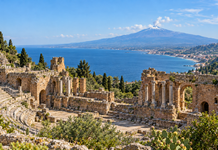
The ancient Greek temple at Segesta is spectacularly positioned in a green landscape, while the nearby ancient theater occupies the summit of Mount Barbaro.
The temple is one of the great survivors of the ancient Mediterranean. Its isolation is part of its appeal: rather than being surrounded by a modern city, it stands in an open landscape of hills and countryside.
Segesta makes an especially good companion to Erice because the two sites offer completely different historical experiences.
At Erice, you experience a medieval town built around an ancient sacred mountain.
At Segesta, you encounter the monumental remains of the ancient Mediterranean world.
The Temple Valley and Selinunte
If you have more time, western Sicily offers two further extraordinary archaeological destinations: Selinunte and Agrigento’s Valley of the Temples.
Selinunte is particularly convenient from the western side of the island and contains an enormous archaeological landscape filled with the remains of Greek temples.
Agrigento is farther away, but its Valley of the Temples is one of the defining archaeological attractions of Sicily.
For visitors fascinated by ancient history, Erice can therefore form part of a much larger itinerary connecting the Elymian, Phoenician, Greek, Roman, Arab and Norman heritage of Sicily.
Marsala and the World of Sicilian Wine
Another excellent excursion is Marsala, south of Trapani.
Marsala is famous internationally for its fortified wine, but the town and surrounding countryside offer much more than wine tasting.
The western Sicilian landscape around Marsala is characterized by vineyards, olive groves, salt pans and coastal wetlands.
Wine enthusiasts can visit wineries, learn about the production of Marsala and sample local wines while exploring the countryside.
For travelers interested in accommodation and longer stays in Sicily, Italia Mia’s guide to the best places to stay in Sicily also provides ideas for using destinations such as Trapani and Marsala as bases for exploring western Sicily.
The Egadi Islands
From Trapani, boats connect with the Egadi Islands, including Favignana, Levanzo and Marettimo.
Favignana is the most accessible for many visitors and is famous for its turquoise water, coves and relaxed island atmosphere.
Levanzo is smaller and quieter, while Marettimo is particularly attractive to travelers interested in hiking, nature and boating.
If you have several days available, combining Erice with an island excursion creates a particularly varied vacation: medieval architecture one day, Mediterranean beaches the next.
The Best Time to Visit Erice
Erice can be visited throughout the year, but the experience varies considerably by season.
Spring is excellent for walking and exploring the surrounding countryside. Temperatures are generally comfortable, and the landscape can be particularly attractive.
Summer is the busiest season, but Erice’s elevation means that it can feel considerably cooler than the coastal towns. It is also a useful escape from the intense heat that can affect lower elevations.
Autumn is an excellent time for food, wine and cultural tourism. The crowds begin to diminish, while the surrounding countryside takes on a different character.
Winter offers the most atmospheric version of Erice. Fog and clouds can transform the town into a mysterious medieval landscape. The downside is that visibility can disappear completely, eliminating the famous panoramic views.
If the principal objective is photography and scenery, check the weather before making the journey to the summit.
How to Reach Erice
There are several ways to reach Erice.
The most spectacular option for many visitors is the cable car from Trapani. The journey takes you from the coastal plain toward the mountain and provides excellent views along the way.
You can also drive from Trapani or Valderice. The mountain road is scenic but winding, so drivers should allow adequate time and avoid rushing.
A rental car is particularly useful if Erice is part of a wider western Sicily itinerary because it gives you the freedom to combine the town with Segesta, San Vito Lo Capo, Scopello, the salt pans and Marsala.
Public transport is possible, but travelers planning to explore several smaller destinations will generally find a car considerably more convenient.
How Long Should You Spend in Erice?
A half-day is enough to see the principal monuments, walk through the historic center and enjoy a pastry.
However, a full day is preferable.
With a full day, you can visit the cathedral, Castle of Venus, Balio Gardens and museum without rushing. You can also stop for lunch, explore smaller streets and spend time simply enjoying the views.
Staying overnight provides an entirely different experience.
Once the large groups of day visitors have departed, Erice becomes quieter. The narrow streets, stone buildings and mountain atmosphere become much more apparent.
For photographers and travelers who value atmosphere over ticking attractions off a list, an overnight stay can be particularly rewarding.
A Suggested Western Sicily Itinerary
A week in western Sicily could be organized around Erice as follows:
Day 1 – Trapani: Explore the historic center, waterfront and local cuisine.
Day 2 – Erice: Take the cable car, explore the medieval center, visit the cathedral, Castle of Venus and Balio Gardens.
Day 3 – Salt Pans and Marsala: Visit the salt-producing landscape and continue to Marsala for wine and historic sights.
Day 4 – Segesta: Spend the day exploring the ancient temple and theater.
Day 5 – San Vito Lo Capo: Enjoy the beach and surrounding mountains.
Day 6 – Scopello and Zingaro: Explore the coast, hike and swim.
Day 7 – Favignana: Take a boat to the Egadi Islands.
This itinerary can easily be shortened or expanded depending on your interests.
Erice for Photographers
Few places in Sicily offer such a concentration of photographic opportunities.
The Castle of Venus is the obvious location for panoramic images, particularly early in the morning or late afternoon.
The Balio Gardens provide views framed by vegetation and medieval architecture.
Inside the town, narrow lanes create strong compositions of stone walls, arches, doors and staircases.
Fog creates an entirely different photographic atmosphere. A street that looks picturesque in bright sunshine can become almost surreal when the mountain disappears into cloud.
The surrounding coast is equally photogenic, especially from elevated viewpoints overlooking Trapani and the Egadi Islands.
Erice Beyond the Tourist Attractions
Perhaps the greatest mistake would be to treat Erice simply as a checklist of monuments.
The town’s real appeal lies in its atmosphere.
Walk slowly.
Sit in a piazza.
Have a coffee.
Try a genovese.
Look into a church.
Follow a street simply because it looks interesting.
Return to the castle near sunset.
Erice rewards travelers who allow themselves time to wander.
It is also a good reminder that Sicily is not simply about beaches and archaeological sites. The island’s greatest strength is its ability to place radically different experiences within a relatively small geographical area.
Within a short drive of Erice, you can move from a medieval mountain town to a Mediterranean beach, from ancient Greek ruins to salt pans, vineyards and fishing villages.
Erice and the Character of Western Sicily
Western Sicily has sometimes received less international attention than destinations such as Taormina, Syracuse or Palermo. That is changing, and Erice is one of the reasons.
The area offers an exceptionally rich combination of attractions without requiring the enormous distances involved in touring the entire island.
Erice provides history and architecture.
Trapani provides coastal life and connections to the islands.
San Vito Lo Capo provides beaches.
Zingaro provides nature.
Segesta provides ancient archaeology.
Marsala provides wine and countryside.
The Egadi Islands provide the Mediterranean experience.
Together they form one of the most rewarding travel regions in Sicily.
Final Thoughts
Erice is one of Sicily’s most unforgettable destinations.
Its appeal does not depend on a single monument. The Castle of Venus is spectacular, but it is the combination of the castle, medieval streets, churches, gardens, pastries, mountain atmosphere and enormous views that makes the town special.
The ancient history of Venus and Eryx gives the town a mythical dimension, while its Norman architecture provides a tangible medieval identity. The modern presence of the Ettore Majorana Centre adds another unexpected layer.
Most importantly, Erice is surrounded by some of western Sicily’s greatest attractions.
A visit can therefore be much more than a day trip. Used as part of a western Sicily itinerary, Erice can become the starting point for discovering Trapani, the salt pans, San Vito Lo Capo, Scopello, the Zingaro coast, Segesta, Marsala and the Egadi Islands.
For travelers looking for history, scenery, food and authentic Sicilian atmosphere, Erice deserves a prominent place on the itinerary.
Internal Links – Italia Mia
- Region of Sicily: A Complete Guide to Sicily — Useful overview of Sicily’s history, cities, landscapes and major attractions.
- Living with Sicily — A personal perspective on Sicilian life, including Erice, Trapani and western Sicily.
- Top 5 Must-See Beaches in Italy — Includes San Vito Lo Capo.
- Top Beaches in Italy in 2026 — Updated beach guide featuring San Vito Lo Capo.
- The Best Places to Stay in Sicily — Accommodation ideas and Sicilian destinations.
- Italian Cuisine or Italian-American Cuisine? — Background on the regional diversity of Italian and Sicilian cuisine.
- Authentic Italian Gelato: A Sweet Journey Through Italy — Related article on Italy’s regional food traditions.
External Links
- Italia.it – Official Erice Guide
- Visit Sicily – Erice
- Erice Official Tourism Portal
- Erice – Castle of Venus