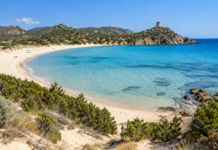

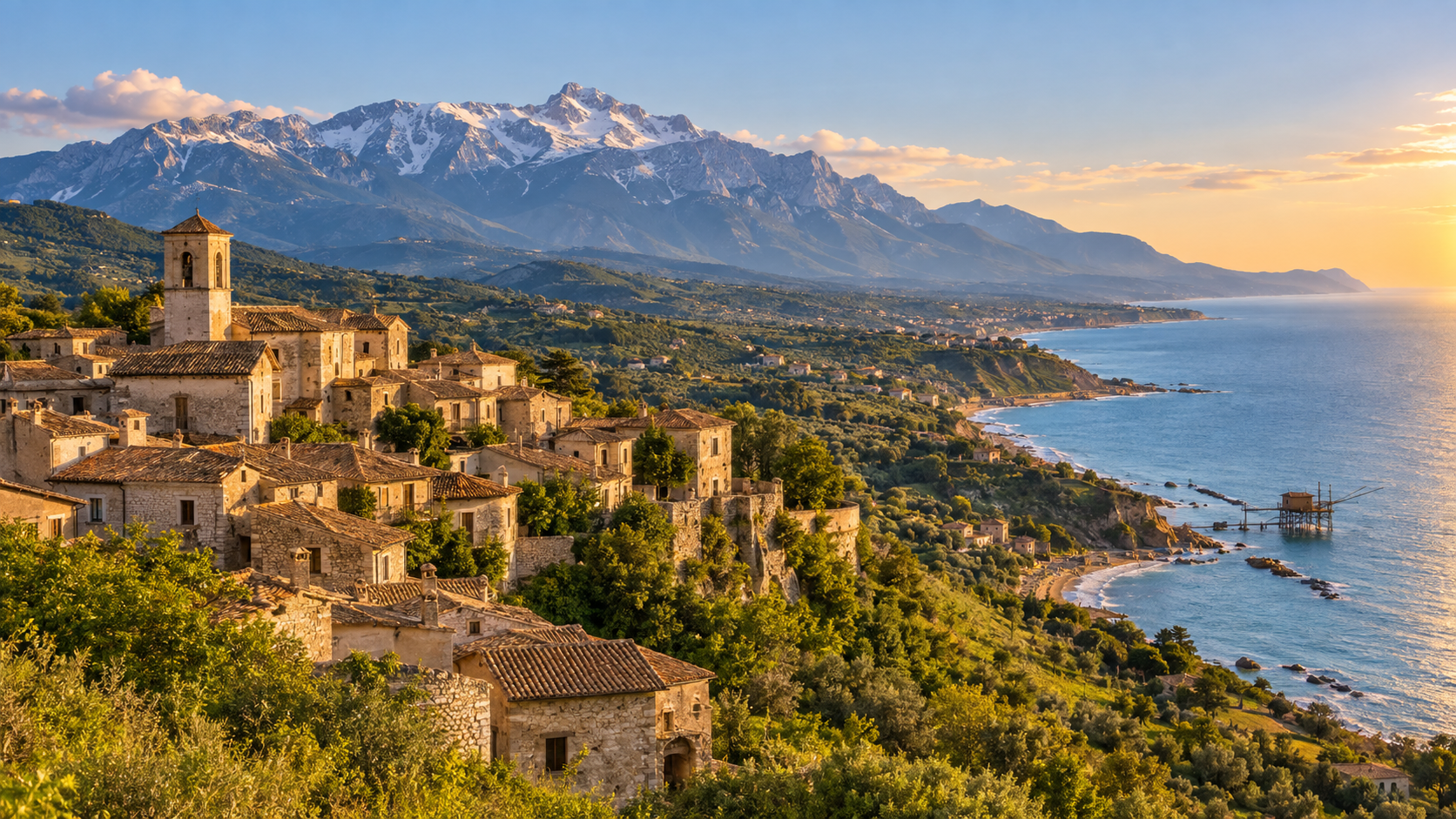
 Abruzzo is where Italy’s rugged Apennine Mountains meet the Adriatic Sea. Within a relatively compact region, travelers can hike beneath some of the highest peaks in the Apennines, explore medieval villages and castles, watch for rare wildlife, dine on a traditional fishing platform and spend the next morning relaxing beside the sea.
Located east of Rome, Abruzzo remains quieter than Tuscany, the Amalfi Coast and Italy’s famous art cities. Yet it offers many of the experiences visitors seek in Italy: historic towns, regional food, local wine, outdoor adventures and landscapes that still feel remarkably unspoiled.
For an overview of the region’s most rewarding destinations, begin with our guide to the best places to visit in Abruzzo. If your trip will include the Adriatic coast, our guide to the best beaches in Abruzzo covers seaside resorts, nature reserves and the celebrated Costa dei Trabocchi.
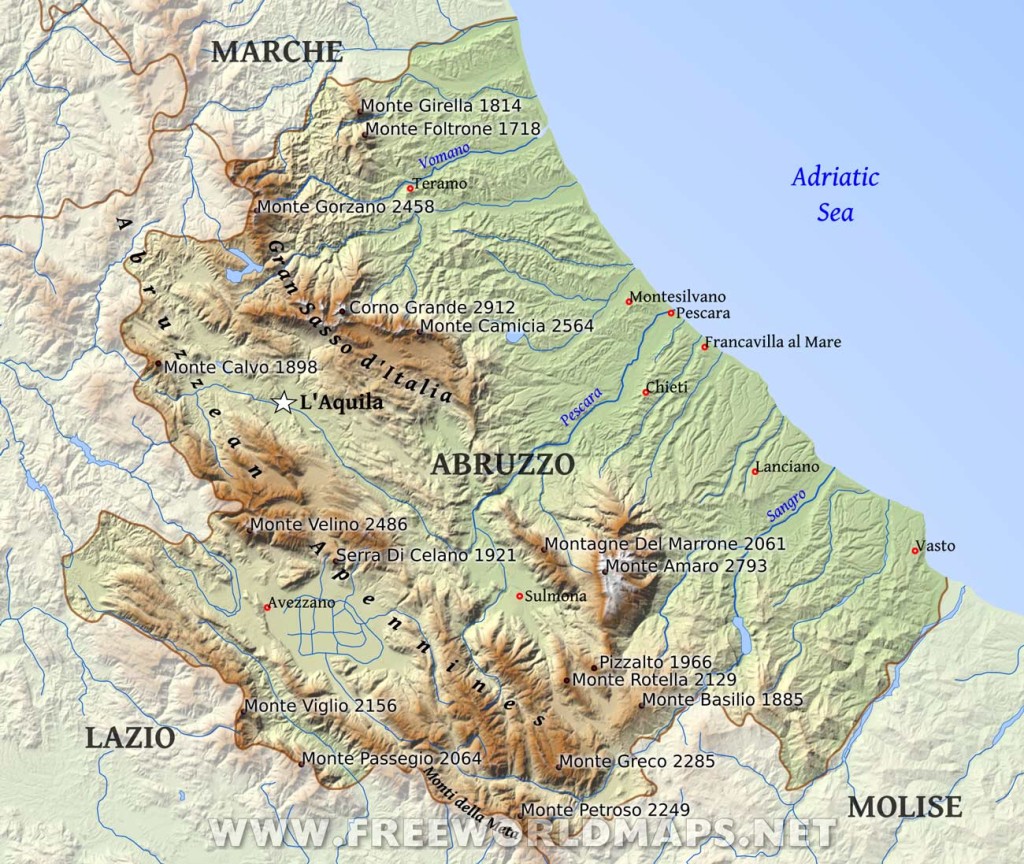
Abruzzo at a Glance
- Regional capital: L’Aquila
- Provinces: L’Aquila, Teramo, Pescara and Chieti
- Location: Central Italy, between Lazio and the Adriatic Sea
- Best known for: National parks, mountains, medieval villages, wildlife, beaches, arrosticini and Montepulciano d’Abruzzo wine
- Highest mountain: Corno Grande, 2,912 meters
- Main coastal city: Pescara
- Best airport: Abruzzo Airport in Pescara
- Best way to explore: Rental car, particularly for national parks and smaller villages
- Ideal trip length: Five to seven days
- Best seasons: Late spring, early summer and September
Why Visit Abruzzo?
Abruzzo is one of Italy’s best regions for travelers who want to combine culture, nature and the coast without moving between distant parts of the country.
The region is especially appealing for:
- Mountain scenery and hiking
- Medieval villages and castles
- Wildlife and nature photography
- Adriatic beaches
- Traditional food and wine
- Road trips
- Family vacations
- Skiing and winter sports
- Less crowded alternatives to Italy’s busiest destinations
Abruzzo also works well as an extension to a stay in Rome. The western part of the region can be reached by road in approximately two hours, depending on the destination and traffic.
The Best Places to Visit in Abruzzo
Abruzzo rewards slow travel. Instead of concentrating on one famous city, its attractions are distributed among mountain valleys, hill towns, national parks and coastal communities.
Our complete guide to the best places to visit in Abruzzo explores the region’s most beautiful towns, villages and natural attractions in greater detail. These are some of the essential stops.
L’Aquila
L’Aquila is Abruzzo’s regional capital and the natural starting point for exploring the mountainous interior. Founded during the Middle Ages, the city contains churches, fountains, palaces and public squares framed by the peaks of the Gran Sasso.
One of its most recognizable monuments is the Fontana delle 99 Cannelle, a medieval fountain decorated with stone masks. Other important sights include the Basilica di Santa Maria di Collemaggio, the Basilica di San Bernardino and the Spanish fortress known as the Forte Spagnolo.
L’Aquila suffered extensive damage during the 2009 earthquake. Restoration has transformed many parts of the historic center, although work continues in some areas. The city’s recovery has become an important part of its contemporary identity.
Pescara
Pescara is Abruzzo’s largest urban center and its principal gateway to the Adriatic. It has a long waterfront, sandy beaches, seafood restaurants, shops and a lively summer atmosphere.
The city is closely associated with poet and writer Gabriele D’Annunzio, whose birthplace is now a museum. Visitors can also cross the sculptural Ponte del Mare, stroll along the seafront and explore the restaurants around the marina.
Pescara is one of the easiest bases in Abruzzo for travelers without a car. It has rail connections along the Adriatic corridor, an airport and bus services to several inland destinations.
Sulmona
Surrounded by mountains in the Peligna Valley, Sulmona is one of Abruzzo’s most attractive small cities. It was the birthplace of the Roman poet Ovid and is famous throughout Italy for its colorful confetti, or sugar-coated almonds.
The historic center extends along Corso Ovidio toward Piazza Garibaldi, where a medieval aqueduct crosses one side of the square. Sulmona is also a useful base for excursions into Majella National Park and the nearby mountain villages.
Chieti
Chieti is one of Italy’s oldest cities, with a long history connected to the ancient Marrucini people and Roman Teate. Its elevated historic center overlooks the surrounding hills and, on clear days, offers views toward both the mountains and the Adriatic.
The city’s archaeological museums contain important Italic and Roman collections. Among their most celebrated exhibits is the Warrior of Capestrano, a monumental sixth-century BC statue that has become an emblem of Abruzzo.
Teramo
Located between the Gran Sasso and the Adriatic coast, Teramo receives fewer international visitors than Pescara or L’Aquila. Its historic center includes the Cathedral of Santa Maria Assunta, Roman ruins and quiet streets lined with local restaurants and cafés.
Teramo makes a practical base for exploring northern Abruzzo, including Civitella del Tronto, the Gran Sasso and the seaside towns of the Teramo coast.
Vasto
Vasto combines an elegant hilltop historic center with panoramic Adriatic views. The old town contains the Palazzo d’Avalos, gardens, churches and terraces overlooking Vasto Marina.
Just north of town, the Punta Aderci Nature Reserve protects one of Abruzzo’s most beautiful stretches of coastline. Vineyards, fields and walking paths descend toward pebble beaches and clear water.
Scanno
Scanno sits in the mountains of the province of L’Aquila, near its namesake lake. Stone staircases, arches and tightly packed houses create one of the most photogenic historic centers in the region.
The village became internationally known through photographs by artists including Henri Cartier-Bresson and Mario Giacomelli. Traditional dress and gold filigree jewelry remain part of Scanno’s cultural identity.
Santo Stefano di Sessanio
Santo Stefano di Sessanio is a remarkably preserved stone village near the high plateau of Campo Imperatore. Its narrow passages and small houses reflect the fortified settlements once found throughout the Abruzzese mountains.
The village is close to Rocca Calascio and can easily be included in a Gran Sasso road trip.
Rocca Calascio
Standing at approximately 1,460 meters above sea level, Rocca Calascio is one of Italy’s highest fortresses. The ruined castle rises dramatically above the surrounding valleys, with open views across the Gran Sasso landscape.
The climb from the parking areas requires suitable shoes, but the panorama is among the most memorable in central Italy. The fortress has appeared in several films, including Ladyhawke and The Name of the Rose.
Civitella del Tronto
Near the border with Le Marche, Civitella del Tronto is dominated by an enormous fortress built along the summit of a rocky ridge. It was one of the last Bourbon strongholds to surrender during the unification of Italy.
Visitors can explore the fortifications before descending into the historic village, whose steep lanes and stone houses overlook the surrounding countryside.
Abruzzo’s National Parks and Mountains
Abruzzo contains three national parks, one regional park and numerous protected reserves. The landscape ranges from high limestone peaks and broad plateaus to beech forests, canyons and remote valleys.
Gran Sasso and Monti della Laga National Park
The Gran Sasso is dominated by Corno Grande, which reaches 2,912 meters and is the highest summit in the Apennines. The national park offers hiking, cycling, climbing, horseback riding and opportunities to explore historic villages.
Campo Imperatore, sometimes described as Italy’s “Little Tibet,” is a vast high-altitude plateau surrounded by mountain peaks. It is one of the region’s most dramatic driving destinations.
Popular places around the park include:
- Campo Imperatore
- Prati di Tivo
- Santo Stefano di Sessanio
- Castel del Monte
- Rocca Calascio
- Lake Campotosto
- Pietracamela
Weather conditions can change rapidly at high elevations. Travelers planning a serious hike should consult official park information and check trail conditions before setting out.
Majella National Park
Majella National Park protects a rugged mountain massif characterized by canyons, forests, caves and remote hermitages. Its marked trail network extends for more than 1,200 kilometers and includes family routes, mountain-bike itineraries and demanding high-altitude hikes.
Recommended destinations include:
- Pacentro
- Caramanico Terme
- Guardiagrele
- Fara San Martino
- Abbateggio
- Eremo di Santo Spirito a Majella
- Eremo di San Bartolomeo in Legio
The park is an excellent choice for travelers interested in hiking, wildlife, mountain villages and Abruzzo’s centuries-old tradition of hermitages.
Abruzzo, Lazio and Molise National Park
This historic national park extends across three regions and provides critical habitat for the Marsican brown bear, Apennine wolf, deer and Abruzzo chamois.
Pescasseroli is its principal visitor base. Other appealing destinations include Opi, Villetta Barrea, Civitella Alfedena, Barrea and the forested Val Fondillo.
Wildlife sightings are never guaranteed. Guided excursions offer the best opportunity to learn about the animals while avoiding disturbance to sensitive habitats.
Beaches and the Abruzzo Coast
Abruzzo has a varied Adriatic shoreline that changes considerably from north to south. The northern coast is dominated by broad sandy beaches and established resorts, while the southern section features coves, rocky stretches and the traditional fishing platforms called trabocchi.
Our guide to the best beaches in Abruzzo compares the principal seaside destinations and helps visitors choose between family-friendly resorts, nature reserves and quieter coves.
Northern Abruzzo Beaches
The Teramo coast is known for long, sandy beaches and shallow water. Popular resorts include:
- Martinsicuro
- Alba Adriatica
- Tortoreto Lido
- Giulianova
- Roseto degli Abruzzi
- Pineto
Pineto is especially appealing for its coastal pine grove, while the nearby Torre del Cerrano Marine Protected Area combines a historic coastal tower with beaches, dunes and protected marine habitats.
Pescara and Francavilla al Mare
Pescara offers kilometers of serviced beaches within easy reach of hotels, restaurants and public transportation. South of the city, Francavilla al Mare provides another accessible resort atmosphere with a broad sandy shoreline.
These locations are convenient for visitors who want a traditional Italian beach holiday without being isolated from urban services.
Costa dei Trabocchi
South of Pescara begins the Costa dei Trabocchi, named after the wooden fishing structures extending over the water. The most distinctive stretch runs for roughly 60 kilometers along the province of Chieti. Many restored trabocchi now operate as seasonal restaurants.
Notable stops include:
- Ortona
- San Vito Chietino
- Rocca San Giovanni
- Fossacesia Marina
- Torino di Sangro
- Casalbordino
- Vasto
The former coastal railway has been transformed into a cycling and walking route, making it possible to experience much of the shoreline away from road traffic.
Punta Aderci
The Punta Aderci Nature Reserve near Vasto is one of the most scenic coastal areas in Abruzzo. Trails cross agricultural land and reach viewpoints above the sea, while paths descend to beaches such as Punta Penna and Mottagrossa.
Facilities are more limited than at the major resorts, so visitors should bring water, sun protection and suitable footwear.
Food to Try in Abruzzo
Abruzzese cuisine reflects the region’s geography. Mountain areas are associated with lamb, cheese, legumes and handmade pasta, while coastal menus emphasize fish and seafood.
Arrosticini
Abruzzo’s best-known specialty consists of small pieces of mutton threaded onto narrow skewers and grilled over a long charcoal brazier called a furnacella. Arrosticini are traditionally served simply, often with bread dressed with olive oil.
Maccheroni alla Chitarra
This square-cut egg pasta is made by pressing sheets of dough through a wooden implement strung with wires resembling a guitar. It may be served with tomato and meat ragù, tiny meatballs or other regional sauces.
Scrippelle ’Mbusse
Associated particularly with Teramo, scrippelle ’mbusse are delicate crepes rolled with cheese and served in broth. The name refers to the crepes being “soaked” in the soup.
Pallotte Cacio e Ova
These meatless balls made with cheese, eggs and breadcrumbs are fried and then simmered in tomato sauce. They are an excellent example of Abruzzo’s resourceful traditional cooking.
Brodetto di Pesce
Several coastal towns prepare their own version of Adriatic fish stew. The recipes vary, but typically combine locally available fish and shellfish with tomato, peppers or other regional ingredients.
Confetti di Sulmona
Sulmona’s decorative sugared almonds are arranged into flowers, bouquets and elaborate gifts. They are closely associated with weddings and celebrations but are sold throughout the year.
Abruzzo Wine
The region’s signature red wine is Montepulciano d’Abruzzo, produced from the Montepulciano grape and not to be confused with Vino Nobile di Montepulciano from Tuscany.
Other wines to look for include:
- Trebbiano d’Abruzzo
- Cerasuolo d’Abruzzo
- Pecorino
- Passerina
- Controguerra DOC wines
Cerasuolo d’Abruzzo is a deeply colored rosé with enough structure to accompany pasta, cured meats, grilled dishes and seafood preparations.
When to Visit Abruzzo
Spring
April through June is ideal for towns, countryside drives and lower-elevation walks. Mountain snow may remain at higher altitudes, particularly early in the season.
Summer
July and August are best for beach vacations and high-mountain activities. Coastal resorts become busy during August, especially around Ferragosto, while the cooler mountain villages provide an attractive alternative.
Autumn
September and October bring milder temperatures, grape harvests, woodland colors and excellent conditions for food-focused road trips. Beach services begin to close as the season progresses.
Winter
Abruzzo is one of central and southern Italy’s most important winter-sports regions. Roccaraso, Campo Felice, Ovindoli and Passolanciano-Majelletta are among its principal skiing areas. Snow and road conditions should always be checked before traveling.
How Many Days Do You Need?
A three-day trip can cover one part of Abruzzo, but five to seven days provides a much more satisfying introduction.
Three-Day Mountain Itinerary
Day 1: L’Aquila and its historic center
Day 2: Santo Stefano di Sessanio, Rocca Calascio and Campo Imperatore
Day 3: Sulmona and Pacentro
Five-Day Mountains and Coast Itinerary
Day 1: L’Aquila
Day 2: Gran Sasso and Rocca Calascio
Day 3: Sulmona and Majella National Park
Day 4: Ortona and the Costa dei Trabocchi
Day 5: Vasto and Punta Aderci
Seven-Day Abruzzo Road Trip
Day 1: Teramo and Civitella del Tronto
Day 2: Gran Sasso and Campo Imperatore
Day 3: L’Aquila
Day 4: Sulmona, Pacentro and Scanno
Day 5: Majella National Park
Day 6: Costa dei Trabocchi
Day 7: Vasto and Punta Aderci
Getting to Abruzzo
By Air
Abruzzo Airport is located near Pescara and serves a selection of Italian and European routes. Rome’s Fiumicino and Ciampino airports offer far more international connections but require an onward journey by bus or car.
By Train
The Adriatic railway makes coastal Abruzzo comparatively easy to reach. Trains connect cities including Giulianova, Pescara, Ortona and Vasto with destinations farther north and south.
Inland journeys can require slower regional trains, buses or a combination of both. Trenitalia also promotes integrated train-and-bus connections for destinations including L’Aquila, Sulmona, Chieti and Teramo.
Travelers can consult Trenitalia’s Abruzzo services for current routes and schedules.
By Car
A car provides the greatest freedom, especially for:
- National parks
- Campo Imperatore
- Rocca Calascio
- Scanno
- Small mountain villages
- Hermitages and trailheads
- Less developed sections of the coast
Mountain roads can be steep and winding. Winter equipment may be compulsory during the colder months, and some high-altitude roads close because of snow.
For broader advice, see our complete guide to driving in Italy.
Where to Stay in Abruzzo
Hotels and accommodation in Abruzzo — Compare seaside hotels, mountain retreats and holiday properties near Pescara, Vasto, Roccaraso, Sulmona and Abruzzo’s national parks.
Find hotels throughout Abruzzo with Expedia
The right base depends on the kind of vacation you want.
- L’Aquila: Best for history and the Gran Sasso
- Pescara: Best for transportation, restaurants and urban beaches
- Sulmona: Best for combining culture with mountain excursions
- Pescasseroli: Best for Abruzzo, Lazio and Molise National Park
- Caramanico Terme: Best for Majella National Park
- Vasto: Best for a historic town near scenic beaches
- Costa dei Trabocchi: Best for cycling, seafood and coastal scenery
- Roccaraso: Best for skiing and winter activities
Accommodation ranges from seaside hotels and mountain lodges to agriturismi, restored village houses and family-run bed-and-breakfasts.
Practical Tips for Visiting Abruzzo
- Reserve a rental car early during summer and major holiday periods.
- Do not rely exclusively on public transportation for remote villages.
- Carry layers even in summer when visiting Campo Imperatore or other high-altitude areas.
- Wear suitable shoes at Rocca Calascio, nature reserves and mountain sites.
- Confirm opening hours for small museums, churches and visitor centers.
- Reserve trabocco restaurants in advance, especially during summer weekends.
- Check weather, trail and road conditions before entering the mountains.
- Allow extra travel time on winding inland roads.
- Carry some cash when visiting small villages and rural establishments.
- Respect wildlife-viewing rules and never approach or feed wild animals.
Is Abruzzo Worth Visiting?
Abruzzo is an excellent choice for travelers who want to see a quieter, wilder and more traditional side of Italy. Few regions make it so easy to combine high mountains, historic villages, national parks, regional cuisine and an Adriatic beach holiday in a single itinerary.
It is not completely undiscovered, especially at the coast in August and in popular ski areas during winter. Nevertheless, much of Abruzzo continues to feel refreshingly removed from Italy’s busiest tourist routes.
Whether you spend a weekend exploring L’Aquila and the Gran Sasso or a full week traveling from medieval mountain villages to the Costa dei Trabocchi, Abruzzo offers a remarkably complete Italian journey.
Continue Planning Your Abruzzo Trip
- Best Places to Visit in Abruzzo
- Best Beaches in Abruzzo
- Best Time to Visit Italy
- How to Travel by Train in Italy
- Driving in Italy: A Guide for Tourists
- Italy’s Best-Kept Secret Places
- Italy’s National Parks
External Sources
- Official Abruzzo tourism portal
- Gran Sasso and Monti della Laga National Park
- Majella National Park
- Abruzzo, Lazio and Molise National Park
- Costa dei Trabocchi – Italia.it
- Trenitalia regional services in Abruzzo