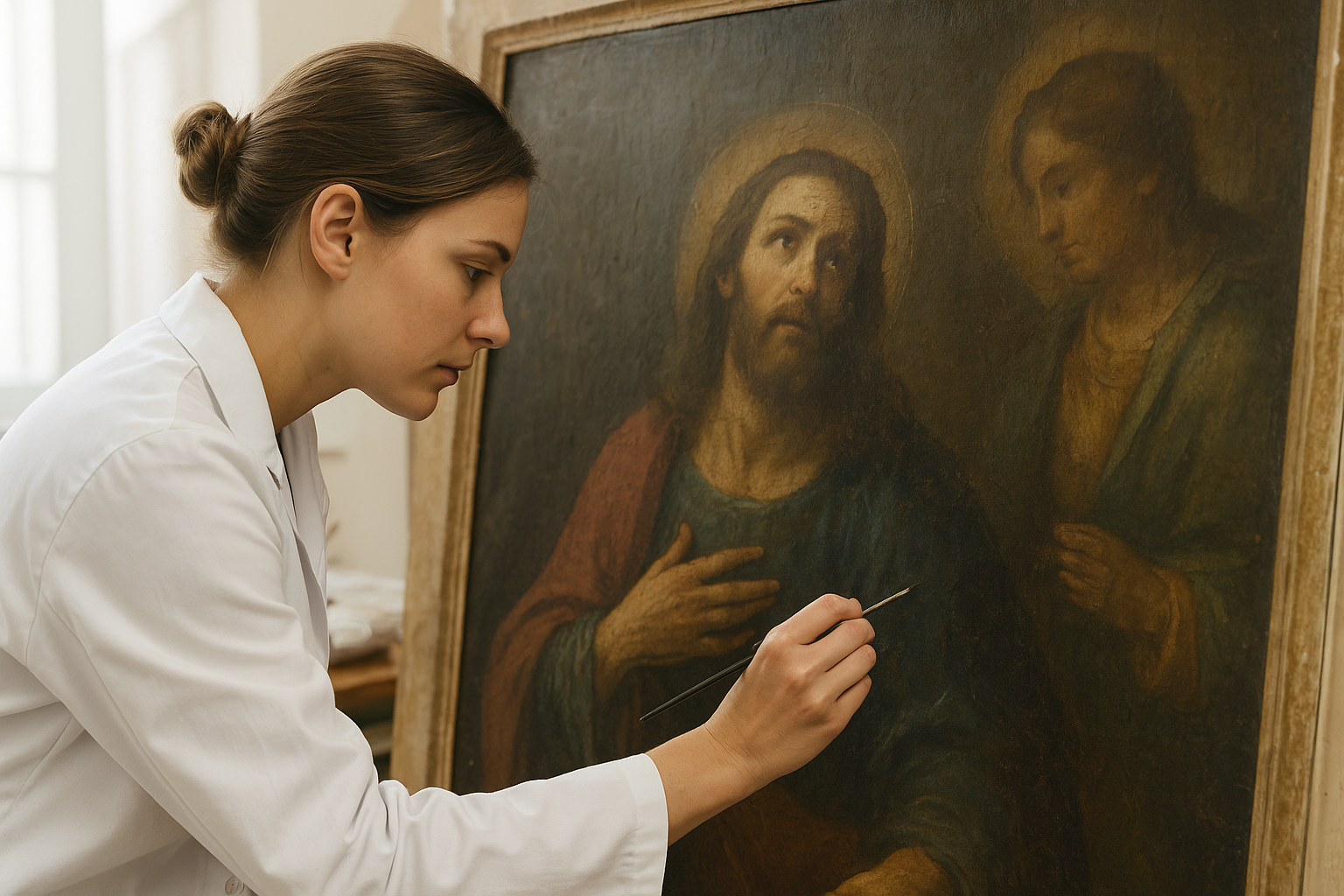
Italy is one of the most inspiring places in the world to study art. Its students do not encounter artistic history only in textbooks: they experience it in churches, museums, archaeological sites, Renaissance palaces and contemporary galleries.
Florence offers direct contact with the Renaissance. Rome combines classical antiquity, Baroque art and modern creative culture. Venice provides an extraordinary setting for contemporary art, while Milan connects fine art with design, fashion, photography and digital media. Carrara remains closely associated with marble and sculpture.
Choosing among Italy’s art schools, however, requires more than selecting a beautiful city. Prospective students should compare each institution’s specializations, teaching language, admission requirements, qualifications and costs.
The schools below are not presented as a rigid ranking. Each is particularly strong in a different area, from traditional painting and sculpture to restoration, design and multimedia art.
Italy’s Best Art Schools at a Glance
| School | City | Particularly Suitable For |
|---|---|---|
| Accademia di Belle Arti di Firenze | Florence | Painting, sculpture, decoration and set design |
| Accademia di Belle Arti di Brera | Milan | Fine art, contemporary practice and new technologies |
| Accademia di Belle Arti di Venezia | Venice | Painting, sculpture and contemporary art |
| Accademia di Belle Arti di Roma | Rome | Visual arts, sculpture, multimedia and set design |
| Accademia di Belle Arti di Carrara | Carrara | Sculpture, marble and material-based art |
| Accademia di Belle Arti di Bologna | Bologna | Fine art, illustration, graphic arts and communication |
| NABA | Milan and Rome | Contemporary art, design, fashion and visual communication |
| IED | Several Italian cities | Design, photography, illustration and creative industries |
| Politecnico di Milano | Milan | Design, architecture and interdisciplinary creative study |
| ISCR | Rome and Matera | Conservation and restoration of cultural heritage |
1. Accademia di Belle Arti di Firenze
The Accademia di Belle Arti di Firenze traces its origins to the Accademia del Disegno established under Cosimo I de’ Medici in 1563. Its historic location places students within walking distance of many of Florence’s most important museums, churches and monuments.
The academy offers study in areas such as painting, sculpture, graphic art, decoration, set design, museum education and new artistic languages. It is especially appealing to students who want traditional studio instruction combined with contemporary experimentation.
Florence itself is one of the institution’s greatest assets. A student can study anatomy, perspective or composition and then examine how those principles were used by Michelangelo, Botticelli, Masaccio and other Italian masters.
To understand the cultural setting before choosing Florence, explore Italia Mia’s introduction to Italy’s great art cities and guide to Italian art movements and periods.
Best for: Painting, sculpture, printmaking, decoration and students attracted to Renaissance art.
2. Accademia di Belle Arti di Brera
Located in Milan’s historic Brera district, the Accademia di Belle Arti di Brera is one of Italy’s best-known public fine-arts academies. Founded in 1776, it shares its cultural setting with the Pinacoteca di Brera and an active neighborhood of galleries, studios and design businesses.
Brera offers first- and second-level programs in painting, sculpture, graphic art, decoration, set design, restoration, photography, art education and new technologies. This range makes it suitable for both traditionally trained artists and students interested in interdisciplinary or digital work.
Milan also provides access to commercial galleries, publishing, advertising, fashion, architecture and international design events. It is therefore a strong choice for students who want to connect personal artistic practice with the wider creative industries.
Best for: Contemporary fine art, painting, sculpture, photography and art technology.
3. Accademia di Belle Arti di Venezia
Few places provide an artistic environment comparable to Venice. The Accademia di Belle Arti di Venezia was established in the 18th century and today combines its historic legacy with contemporary teaching.
Programs cover disciplines such as painting, sculpture, graphic art, decoration, set design and new artistic technologies. Students are immersed in a city filled with Byzantine mosaics, Renaissance paintings, historic architecture and traditional crafts.
Venice is also home to the Venice Biennale, one of the world’s most influential international cultural events. Its exhibitions, national pavilions and associated projects expose students to artists, curators and ideas from around the world.
The city’s artistic importance extends beyond formal institutions. Churches, palaces, artisan workshops and museums can all become part of a student’s visual education. Italia Mia’s guide to Italian art and artists provides useful historical context.
Best for: Contemporary art, painting, sculpture and students seeking an internationally connected art environment.
4. Accademia di Belle Arti di Roma
The Accademia di Belle Arti di Roma offers the opportunity to study in a city shaped by more than two thousand years of visual culture. Ancient sculpture, Renaissance frescoes, Baroque architecture, cinema and contemporary art coexist throughout Rome.
Its academic areas include painting, sculpture, decoration, graphic art, set design, fashion-related studies, communication, multimedia and art education. The academy can therefore accommodate both traditional studio interests and newer forms of visual expression.
Rome is particularly valuable for students interested in the relationship between art and public space. Classical monuments, fountains, churches and modern exhibition venues offer an unusually varied collection of subjects to observe and study.
Best for: Visual arts, sculpture, set design, multimedia and interdisciplinary study.
5. Accademia di Belle Arti di Carrara
The Accademia di Belle Arti di Carrara is the most distinctive choice on this list for students interested in sculpture. Founded in 1769, it is located near the marble quarries that have supplied material to artists and architects for centuries.
Carrara’s identity is inseparable from stone. The city’s workshops, quarries and sculptural traditions create an environment in which students can understand marble not simply as a material, but as part of a living local culture.
The academy is not limited to classical stone carving. Its programs encompass sculpture, painting, decoration, graphic arts, multimedia and other contemporary practices. Nevertheless, its location makes it especially compelling for artists who want to develop a deep knowledge of materials and three-dimensional form.
Readers interested in the legacy of Italy’s most celebrated sculptor can also explore the life and works of Michelangelo Buonarroti.
Best for: Sculpture, marble, public art and material-based artistic practice.
6. Accademia di Belle Arti di Bologna
Bologna’s public academy offers programs spanning painting, sculpture, graphic arts, decoration, illustration, comics, design, photography, art communication and restoration-related disciplines.
The city has a large student population and one of Europe’s most established academic traditions. Compared with Florence, Venice and Rome, Bologna can feel less dominated by mass tourism, allowing students to become more involved in everyday Italian cultural life.
Its strengths in illustration, graphic narrative and visual communication make it particularly interesting for students whose ambitions extend beyond conventional painting or sculpture.
Best for: Illustration, comics, graphic arts, visual communication and contemporary fine art.
7. NABA, Nuova Accademia di Belle Arti
NABA is a private institution with campuses in Milan and Rome. Its programs connect visual arts with design, fashion, communication, set design, media and emerging technologies.
This multidisciplinary approach distinguishes NABA from Italy’s more historically oriented public academies. Students frequently work through projects, collaborations and professional briefs, making the school attractive to those who want to operate across several creative fields.
NABA may suit an international student seeking a structured, contemporary environment with English-taught options. Because it is private, tuition is generally higher than at public academies, so applicants should compare total costs, scholarships and program recognition carefully.
Best for: Contemporary art, art direction, visual communication, fashion and media design.
8. Istituto Europeo di Design
The Istituto Europeo di Design, usually called IED, operates in several Italian cities, including Milan, Florence, Rome, Turin and Cagliari. Available subjects vary by campus but can include fine arts, illustration, animation, photography, visual communication, interior design, product design, fashion, film and curatorial studies.
IED is especially suitable for students who want to work within the commercial creative industries. Its programs tend to emphasize projects, portfolios, collaboration and connections with professional practice.
Applicants should examine the individual campus rather than treating IED as a single uniform school. A photography program in Milan and an art-restoration course in Florence, for example, may offer very different experiences and facilities.
Best for: Design, photography, illustration, visual communication and career-oriented creative education.
9. Politecnico di Milano
Politecnico di Milano is not a traditional academy of painting or sculpture. It is nevertheless one of Italy’s most important institutions for students interested in design, architecture, communication and the intersection of creativity and technology.
Its approach is analytical, technical and project-based. Students may work with product systems, interiors, communication, digital tools, materials and user-centered design rather than focusing exclusively on personal studio practice.
The Politecnico is therefore a better choice for a future designer or architect than for someone seeking classical instruction in drawing or figurative painting.
Best for: Product design, communication design, interior design and architecture.
10. Istituto Centrale per il Restauro
The Istituto Centrale per il Restauro, commonly known as ICR and historically associated with the name ISCR, is a specialist institution devoted to conserving and restoring cultural heritage. Its principal activities are based in Rome, with additional teaching facilities in Matera.
Restoration combines artistic sensitivity with chemistry, material science, documentation and art history. Students must learn to preserve an object without disguising its age or altering its historical meaning.
Admission is highly selective, and the course demands substantial technical commitment. For the right student, however, it provides a direct path into one of Italy’s most respected cultural professions.
Best for: Conservation and restoration of paintings, sculpture, archaeological material and historic objects.
Public Academies or Private Art Schools?
Italy’s public academies belong to the AFAM system of Higher Education in Art, Music and Dance. They award first- and second-level academic diplomas comparable within the Italian higher-education framework to undergraduate and postgraduate qualifications.
Public academies generally cost less than private institutions, although tuition can depend on income, nationality and individual circumstances. They may also require stronger Italian-language skills.
Private schools frequently offer more programs in English, smaller international classes and closer connections with commercial creative industries. Their fees, however, can be considerably higher.
Before applying, verify:
- Whether the institution and program are officially recognized
- The language in which classes are taught
- Portfolio and entrance-examination requirements
- Tuition, materials and studio expenses
- Scholarship opportunities
- Visa and pre-enrollment procedures
- Housing and everyday living costs
- The exact qualification awarded at graduation
Admission Requirements for International Students
Requirements differ among institutions, but undergraduate applicants commonly need a secondary-school qualification, academic transcripts, identification documents and a portfolio. Some schools also conduct an interview, practical examination or Italian-language assessment.
Applicants from outside the European Union may need to complete pre-enrollment through the Universitaly platform before applying for a study visa. Procedures and deadlines can change, so prospective students should rely on the school, Universitaly and the appropriate Italian consulate for current instructions.
Learning Italian remains valuable even when the course is taught in English. It makes studio communication, housing searches and daily life considerably easier. Italia Mia’s guides to academic life in Italian universities and moving to Italy as an expat provide additional preparation.
How to Choose the Right School
Begin with the type of artist or creative professional you want to become.
Choose Florence if you are strongly drawn to Renaissance art and traditional studio disciplines. Consider Carrara for sculpture and marble, Venice for contemporary art in an exceptional cultural setting, and Rome for access to classical, religious and modern visual culture.
Milan is particularly attractive for students interested in contemporary art, design, fashion, photography or professional creative networks. Bologna offers a lively academic environment and notable options in illustration and visual communication.
Do not choose solely on reputation. Examine course plans, faculty portfolios, studios, facilities and recent student work. If possible, attend an open day or request a conversation with the admissions office.
Recommended Books for Art Students
These books provide a useful foundation for anyone preparing to study painting, sculpture or art history in Italy.
The Story of Art — E. H. Gombrich
One of the most accessible introductions to Western art. Gombrich explains major artists, periods and stylistic changes in clear language, making this an excellent starting point before visiting Italy’s museums and monuments.
Art in Renaissance Italy — John T. Paoletti and Gary M. Radke
A detailed examination of Renaissance art within its political, religious and social setting. The book helps readers understand why works were commissioned, where they were displayed and how contemporary audiences experienced them.
The Lives of the Artists — Giorgio Vasari
Vasari’s famous biographies introduced generations of readers to Giotto, Leonardo da Vinci, Raphael, Michelangelo and other Italian masters. Although some anecdotes should be read critically, the book remains essential to the history of Italian art writing.
Drawing on the Right Side of the Brain — Betty Edwards
A practical introduction to observational drawing. Its exercises help beginners look more carefully at proportions, edges, negative space and the relationships between forms.
Color and Light — James Gurney
A clear and richly illustrated guide to color, atmosphere, reflections and different types of illumination. It is valuable for painters, illustrators and digital artists.
Anatomy for Sculptors — Uldis Zarins and Sandis Kondrats
A highly visual reference for understanding the structure of the human body. It is especially useful for figurative sculptors, painters, illustrators and character artists.
More recommendations can be found in Italia Mia’s collection of books about Italian art and artists and the broader Italian books collection.
As an Amazon Associate, Italia Mia may earn from qualifying purchases.
More reading ideas can be found in Italia Mia’s selection of books about Italian art and artists and the broader Italian books collection.
Frequently Asked Questions
What is the best art school in Italy?
There is no single best school for every student. Florence and Brera are strong choices for traditional and contemporary fine art, Carrara is especially attractive for sculpture, ICR specializes in restoration, and NABA, IED and Politecnico di Milano are better suited to many design-oriented careers.
Can I study art in Italy in English?
Yes. Several private institutions offer complete programs or individual courses in English. English-language availability at public academies is more limited and should be confirmed for the specific program.
Are Italian fine-arts qualifications recognized?
Recognized public academies and authorized private institutions operate within Italy’s higher-education system. International recognition may depend on the qualification, destination country and intended profession, so students should verify equivalency before enrolling.
Is a portfolio required?
Many art programs require a portfolio, particularly when admission is selective. Requirements can include drawings, paintings, photographs, design projects, digital work or a combination reflecting the applicant’s chosen discipline.
Where should I study sculpture in Italy?
Carrara is the most distinctive destination for marble and material-based sculpture. Florence, Brera, Venice, Rome and Bologna also offer sculpture programs with different artistic approaches.
Studying Art in Italy: The Final Choice
The greatest advantage of studying art in Italy is the relationship between education and place. Museum visits, historic buildings, streets, workshops and public monuments become part of the learning experience.
A prestigious name can be helpful, but the right school is the one whose teaching philosophy, facilities and specialization match your goals. Compare programs carefully, confirm all current requirements with the institution and consider how each city will influence both your education and your development as an artist.
External Links
Universitaly — Official Italian Higher-Education Portal
Accademia di Belle Arti di Firenze
Accademia di Belle Arti di Brera
Accademia di Belle Arti di Venezia
Accademia di Belle Arti di Roma
Accademia di Belle Arti di Carrara
Accademia di Belle Arti di Bologna
IED — Istituto Europeo di Design
Istituto Centrale per il Restauro