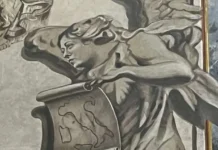

The Vatican Museums are not a single museum but an immense network of galleries, chapels, courtyards and former papal apartments filled with treasures accumulated across centuries. Ancient Roman sculpture, Renaissance frescoes, Egyptian antiquities, historical maps and works by artists including Michelangelo, Raphael, Leonardo da Vinci and Caravaggio all form part of the collection.
For many travelers, this is the artistic highlight of a visit to Rome. It can also be one of the most crowded and tiring attractions in Italy. Booking the right ticket, choosing a realistic route and arriving prepared will make an enormous difference.
Italia Mia may earn a commission when you purchase tickets, reserve accommodation or buy books through selected links on this page, at no additional cost to you.
A Brief History of the Vatican Museums
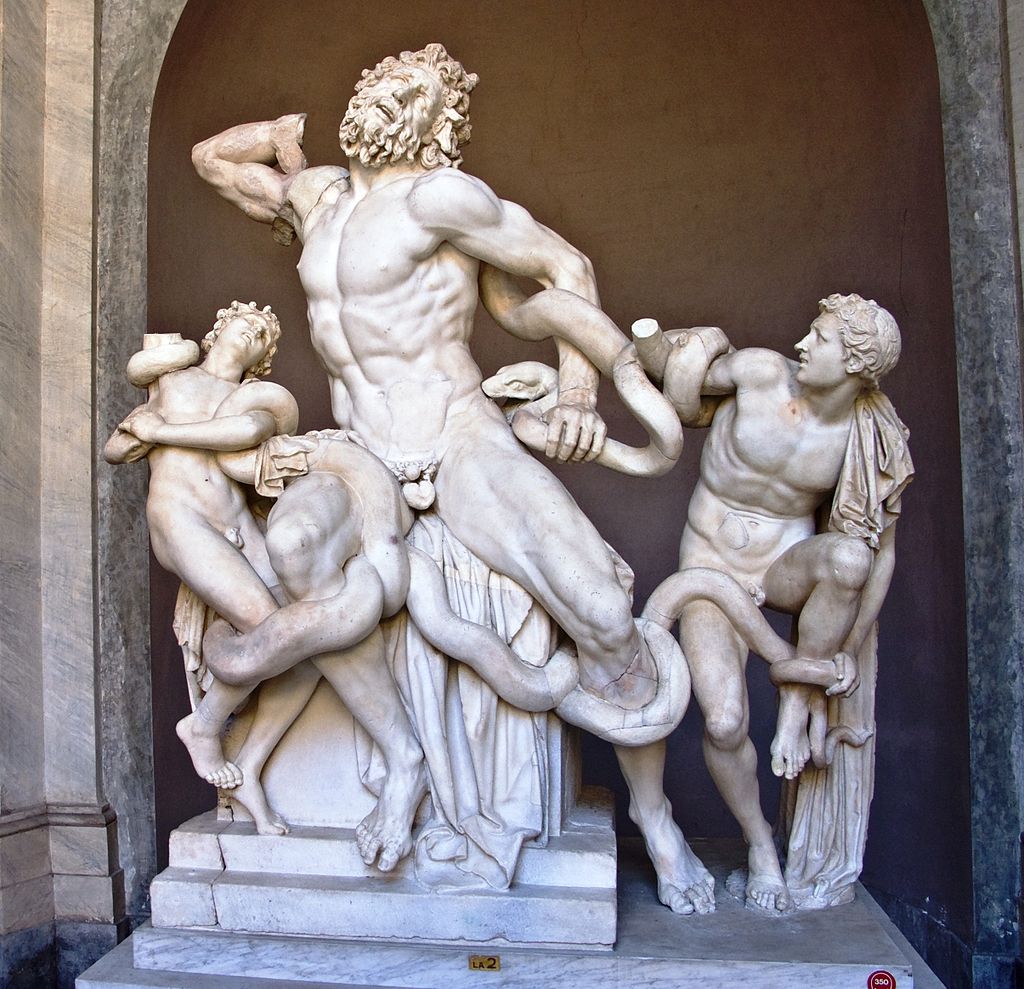
The traditional starting point of the Vatican Museums is 1506, when the celebrated ancient sculpture known as the Laocoön Group was discovered near Rome. Pope Julius II acquired the work and placed it on public display at the Vatican.
Successive popes expanded the collection, commissioned new buildings and decorated the papal apartments with works by the greatest artists of their time. What began as a relatively small group of antiquities eventually developed into one of the world’s most important museum complexes.
Today, the collections reflect far more than the history of the Catholic Church. They encompass ancient Egypt, Greece and Rome; early Christianity; the Italian Renaissance; decorative arts; ethnology; cartography and modern religious art.
Visitors enter from Viale Vaticano, on the northern side of Vatican City. This entrance should not be confused with St. Peter’s Square, which lies on the opposite side of the Vatican walls.
What to See Inside the Vatican Museums
Trying to see every room in one visit is unrealistic. Most first-time visitors should concentrate on a carefully chosen selection of major works and galleries.
The Sistine Chapel
The Sistine Chapel is the most famous room in the Vatican Museums and the destination toward which the principal visitor routes eventually lead.
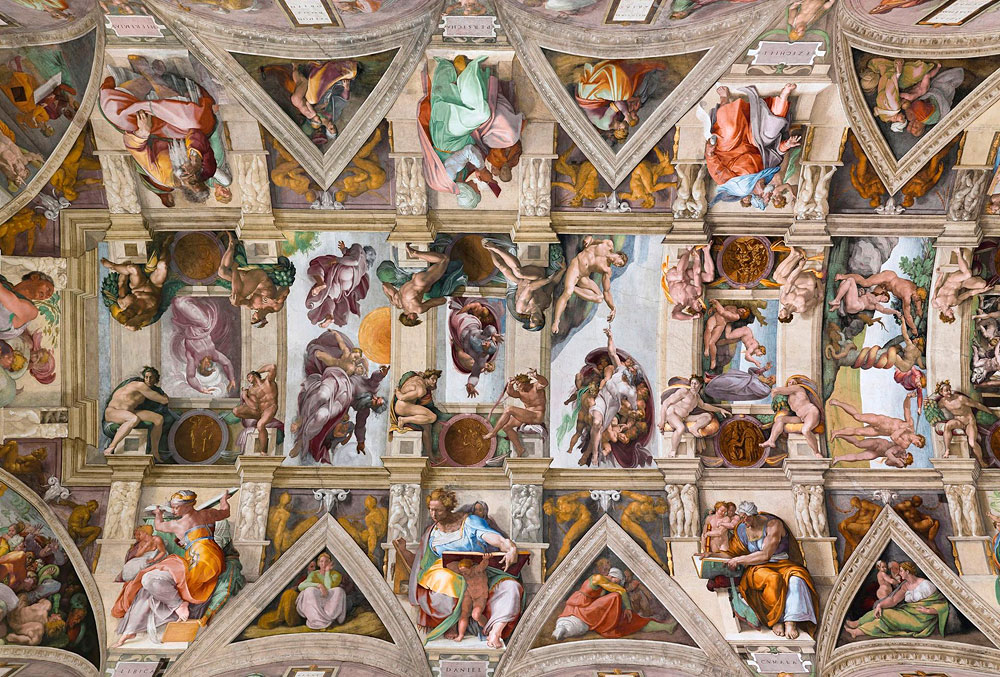
Michelangelo painted the chapel’s ceiling between 1508 and 1512. Its scenes from the Book of Genesis include The Creation of Adam, one of the most recognizable images in Western art. More than two decades later, Michelangelo returned to paint The Last Judgment on the altar wall.
The chapel remains an active religious space and is used for the conclave that elects a new pope. Visitors must remain quiet, dress appropriately and follow the instructions of the attendants. Photography and video recording are prohibited inside the chapel.
The Raphael Rooms
The Raphael Rooms were part of the papal apartments used by Pope Julius II and his successors. Raphael and members of his workshop decorated the rooms with elaborate frescoes during the early 16th century.
The best-known work is The School of Athens, in which philosophers including Plato and Aristotle appear within an idealized classical setting. The fresco combines Renaissance perspective, classical learning and portraiture with extraordinary confidence.
Do not rush through these rooms on the way to the Sistine Chapel. They are among the greatest achievements of High Renaissance painting.
The Gallery of Maps
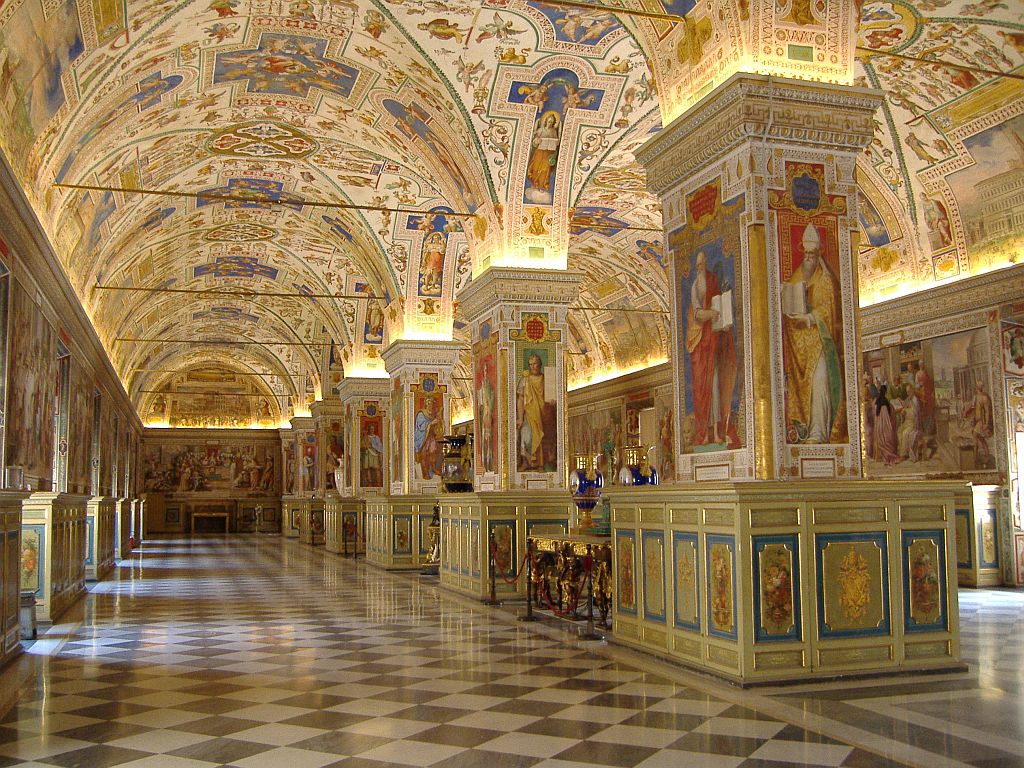
The Gallery of Maps is a long, brilliantly decorated corridor containing 16th-century maps of the Italian peninsula and its regions. The maps were produced under Pope Gregory XIII and show how Italy was understood centuries before national unification.
Its painted geographical details, ornamental ceiling and long perspective make it one of the most memorable spaces in the museums.
Travelers interested in Italy’s regional diversity may also enjoy Italia Mia’s guide to the 20 regions of Italy.
The Pio-Clementine Museum
The Pio-Clementine Museum contains many of the Vatican’s most important Greek and Roman sculptures.
Highlights include the Apollo Belvedere, the Belvedere Torso and the Laocoön Group. These ancient works profoundly influenced Renaissance artists, including Michelangelo, who studied classical sculpture closely.
The Vatican Pinacoteca
The Vatican Pinacoteca, or Picture Gallery, is sometimes overlooked by visitors following the fastest route to the Sistine Chapel. It deserves time of its own.
Its galleries include works by Giotto, Fra Angelico, Perugino, Raphael, Leonardo da Vinci, Titian and Caravaggio. Among the masterpieces are Raphael’s Transfiguration, Leonardo’s unfinished St. Jerome in the Wilderness and Caravaggio’s dramatic Entombment of Christ.
The Gregorian Egyptian Museum
Founded by Pope Gregory XVI in the 19th century, the Gregorian Egyptian Museum contains statues, sarcophagi, mummies, inscriptions and objects associated with ancient Egyptian religious and funerary traditions.
The collection also explores the connections between Egypt, Rome and the early Christian world.
The Gregorian Etruscan Museum
The Etruscan collection introduces visitors to the civilization that flourished in central Italy before Rome became the dominant power of the Mediterranean.
Its displays include ceramics, bronzes, jewelry and funerary objects. This section is particularly valuable for travelers planning to explore Etruscan sites in Lazio, Tuscany or Umbria.
The Spiral Staircase
The famous double-helix staircase near the museum exit was designed by Giuseppe Momo and completed in 1932. Two intertwined ramps allow people traveling in opposite directions to move without crossing one another.
It is often called the Bramante Staircase, although the original Renaissance staircase designed by Donato Bramante is located elsewhere in the Vatican complex and is not normally included on the standard visitor route.
Vatican Museums Tickets
Advance reservations are strongly recommended, particularly during spring, summer, Easter, Christmas and other major religious periods. Same-day availability should never be assumed.
Standard Vatican Museums Admission
This is the simplest option for independent visitors. Admission includes the Vatican Museums and the Sistine Chapel.
Reserve Vatican Museums admission tickets
A timed reservation reduces the risk of spending a substantial part of the day waiting outside. You must still complete the required security checks, so arrive before the time shown on your voucher.
Guided Vatican Museums and Sistine Chapel Tour
A guided visit can be valuable because the museums are enormous and the historical context is not always obvious. A guide can help you identify the most important works without becoming overwhelmed by the number of rooms.
Book a guided Vatican Museums and Sistine Chapel visit
This option is particularly suitable for first-time visitors and anyone with limited time in Rome.
Vatican Museums and St. Peter’s Basilica Tour
Some guided itineraries combine the museum highlights and Sistine Chapel with St. Peter’s Basilica. Carefully read the current tour description, since access routes can change during papal events, religious ceremonies or exceptional closures.
Check Vatican Museums and St. Peter’s Basilica guided tours
General admission to the Vatican Museums does not automatically provide unrestricted skip-the-line access to St. Peter’s Basilica.
Vatican Gardens and Museums
The Vatican Gardens occupy a large part of Vatican City but are not accessible through ordinary independent admission. Entry generally requires an eligible organized visit.
Reserve a Vatican Gardens tour with museum admission
This is a good choice for travelers who want a more complete Vatican experience and have at least half a day available.
Vatican Museums and Castel Sant’Angelo
A combination ticket can help visitors organize two important attractions located within the same general area of Rome.
Check Vatican Museums and Castel Sant’Angelo ticket options
Castel Sant’Angelo is not part of Vatican City, but it is within walking distance of St. Peter’s Square.
Ticket products, prices, included services and cancellation conditions can change. Always read the complete booking terms before paying.
Opening Hours and Closing Days
The Vatican Museums currently open Monday through Saturday from 8:00 a.m. until 8:00 p.m., with final admission at 6:00 p.m. Visitors are normally required to leave the galleries before the official closing time.
On the last Sunday of most months, the museums open from 9:00 a.m. until 2:00 p.m., with final admission at 12:30 p.m. Entry is free, but these Sundays can be exceptionally busy and exclusions apply when the date coincides with certain holidays.
The museums close on most Sundays and on selected religious and public holidays. Opening arrangements can also change because of Vatican ceremonies or special events.
Before traveling, verify the latest schedule and official notices through the Vatican Museums website.
How Much Time Should You Allow?
Allow at least three hours for a focused visit to the principal galleries and the Sistine Chapel. Four to five hours is more comfortable if you also want to explore the Pinacoteca, Egyptian Museum or Etruscan Museum.
A guided highlights tour is useful when time is limited, but even a guided visit can involve considerable walking and standing.
Do not schedule another timed attraction immediately afterward. Security queues, crowds and the enormous scale of the museums can make the visit take longer than expected.
The Best Time to Visit
An early entrance generally gives you the best chance of experiencing the first galleries before the heaviest crowds arrive. Late-afternoon admission can also be more comfortable, but you must plan carefully to avoid reaching the final rooms near closing time.
Tuesday through Thursday may feel calmer than Mondays and Saturdays, although there is no reliably empty day. Rainy days can be unexpectedly crowded because travelers replace outdoor sightseeing with museum visits.
The free last Sunday of the month saves the admission cost but is usually a poor choice for anyone hoping for a quiet experience.
Dress Code and Visitor Rules
Because the museums form part of Vatican City and include sacred spaces, visitors must dress respectfully. Shoulders and knees should be covered, and very revealing clothing may result in refused entry.
Large bags, suitcases, umbrellas and certain other objects may have to be deposited in the cloakroom. Security screening is mandatory.
Photography is generally permitted in many museum areas for personal use, but flash, tripods and professional equipment may be restricted. Photography and filming are prohibited in the Sistine Chapel.
Comfortable shoes are essential. The visit involves long corridors, hard floors and numerous periods of standing.
How to Reach the Vatican Museums
The entrance is at Viale Vaticano, not in St. Peter’s Square.
The nearest Rome Metro stations are Ottaviano and Cipro on Line A. From either station, expect an additional walk to the museum entrance. Several city buses also serve the surrounding Prati and Vatican districts.
Travelers arriving by taxi should specify “Ingresso Musei Vaticani, Viale Vaticano” to avoid being dropped at the wrong side of Vatican City.
For a broader introduction to the city, read our Rome travel guide and our guide to the best destinations and cities in Italy.
Where to Stay Near the Vatican Museums
Staying near the Vatican can be convenient when you have an early museum reservation. The most useful neighborhoods are Prati, Borgo Pio and the area around the Cipro and Ottaviano Metro stations.
Prati
Prati is an elegant residential and shopping district with restaurants, cafés and convenient Metro connections. It is a good choice for visitors who want to remain close to the Vatican without staying in the busiest historic-center streets.
Find hotels in Rome’s Prati and Vatican area on Trip.com
Borgo Pio
Borgo Pio lies between St. Peter’s Square and Castel Sant’Angelo. Its narrow streets place visitors close to the basilica, restaurants and central Rome, although reaching the Vatican Museums entrance still requires a walk around the Vatican walls.
Search for hotels near Vatican City on Trip.com
Cipro and Trionfale
The Cipro and Trionfale area can offer better value than the streets immediately surrounding St. Peter’s Square. It is especially practical for the museum entrance and Line A of the Metro.
One contemporary option is Mama Shelter Roma, located near Cipro station and within walking distance of the museums.
Check Mama Shelter Roma prices and availability
Travel dates have a major effect on Rome hotel prices. Compare refundable and non-refundable rates carefully, and confirm the property’s precise location before booking.
For additional choices, see Italia Mia’s guide to the best hotels in Rome.
Recommended Books About the Vatican Museums
A good guidebook provides context that is difficult to absorb while moving through crowded galleries.
Vatican Museums: 100 Works Not to Be Missed
This visual guide concentrates on a manageable selection of masterpieces. It is useful for deciding what to prioritize before entering such an extensive collection.
Find Vatican Museums: 100 Works Not to Be Missed on Amazon
The Vatican: All the Paintings
A substantial illustrated reference devoted to the paintings and frescoes preserved in the Vatican. It is better suited to readers who want a detailed art book than a lightweight travel guide.
Find The Vatican: All the Paintings on Amazon
Lonely Planet Rome
A practical Rome guide can help place the Vatican visit within a wider itinerary that includes ancient Rome, the historic center, Trastevere and other museums.
Find the latest Lonely Planet Rome guide on Amazon
Michelangelo and the Sistine Chapel
Readers interested in Michelangelo can choose from several illustrated studies examining the ceiling, The Last Judgment and the artistic challenges behind the project.
Browse books about Michelangelo and the Sistine Chapel on Amazon
You may also enjoy our imagined interview with Michelangelo and our overview of Italy’s great art cities.
A Practical Half-Day Itinerary
For a first visit, the following sequence provides a balanced introduction:
- Arrive approximately 20–30 minutes before your reserved time.
- Complete the security and ticket procedures.
- Explore the Pio-Clementine Museum and classical sculpture.
- Continue through the Gallery of Maps.
- Spend adequate time in the Raphael Rooms.
- Enter the Sistine Chapel without rushing.
- Visit the Pinacoteca if time and energy permit.
- Leave time for St. Peter’s Square or Castel Sant’Angelo afterward.
The internal visitor route can change, and not every gallery is always accessible. Follow the signs and instructions provided inside the museums.
Final Advice
The Vatican Museums reward preparation. Reserve admission well ahead of your visit, choose a limited number of priorities and resist the temptation to hurry past every gallery simply to reach the Sistine Chapel.
The famous ceiling may be the climax, but the classical sculpture, Raphael Rooms, Gallery of Maps and Pinacoteca transform the visit into a much broader journey through European art and history.
With a sensible itinerary, comfortable shoes and enough time, the Vatican Museums can be one of the most memorable experiences in Rome.
External Links
- Official Vatican Museums website
- Official Vatican Museums opening hours and closures
- Official Vatican Museums ticket portal
- Weekend in Italy: Vatican Museums tickets
- Trip.com hotels near Vatican City