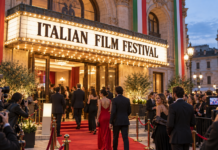
The 83rd Venice International Film Festival concluded on September 12, 2026, after eleven days of world premieres, red-carpet appearances, political debate and discoveries from international cinema.
Held on the Venice Lido and directed by Alberto Barbera, the festival brought together 21 films competing for the Golden Lion, alongside the Orizzonti, Venice Spotlight, Venice Classics, Biennale College Cinema and Venice Immersive programs.
The biggest winner was Woman Unknown, directed by Danish-Egyptian filmmaker May el-Toukhy. The postwar drama received the Golden Lion for Best Film, while its leading actress, Mathilde Arcel, won the Coppa Volpi for Best Actress.
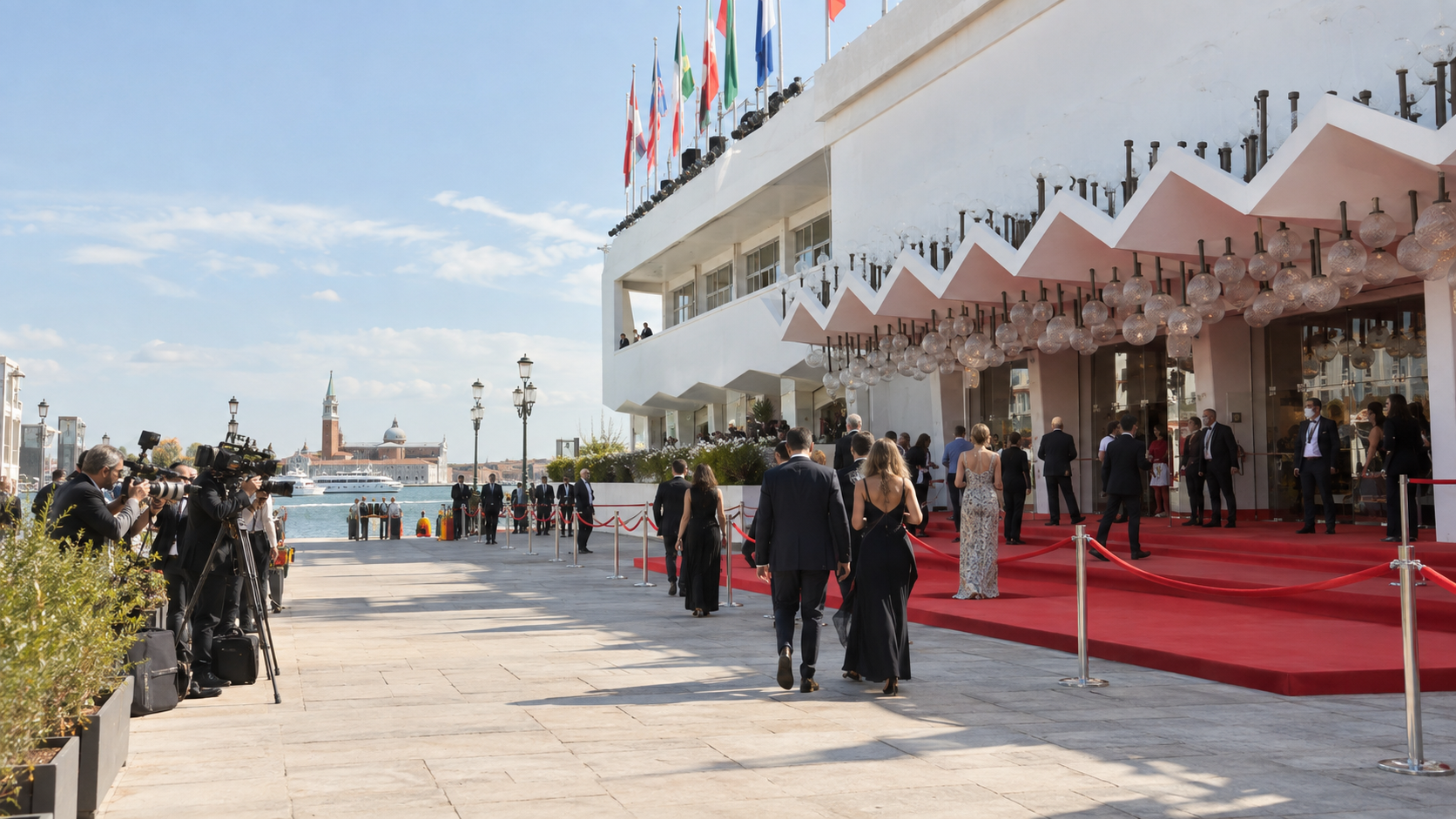
I have always found the Venice Film Festival particularly fascinating because it combines two very different worlds. There is the glamorous Venice of actors arriving by boat, photographers lining the red carpet and elegant evening premieres. Behind that public image, however, the festival remains deeply committed to serious cinema, difficult subjects and filmmakers willing to challenge their audiences.
The 2026 edition reflected both sides of Venice: Hollywood personalities and international glamour alongside films about war, political power, media influence, social inequality, personal memory and moral responsibility.
Woman Unknown Wins the Golden Lion
The international jury, led by American actress and director Maggie Gyllenhaal, awarded the Golden Lion to Kvinde Ukendt, internationally titled Woman Unknown.
Directed by May el-Toukhy, the film is set in Denmark after the end of World War II. It follows Marie, a housemaid whose relationship with a German soldier during the occupation threatens the new life she is attempting to construct.
The story examines a painful and sometimes overlooked part of postwar European history: the public humiliation and social exclusion experienced by women accused of fraternizing with occupying German soldiers.
El-Toukhy was the only solo female director among the 21 filmmakers competing for the Golden Lion. However, Gyllenhaal emphasized that the jury selected the film for its artistic qualities rather than as a symbolic response to the imbalance between male and female directors.
The film achieved a significant double victory when Mathilde Arcel received the Coppa Volpi for Best Actress. Her performance gives the historical drama its emotional center, transforming a story of public judgment into a more intimate examination of shame, memory and survival.
Main Competition Winners
The Venezia 83 jury viewed all 21 competition films before presenting the following awards:
- Golden Lion for Best Film: Kvinde Ukendt (Woman Unknown), directed by May el-Toukhy
- Silver Lion – Grand Jury Prize: Ga-neung-han Sa-rang (Possible Love), directed by Lee Chang-dong
- Silver Lion for Best Director: Ilya Khrzhanovsky for DAU
- Coppa Volpi for Best Actress: Mathilde Arcel for Woman Unknown
- Coppa Volpi for Best Actor: John Malkovich for Wild Horse Nine
- Best Screenplay: Stéphane Brizé, Coralie Amédéo and Olivier Gorce for Un bon petit soldat
- Special Jury Prize: NAZA, directed by Yuval Abraham and Rachel Szor
- Marcello Mastroianni Award for Best Young Performer: Malou Khebizi for 15/18 (A Place to Heal)
Possible Love Takes the Grand Jury Prize
South Korean director Lee Chang-dong received the Silver Lion Grand Jury Prize for Possible Love.
Starring Jeon Do-yeon, Sul Kyung-gu, Zo In-sung and Cho Yeo-jeong, the film explores the relationships between people from different social and economic backgrounds. Its 164-minute running time allows Lee to develop the characters gradually while examining class, emotional dissatisfaction and the tensions between working-class and affluent lives.
Lee Chang-dong has built an international reputation through psychologically complex films such as Secret Sunshine, Poetry and Burning. His Venice award confirmed his continuing importance as one of South Korea’s most respected filmmakers.
Ilya Khrzhanovsky Wins Best Director for DAU
The Silver Lion for Best Director went to Ilya Khrzhanovsky for DAU, one of the festival’s longest and most controversial competition entries.
Originally conceived as a conventional biographical film about Soviet physicist Lev Landau, the project developed into an enormous experimental reconstruction of Soviet life. Much of it was filmed on an extensive set in Kharkiv, Ukraine, with participants living and working inside a controlled historical environment.
The film shown in Venice lasted more than three hours, followed by an intermission. Its unusual production history and association with Russia and Ukraine generated significant discussion before and during the festival.
The directing award recognized the scale and ambition of Khrzhanovsky’s work, even as the circumstances surrounding the production remained the subject of debate.
John Malkovich Wins Best Actor
John Malkovich received the Coppa Volpi for Best Actor for his performance in Martin McDonagh’s Wild Horse Nine.
The film stars Malkovich as an aging and unconventional CIA operative in a story connected to American involvement in Chile around the time of the 1973 coup. The cast also includes Sam Rockwell, Steve Buscemi, Tom Waits, Parker Posey, Mariana Di Girolamo and Ailín Salas.
McDonagh is known for combining dark humor, violence and morally compromised characters. In Wild Horse Nine, those elements are placed within a political story about intervention, responsibility and the consequences of decisions made by powerful institutions.
Malkovich’s award was one of the most prominent acting honors of the festival and added another important achievement to a career extending across American and European cinema.
NAZA Receives the Special Jury Prize
One of the festival’s most discussed films was NAZA, directed by Yuval Abraham and Rachel Szor.
The documentary was added to the main competition shortly before the festival opened. It investigates Israeli military operations in Gaza and the use of technology and artificial intelligence in identifying potential targets.
Its presentation prompted strong reactions and became part of a wider political debate surrounding the festival. The jury ultimately awarded NAZA the Special Jury Prize, placing it among the most significant films of the edition.
The award demonstrated Venice’s continuing willingness to present politically contentious work and to treat documentary filmmaking as an essential part of contemporary cinema.
Best Screenplay and Emerging Performer
The Best Screenplay Award went to Stéphane Brizé, Coralie Amédéo and Olivier Gorce for Un bon petit soldat.
Directed by Brizé, the French drama stars Vincent Lindon and Italian actress Alba Rohrwacher. Like several of Brizé’s earlier films, it examines moral choices inside social and professional systems that place individuals under pressure.
Malou Khebizi received the Marcello Mastroianni Award for Best Young Actor or Actress for her performance in Cédric Kahn’s 15/18 (A Place to Heal).
The award is named after one of Italian cinema’s most internationally recognized actors. Readers interested in his remarkable career can explore Italia Mia’s biography of Marcello Mastroianni.
Orizzonti Award Winners
The Orizzonti section focuses on new aesthetic and expressive trends in international cinema. It often introduces filmmakers and performers who later become familiar names at major festivals.
The Orizzonti jury selected the following winners:
- Best Film: Un détour par Diane (Diane in the Loop), directed by Ann Sirot and Raphaël Balboni
- Best Director: Jacqueline Lentzou for A Day in the Life of Jo: Chapter Phaedra
- Special Jury Prize: La maison du vent (House of the Wind), directed by Auguste Bernard Kouemo Yanghu
- Best Actress: Laleh Marzban for Moragheb (Falling House)
- Best Actor: Riccardo Scamarcio for I figli della scimmia
- Best Screenplay: Tommaso Landucci and Damiano Femfert for I figli della scimmia
- Best Short Film: Quelques instants de bonheur (A Few Moments of Happiness), directed by Shaden Safieddine Tazi
Italy performed particularly well in this section. Riccardo Scamarcio received the acting award for I figli della scimmia, while Tommaso Landucci and Damiano Femfert won Best Screenplay for the same film.
House of the Wind Wins the Lion of the Future
La maison du vent (House of the Wind), directed by Auguste Bernard Kouemo Yanghu, received the Luigi De Laurentiis Award for a Debut Film, also known as the Lion of the Future.
The Cameroon-led international production also won the Orizzonti Special Jury Prize, making it another film to receive recognition in two separate categories.
The Lion of the Future is one of Venice’s most valuable awards for an emerging filmmaker. It includes a $100,000 prize divided equally between the director and producer.
Venice Spotlight, Classics and Immersive Winners
The Armani Beauty Audience Award in the Venice Spotlight section went to Eu Contez (I Matter), directed by Alina Șerban.
The Venice Classics Award for Best Restored Film was presented to La lunga notte del ’43, directed by Florestano Vancini. Released in 1960, the film is a major work of postwar Italian cinema and is based on a story by Giorgio Bassani.
Its restoration award was an important reminder that Venice is not devoted exclusively to new productions. The festival also plays a vital role in preserving and reintroducing historically significant films.
The Venice Immersive jury presented three awards:
- Venice Immersive Grand Prize: The Pigeon Ring, by Shixin Tao and Yuqi Zhang
- Venice Immersive Special Jury Prize: Out of the Ashes, by Rory Mitchell and Nonny De La Peña
- Venice Immersive Achievement Prize: Empire at Sea, by Peter Flaherty
Venice Immersive gives virtual reality, extended reality and other interactive forms of storytelling a prestigious international platform.
Italian Cinema at the Festival
Italian filmmakers and actors appeared throughout the competition and parallel sections.
The principal Italian-directed films in the Golden Lion competition included:
- Marco Bechis’s Ritorno a Buenos Aires
- Edoardo De Angelis’s Il fuoco che ti porti dentro
- Nanni Moretti’s Succederà questa notte
- Andrea Pallaoro’s The Echo Chamber
- Paolo Strippoli’s L’estranea
Nanni Moretti’s film featured an international cast including Louis Garrel, Jasmine Trinca, Hippolyte Girardot, Angela Finocchiaro and Melina Åkerman.
Jasmine Trinca appeared in both Succederà questa notte and Paolo Strippoli’s L’estranea, while Alba Rohrwacher starred in the French production Un bon petit soldat.
Although an Italian film did not win the Golden Lion, Riccardo Scamarcio’s Orizzonti acting award, the screenplay prize for I figli della scimmia and the restoration award for La lunga notte del ’43 gave Italian cinema a meaningful presence among the winners.
For a broader overview, read Italia Mia’s examination of recent Italian cinema, filmmakers and industry trends.
Danny Boyle’s Ink Opens the Festival
The festival opened on September 2 with the world premiere of Ink, directed by Danny Boyle and written by James Graham.
Starring Jack O’Connell, Guy Pearce and Claire Foy, the film is set in 1969 and explores Rupert Murdoch’s acquisition of the British newspaper The Sun.
Choosing Ink as the opening film immediately introduced one of the festival’s recurring concerns: the relationship between media, institutional power and public opinion.
The film was screened in competition in the Sala Grande following the opening ceremony.
Dio ride Closes the Festival
The official closing film was Dio ride, directed by Giovanni Veronesi.
Presented as a world premiere in the Sala Grande after the awards ceremony on September 12, the film brought the festival to a close after the presentation of the official prizes.
Italian singer-songwriter Francesca Michielin performed during the closing ceremony, which was hosted by Italian actors Greta Scarano and Nicolas Maupas.
George Clooney and Ellen Burstyn Receive Golden Lions
Two celebrated American actors received Golden Lions for Lifetime Achievement.
George Clooney was honored during the opening ceremony on September 2, with actress Laura Dern presenting the tribute.
Clooney has a long relationship with Venice. His films shown at the festival have included Good Night, and Good Luck, Michael Clayton, The Ides of March, Gravity and Jay Kelly. The city also has personal significance for him because he married Amal Alamuddin in Venice in 2014.
Ellen Burstyn received the second Golden Lion for Lifetime Achievement on September 7.
Her career includes memorable performances in The Last Picture Show, The Exorcist, Alice Doesn’t Live Here Anymore, Resurrection, Requiem for a Dream and Interstellar.
Burstyn also appeared at the festival in Maggie Gyllenhaal’s short film Flesh Impact and in Kornél Mundruczó’s Place to Be.
Luca Guadagnino and Serena Rossi Honored
Italian director Luca Guadagnino received the Cartier Glory to the Filmmaker Award, recognizing his original contribution to contemporary cinema.
The award was presented before the out-of-competition screening of his documentary Joie de vivre, dedicated to filmmaker Bernardo Bertolucci.
Guadagnino’s international career includes I Am Love, Call Me by Your Name, Suspiria, Bones and All, Challengers and After the Hunt.
Italian actress Serena Rossi received the Campari Passion for Film Award before the premiere of Mario Martone’s Scherzetto. The honor recognizes professionals whose passion, artistic personality and contribution extend beyond conventional performance categories.
A Festival Shaped by Politics and Social Questions
Political cinema had an unusually strong presence in the final awards.
Woman Unknown examined gender, occupation and the treatment of women after World War II. Possible Love explored class differences in South Korea. DAU confronted the psychological and political environment of the Soviet Union. Wild Horse Nine addressed American involvement in Chile, while NAZA focused on Israeli military operations in Gaza.
These were not background themes. They became central to the films selected by the jury for recognition.
The festival also faced criticism because only one of the 21 competition films was directed solely by a woman. May el-Toukhy’s Golden Lion victory did not erase that imbalance, but it gave the edition a striking conclusion.
The results showed that Venice remains willing to reward films that engage directly with uncomfortable historical and contemporary subjects.
The World’s Oldest Film Festival
The Venice International Film Festival was founded in 1932 as part of La Biennale di Venezia, making it the oldest international film festival in the world.
The first edition was held on the terrace of the Hotel Excelsior on the Lido. The Palazzo del Cinema, which remains the symbolic center of the festival, opened in 1937.
Over the decades, Venice has introduced audiences to major works by Italian and international filmmakers. The Golden Lion has been awarded to directors including Akira Kurosawa, Michelangelo Antonioni, Luis Buñuel, Agnès Varda, Wim Wenders, Zhang Yimou, Ang Lee, Sofia Coppola, Guillermo del Toro and Alfonso Cuarón.
The festival has also become an important starting point for the international awards season. Films premiered in Venice regularly continue to the Golden Globes, BAFTAs and Academy Awards.
Readers can explore more events in Italia Mia’s guide to the most important Italian film festivals and learn more about the event’s background in Experience Venice’s Film Festival.
Where the Festival Takes Place
The festival is held primarily on the Venice Lido rather than in Venice’s historic center.
Its principal locations include:
- Palazzo del Cinema and the Sala Grande
- Sala Darsena
- Palazzo del Casinò
- PalaBiennale
- Sala Giardino
- Venice Immersive Island
Visitors normally reach the Lido by vaporetto, arriving at Lido Santa Maria Elisabetta. Local buses then connect the vaporetto terminal with the festival area around Lungomare Marconi.
Staying on the Lido is convenient for attending several screenings, particularly early or late presentations. Staying in historic Venice offers easier access to the city’s monuments, restaurants and neighborhoods but requires allowing time for the vaporetto journey.
For future festival visits, see my selection of Venice’s best hotels and the complete Italia Mia guide to the Veneto region.
Books About Venice and the Film Festival
The Venice International Film Festival by Peter Cowie
Film historian Peter Cowie explores the personalities, controversies and landmark movies that shaped the world’s oldest film festival. It is an excellent choice for readers who want more than a simple list of winners and dates.
Find The Venice International Film Festival on Amazon
Happy 75°: A Brief Introduction to the History of the Venice International Film Festival
Published by La Biennale di Venezia, this illustrated volume follows the festival from its establishment in 1932 through political upheavals, artistic transformations and its development into a major international event.
Venice Travel Guides
A current Venice guidebook can help visitors understand the city’s neighborhoods, vaporetto system, islands, restaurants and less crowded attractions beyond Piazza San Marco.
Browse Venice travel guides on Amazon
Final Reflections
The Venice Film Festival has always balanced art, commerce, celebrity and controversy. The 2026 edition demonstrated how productive—and sometimes uncomfortable—that combination can be.
George Clooney and Ellen Burstyn brought the weight of distinguished careers to the Lido. Danny Boyle, Werner Herzog, Nanni Moretti, Lee Chang-dong, Martin McDonagh and other established directors presented new work. Emerging filmmakers found recognition through Orizzonti, Venice Spotlight and the Lion of the Future.
Yet the festival ultimately belonged to May el-Toukhy and Mathilde Arcel.
By awarding both the Golden Lion and the Coppa Volpi for Best Actress to Woman Unknown, the jury placed an intimate European story about memory, judgment and female experience at the center of the festival.
The red carpets have now been removed and the international guests have departed the Lido, but the films are beginning the next stage of their journeys. Some will receive theatrical distribution, others will appear at additional festivals, and several are likely to remain part of the international awards conversation.
That continuing influence is what makes Venice much more than an elegant annual spectacle. It is one of the places where the cinematic year begins to take shape.
External Links
- Official Venice Film Festival website
- Official awards of the 83rd Venice Film Festival
- Complete Venezia 83 competition
- Complete festival lineup
- History of the Venice Film Festival
- Reuters: Complete list of Venice Film Festival winners
- ACTV Venice public transportation