 From October 13 to 25, 2026, Rome becomes one of Europe’s most exciting destinations for film lovers. The Rome Film Fest 2026, officially known as the Festa del Cinema di Roma, brings international premieres, acclaimed directors, Italian productions, celebrated actors and enthusiastic audiences together in the Eternal City.
Now in its 21st edition, the festival has grown into an important event on the international film calendar. Its principal venue is the Auditorium Parco della Musica Ennio Morricone, while additional screenings and cultural events take place at MAXXI, Casa del Cinema and other locations throughout Rome.
This year’s program features new Italian films, international competition entries, documentaries, restored classics and encounters with filmmakers. Among the highlights are a Lifetime Achievement Award for Javier Bardem, a similar honor for Julianne Moore, and the opening premiere of Paolo Genovese’s Il rumore delle cose nuove.
For visitors, the festival offers something that makes it different from many prestigious film events: a genuine opportunity to experience cinema as part of everyday city life.
Whether you are planning a trip to Rome specifically for the festival or are already in the capital, this guide explains which films deserve attention, where to attend screenings, how to buy tickets and how to organize your visit.
Rome Film Fest 2026: Dates and Essential Information
The 21st Rome Film Fest runs from Tuesday, October 13, through Sunday, October 25, 2026.
The organizers extended the event by an additional day following increased film submissions and requests from independent producers and distributors.
The festival is organized by Fondazione Cinema per Roma, with Salvatore Nastasi as president and Paola Malanga as artistic director.
Here are the essential details:
- Dates: October 13–25, 2026
- Edition: 21st
- Main venue: Auditorium Parco della Musica Ennio Morricone
- Additional venues: MAXXI, Casa del Cinema and other locations
- Opening film: Il rumore delle cose nuove by Paolo Genovese
- Ticket prices: €6–€30, depending on the event
- Official ticket seller: Rome Film Fest Boxol
- Full program: Rome Film Fest 2026 official program
Although the festival attracts internationally recognized filmmakers, much of its programming is intended for ordinary moviegoers, not exclusively film-industry professionals.
That public-oriented character is central to the identity of the Festa del Cinema.
The 2026 Program: Competition, Premieres and Special Screenings
The Rome Film Fest is not simply a series of glamorous premieres. Its programming encompasses different forms of filmmaking, from narrative features and documentaries to experimental work and restored classics.
The 2026 selection is organized around several principal sections.
Progressive Cinema Competition
The festival’s international competition features 18 films, bringing together established and emerging filmmakers.
The competition includes fiction, documentaries and other cinematic forms. A jury chaired by Polish director Jan Komasa will award prizes including Best Film, Best Director, Best Screenplay and acting awards.
For audiences interested in discovering unfamiliar filmmakers, this is one of the festival’s most rewarding sections.
Grand Public
Grand Public presents films intended for a broad international audience.
These are often the premieres most likely to attract media attention, popular actors and strong public interest. The section also gives visitors an opportunity to see major releases before their wider theatrical distribution.
Freestyle
Freestyle explores cinema beyond conventional formats and includes films, documentaries, artistic projects and television series.
It provides space for formal experimentation and creative approaches that may not fit comfortably within traditional narrative categories.
Best of 2026
This section presents films already recognized at major international festivals.
It allows Roman audiences to see acclaimed productions that may otherwise have limited theatrical exposure in Italy.
History of Cinema
Dedicated to the preservation and rediscovery of film heritage, this program features restorations, documentaries, retrospectives and tributes.
For anyone interested in the history of Italian cinema, it is particularly valuable.
The complete selection is available through the official Rome Film Fest film guide.
Important Italian Films to Watch in 2026
Italian cinema is at the heart of the festival, and the 2026 lineup includes notable work from established directors and emerging filmmakers.
Il rumore delle cose nuove — Paolo Genovese
The opening film is one of the most anticipated Italian productions of the festival.
Directed by Paolo Genovese, Il rumore delle cose nuove tells the story of three couples whose seemingly secure lives are transformed by an unexpected event.
Its ensemble cast includes Emanuela Fanelli, Claudia Pandolfi, Vittoria Puccini, Stefano Accorsi, Edoardo Pesce and Lino Musella, with a special appearance by Claudio Santamaria.
Genovese is internationally known for Perfect Strangers (Perfetti sconosciuti), a film whose premise inspired numerous adaptations around the world.
The choice of Genovese for opening night connects the festival with a filmmaker who understands how to combine mainstream appeal, social observation and emotionally complicated characters.
The film is scheduled for Italian theatrical release on November 12, 2026.
Giorni felici — Susanna Nicchiarelli
In the Progressive Cinema Competition, Susanna Nicchiarelli presents Giorni felici, an Italian-Belgian production featuring Carlotta Gamba and Riccardo Scamarcio.
Nicchiarelli is a filmmaker worth following for her distinctive perspective on identity, relationships and contemporary society.
Its competition placement makes Giorni felici one of the Italian titles to watch as the awards approach.
Mustang — Kasia Smutniak
Actress and filmmaker Kasia Smutniak presents the documentary Mustang in the Progressive Cinema Competition.
The festival has included it among the documentary selections eligible for recognition.
It deserves attention from audiences interested in the expansion of nonfiction filmmaking within contemporary Italian cinema.
Noi, un po’ meglio — Daniele Luchetti
Daniele Luchetti returns with Noi, un po’ meglio, presented in the Grand Public section.
Its cast includes Elio Germano, Maria Chiara Giannetta, Anna Bonaiuto and Caterina Guzzanti.
Luchetti has long been associated with films that examine Italian family relationships, private conflicts and social change.
His new production deserves consideration from viewers who prefer character-driven Italian dramas.
Cambogia — Valerio Lundini
Cambogia marks Valerio Lundini’s feature directing debut and appears in the Freestyle program.
The cast includes Lundini himself, Benedetta Porcaroli, Gabriel Montesi and Sonia Bergamasco.
It is an interesting selection for audiences curious about new voices emerging from Italian entertainment and comedy.
More Italian Productions Worth Following
Other notable selections include Desiderio by Michela Cescon, È andata così by Gianni Zanasi, Il ministero dell’amore by Giacomo Ciarrapico and Luca Vendruscolo, and Le rose di Marrakech by Ginevra Elkann.
These films illustrate the diversity of Italian production, from ensemble storytelling to contemporary drama and emerging approaches to familiar themes.
For a broader perspective on today’s national cinema, see Italia Mia’s Top 10 Italian Movies of the Past Year.
International Films and Major Guests
Rome Film Fest has increasingly positioned itself as a meeting point for Italian cinema and international filmmaking.
The 2026 selection reflects that ambition.
Among the international titles in the program are:
- El ser querido by Rodrigo Sorogoyen, starring Javier Bardem
- The Debut by Jesse Eisenberg, featuring Julianne Moore
- Fatherland by Paweł Pawlikowski
- I Love Boosters by Boots Riley, with Keke Palmer and Demi Moore
- Klara and the Sun by Taika Waititi, starring Jenna Ortega and Amy Adams
- I Play Rocky by Peter Farrelly, starring Anthony Ippolito
- Fjord by Cristian Mungiu, with Sebastian Stan and Renate Reinsve
The presence of these productions gives international visitors several reasons to attend beyond the Italian premieres.
However, appearing in the festival’s film lineup does not automatically confirm that every credited actor will attend in person. Visitors should rely on the festival’s daily announcements for red-carpet appearances.
Javier Bardem Receives the Lifetime Achievement Award
One of the defining events of Rome Film Fest 2026 will be the presentation of a Lifetime Achievement Award to Spanish actor Javier Bardem.
Bardem has built a remarkable international career across Spanish, European and Hollywood cinema.
His Oscar-winning performance in No Country for Old Men established him as one of the most recognizable actors of his generation, while other important roles include Biutiful, Before Night Falls, The Sea Inside, Skyfall and Dune.
The Rome festival will recognize his career during the presentation of El ser querido, directed by Rodrigo Sorogoyen.
The film features Bardem as Esteban Martinez, a celebrated director whose past is marked by violence and excess.
The award will be presented by Italian director Paolo Sorrentino, himself one of contemporary European cinema’s most important filmmakers.
The connection is particularly appropriate in Rome, a city whose beauty, contradictions and cinematic mythology are central to Sorrentino’s Oscar-winning film The Great Beauty.
For film enthusiasts, Bardem’s recognition is more than a celebrity appearance. It celebrates an actor whose work crosses languages, genres and filmmaking traditions.
Julianne Moore and Other Distinguished Guests
American actress Julianne Moore will also receive a Lifetime Achievement Award during the festival.
Moore’s acclaimed career includes Still Alice, Far from Heaven, The Hours, Boogie Nights and The Kids Are All Right.
Her award will be presented by Jesse Eisenberg during the screening of The Debut, a film he directs and in which Moore appears.
The festival will also recognize composer Nicola Piovani with the Banca Ifis Music Award.
For audiences interested in the filmmaking process, two particularly attractive events are the masterclasses by European directors:
- Paweł Pawlikowski: Friday, October 16, at 4:30 p.m., Sala Petrassi, Auditorium Parco della Musica.
- Rodrigo Sorogoyen: Sunday, October 18, at 4:30 p.m., Sala Petrassi, Auditorium Parco della Musica.
Another special recognition goes to Anthony Ippolito, who will receive the Progressive Lifetime Achievement Award in connection with I Play Rocky.
These events illustrate the range of the festival’s public encounters, from discussions of directing and storytelling to tributes recognizing important creative careers.
The Festival’s Tribute to Monica Vitti
One of the most meaningful elements of the 2026 edition is its tribute to Monica Vitti.
The celebrated Italian actress appears in the festival’s official visual identity through a photograph taken by Sergio Strizzi on the set of Michelangelo Antonioni’s L’eclisse.
The image commemorates the 95th anniversary of Vitti’s birth.
Vitti occupies a singular position in Italian cinema. Her work with Antonioni helped redefine the presentation of women, emotion and alienation on screen.
She later demonstrated exceptional comic talent, becoming one of Italy’s most versatile performers.
For readers who want to explore that cinematic heritage, Italia Mia’s 30 Best Italian Movies of All Time provides an introduction to the directors and films that shaped the country’s international reputation.
Where the Rome Film Fest Takes Place
The festival extends across several venues, but three locations are particularly useful for visitors to understand.
Auditorium Parco della Musica Ennio Morricone
Address: Viale Pietro de Coubertin 30, Rome
The Auditorium is the heart of the event.
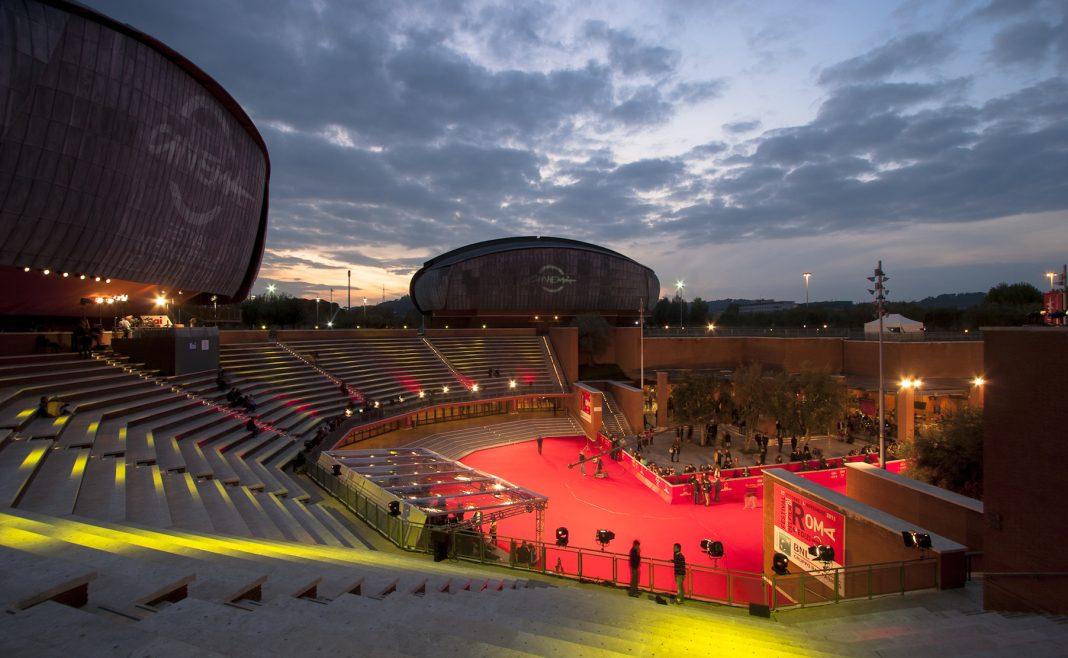
Designed by architect Renzo Piano, the complex is recognizable for its curved concert halls and spacious public areas.
During the festival, it becomes the principal location for premieres, screenings, public conversations and red-carpet events.
The Auditorium’s main strengths include its concentrated program, multiple screening spaces and atmosphere.
Even visitors without tickets for a major premiere can enjoy the surrounding festival activity, subject to event access and security arrangements.
The main red carpet runs along the avenue leading toward the outdoor Cavea.
MAXXI — National Museum of 21st Century Arts
Address: Via Guido Reni 4/A, Rome
MAXXI provides another important festival location.
Designed by Zaha Hadid, the museum is known for its contemporary architecture and commitment to modern artistic expression.
Its auditorium hosts films, documentaries and other festival presentations.
The published program includes screenings such as Caro mondo crudele, Eva Mameli Calvino. La Signora dei fiori, Wax & Gold and Siri Hustvedt – Dance Around the Self.
MAXXI is especially appealing to visitors who want to combine a screening with a contemporary art experience.
There are also useful ticket benefits:
- Festival ticket or accreditation holders can receive reduced admission to MAXXI exhibitions.
- Visitors holding a MAXXI ticket or myMAXXI card are eligible for a 20% discount on festival events under the museum’s published arrangements.
Importantly, tickets for festival screenings at MAXXI must be purchased through the Rome Film Fest’s Boxol service or its festival box offices. They are not sold at the ordinary MAXXI museum ticket desk.
See the MAXXI Rome Film Fest 2026 schedule before planning your visit.
Casa del Cinema
Address: Largo Marcello Mastroianni 1, Villa Borghese, Rome
Casa del Cinema hosts an important portion of the festival’s History of Cinema section.
This venue is particularly attractive to cinephiles interested in documentaries, restorations and the history of filmmaking.
The 2026 program includes restored screenings of Antonioni’s L’eclisse, together with international classics and a tribute to producer Tessa Ross.
A retrospective also celebrates actor, producer and director Jacques Perrin, including Giuseppe Tornatore’s Nuovo Cinema Paradiso.
Casa del Cinema is located within Villa Borghese, making it possible to combine film screenings with a walk through one of Rome’s most attractive public parks.
How to Buy Rome Film Fest 2026 Tickets
Advance ticket sales began on October 7, 2026, at 11 a.m., using the festival’s official Boxol platform.
Tickets can also be purchased at the Auditorium Parco della Musica festival box office during October 13–25.
Prices range from €6 to €30, depending on the screening or event.
To book:
- Visit the official Rome Film Fest ticket platform.
- Select the film, masterclass or event that interests you.
- Check the venue, screening date, starting time and ticket category.
- Complete the purchase and retain your ticket or booking confirmation.
- Arrive well ahead of the scheduled start.
The festival states that admission to screening rooms is permitted up to ten minutes before the scheduled start, and entry is not allowed after a screening begins.
Security checks may also delay access, so arriving 30 minutes early is a sensible precaution, especially for popular events.
Are discounted tickets available?
Yes. The festival has agreements with cultural organizations and certain visitor-pass programs.
For example, eligible MIC Card and Roma Pass holders can receive a 20% discount on full-price festival tickets, subject to the published conditions and a minimum ticket price of €6.
The easiest way to check your eligibility is through the official concessions page.
Are screenings in English?
Films are generally presented in their original language, with subtitles in Italian and/or English.
English-speaking visitors should check the subtitle details for individual screenings rather than assume that every Italian-language film has English subtitles.
How to Reach the Auditorium Parco della Musica
The Auditorium is located in the northern part of Rome, within the Flaminio district.
It is not immediately beside the Colosseum or the principal historic-center attractions. Allow sufficient time for the journey, particularly in the evening.
By Metro and Tram
A useful route is to take Metro Line A to Flaminio, then connect with tram 2 toward Piazza Mancini.
The Piazza Apollodoro tram stop serves the Auditorium area.
Check current services and any diversions through ATAC, Rome’s public transport operator.
By Bus
Bus services identified by the festival include routes 53, 168, 910 and 982, among others.
Route 910 is particularly useful for some travelers arriving through the Termini area.
Because services and stopping arrangements may change, consult ATAC before leaving your hotel.
By Taxi
A licensed taxi can be convenient after an evening screening, particularly if you are staying in the historic center or traveling with someone who has limited mobility.
Use an authorized taxi stand or a reputable booking service.
By Car
Parking facilities are available near the Auditorium, but demand can increase during major premieres.
For most visitors staying in central Rome, public transportation or taxis will be more convenient than driving.
Moving Between MAXXI and the Auditorium
MAXXI and the Auditorium are both in the Flaminio area.
This makes them practical to combine during one festival day, although they are separate venues and require travel time between screenings.
Always check the end time of your first film before buying tickets for a second event.
Accessibility at the Festival
Accessibility deserves attention when organizing a festival visit, especially for visitors with mobility, hearing or visual disabilities.
The Rome Film Fest states that all spaces at the Auditorium Parco della Musica are barrier-free.
MAXXI also provides accessible facilities, including lifts and adapted restrooms, while Casa del Cinema publishes accessibility information for visitors.
The festival’s regulations require participating Italian productions to provide accessibility materials compatible with systems supporting viewers with sensory disabilities.
However, that does not establish that every screening offers the same accommodations.
For reliable planning, visitors should confirm:
- Wheelchair seating and companion arrangements
- Step-free access to the specific screening room
- Accessible restroom locations
- English or Italian subtitles
- Audio description and other sensory-access services, where available
Contact the festival or individual venue before purchasing tickets if a particular service is essential.
For broader travel advice, consult Italia Mia’s Accessible Travel in Italy guide.
Where to Stay in Rome During the Festival
Choosing the right accommodation can substantially improve the experience, especially for visitors attending several screenings.
A hotel in the historic center may be excellent for sightseeing but less convenient for repeated journeys to the Auditorium.
If cinema is the main purpose of your visit, consider these areas.
Flaminio and Parioli
These neighborhoods deserve priority for visitors who expect to spend most of their time at the Auditorium or MAXXI.
Flaminio is particularly practical for the principal festival venues, while some locations in Parioli provide quieter surroundings.
The exact address matters. A hotel advertised as being in northern Rome is not necessarily close to the Auditorium.
Piazza del Popolo and the Spanish Steps
This is a good compromise for a visitor combining cinema with sightseeing.
Flaminio Metro station is convenient for the festival transport connections, while the historic center remains accessible on foot or by public transportation.
Higher-end hotels are available in this part of Rome.
Prati
Prati offers broad streets, restaurants, shopping and useful connections toward the Vatican and Flaminio.
It can work well for visitors who want an attractive residential neighborhood rather than a hotel immediately beside the red carpet.
The Historic Center
Visitors attending only one or two screenings may prefer to stay near the Pantheon, Piazza Navona or other central landmarks.
Rome offers far more than the festival, and a central location makes independent sightseeing easier.
Italia Mia’s Explore Rome destination guide introduces the city’s principal attractions, while our Where to Stay in Rome guide explains the differences between neighborhoods.
For a special stay, see 20 Best Luxury Hotels in Italy, which includes Rome’s historic Hotel Hassler.
Compare Rome Accommodation
Before booking, compare the total price for your dates, including taxes, cancellation terms and local transport.
Both links lead to Rome-specific hotel selections rather than generic travel homepages.
For festival visitors, location should come before prestige. A comfortable hotel with a practical journey to the Auditorium may be more valuable than an expensive room requiring complicated late-night transfers.
Rome Film Fest vs. Venice Film Festival: What Is the Difference?
Italy hosts two internationally important film festivals, but Rome and Venice offer different experiences.
The Venice International Film Festival, founded in 1932, is one of the world’s oldest film festivals and occupies a prominent position in the global cinema industry.
Its premieres frequently become part of international awards-season discussions, and much of its activity takes place on the Lido.
Rome Film Fest is a younger event, first held in 2006.
Its identity is more openly connected with the wider public and the cultural life of the city.
Visitors may find Rome more accessible for combining screenings with ordinary urban experiences: museums, restaurants, neighborhoods and historic landmarks.
The two events are therefore not interchangeable.
Venice is especially significant as a historic international festival and industry showcase. Rome offers a different blend of red-carpet prestige, audience participation, Italian cinema and metropolitan culture.
For travelers interested in cinema rather than celebrity appearances alone, both deserve consideration.
Why Rome Film Fest Matters for Contemporary Italian Cinema
Italian cinema has a celebrated history, but its present and future are equally interesting.
From neorealism and the work of Fellini and Antonioni to filmmakers such as Paolo Sorrentino, Matteo Garrone, Alice Rohrwacher and Paola Cortellesi, Italian directors have repeatedly reinvented the country’s cinematic language.
Rome Film Fest creates space for new generations to enter that tradition.
The inclusion of first features, documentaries, international collaborations and experimental work is particularly important.
It also gives audiences an opportunity to consider how cinema reflects questions about contemporary European society, family relationships, identity and cultural change.
Readers interested in evolving LGBTQ representation in film can explore Italia Mia’s Queer Italian Cinema: Directors, Films and Changing Representation.
The international Freestyle selection also includes Club Kid, Jordan Firstman’s debut feature, offering another title for audiences following queer perspectives in contemporary cinema.
Film festivals are often where interesting productions first reach enthusiastic audiences before finding distributors, streaming platforms or international recognition.
That discovery process is one of the strongest reasons to follow the competition and smaller screenings rather than concentrating exclusively on celebrity-driven premieres.
The Films Italia Mia Will Be Following
Several productions in the 2026 program deserve closer coverage as the festival progresses.
Il rumore delle cose nuove: Paolo Genovese’s opening-night film could support a complete article covering its story, ensemble cast, critical reception and eventual international viewing options.
Giorni felici: Susanna Nicchiarelli’s competition entry deserves attention as a new work by an established Italian director.
Mustang: Kasia Smutniak’s documentary offers an opportunity to examine nonfiction cinema and its place in the festival.
Noi, un po’ meglio: Daniele Luchetti’s latest film could be explored alongside his earlier work and the contemporary Italian family drama.
Cambogia: Valerio Lundini’s directing debut is a candidate for follow-up coverage of emerging Italian filmmakers.
El ser querido: Rodrigo Sorogoyen’s film deserves international coverage, especially in connection with Bardem’s Lifetime Achievement Award.
Additional coverage should follow the festival’s major award winners once the results are announced.
This approach will allow Italia Mia to connect current productions with its growing collection of articles about classic and contemporary Italian movies.
Is Rome Film Fest 2026 Worth Visiting?
For anyone interested in cinema and Italian culture, the Rome Film Fest is one of the most attractive reasons to visit the capital in October.
A visitor can spend the morning exploring Rome, attend an afternoon screening at MAXXI, and end the evening at a premiere or public conversation at the Auditorium.
The festival offers an opportunity to see films before their wider release, discover emerging talent, revisit classics and participate in discussions with filmmakers.
Its greatest appeal is the combination of contemporary cinema and Rome itself.
Few destinations offer such an extraordinary historical backdrop to an event dedicated to the future of storytelling.
The best advice is to choose a manageable number of screenings, reserve tickets for the events that matter most and leave time to enjoy the city between films.
The Rome Film Fest 2026 runs October 13–25, and the official program and ticket platform are already available.
For lovers of Italian cinema, it is an event well worth following.
External Sources
- Official Rome Film Fest website
- Complete Rome Film Fest 2026 film selection
- Rome Film Fest official program and screening schedule
- Official ticket office and ticket prices
- MAXXI — Rome Film Fest 2026
- Auditorium Parco della Musica Ennio Morricone
- Casa del Cinema
- ATAC — Rome Public Transportation
Information verified October 8, 2026. Festival schedules, guest appearances, individual screening arrangements and ticket availability may change.