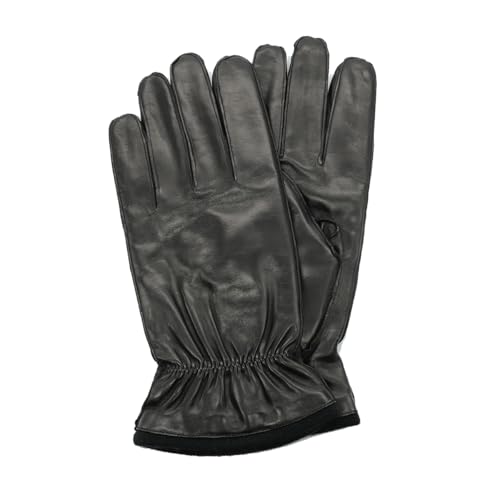
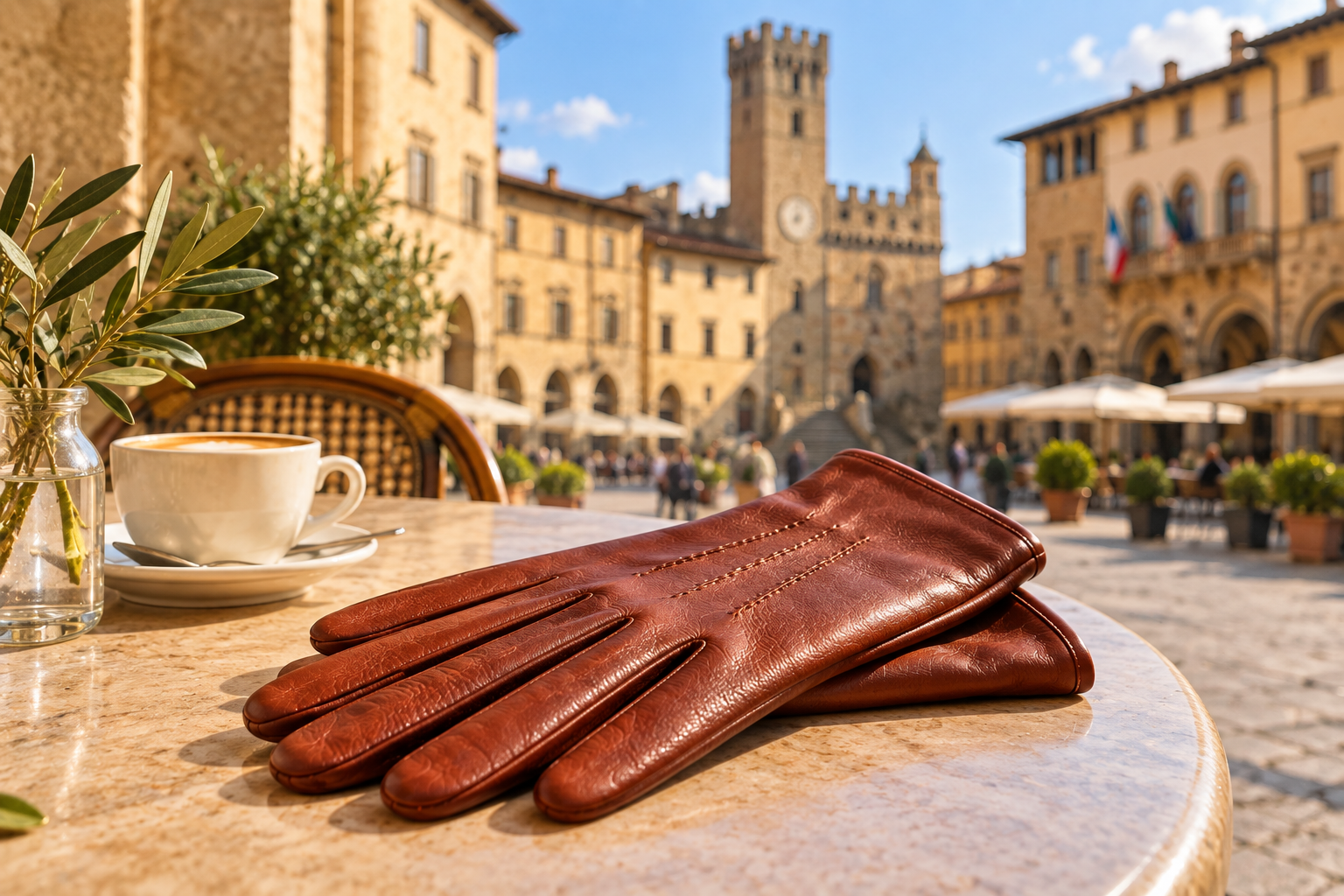
 Italian leather gloves are one of those small luxuries that explain the appeal of Made in Italy better than almost anything else.
A good pair looks simple. There may be no visible logo, elaborate hardware or obvious decoration. Yet when you put the gloves on, the difference becomes apparent: soft leather, carefully shaped fingers, fine stitching and a fit that gradually adapts to the hand.
Italy has produced leather goods for centuries, but gloves occupy a particularly interesting place in this tradition. While Tuscany is internationally associated with tanning and leather goods, Naples has developed one of Italy’s most distinctive traditions of glove making.
Today, Italian leather gloves range from understated black nappa gloves lined with cashmere to colorful women’s fashion gloves, rugged deerskin designs, elegant men’s dress gloves and perforated driving gloves.
For anyone interested in Italian craftsmanship, fashion or simply buying something beautiful that can be used for years, gloves deserve far more attention than they usually receive.
Naples and the Italian Tradition of Glove Making
Italy’s leather industry developed through many regional specializations. Tuscany became particularly important for tanning and leather goods, while other regions developed expertise in shoes, handbags, clothing and accessories.
Glove making became especially associated with Naples.
The Neapolitan tradition combines leather knowledge with skills closer to tailoring. A glove has to follow the shape and movement of the hand extremely closely. A beautiful piece of leather is therefore only the beginning.
The artisan must understand how much the leather will stretch, how it should be cut and how the pieces will behave after they have been sewn together.
That makes glove making very different from simply cutting pieces for a wallet or belt.
The Italian leather research institute, the Stazione Sperimentale per l’Industria delle Pelli e delle Materie Concianti, describes Neapolitan glove making as an important expression of local craftsmanship. The institution has also documented and supported the transmission of these specialist skills.
Some Neapolitan workshops continue this tradition today, combining established techniques with contemporary colors, linings and designs.
If you are interested in the broader story behind these materials, read our guide to Italian leather and where to buy leather goods in Italy.
Why Making a Leather Glove Is So Difficult
A glove appears to be a relatively simple object until you examine one closely.
It must fit around the palm while allowing the fingers to move independently. It must accommodate the thumb at a different angle. Seams need to be strong but not so bulky that they become uncomfortable.
Most importantly, leather does not behave exactly like woven fabric.
Specialist glove leather is selected partly for its softness and elasticity. The cutter therefore needs to understand the natural stretch of each hide before deciding how the individual pieces should be positioned.
Traditional production may involve numerous individual operations: selecting the hide, preparing it, cutting the components, sewing the fingers and thumb, adding decorative stitching, attaching a lining, finishing the cuff, pressing the finished glove and inspecting it.
At Naples-based Gala Gloves, for example, the company describes a process involving 25 stages from leather to finished pair, including selection, hand cutting, sewing, finishing and final inspection.
That amount of work helps explain why a genuinely well-made Italian glove feels so different from an inexpensive mass-produced version.
The Best Leathers for Italian Gloves
Not every type of leather is suitable for gloves.
A leather that works beautifully for a structured handbag may be completely inappropriate when wrapped around fingers that need to bend and move.
Nappa Leather
Nappa is perhaps the leather most closely associated with elegant Italian gloves.
It is prized for its smooth surface, softness and flexibility. Fine nappa can create the almost “second skin” sensation associated with high-quality dress gloves.
Black and dark brown nappa are timeless choices, but Italian makers also use burgundy, navy, cognac, green and brighter fashion colors.
For a first pair of quality Italian leather gloves, nappa is an excellent place to start.
Suede
Suede has a softer, velvety appearance.
It tends to look slightly more relaxed than polished nappa and works particularly well with wool coats, tweed and casual winter clothing.
Its textured surface does, however, require more careful maintenance.
Deerskin
Deerskin has a more pronounced grain and a somewhat more rugged character.
It can be remarkably soft while remaining durable, making it attractive for casual men’s gloves as well as more substantial winter designs.
As it ages, good deerskin can develop an appealing character rather than simply looking worn.
Lamb and Sheep Leather
Fine lamb and sheep leathers are widely appreciated for their softness and flexibility.
Because the hand requires freedom of movement, these qualities are particularly valuable in glove making.
The important consideration is not simply the animal from which the hide came but how carefully the leather has been selected, tanned, finished and cut.
What Is Inside an Italian Leather Glove?
The exterior leather receives most of the attention, but the lining can dramatically change how a glove feels and performs.
Cashmere is one of the most luxurious choices. It is warm without requiring an excessively bulky lining, making it ideal for elegant winter gloves.
Wool offers excellent practicality and warmth and is often less expensive than cashmere.
Silk creates a lighter, refined glove and allows the hand to slide easily inside.
Some gloves are deliberately unlined, particularly driving gloves and lightweight styles. Without a lining, the wearer can feel more of the leather and enjoy greater sensitivity through the fingers.
When comparing two apparently similar pairs, always check the lining. It can be one of the biggest differences in both comfort and price.
Italian Leather Gloves for Women
Women’s Italian gloves offer enormous stylistic variety.
The classic starting point is a fitted black leather glove. It works with almost every winter coat and can move easily between everyday, business and evening clothing.
Brown and cognac provide a warmer alternative, especially with beige, camel and earth-toned outerwear.
Italian manufacturers are also particularly good at color.
Burgundy, forest green, navy, mustard, red and even violet can turn gloves into an intentional part of an outfit rather than something worn only because the weather is cold.
Longer gloves can be particularly elegant with coats and jackets that have three-quarter-length sleeves. Shorter gloves are more practical for everyday use.
Decorative possibilities include contrasting stitching, buttons, bows, perforation, embroidery and combinations of leather and suede.
The key is proportion. The most convincing Italian designs generally allow the leather and shape of the glove to remain the principal attraction.
Italian Leather Gloves for Men
Men’s gloves tend to be visually quieter, but the differences in construction, leather and purpose can be substantial.
A smooth black leather glove is the traditional choice for formal clothing and dark overcoats.
Dark brown and cognac work particularly well with more casual wool coats, leather jackets and country-inspired clothing.
Men who want something less formal might consider deerskin or suede.
The lining matters as well. Cashmere-lined nappa gloves can be exceptionally elegant, while thicker wool-lined designs make more sense for prolonged exposure to cold weather.
For more ideas about incorporating accessories into an Italian-inspired wardrobe, see our complete guide to Italian fashion, its history, designers and the meaning of Made in Italy.
Italian Driving Gloves
Driving gloves deserve their own category.
Originally practical rather than decorative, they improved grip on steering wheels at a time when automobiles required considerably more physical effort to drive.
Traditional driving gloves are usually unlined and may have perforations across the fingers and back of the hand. Open-back designs and snap closures are also common.
The thin construction allows the driver to maintain tactile contact with the steering wheel.
Today, of course, few people actually need gloves to operate a modern car. Yet the driving glove has survived because it became a fashion object in its own right.
A beautifully made pair still evokes classic Italian motoring culture, sports cars and the elegance associated with mid-century European travel.
How Italian Leather Gloves Should Fit
Fit is arguably more important with gloves than with almost any other leather accessory.
A handbag does not need to conform to your body. A glove does.
A new leather glove should generally feel close to the hand without restricting circulation or forcing the fingers into an unnatural position.
Leather normally relaxes slightly through use.
For that reason, buying gloves that are noticeably loose from the beginning can be a mistake. After repeated wear, they may become even looser.
At the same time, excessively tight gloves put stress on seams and make the fingers uncomfortable.
Look at the fingertips as well. Large empty spaces beyond the end of your fingers usually indicate that the glove is too long.
The thumb should move naturally and the palm should not contain large folds of excess leather.
How to Measure Your Hand for Italian Gloves
When buying online, never assume that your usual S, M or L will automatically correspond to the correct Italian glove size.
Manufacturers can use different sizing systems.
The most useful measurement is usually the circumference around the widest part of the hand, excluding the thumb.
Use a flexible measuring tape and wrap it around the knuckles without pulling excessively tight.
Some manufacturers also ask for hand length, measured from the tip of the middle finger to the base of the palm.
Then compare your measurements with the individual manufacturer’s sizing chart.
This last step is essential.
Do not rely on a generic conversion table when the company selling the gloves provides its own measurements.
How to Recognize Quality Italian Leather Gloves
The words “Italian leather” can be misleading.
They do not necessarily mean that the entire glove was manufactured in Italy.
If you specifically want Italian-made gloves, look for clear Made in Italy labeling and information about the manufacturer.
Then inspect the construction.
Good gloves should have clean, consistent stitching and carefully finished seams. The fingers should have balanced proportions. The lining should sit neatly inside rather than bunching up.
The leather should feel supple and appropriate for the style.
Do not judge quality by softness alone. Extremely soft leather is not automatically superior, just as thicker leather is not necessarily more durable.
The important question is whether the material is appropriate for the intended glove.
This is also why Italia Mia recommends caution when buying supposedly Italian leather goods from anonymous online sellers or tourist-market stalls.
For a broader explanation of Italy’s leather industry and how to recognize quality, see our Italian Leather Guide.
Made in Italy Versus an Italian-Sounding Brand
This distinction is worth emphasizing.
An Italian name, an Italian flag on a website or a description such as “Italian style” does not prove that a product was manufactured in Italy.
Even an Italian company may produce different product lines in different countries.
When origin matters to you, check the actual product label and the manufacturer’s description.
A reputable maker should be reasonably transparent about where its gloves are produced.
The same principle applies across Italian fashion. Italy’s reputation was built not simply on branding but on networks of specialist manufacturers, craftspeople, designers and production districts.
Our guide to the great Italian fashion designers explains how those manufacturing traditions helped support internationally famous fashion houses.
Choosing the Right Pair
If you want one versatile pair, start simply.
For women, a fitted black or dark brown nappa glove with a cashmere or wool lining will work with almost any winter wardrobe.
For men, smooth black leather is the safest choice for formal clothing, while dark brown offers slightly more versatility for everyday wear.
After that, gloves become much more interesting.
Consider burgundy or green leather, contrasting stitching, suede, deerskin or an unlined driving glove.
The best purchase is not necessarily the most expensive pair. It is the one you will actually wear.
Excellent craftsmanship hidden permanently inside a drawer is not much of an investment.
Are Expensive Italian Gloves Worth It?
They can be, but price alone is not proof of quality.
With genuinely well-made gloves, you are paying for several things: better leather, skilled cutting, more careful stitching, a quality lining, finishing and labor.
The biggest difference often becomes apparent after repeated wear.
A well-cut leather glove begins to conform to the hand. Instead of simply stretching, it develops a more personalized fit.
Quality gloves can also be maintained and worn for years.
That makes a classic pair very different from a trend-driven accessory intended to last only a season.
Caring for Italian Leather Gloves
Good leather gloves require surprisingly little maintenance if they are treated sensibly.
The most important rule is to avoid unnecessary soaking.
If your gloves become wet, allow them to dry naturally at room temperature. Keep them away from radiators, hair dryers and other direct heat sources, which can cause leather to stiffen or shrink.
Do not wring them out.
While they are still slightly damp, gently reshape the fingers with your hands.
For ordinary dust or surface dirt, use a clean soft cloth. More substantial stains should be treated according to the type and finish of the leather.
Suede requires different care from smooth nappa, so universal cleaning products should be approached cautiously.
Before applying any leather conditioner or cleaner, check the manufacturer’s instructions and test the product on an inconspicuous area.
When winter ends, store the gloves flat in a cool, dry place rather than folding or crushing them underneath heavier clothing.
Italian Leather Gloves as a Gift
Leather gloves can make an excellent Italian gift because they combine practicality with craftsmanship.
They are also more personal than many luxury accessories.
The difficulty, naturally, is sizing.
If you are buying for someone else, try to determine their glove size first or buy from a retailer that permits exchanges.
For a special gift, cashmere-lined nappa is difficult to beat. A classic color will also reduce the risk of choosing something the recipient rarely wears.
If the person already owns conventional gloves, consider driving gloves, suede or a stronger color instead.
A Small Expression of Italian Craftsmanship
Italian leather gloves do not have the immediate visibility of a designer handbag or pair of luxury shoes.
That is partly what makes them appealing.
Their quality is experienced at close range: the softness of the leather, the precision around the fingers, the warmth of a cashmere lining and the way a carefully cut glove gradually conforms to its owner’s hand.
They also demonstrate something fundamental about Italian fashion.
Made in Italy has never been only about famous logos.
Behind Italy’s international fashion houses lies a much larger world of tanners, cutters, stitchers, pattern makers, textile specialists and small workshops whose expertise can be concentrated in something as seemingly simple as a pair of gloves.
Naples’ glove-making tradition is an excellent example.
A beautifully made Italian leather glove is therefore more than a winter accessory. It is a small, functional piece of a much larger Italian craft tradition.
External Sources
Stazione Sperimentale – The Glove School and Neapolitan Glove-Making Tradition
Gala Gloves – How Gloves Are Made in Naples