
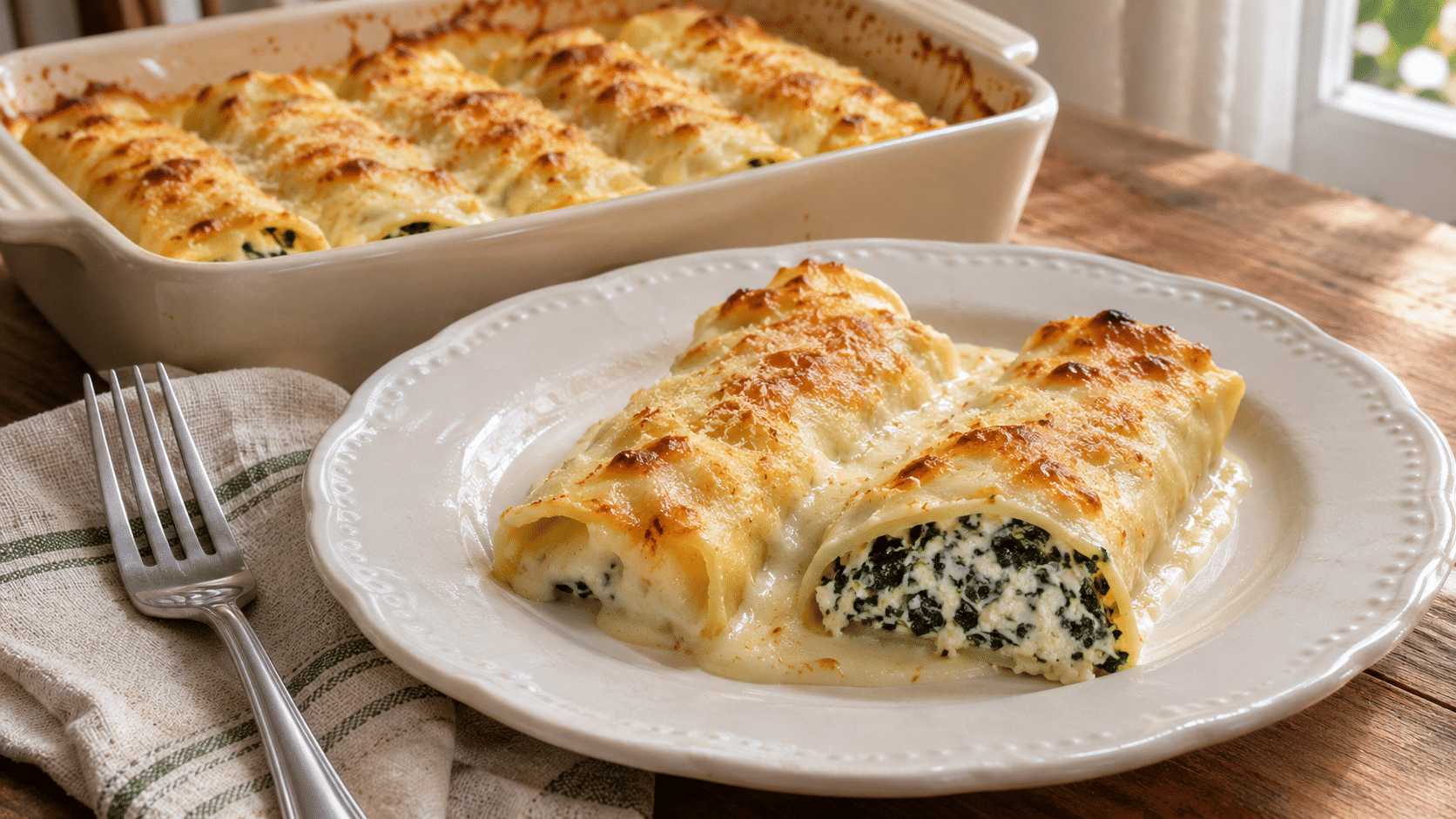
A spoon breaks through the golden top of the béchamel, lifting a soft pasta roll filled with ricotta and finely chopped spinach. A little nutmeg runs through the filling, while grated cheese gives the surface its browned edges. Cannelloni ricotta e spinaci are the sort of baked pasta that makes a generous Sunday lunch without requiring a pot of ragù simmering all morning.
This version uses fresh egg-pasta sheets, rolled around the filling and baked in a single layer beneath homemade béchamel. The preparation is straightforward, but a few details make a considerable difference: squeeze the spinach thoroughly, drain wet ricotta, and keep the sauce loose enough to spread around the pasta.
A classic filling for Italian baked pasta
Ricotta and spinach appear together in several Italian pasta preparations, from ravioli to cannelloni. Here, the mild cheese softens the flavour of the greens, while an egg and grated hard cheese help the filling hold together when served.
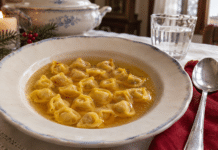
Cannelloni belong comfortably on a Sunday or festive table. They can be assembled ahead, portioned easily and brought to the table in their baking dish. Unlike the tiny parcels in tortellini in brodo, these larger rolls need relatively little shaping.
There are versions with tomato sauce and versions in bianco, with béchamel alone. The recipe below follows the latter approach, giving the ricotta and spinach most of the attention. It is a practical addition to the home-cooking repertoire alongside the dishes in Famous Italian Recipes: 15 Classic Dishes to Make at Home.
Cannelloni ricotta e spinaci recipe
Serves: 4 generously, or 6 as a first course
Makes: approximately 12 cannelloni
Preparation: about 40 minutes
Baking: 30–35 minutes
Resting: 10 minutes
Equipment: a baking dish approximately 23 × 33 cm, saucepan, whisk and mixing bowl
Allow extra time if your ricotta needs draining. This method is written for thin, fresh pasta sheets; see the separate instructions below for dried cannelloni tubes.
For the pasta and filling
- Approximately 250 g thin fresh egg-pasta sheets, enough for twelve rectangles about 10 × 12 cm
- 500 g fresh spinach, washed, or 300 g frozen leaf spinach
- 500 g ricotta, drained if necessary
- 1 medium egg
- 70 g finely grated Parmigiano Reggiano or Grana Padano
- A small pinch of freshly grated nutmeg
- Salt and freshly ground black pepper
For the béchamel and topping
- 60 g unsalted butter, plus a little for the dish
- 60 g plain all-purpose flour
- 800 ml whole milk, plus a little extra if needed
- Salt and a small pinch of nutmeg
- 30 g finely grated Parmigiano Reggiano or Grana Padano
For a strictly vegetarian dish, use a hard cheese made with vegetarian rennet in place of Parmigiano Reggiano or Grana Padano, which use animal rennet. Check the ricotta label as well.
Prepare the spinach and ricotta
Place fresh spinach in a large pan with the water still clinging to its leaves. Cover and cook over medium heat, turning occasionally, until wilted. Work in batches if necessary. If using frozen spinach, cook it according to the packet instructions.
Drain, spread out to cool, then squeeze firmly in small handfuls or in a clean cloth. Chop finely with a knife. The cooked weight varies with the spinach and how thoroughly it is squeezed; roughly 200–250 g of well-drained greens is a useful guide.
If liquid pools around the ricotta, drain it in a fine sieve set over a bowl in the refrigerator. Ricotta should be soft and spoonable, but it should not release a puddle when placed in the mixing bowl.
Mix the ricotta with the chopped spinach, grated cheese, nutmeg and black pepper. Taste and adjust the salt before adding the raw egg. Stir in the egg until evenly combined, then refrigerate the filling while you prepare the sauce.
Make a smooth, pourable béchamel
Melt the butter in a saucepan over medium-low heat. Stir in the flour and cook for about two minutes, stirring continuously and keeping the mixture pale.
Add the milk gradually, whisking well after the first additions so that no lumps remain. Once all the milk is incorporated, bring to a gentle simmer and cook for about five minutes, stirring along the bottom and into the corners of the pan.
Season with salt and nutmeg. The finished sauce should coat a spoon but still pour readily. If it becomes thick enough to sit in a mound, whisk in a little more milk. Pasta absorbs moisture as it bakes, and a stiff sauce can leave exposed edges dry.
Roll and assemble the cannelloni
Heat the oven to 190°C conventional / 170°C fan / 375°F. Lightly butter the baking dish.
Cut the pasta into approximately twelve rectangles. Check the packet instructions: some fresh sheets can be used directly, while others need brief blanching. If blanching is required, cook a few pieces at a time in a wide pan of salted water until pliable, then lift them out and lay them separately on clean kitchen towels.
Spread approximately a quarter of the béchamel across the bottom of the baking dish. Divide the filling among the pasta rectangles, placing it in a thick line along one short edge of each. Roll the sheets around the filling with a small overlap and arrange seam-side down.
Keep the cannelloni in one layer with enough room for the sauce to settle between them. If your sheets are a different size, adjust the number of rolls rather than overfilling them.
Spoon over the remaining béchamel, covering the ends and edges of the pasta. Sprinkle with the remaining 30 g grated cheese.
Bake until golden and let the dish rest
Cover loosely with foil and bake for 20 minutes. Remove the foil and continue baking for approximately 10–15 minutes, until the sauce bubbles, the top is lightly golden and the pasta is tender when pierced with a small knife.
If you want more colour, finish briefly under the grill, watching closely. Browning alone does not tell you whether the pasta underneath is cooked, so check the centre of the dish before serving.
Rest for 10 minutes. This gives the filling and sauce time to settle, making it easier to lift out intact portions. Serve with a broad spatula, taking a little sauce from the bottom of the dish with each helping.
Can you use dried cannelloni tubes?
Yes, although they need a different approach. Choose enough tubes to hold the filling in one layer in your dish; their size and capacity vary by brand.
Follow the manufacturer’s instructions about pre-boiling, sauce quantity and baking time. Oven-ready tubes generally need more moisture and longer cooking than thin fresh sheets. Prepare additional sauce if the packet requires it, cover every tube completely, and keep the dish covered for the main cooking period.
A piping bag with a wide opening makes filling easier. Fill from both ends, stopping when the mixture meets in the middle, and avoid packing it so tightly that the pasta cracks. Uncover near the end to brown the surface, once the tubes are tender.
Small adjustments and common problems
A watery filling: usually starts with spinach that has not been squeezed enough or ricotta containing excess whey. Drain both before mixing. Extra flour in the filling can make it heavy and does not address the original problem.
Dry pasta edges: need better sauce coverage. Check the ends of every roll before baking and loosen thick béchamel with milk.
Too much nutmeg: can dominate the mild ricotta. Begin with a small pinch; you can add more to the mixture before the egg goes in.
A tomato variation: spread a thin layer of cooked, lightly seasoned tomato sauce beneath the rolls, then finish with béchamel. Keep it fairly thick so that it does not make the dish watery.
Swiss chard can replace the spinach after its tougher stalks have been removed or cooked separately. Whichever greens you use, chop them finely enough that the filling divides cleanly when you cut into a roll.
Make ahead, store and reheat
For the fresh-sheet version, assemble the dish up to a day ahead, cover and refrigerate promptly. Bake directly from the refrigerator in a dish suitable for that temperature change, allowing extra covered baking time until hot throughout. Keep a little milk available to loosen any reserved sauce before adding it.
For leftovers, divide larger quantities into shallow containers and refrigerate within two hours, or within one hour in temperatures above 32°C/90°F. Keep refrigerated at 4°C/40°F or below and use within three to four days. Freeze individual cooked portions if you need longer storage.
Thaw frozen portions in the refrigerator. Reheat covered with a small splash of milk or water until the centre reaches 74°C/165°F, then uncover briefly if you want to refresh the top. A thermometer is useful because the sauce can bubble around the edges while the centre remains cool.
What to serve with ricotta and spinach cannelloni
For a simple lunch, serve the cannelloni with a sharply dressed green salad or cooked vegetables. Fennel, radicchio or rocket provides a fresh contrast to the creamy sauce.
If the pasta is the first course of a longer meal, offer smaller portions and follow with a modest main dish. There is already plenty of dairy in the filling and topping, so an additional heavy cheese course is unnecessary.
Italian cookbooks for your kitchen
An Italian cookbook can help you build on the same skills: preparing vegetables, judging the consistency of a sauce and working with fresh pasta.
As an Amazon Associate, Italia Mia earns from qualifying purchases.
- Essentials of Classic Italian Cooking by Marcella Hazan — a useful reference for readers who want detailed explanations of Italian cooking methods alongside a broad collection of recipes.
- Find The Silver Spoon on Amazon — a wide-ranging collection of Italian home cooking, suited to cooks who want ideas beyond pasta. Check the language, edition and format before ordering.
These are suggestions for further cooking, rather than the source of the recipe above.
External Links
- Grana Padano Consortium: cannelloni with ricotta and spinach
- Phaidon: The Silver Spoon
- USDA: handling leftovers safely
- USDA: safe methods for reheating food