

Choosing only ten places to visit in Italy is almost impossible.
Italy has more than twenty regions, hundreds of historic cities and towns, thousands of miles of coastline, Alpine peaks, Mediterranean islands, archaeological sites, vineyards, lakes and some of the world’s greatest collections of art.
Rome alone could occupy an entire vacation. Tuscany contains enough towns, landscapes and wineries for weeks of exploration. Sicily could easily be a trip of its own.
So this is not intended to be a definitive ranking of Italy’s “best” places.
Instead, consider these ten essential Italian destinations: places that collectively demonstrate why Italy remains one of the world’s most extraordinary countries to visit.
They include ancient cities and Renaissance masterpieces, but also mountains, islands, coastlines and countryside.
If this will be your first trip, also read our Italy for First-Time Visitors guide before planning your itinerary.
1. Rome — The Essential Italian City
If you can visit only one city in Italy, Rome makes a compelling case.
Few cities allow you to move so casually between different periods of civilization. You can walk past an ancient Roman temple, enter a Renaissance church, cross a Baroque piazza and finish the evening eating carbonara in a neighborhood trattoria.
Rome isn’t simply a collection of famous monuments. The city itself is the attraction.
1What You Shouldn’t Miss
The obvious starting point is ancient Rome:
- The Colosseum
- Roman Forum
- Palatine Hill
- Pantheon
- Baths and archaeological sites scattered throughout the city
Then there is Renaissance and Baroque Rome:
- Piazza Navona
- Trevi Fountain
- Spanish Steps
- Campo de’ Fiori
- Villa Borghese
And within Rome lies Vatican City, where visitors can see St. Peter’s Basilica, St. Peter’s Square, the Vatican Museums and the Sistine Chapel.
But leave time for ordinary Rome as well.
Walk through Trastevere, explore the streets around Monti, stop for an espresso, visit a neighborhood market and spend an evening simply wandering.
Rome rewards travelers who don’t schedule every hour.
2How Long Should You Stay?
Minimum: 3 days
Better: 4–5 days
Rome is not a destination to squeeze into a single day.
3Best For
History, archaeology, art, architecture, food and first-time visitors.
2. Florence — Renaissance Italy at Its Finest
If Rome represents the grandeur of ancient Italy, Florence represents the Renaissance.
The historic center is remarkably compact. Within a relatively small area are masterpieces by Michelangelo, Botticelli, Brunelleschi, Giotto and many of the artists who transformed European culture.
At the center stands the Cathedral of Santa Maria del Fiore—the Duomo—with Brunelleschi’s extraordinary dome dominating the skyline.
Nearby are Giotto’s Campanile and the Baptistery.
Walk toward the Arno and you reach Piazza della Signoria, Palazzo Vecchio, the Uffizi Galleries and eventually the Ponte Vecchio.
4What You Shouldn’t Miss
- Florence Cathedral and Brunelleschi’s Dome
- Uffizi Galleries
- Accademia Gallery and Michelangelo’s David
- Piazza della Signoria
- Palazzo Vecchio
- Ponte Vecchio
- Basilica of Santa Croce
- Oltrarno
- Piazzale Michelangelo
One of Florence’s greatest advantages is its walkability. You can experience much of the historic city without using transportation.
But don’t treat Florence merely as a checklist of museums.
Eat a bistecca alla fiorentina, explore the artisan workshops of Oltrarno, visit a food market and enjoy an evening walk along the Arno.
5How Long Should You Stay?
Minimum: 2 days
Better: 3–4 days
Florence also makes an excellent base for exploring Tuscany.
6Best For
Renaissance art, architecture, museums, food and history.
3. Venice — A City Unlike Any Other
You can see thousands of photographs of Venice and still be surprised when you arrive.
There really is nowhere else quite like it.
Built across islands in the Venetian Lagoon, Venice replaces streets with canals and cars with boats. Palaces rise directly from the water. Narrow passages suddenly emerge into beautiful squares. Bridges lead from one neighborhood to another.
The famous sights deserve their reputation.
St. Mark’s Square, St. Mark’s Basilica, the Doge’s Palace, Rialto Bridge and Grand Canal should all be experienced at least once.
But Venice becomes even more memorable when you leave the busiest routes.
Explore Cannaregio. Wander through Castello. Cross into Dorsoduro. Take a vaporetto without worrying too much about where you are going.
7Beyond Central Venice
The lagoon islands make worthwhile excursions:
Murano is internationally famous for its centuries-old glassmaking tradition.
Burano is known for brilliantly colored houses and lace.
Torcello offers a quieter glimpse into the lagoon’s early history.
8Venice and Overtourism
Venice can become extremely crowded, particularly around St. Mark’s Square and Rialto.
Staying overnight changes the experience dramatically.
Early mornings and evenings reveal a much quieter city after many day visitors have departed.
9How Long Should You Stay?
Minimum: 2 days
Better: 3 days
10Best For
Romance, architecture, photography, history and completely unique urban landscapes.
4. Tuscany — The Italy Many Travelers Dream About
Florence may be Tuscany’s capital, but the surrounding region deserves its own place on this list.
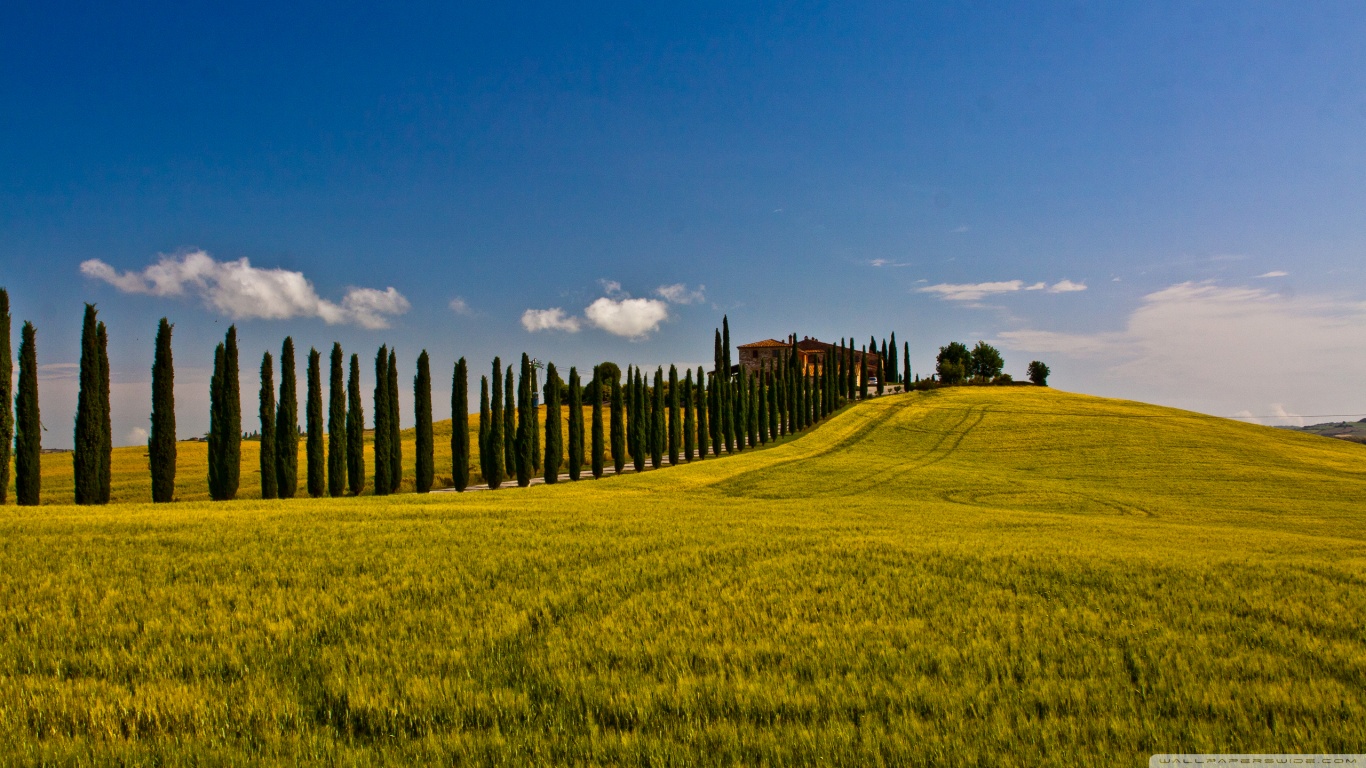
This is the landscape many people imagine when they picture rural Italy: vineyards, olive groves, cypress-lined roads, stone farmhouses and medieval villages rising from hilltops.
But Tuscany is more diverse than the postcard image suggests.
11Siena
Siena is one of Italy’s finest medieval cities.
Its shell-shaped Piazza del Campo hosts the famous Palio horse race, while Siena Cathedral is among Italy’s most spectacular churches.
12Val d’Orcia
The landscape south of Siena includes some of Tuscany’s most recognizable scenery.
Explore:
- Pienza
- Montalcino
- Montepulciano
- Bagno Vignoni
- San Quirico d’Orcia
13San Gimignano
Its surviving medieval towers make San Gimignano instantly recognizable.
It can become busy during the day, so early morning or late afternoon visits are particularly rewarding.
14Lucca and Pisa
Pisa has one of the world’s most recognizable monuments, but nearby Lucca deserves considerably more attention than it often receives.
Its Renaissance walls encircle an exceptionally pleasant historic center and can be explored on foot or bicycle.
Our complete guide to Tuscany goes much deeper into the region’s cities, villages, food and landscapes.
15How Long Should You Stay?
Minimum: 3 days
Better: 5–7 days or longer
A car is extremely useful for exploring rural Tuscany. Before renting one, read our Driving in Italy for Tourists guide.
16Best For
Countryside, wine, medieval villages, art, food and road trips.
5. Naples, Pompeii and the Bay of Naples
Naples is not Florence with palm trees.
It isn’t Rome in the south.
It is unmistakably Naples.
Energetic, crowded, historic, theatrical and occasionally chaotic, Naples offers one of Italy’s most distinctive urban experiences.
Its historic center is a UNESCO World Heritage Site, filled with churches, palaces, markets, workshops and streets where everyday life unfolds around centuries of history.
And then there is the food.
Naples is the birthplace of pizza, but Neapolitan cuisine extends far beyond it.
17What to See in Naples
Don’t miss:
- Spaccanapoli
- Naples National Archaeological Museum
- Cappella Sansevero
- Via dei Tribunali
- Santa Chiara
- Castel dell’Ovo
- Naples waterfront
18Pompeii and Herculaneum
Nearby are two of the world’s most important archaeological sites.
Pompeii preserves an extraordinary Roman city buried by the eruption of Mount Vesuvius in AD 79.
Herculaneum, destroyed during the same eruption, is smaller but preserves buildings and organic material in remarkable detail.
Visiting both provides a fascinating comparison.
19The Islands
The Bay of Naples also gives access to:
- Capri
- Ischia
- Procida
Few destinations combine archaeology, city life, islands, volcanoes and extraordinary food as effectively as Naples and Campania.
20How Long Should You Stay?
Minimum: 3 days
Better: 4–5 days
21Best For
Food, archaeology, street life, history and travelers seeking a more intense Italian city experience.
6. The Amalfi Coast — Italy’s Dramatic Mediterranean Coastline
Mountains plunge toward the Mediterranean. Villages cling to cliffs. Roads curve high above the sea.
The Amalfi Coast earns its reputation.
Positano receives much of the attention, with its colorful buildings cascading toward the water, but the coast offers much more.
22Places to Explore
Amalfi — the historic maritime town that gives the coastline its name.
Ravello — perched high above the sea and famous for gardens and extraordinary views.
Praiano — smaller and generally quieter than Positano.
Atrani — one of the smallest and most atmospheric towns along the coast.
Maiori and Minori — useful alternatives for travelers seeking beaches and a somewhat different atmosphere.
23Don’t Try to See Everything in One Day
One of the biggest mistakes visitors make is treating the Amalfi Coast as a sightseeing checklist.
Its appeal is precisely the opposite.
Have lunch overlooking the sea. Swim. Take a ferry. Walk through a village. Spend an afternoon doing almost nothing.
24Driving the Amalfi Coast
The coastal road is spectacular but can also be narrow and congested.
During busy periods, ferries and buses may be preferable to driving.
25How Long Should You Stay?
Minimum: 2 days
Better: 3–4 days
26Best For
Coastal scenery, romance, swimming, photography and Mediterranean atmosphere.
7. Sicily — Almost a Country Within a Country
Trying to describe Sicily as a single destination is difficult.
Italy’s largest island contains Greek temples, Roman mosaics, Norman cathedrals, Baroque towns, Arab influences, beaches, mountains, vineyards and Europe’s highest active volcano.
It also possesses one of Italy’s most distinctive culinary traditions.
Sicily deserves a trip of its own.
27Palermo
The island’s capital combines Norman, Arab, Byzantine, Spanish and Italian influences.
Visit Palermo’s markets, cathedral and extraordinary churches, then travel to nearby Monreale for its celebrated mosaics.
28Eastern Sicily
Taormina combines an ancient theater with views toward Mount Etna and the Mediterranean.
Catania sits beneath Etna and has a striking historic center built partly from dark volcanic stone.
Syracuse and Ortigia combine Greek history with one of Sicily’s most beautiful old towns.
29Southeastern Sicily
The Baroque towns of the Val di Noto include:
- Noto
- Ragusa
- Modica
- Scicli
30Ancient Sicily
The Valley of the Temples at Agrigento contains some of the finest surviving Greek temples anywhere in the Mediterranean world.
31How Long Should You Stay?
Minimum: 5 days
Better: 7–14 days
Trying to “do Sicily” in two or three days means missing much of what makes the island extraordinary.
32Best For
History, beaches, archaeology, food, architecture and longer road trips.
8. Cinque Terre and the Ligurian Coast
The five villages of the Cinque Terre have become some of Italy’s most recognizable coastal destinations.
They are:
- Monterosso al Mare
- Vernazza
- Corniglia
- Manarola
- Riomaggiore
Colorful houses rise above the Ligurian Sea while vineyards occupy terraces carved into steep hillsides.
The villages are connected by train, and hiking trails provide another way to explore the coastline when conditions permit.
33Don’t Drive Between the Villages
A car is generally unnecessary and inconvenient for visiting the Cinque Terre.
The train is usually the most practical transportation.
Boats also provide beautiful views of the villages from the sea when services are operating.
34Look Beyond the Famous Five
Liguria has much more to offer.
Nearby Portovenere is exceptionally beautiful, while farther north the coast includes destinations such as Portofino, Camogli and Santa Margherita Ligure.
35How Long Should You Stay?
Minimum: 2 days
Better: 3 days
36Best For
Hiking, coastal scenery, photography, seafood and travelers who prefer small towns to large cities.
9. The Italian Lakes — Como, Garda and Maggiore
Northern Italy’s lakes offer a completely different landscape from Rome, Tuscany or Sicily.
Mountains rise behind elegant villas, gardens and lakeside towns. Ferries cross the water between villages, and the atmosphere can feel both Alpine and Mediterranean.
37Lake Como
Lake Como is the most internationally famous.
Bellagio, Varenna and Menaggio are among the classic destinations, while historic villas and gardens line the shores.
38Lake Garda
Italy’s largest lake offers considerably more variety.
The southern shore includes towns such as Sirmione, while the northern lake becomes increasingly dramatic as mountains close around the water.
It is particularly good for travelers interested in outdoor activities.
39Lake Maggiore
Lake Maggiore is famous for the Borromean Islands, elegant gardens and Belle Époque atmosphere.
It often receives less attention from international first-time visitors than Como but is very rewarding.
40How Long Should You Stay?
Minimum: 2 days
Better: 3–5 days
41Best For
Scenery, relaxation, villas, gardens, boat trips and couples.
10. The Dolomites — Italy at Its Most Spectacular
Italy isn’t only Renaissance cities and Mediterranean beaches.
In the northeast, the Dolomites provide some of Europe’s most dramatic mountain scenery.
Jagged pale peaks rise above green valleys, Alpine villages and mountain lakes.
The region is extraordinary in every season.
42Summer
During warmer months, visitors come for:
- Hiking
- Cycling
- Via ferrata
- Mountain refuges
- Scenic drives
- Lakes and valleys
43Winter
The Dolomites become one of Europe’s great skiing destinations.
44Places to Consider
Popular bases and destinations include:
- Cortina d’Ampezzo
- Val Gardena
- Ortisei
- Alta Badia
- Val di Funes
- Alpe di Siusi
- Tre Cime di Lavaredo
The cultural atmosphere is also fascinating.
In parts of the region, Italian, German and Ladin traditions coexist, creating food, architecture and customs quite different from southern Italy.
45How Long Should You Stay?
Minimum: 3 days
Better: 5–7 days
46Best For
Mountains, hiking, skiing, nature, photography and outdoor travel.
What About Milan?
The original version of this article included Milan among Italy’s ten essential destinations.
Milan remains one of Italy’s most important and fascinating cities, and anyone interested in fashion, design, architecture, business or contemporary Italian culture should seriously consider visiting.
The Duomo, Galleria Vittorio Emanuele II, Brera, Castello Sforzesco and Leonardo da Vinci’s Last Supper alone justify a stop.
Milan is also the center of Italian fashion. If that interests you, read our guide to Milan Fashion Week.
But for a list limited to only ten destinations representing the greatest possible variety of Italian experiences, the lakes and Dolomites give travelers something substantially different from Rome, Florence, Venice and Naples.
Milan would be very close to number eleven.
What About Puglia?
Puglia could just as easily make this list.
The heel of the Italian peninsula offers whitewashed towns, centuries-old olive groves, Adriatic and Ionian beaches, Baroque Lecce and the famous trulli of Alberobello.
It is particularly attractive to travelers returning to Italy after seeing the classic Rome–Florence–Venice route.
The same could be said for Umbria, Piedmont, Sardinia, Emilia-Romagna and Abruzzo.
That is the fundamental problem with creating a “Top 10 Italy” list: reaching number ten doesn’t mean Italy runs out of exceptional places.
For a much larger selection, see our Top Italian Destinations and Italian Cities guide.
Which Italian Destination Should You Choose?
Your ideal destination depends less on rankings and more on what you want from your vacation.
For ancient history: Rome, Pompeii and Sicily.
For Renaissance art: Florence and Tuscany.
For romance: Venice, the Amalfi Coast and the Italian Lakes.
For food: Naples, Sicily, Tuscany and Emilia-Romagna.
For beaches: Sicily, Sardinia, Puglia and southern Italy.
For hiking: the Dolomites and Cinque Terre.
For wine: Tuscany, Piedmont, Veneto and Sicily.
For fashion and design: Milan.
For countryside: Tuscany, Umbria and Piedmont.
For a first trip: Rome, Florence and Venice remain difficult to beat.
The Classic First Trip to Italy
If you have never visited Italy and have approximately ten days, don’t try to fit all ten destinations into one vacation.
A much better itinerary is:
Rome — 3 or 4 nights
↓
Florence — 3 nights
↓
Venice — 2 or 3 nights
High-speed trains make this route relatively easy without renting a car.
With two weeks, you could add several days in Tuscany or another destination that particularly interests you.
Our Ultimate Italy Travel Guide provides more extensive advice about transportation, accommodation, itineraries and planning.
A Second Trip to Italy
Your second visit is where Italy becomes especially interesting.
Instead of repeating the classic itinerary, consider combinations such as:
Naples → Pompeii → Amalfi Coast
Palermo → Agrigento → Syracuse → Taormina
Florence → Siena → Val d’Orcia → Lucca
Milan → Lake Como → Dolomites → Venice
Bari → Alberobello → Ostuni → Lecce → Salento
Slower regional travel often produces a much richer experience than racing between famous landmarks.
When Is the Best Time to Visit Italy?
There is no single best month for every destination.
April–May
Excellent for cities, Tuscany, Sicily and much of southern Italy. Temperatures are generally comfortable and landscapes are particularly attractive.
June
Long days and good weather make June excellent for much of Italy, although popular destinations become increasingly busy.
July–August
Ideal for many beach and mountain vacations but hot and crowded in major art cities. August is also peak domestic holiday season.
September–October
Among the best periods for combining cities, countryside, food and wine.
November–February
Excellent for travelers interested primarily in cities, museums and lower-season travel, while the Alps and Dolomites enter their winter season.
Always consider the specific destination rather than treating Italy as if it had one climate.
Ten Destinations, Thousands of Possibilities
Rome may introduce you to ancient Italy.
Florence reveals the Renaissance.
Venice demonstrates what happens when an entire civilization develops around water.
Tuscany offers countryside and medieval towns. Naples provides energy and extraordinary food. The Amalfi Coast delivers Mediterranean drama. Sicily reveals layer upon layer of civilizations. Cinque Terre clings improbably to the Ligurian coast. The northern lakes provide elegance and tranquility. And the Dolomites remind visitors that Italy is also an Alpine country.
Yet these ten places barely begin to describe Italy.
There is Bologna for food lovers, Ravenna for Byzantine mosaics, Turin for museums and Piedmontese culture, Matera for its ancient cave districts, Lecce for Baroque architecture, Sardinia for extraordinary beaches, Verona for history and romance, and countless small towns that rarely appear on international itineraries.
Perhaps the best way to plan an Italian vacation is therefore not to ask:
“How many famous places can I see?”
Ask instead:
“What kind of Italy do I want to experience?”
Choose two or three places that answer that question and give yourself enough time to actually experience them.
Italy will still be here for the next trip.
Related Italia Mia Guides
- Italy for First-Time Visitors: The Complete Guide to Your First Italian Vacation
- Ultimate Italy Travel Guide 2026
- Top Italian Destinations and Italian Cities
- Region of Tuscany: Complete Travel Guide
- Driving in Italy for Tourists
External Links
For current visitor information, opening hours, reservations and transportation, consult official sources before traveling: