 Florence can leave you with a strange impression: that everything important happened centuries before you arrived. After the Uffizi, the Accademia and a succession of extraordinary churches, even an enthusiastic traveler can begin to see the city as a collection of masterpieces connected by souvenir shops.
Give it another afternoon. Follow a different set of addresses, then stay for the evening.
There is a Florence of contemporary exhibitions, independent booksellers, handmade notebooks, small design businesses, documentary screenings and adventurous music. Some of it occupies Renaissance buildings. Some has taken root in former institutional and industrial spaces. Much of it sits close enough to the familiar sights to fit into a visit without a complicated journey.
This guide connects those places into an afternoon-to-evening itinerary, with alternatives for different interests. The main route begins around Santa Maria Novella, crosses the Arno into the Oltrarno, and leaves time for dinner and a performance. A second route heads east toward Santa Croce and Le Murate; a third makes Manifattura Tabacchi the focus.
For the wider regional picture, start with our complete Tuscany travel guide. Here, the scale is smaller: one afternoon, a few good addresses, and an evening worth keeping free.
How to Plan Florence After the Museums
The most useful decision comes before you start walking: choose how you want the evening to end.
A concert near the Carmine makes an Oltrarno afternoon sensible. A screening at Cinema La Compagnia favors a route that finishes north of the river. An opera or orchestral performance at the Maggio requires time to reach its theater beyond the compact monumental center. An event at Manifattura Tabacchi deserves an afternoon built around that destination.
Once you have an evening booking, work backward. Leave enough time for dinner, the journey and a comfortable arrival. Then choose one exhibition and two or three shops or bookshops along the way.
Florence rewards this degree of restraint. After a morning looking at paintings, a further three hours in galleries can turn pleasure into endurance. One focused exhibition, followed by browsing and a seated break, gives the day a more varied rhythm.
The timetable below is a suggested planning framework. Check each venue’s current opening days, temporary closures and event arrangements before visiting. Small shops may have shorter hours, and a cultural venue can be open without having the particular exhibition or performance you hoped to see.
Contemporary Art in Florence: Choose Your Starting Point
Museo Novecento: A Change of Century
Museo Novecento occupies the former Leopoldine complex on Piazza Santa Maria Novella. Its remit covers Italian art of the twentieth and twenty-first centuries, combining civic collections with temporary exhibitions and special projects. Museo Novecento
That makes it an effective first stop for visitors whose Florentine experience has concentrated on the Renaissance. The change of period creates room for different questions about painting, sculpture and the relationship between art and modern life.
Read the current exhibition descriptions before deciding how long to stay. A temporary show may be the main reason for your visit; another day, a selective look at the collection may be enough.
Allow approximately an hour for a focused visit, extending it if a particular exhibition catches your attention. Resist treating that estimate as a challenge to see everything. Leave with enough energy to notice the city outside.
Its location is especially useful if you arrived at Santa Maria Novella station, or if you want to continue toward the independent businesses around Via de’ Fossi.
Palazzo Strozzi: Let the Exhibition Decide
Palazzo Strozzi is another strong option, particularly when its temporary program matches your interests. The Renaissance palace hosts major exhibitions, including projects involving modern and contemporary art; the subject changes, so check what is actually on.
There is an interesting relationship between the historic building and the art it contains. The setting gives contemporary work an architectural context very different from a purpose-built gallery.
Choose Strozzi instead of Museo Novecento if its current show is your priority. Visiting both is possible, but it changes the balance of an afternoon intended to include shops and street life.
Late opening can create another option. At the time of checking, the published schedule for the exhibition running from September 25, 2026, to January 24, 2027, includes Thursday opening until 11 p.m., with last admission one hour before closing. Verify the schedule for your own dates, particularly when exhibitions change. Fondazione Palazzo Strozzi
A late exhibition visit can become the evening’s main cultural event. Put shops first, have an early meal, and give the art your attention afterward.
Independent Bookshops: Places to Spend Time
Todo Modo on Via de’ Fossi
Todo Modo brings together an independent bookshop, a wine-and-food component called Uqbar, and a space for reading and study. Its address on Via de’ Fossi places it naturally within the Santa Maria Novella part of this itinerary. Café – Todo Modo
Allow time to browse before choosing a table. Look for a small publisher, a photography title or a book whose design interests you. Ask about English-language stock if you need it; the value of an independent bookseller often lies in the recommendation you would not have found through a familiar online search.
For travelers who read Italian, a bookshop can offer a useful glimpse of contemporary interests beyond the subjects represented in museum collections.
Keep café plans flexible. Bookshop opening hours do not necessarily tell you when the kitchen is serving, and a reading area has a different purpose from a lively bar. Check the arrangements for the part of the business you intend to use.
Brac Near Santa Croce
Brac, on Via dei Vagellai, combines a contemporary-art bookshop with a café and kitchen. It suits the eastern version of the itinerary, especially if you want to combine books, a meal and a visit toward Le Murate. libreriabrac.net
The appeal is the continuity between looking, reading and conversation. A bookshop stop need not end when hunger arrives, and dinner can become a pause within the cultural afternoon.
Reserve if eating here is central to your plan. Check the current menu and explain dietary requirements directly when booking. An attractive description of a place is never a substitute for confirming what its kitchen can provide that evening.
Choose between Brac and Todo Modo according to your route. Including both is worthwhile if bookshops are your main interest; otherwise, let one absorb an unhurried hour.
Shopping for Florence’s Living Craft Culture
An independent shop can tell you something about a city, but independence alone does not establish where an object was made or how well it will last.
Ask specific questions. Who designed it? Where was it produced? Which materials were used? Can it be repaired? Is it made by the workshop you are visiting, or selected from another maker?
These questions distinguish different kinds of businesses without assuming that one model is always superior. A working artisan, a retailer representing local designers, and an antiques dealer each offer a different relationship with the object.
For more detailed buying advice, read our Florence guide to leather goods, gold, jewelry and fashion.
Il Torchio: Bookbinding in the Oltrarno
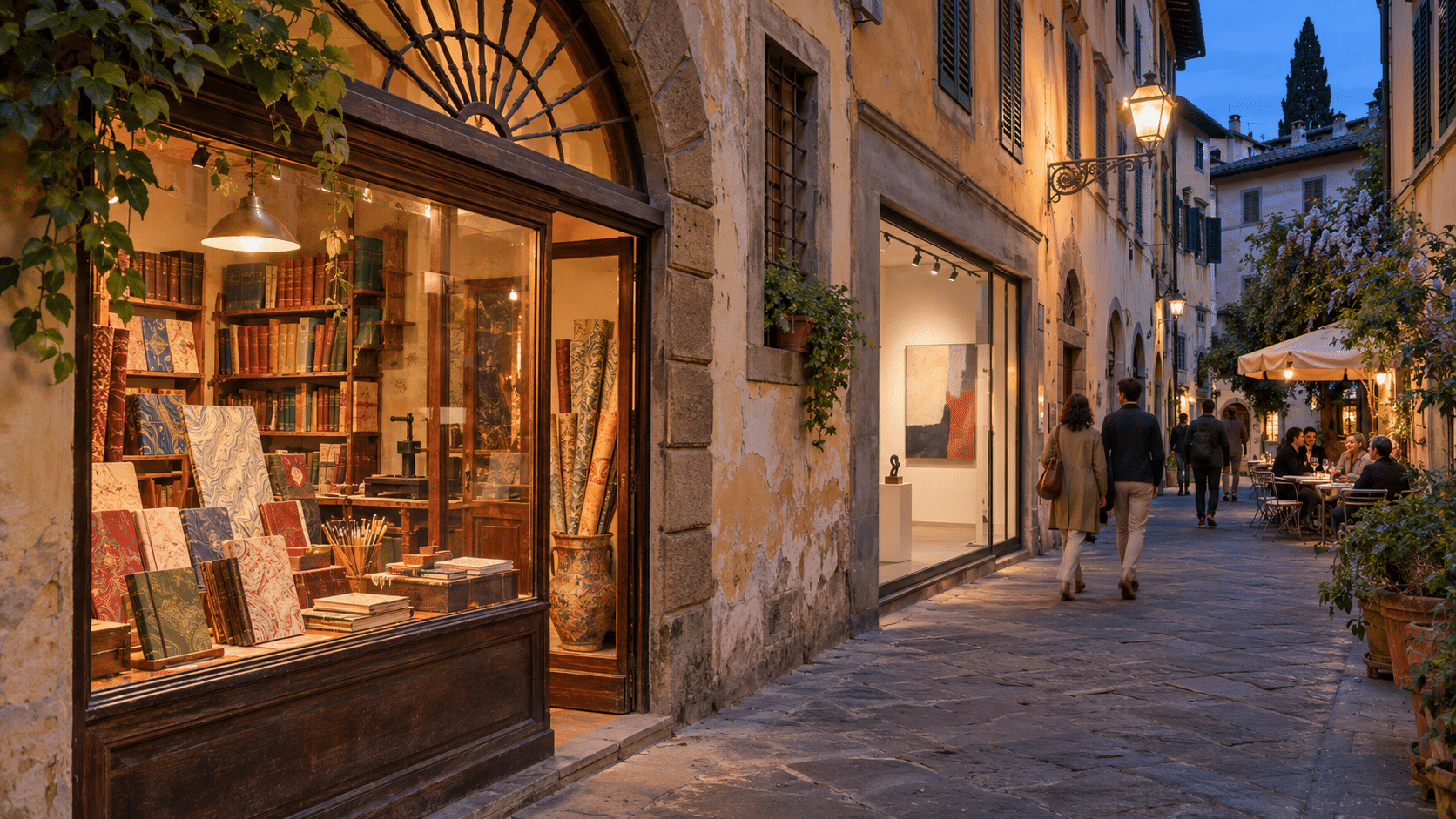
Il Torchio is a bookbinding workshop on Via de’ Bardi, south of the Arno. Its work draws on Florentine binding traditions while using materials and design ideas that connect the craft to contemporary life. Legatoria Il Torchio
Paper, covers and construction provide plenty to notice even in a small object. If you are considering a notebook, think about how you will use it: whether it opens comfortably, how the paper feels and whether its size makes it practical to carry.
A handmade book can be a particularly satisfying purchase for someone who writes, draws or keeps travel notes. Its value continues after the holiday, each time it is opened.
Treat the workshop as a working business. Ask before photographing people or processes, and arrange any special visit, demonstration or commission in advance. A shop visit does not automatically include access to the making process.
Albrici: Antiques and Interior Objects
Albrici, on Via dei Serragli, offers antiques, decorative objects and selected artisan production. It gives the Oltrarno route a different emphasis from contemporary fashion or paper goods. Albrici
Even if furniture is beyond your budget or luggage allowance, looking at materials, proportions and decorative details can be rewarding. Smaller objects may be more practical, but ask about age, condition and provenance rather than relying on appearance.
For anything fragile, valuable or antique, discuss packing, shipping and any relevant export requirements before paying. A shop can explain the arrangements for a particular purchase more accurately than a general travel guide.
Browsing is enough. There is no need to turn every stop into a transaction, and the best purchase may be the one you return to after thinking about it.
Florence Factory: A Contemporary Design Alternative
Florence Factory, on Via dei Neri, describes its focus as contemporary craftsmanship and independent design from Florence and Tuscany. It is particularly convenient for the Santa Croce and eastern-center route. Florence Factory
A shop representing several makers allows comparisons across styles and materials in one place. Ask which designer made the piece that interests you and what connects it to the region.
Look beyond a familiar Florentine motif. An object can express a relationship with the city through its production, material or maker without carrying an image of the cathedral.
This is also a useful stop for travelers who want a carefully chosen gift but do not have time to arrange individual workshop appointments. Check current stock if you are seeking something specific.
Crossing the Arno: An Oltrarno Afternoon
The Oltrarno offers a useful concentration of workshop streets, shops and places to eat. Santo Spirito and San Frediano are familiar names on travel itineraries, so expect visitors alongside residents and working businesses.
Approach the area through individual streets rather than trying to find an entirely untouched neighborhood. Via de’ Bardi, Via dei Serragli and the streets around Santo Spirito offer different combinations of shops and everyday activity.
Two crossings serve different plans. Ponte Santa Trinita works well for an afternoon continuing toward Santo Spirito and Via dei Serragli. Ponte Vecchio places you conveniently for Via de’ Bardi and Il Torchio.
Choose the bridge that suits your first confirmed stop. Crossing one bridge outward and another on the return can be pleasant, but repeated river crossings quickly add distance.
If you want to visit both Il Torchio and Albrici, check their hours and plot the connecting walk before leaving the north bank. If one is the priority, go there first. The part of the afternoon that depends on an open shop should come before a flexible riverside stroll.
Aperitivo and Dinner Without Rushing
Aperitivo is a useful point at which to stop walking and decide how the rest of the evening feels. Choose a place where you can sit comfortably and talk, then check the menu before ordering.
Food arrangements vary. Some drinks arrive with a small snack; more substantial food may be charged separately. Ask rather than assuming that the price includes a meal.
Keep the order proportionate to your dinner plans. If a performance follows, an elaborate aperitivo and a full restaurant meal can leave you negotiating the clock for the rest of the night.
Dinner should follow the geography of your booking. For a concert near the Carmine, stay in the Oltrarno. For Cinema La Compagnia, eat north of the river or allow time to get there. For the Maggio, choose an early meal with a straightforward journey to the theater.
Tell the restaurant if you need to leave by a particular time. For a long opera, dinner afterward may be too late for your preferences or the kitchen you had in mind. Check both the performance’s expected duration and restaurant service times.
A good evening often rests on this ordinary decision: reserve a meal that fits the event, then enjoy it without watching your phone.
Florence Evening Culture: Choose One Main Event
Musicus Concentus and Sala Vanni
Musicus Concentus is a valuable starting point for contemporary music and jazz in Florence. Sala Vanni, within the Santa Maria del Carmine complex, is an important venue in its programming, although the organization also presents events elsewhere. FeelFlorence
Read individual event listings carefully. The artist, venue and format matter more than the fact that a concert appears under a familiar organization’s name.
An unfamiliar musician can be a rewarding choice. Listen to a short sample beforehand if it helps, then allow the performance to be an encounter rather than a test of recognition.
Check ticketing, seating arrangements and doors-opening time. On an appropriate concert date, Sala Vanni makes a particularly coherent ending to an afternoon around Santo Spirito and Via dei Serragli.
Cinema La Compagnia
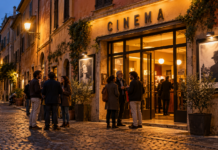
Cinema La Compagnia, on Via Cavour, is a strong address for documentary film, festivals and curated screenings. It gives cinema-minded visitors a reason to spend an evening beyond the restaurant table. La Compagnia
Read the screening details before booking. Original language does not automatically mean English dialogue, and subtitles may be Italian, English or absent. A question-and-answer session may also take place in Italian.
Festival screenings can have different booking arrangements from ordinary sessions. Check whether the ticket covers a single film, a group of screenings or a particular event.
Choose this ending if the program interests you, then arrange the afternoon to finish on the north bank. After the film, keep any further walk optional, particularly if you are catching a train or have already spent the morning sightseeing.
Teatro del Maggio Musicale Fiorentino
The Maggio offers opera and concert programming on a larger scale. Its modern theater lies west of the historic center, so the journey needs to be part of your plan. operadifirenze.it
Check the exact starting time, auditorium, approximate duration and any interval. Performances do not all begin at the same hour, and some take place in the afternoon.
Choose seats according to the performance and your preferences, using the official seating information. If you need accessible seating, assistance or language information, contact the theater before purchasing.
For this version of the day, reduce the shopping route and build in a proper break. Arriving rested helps you enjoy a full-length performance, especially after a museum visit earlier in the day.
The Main Afternoon-to-Evening Itinerary
This route suits travelers staying centrally who want art, independent books, Oltrarno shops and a relaxed evening. Concert dates and shop hours determine the final order.
| Time | Suggested stop | Planning note |
|---|---|---|
| 2–3:15 p.m. | Museo Novecento or Palazzo Strozzi | Choose one exhibition venue. |
| 3:30–4:15 p.m. | Todo Modo and Via de’ Fossi | Browse, then take a short break. |
| 4:15–5:45 p.m. | Cross the Arno and visit selected shops | Prioritize confirmed shop hours. |
| 5:45–6:30 p.m. | Santo Spirito area | Sit down for aperitivo or a soft drink. |
| Around 7 p.m. | Dinner near the evening venue | Adjust to the actual performance time. |
| Evening | A booked concert, or an unhurried walk | Use the organizer’s timetable. |
Start With One Exhibition
Arrive with a simple aim: see the exhibition or collection that interests you most. If the morning was already museum-heavy, shorten this stop or begin directly at Todo Modo.
Browse Before Crossing the River
Use Via de’ Fossi as the transition between formal art viewing and a less structured afternoon. Leave room for one unexpected book or shop window without adding another compulsory destination.
Put Working Shops Before Aperitivo
Go first to whichever workshop or shop matters most. If you want Il Torchio, arrange the crossing toward Via de’ Bardi; if your priority is Via dei Serragli, Ponte Santa Trinita may suit better. Visit the other address only if time and energy allow.
Let the Evening Set the Pace
For a Sala Vanni concert, remain in the Oltrarno and eat nearby. If there is no suitable event, keep dinner and a short walk as the evening itself. There is no need to replace a nonexistent concert with a rushed journey to something unrelated.
Expect roughly three to five kilometers of walking across the core route, depending on your museum choice, shop detours and evening destination. This is a planning estimate, excluding travel from your accommodation and the considerable walking you may already have done that morning.
Alternative Route: Santa Croce, Brac and Le Murate
Choose the eastern route if contemporary-art books, small design businesses and an interdisciplinary arts venue appeal more than crossing into the Oltrarno.
Begin around Via dei Neri with Florence Factory, then continue to Brac for browsing and a planned meal or break. Build the order around kitchen hours and your table reservation.
Continue east toward Le Murate, a former prison complex transformed through urban redevelopment. MAD—Murate Art District—presents contemporary exhibitions, performances, meetings and other cultural projects within this wider setting. FeelFlorence
Check MAD’s actual program before going. A venue devoted to research and artistic production does not necessarily offer the same experience every day, and access to an exhibition is separate from admission to a scheduled activity.
At the time of checking, MAD lists regular afternoon opening from Tuesday through Saturday, with closure on Sundays, Mondays and holidays. Verify current access and last-entry arrangements for your visit. Murate Art District
Spend the evening in the eastern center if there is an event you want to attend. Otherwise, return toward your dinner booking. Adding the full Oltrarno route to this afternoon would sacrifice much of the time that makes these stops worthwhile.
Alternative Route: Manifattura Tabacchi
Manifattura Tabacchi provides another perspective on contemporary Florence: the reuse of a former industrial complex as a district incorporating shops, food, services and cultural activity. manifatturatabacchi.com
Its scale and location make it a destination to plan around. Choose it because an exhibition, event, business or architectural interest gives you a reason to go.
Check the current directory and calendar. The complex contains different operators with their own hours, and access to the district does not guarantee access to every interior or exhibition space.
Allow a substantial afternoon rather than adding it between central appointments. Compare bus, tram-and-walk or taxi options from your actual starting point, using current journey information.
An event here can carry the visit into the evening. Without one, browsing and a meal may still appeal, but assess the current offering before committing the time. This version is especially useful for a return visitor interested in Florence beyond its monumental center.
Practical Details That Make the Day Work
Arrive by Train Where Possible
Firenze Santa Maria Novella is a convenient arrival point for the main route. Before leaving, check the return train and the time needed to reach the station from your final venue.
For a concert ending late, an overnight stay may be more comfortable than arranging the entire evening around the last useful departure. Our guide to Tuscany without a car helps place Florence within a longer rail-and-bus trip.
Keep the Car Outside the Central Route
Florence’s restricted traffic zone, or ZTL, requires attention. A restaurant or hotel reservation does not by itself authorize unrestricted driving through the center.
If staying at a hotel within the ZTL, ask the property for the permitted approach and vehicle-registration procedure before arriving. Otherwise, consider parking outside the restricted area and continuing by public transport. Check current official rules rather than following a navigation app into an unfamiliar street. FeelFlorence
Shorten the Walk When Needed
Compact distances can become tiring after hours of museum standing. Choose one bank of the river, two principal stops and a reserved dinner, then use a taxi for the evening journey if helpful.
Historic paving, thresholds, stairs and crowded pavements can affect access. Contact individual venues about step-free entry, lifts and suitable seating; the fact that a business is inside the historic center tells you little about its interior.
Adjust for Weather and Season
In summer, move exposed walking later and protect time for indoor breaks. In winter, treat dusk as an early part of the afternoon rather than assuming a long daylight stroll after shopping.
For rain, a bookshop, exhibition and nearby meal make a strong combination. Check Sunday and holiday hours individually before building the day around small businesses.
What to Book, and What to Leave Open
Book the event first, dinner second, and any exhibition requiring advance tickets third. Arrange workshop appointments separately when needed.
Leave ordinary browsing and the final stroll flexible. Too many small reservations make a short itinerary fragile: one late museum exit begins to affect every subsequent stop.
For spending, separate admission, food, transport and purchases. Check live exhibition and performance prices, then decide whether your priority is a major show, a more modest screening or a free evening walk. Craft purchases deserve their own budget because prices vary too widely for a useful universal allowance.
If you want to take something home, set a limit before browsing and save room in your bag. Ask about receipts, care and shipping for the specific object. One well-chosen piece is easier to enjoy than an afternoon spent accumulating things you did not particularly want.
Book Your Florence Stay and Experiences
Choose accommodation according to the evening you want. Santa Maria Novella is practical for rail arrivals and the western part of the center. Santo Spirito and San Frediano suit an Oltrarno-focused stay. Santa Croce works well for the eastern route.
Check the precise street, room position and recent noise comments before booking. Being close to evening activity can be convenient while also making a quiet room more important.
Compare the wider options in our guide to where to stay in Tuscany. If this visit forms part of a longer holiday, our 25 best places to visit in Tuscany can help balance Florence with smaller destinations.
For experiences, look for a small-group artisan walk or a bookbinding session with a clearly identified host. Confirm the language, group size, duration and what participation involves. Book performances through the official organizers listed below.
A printed guide can complement this contemporary itinerary with the city’s major sights: Rick Steves Florence & Tuscany emphasizes practical sightseeing, while Lonely Planet Florence & Tuscany provides another option for planning a wider regional trip. Check the edition before ordering.
As an Amazon Associate, Italia Mia earns from qualifying purchases, at no additional cost to you.
External Links
- Museo Novecento — museum and exhibition information.
- Palazzo Strozzi: Tickets and Opening Hours — current exhibition access.
- Todo Modo — independent books, reading space and food.
- Libreria Brac — books, kitchen and cultural program.
- Il Torchio — Florentine bookbinding.
- Albrici — antiques and decorative objects.
- Florence Factory — contemporary craft and design.
- MAD—Murate Art District — exhibitions and interdisciplinary events.
- Manifattura Tabacchi — directory and events.
- Musicus Concentus — concerts and venue details.
- Cinema La Compagnia — screenings and festivals.
- Maggio Musicale Fiorentino — opera and concerts.
- FeelFlorence: Driving and ZTL — official driving guidance.
- FeelFlorence: Buses and Trams — public transport information.