

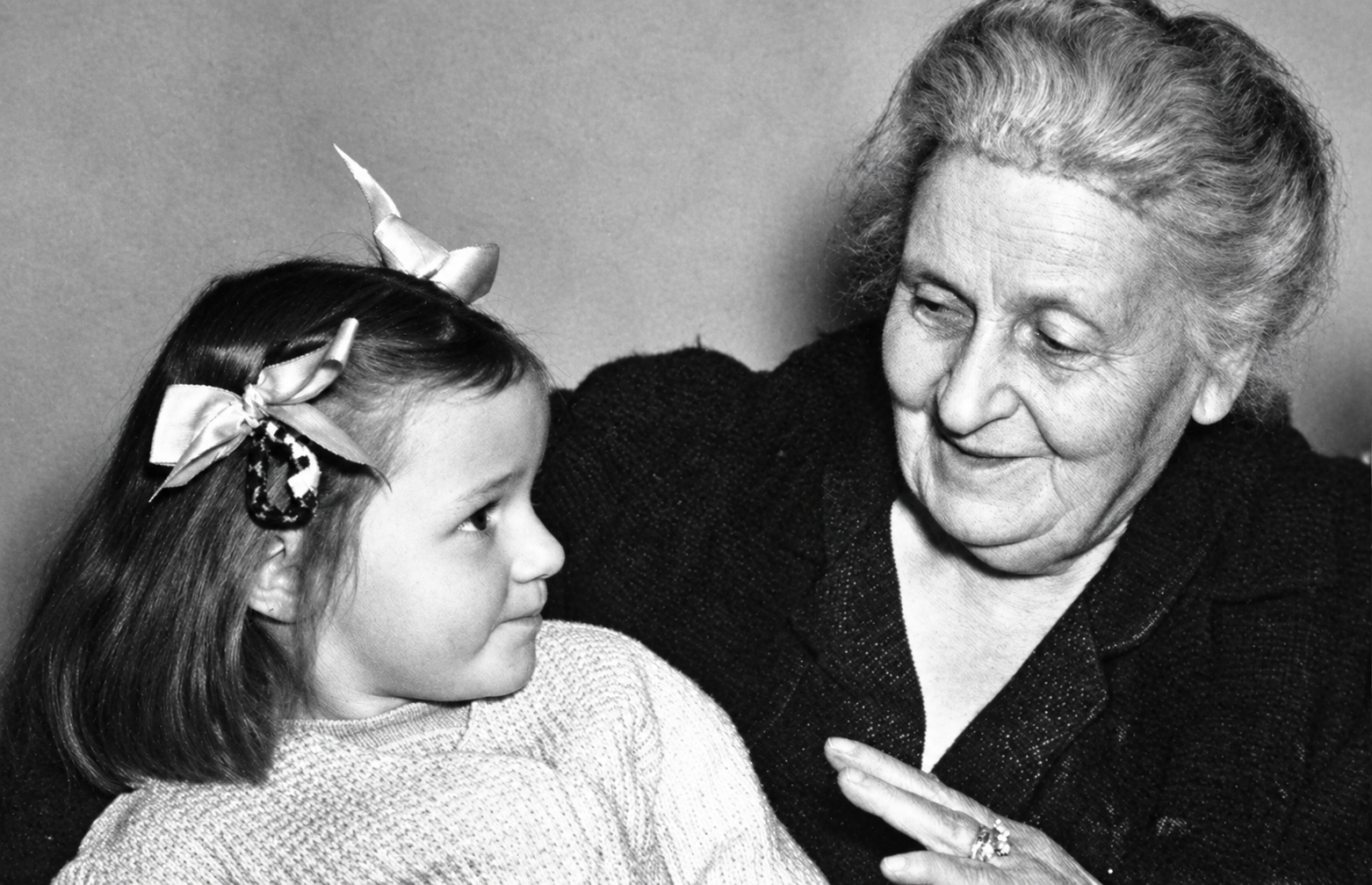
 Maria Montessori changed how the world understands childhood. An Italian physician, educator, researcher and advocate for women’s rights, she developed an educational approach based on close observation, purposeful activity and respect for each child’s natural development.
Her ideas challenged the authoritarian classroom of the early twentieth century. Instead of treating children as passive recipients of information, Montessori regarded them as active participants in their own education. She designed child-sized classrooms, self-correcting learning materials and practical exercises that encouraged independence, concentration and confidence.
Today, Montessori schools operate across continents, while elements of her method—from low shelves and hands-on materials to mixed-age classrooms—have influenced mainstream early-childhood education. Her achievement becomes even more remarkable when considered within the social restrictions faced by an ambitious Italian woman born in 1870.
Early Life in Chiaravalle and Rome
Maria Tecla Artemisia Montessori was born on August 31, 1870, in Chiaravalle, a small town in the Marche region near Ancona. Her father, Alessandro Montessori, worked as a civil servant, while her mother, Renilde Stoppani, came from an educated family and encouraged her daughter’s intellectual independence.
When Maria was still young, the family moved to Rome. Italian society offered women few professional possibilities, and teaching was considered one of the limited respectable careers available to them. Montessori, however, showed an early interest in mathematics and science.
As a teenager, she attended a technically oriented secondary school generally associated with male students. She initially considered engineering, an exceptionally unconventional ambition for an Italian woman at the time. She later studied physics, mathematics and natural sciences at the University of Rome before seeking admission to medicine.
Her path into medical school was difficult. Accounts of her life describe institutional resistance, social prejudice and the practical complications of studying anatomy in an overwhelmingly male environment. Nevertheless, she completed the program and received her medical degree in 1896.
Montessori is frequently called Italy’s first female doctor, but that description is not strictly accurate: other Italian women had earned medical qualifications before her. She was, however, unquestionably among the country’s earliest female physicians and one of the most visible women to enter the profession.
Her determination recalls the intellectual independence of Italian innovators such as Galileo Galilei, although Montessori confronted the additional barriers imposed upon women in education and professional life.
A Physician, Researcher and Advocate for Women
After graduating, Montessori worked at Rome’s Santo Spirito Hospital and became associated with the psychiatric clinic of the University of Rome. Her work brought her into contact with children who had intellectual and developmental disabilities and were frequently confined in institutions with little meaningful education.
The language used to describe these children during Montessori’s lifetime was often dehumanizing. Montessori recognized that many of their difficulties were being treated solely as medical problems when they also required an educational response.
She studied the work of French physicians Jean-Marc-Gaspard Itard and Édouard Séguin, who had experimented with sensory training and specially designed teaching materials. Montessori adapted and expanded some of their ideas, combining them with her medical observation of children’s behavior.
At the Orthophrenic School in Rome, where she worked with teachers and children, her pupils achieved results that surprised contemporary observers. Some were able to pass examinations normally taken by children in conventional schools.
Montessori drew a provocative conclusion. If children who had been dismissed as incapable could perform at this level, the greater question was why ordinary schools were failing to develop the potential of so many other children.
Her activities were not confined to medicine and education. Montessori participated in the growing Italian women’s movement and represented Italy at international women’s congresses in Berlin in 1896 and London in 1899. She spoke about women’s education, professional opportunity, equal pay and social reform.
At a time when Italian women did not possess national voting rights, her own career became a powerful demonstration of female intellectual and professional capability.
Maria Montessori and Her Son Mario
During her early medical career, Montessori formed a personal and professional relationship with the physician Giuseppe Montesano. In 1898 she gave birth to their son, Mario.
Because the couple was unmarried and an illegitimate birth could have destroyed Montessori’s professional position, Mario was initially placed with a foster family in the countryside. Maria visited him, but for years their relationship was not publicly acknowledged as that of mother and son.
The separation was one of the most painful episodes of her life. After the death of her mother, Montessori brought the adolescent Mario to live with her. In public, he was sometimes presented as a nephew or adopted son, but he eventually became her closest collaborator.
Mario accompanied his mother on her travels, helped conduct training courses and supported the international development of her educational work. After Maria’s death, he continued to lead the movement through the Association Montessori Internationale.
Their partnership helped transform what began as an experiment in Rome into a worldwide educational organization.
The First Casa dei Bambini
The decisive turning point came in 1907. Montessori was invited to organize a school for young children living in a working-class housing development in Rome’s San Lorenzo district.
The first Casa dei Bambini—Children’s House—opened at Via dei Marsi 58 on January 6, 1907. Its pupils were mostly children between the ages of two or three and six whose parents worked during the day.
The classroom became Montessori’s laboratory. Rather than beginning with a rigid theory and forcing children to follow it, she observed how they responded to different activities, objects and arrangements.
She noticed that children were strongly attracted to purposeful tasks. They repeated exercises voluntarily, worked with surprising concentration and often preferred meaningful activity to ordinary toys. When materials suited their developmental needs, they appeared calmer and more self-disciplined.
Montessori removed heavy desks and introduced furniture that children could move themselves. Materials were stored on low, accessible shelves. Washbasins, chairs, tables and household tools were adapted to children’s size.
The environment communicated a radical message: this space belonged to the children.
A second Casa dei Bambini soon followed, and visitors came to observe what was happening. Montessori described the experiment in her 1909 book Il metodo della pedagogia scientifica applicato all’educazione infantile nelle Case dei Bambini, later published in English as The Montessori Method.
Readers interested in her original ideas can find editions of The Montessori Method by Maria Montessori on Amazon.
How the Montessori Method Works
Montessori education is sometimes reduced to a collection of wooden learning materials, but the method represents a much broader understanding of childhood.
The prepared environment is one of its central principles. The classroom must be orderly, attractive, accessible and suited to the children’s stage of development. Everything has a purpose and a designated place.
Children are generally allowed to choose activities within carefully established limits. The teacher observes, presents materials and intervenes when necessary but avoids controlling every moment. Montessori preferred the term “directress” because the adult’s role was to guide children toward constructive independence.
Many Montessori materials isolate a single quality or difficulty. A child might arrange objects according to dimension, identify differences in color, trace sandpaper letters or use beads to understand mathematical relationships.
Materials often contain a built-in control of error. Children can recognize and correct mistakes without immediately depending on an adult to tell them whether they are right or wrong.
Practical-life exercises include pouring, fastening clothing, cleaning, preparing food and caring for the classroom. These are not treated as distractions from education. They develop coordination, concentration, sequencing and responsibility.
The principal areas of activity generally include:
Practical life: Everyday tasks that strengthen coordination, independence and care for the environment.
Sensorial education: Materials that refine the perception of size, shape, texture, sound, color, weight and other qualities.
Language: Spoken-language development, tactile letters, writing and reading activities.
Mathematics: Concrete materials that make quantities, place value and numerical operations visible.
Culture and science: Geography, biology, history, art and the child’s relationship with the natural and human world.
Mixed-age classrooms are another characteristic. Younger children learn by observing older classmates, while older children reinforce their knowledge by helping others. The classroom becomes a small community rather than a group in which every child must perform the same task simultaneously.
The Absorbent Mind and Sensitive Periods
Montessori believed that young children possess what she called an “absorbent mind”: an extraordinary capacity to acquire language, movement, social behavior and cultural patterns from their surroundings.
This absorption does not occur through conventional lectures. Children construct themselves through experience, repetition and interaction with their environment.
She also identified sensitive periods—phases during which children are especially receptive to particular kinds of learning. A strong interest in order, movement, language or small objects may reveal an underlying developmental need.
The adult’s responsibility is to recognize these periods and provide an appropriate opportunity. Montessori therefore opposed unnecessary interruption. A child deeply engaged in an activity was performing important developmental work, even when the exercise appeared simple to an adult.
Freedom in a Montessori classroom does not mean the absence of limits. Children are free to choose constructive work, move responsibly and repeat activities, but they may not harm others, misuse materials or disrupt the community.
For Montessori, genuine discipline developed from purposeful engagement and self-control rather than fear of punishment.
International Success
News of the Casa dei Bambini spread quickly. Montessori’s book was translated into multiple languages, and educators traveled to Rome to study her classrooms.
Montessori visited the United States in 1913 and received an enthusiastic welcome. Prominent supporters included inventor Alexander Graham Bell and his wife, Mabel. Montessori classrooms opened in several American cities, and her lectures attracted large audiences.
At the 1915 Panama-Pacific International Exposition in San Francisco, children worked in a classroom enclosed by glass, allowing visitors to observe the method in action. The “Glass Classroom” became one of the exhibition’s most discussed educational attractions.
The early enthusiasm in the United States later declined. Critics argued that the method was too structured, too individualistic or insufficiently supportive of imaginative play. William Heard Kilpatrick, an influential follower of philosopher John Dewey, published a particularly damaging critique.
Montessori education nevertheless continued to grow in Europe and found new audiences elsewhere. Its international revival after the Second World War would eventually make it one of the most recognizable educational movements in the world.
Montessori and Fascist Italy
Montessori’s relationship with Benito Mussolini’s regime was complicated and should not be simplified into either complete collaboration or immediate resistance.
During the 1920s, Mussolini’s government supported the expansion of Montessori education in Italy. The Opera Nazionale Montessori was established in 1924, and official approval provided opportunities to create schools and train teachers.
Montessori accepted this support, apparently hoping that it would allow her method to reach more children. The Fascist state, meanwhile, saw the international reputation of an Italian educational innovator as useful to its prestige.
The alliance contained a fundamental contradiction. Fascism demanded conformity, political indoctrination and obedience to the state. Montessori believed that education should cultivate independence, dignity and peace.
Relations deteriorated as the regime attempted to exercise greater control. Montessori refused to subordinate her movement completely to Fascist ideology. In 1934 she left Italy, and Montessori institutions were subsequently closed or suppressed by the regime.
This episode remains debated by historians. Her early willingness to work with Mussolini deserves critical examination, but so does the eventual incompatibility between her educational philosophy and totalitarian education.
Exile, India and Cosmic Education
After leaving Italy, Montessori lived in Spain, but the outbreak of the Spanish Civil War forced her to depart Barcelona in 1936. She subsequently settled in the Netherlands, which became an important center of the movement.
In 1939 Montessori traveled with Mario to India to conduct a training course. When Italy entered the Second World War on the Axis side, British authorities classified them as enemy aliens. Mario was temporarily detained, while Maria’s movements were restricted.
They nevertheless remained in India for several years, training teachers and developing new educational ideas. Contact with Indian intellectual and spiritual traditions helped broaden Montessori’s thinking about humanity, nature and peace.
Her concept of cosmic education, particularly influential at the elementary level, presented the universe as an interconnected whole. Children were invited to explore the history of the cosmos, the development of life, human civilization and the mutual dependence of living systems.
Montessori believed that education should help children understand both their freedom and their responsibility. Knowledge was not merely preparation for employment; it was a way of discovering one’s place within humanity and the natural world.
Education as a Path to Peace
The destruction caused by two world wars strengthened Montessori’s conviction that education was essential to peace.
She argued that peace could not be secured only through diplomatic agreements made after conflicts had begun. A peaceful society required human beings educated from childhood to exercise independence without dominating others.
Her later lectures connected children’s dignity with humanity’s future. When adults unnecessarily controlled, humiliated or silenced children, she believed they reproduced habits of submission and aggression. An education based on cooperation and respect could help create a different kind of society.
Montessori was nominated for the Nobel Peace Prize in 1949, 1950 and 1951. She never received the award, but the nominations reflected the international recognition of her work as more than a classroom technique.
The Association Montessori Internationale
Maria and Mario Montessori founded the Association Montessori Internationale in 1929. The organization was created to preserve the integrity of her educational principles, supervise teacher training and coordinate the movement’s international activities.
After the war, Montessori returned to Europe and resumed teaching and lecturing. She visited Italy again, where her contribution was publicly honored, and continued conducting international training courses despite her advanced age.
The Association Montessori Internationale remains headquartered in Amsterdam and supports training centers, educators and Montessori organizations around the world.
Montessori education is not controlled by a single global licensing authority, however. Schools using the name can differ substantially in teacher preparation, materials, classroom organization and fidelity to Maria Montessori’s principles. Parents considering a school should therefore look beyond the label and observe how the method is actually practiced.
Criticism and Continuing Debate
No educational method should be treated as beyond criticism. Some educators believe traditional Montessori classrooms give insufficient space to fantasy play, collaborative projects or adult-directed storytelling. Others question the cost and controlled use of specialized materials.
The emphasis on independent work can also be misunderstood. Well-run Montessori classrooms include social interaction, collective responsibility and peer learning, but these features may be less visible than individual activity.
Another difficulty is that the word “Montessori” is used by schools with widely varying standards. Outcomes depend on teacher training, classroom quality, family background and the consistency with which the approach is implemented.
Modern educational research has found support for several Montessori principles, including hands-on learning, orderly environments, meaningful choice and uninterrupted concentration. Evaluating the method as a whole remains more difficult because schools and studies do not always follow an identical model.
Montessori described her pedagogy as scientific because it emerged from systematic observation. Her work was innovative, but it developed before today’s standards for controlled educational research. Her conclusions should therefore be studied historically as well as tested against contemporary evidence.
Maria Montessori’s Books
Montessori communicated her ideas through lectures, training courses and numerous books. Her most influential works include The Montessori Method, The Absorbent Mind, The Secret of Childhood, The Discovery of the Child, Education and Peace and To Educate the Human Potential.
The Absorbent Mind offers one of the clearest introductions to her understanding of early development. The Secret of Childhood examines how adult behavior can either support or obstruct the child’s inner growth. Education and Peace reveals the larger ethical and political purpose behind her pedagogy.
Several English editions and collections can be found through these affiliate searches:
The Absorbent Mind by Maria Montessori on Amazon
The Secret of Childhood by Maria Montessori on Amazon
Education and Peace by Maria Montessori on Amazon
Maria Montessori’s Final Years and Death
Montessori spent her final years in the Netherlands while continuing to travel, lecture and plan new work. She remained intellectually active and concerned with the social responsibilities of education.
Maria Montessori died in Noordwijk, the Netherlands, on May 6, 1952, at the age of eighty-one. She was buried there rather than returned permanently to Italy, a choice reflecting the international character of her life and work.
Her tomb bears a message asking children to join her in building peace among humanity and throughout the world.
Mario Montessori continued her work as director general of the Association Montessori Internationale until his death in 1982. Later generations of the Montessori family also became involved in training, research and the preservation of her legacy.
Places Associated with Maria Montessori in Italy
Chiaravalle remains the principal destination for those interested in Montessori’s birthplace and childhood. Her family home has become a museum and study center operated in connection with the Fondazione Chiaravalle Montessori.
Rome contains several important locations from her professional life. The most historically significant is Via dei Marsi 58 in San Lorenzo, where the first Casa dei Bambini opened in 1907.
The neighborhood is easily reached while exploring the capital. ItaliaMia’s guide for first-time visitors to Italy provides practical ideas for including Rome in a broader journey.
The Opera Nazionale Montessori, also based in Rome, promotes training, research and awareness of Montessori’s Italian heritage.
These places reveal an important aspect of her story: a worldwide educational movement began not in a privileged private academy but among young children living in a working-class Roman neighborhood.
Why Maria Montessori Still Matters
Maria Montessori’s greatest achievement was not simply the invention of classroom materials. She transformed the way adults were invited to look at children.
She asked teachers and parents to replace impatience with observation. She showed that independence could be encouraged through an environment adapted to the child. She recognized concentration as something to protect rather than interrupt and treated practical competence as an essential part of intellectual growth.
Montessori was not a flawless figure, and her method is not the only valid approach to education. Her relationship with Fascist institutions, the limits of some of her theories and the uneven use of her name all require thoughtful examination.
Nevertheless, her central insight retains its force: children possess capacities that adults often fail to recognize because the world has been designed almost entirely around adult expectations.
From Chiaravalle and Rome to classrooms across Europe, Asia, Africa and the Americas, Maria Montessori created one of Italy’s most influential contributions to modern education. Like Leonardo da Vinci, she combined careful observation with the courage to question established habits.
More than seventy years after her death, children still pour water from small pitchers, trace textured letters, arrange numerical beads and learn to care for shared spaces in classrooms shaped by her vision. Each activity embodies her enduring belief that education should help human beings become capable, responsible and free.
External Sources
Association Montessori Internationale: Biography of Maria Montessori
Association Montessori Internationale: Timeline of Maria Montessori’s Life
Opera Nazionale Montessori: Maria Montessori
Encyclopaedia Treccani: Maria Montessori
Nobel Prize Nomination Archive: Maria Montessori
Stanford Encyclopedia of Philosophy: Maria Montessori
Maria Montessori’s Birthplace Foundation in Chiaravalle