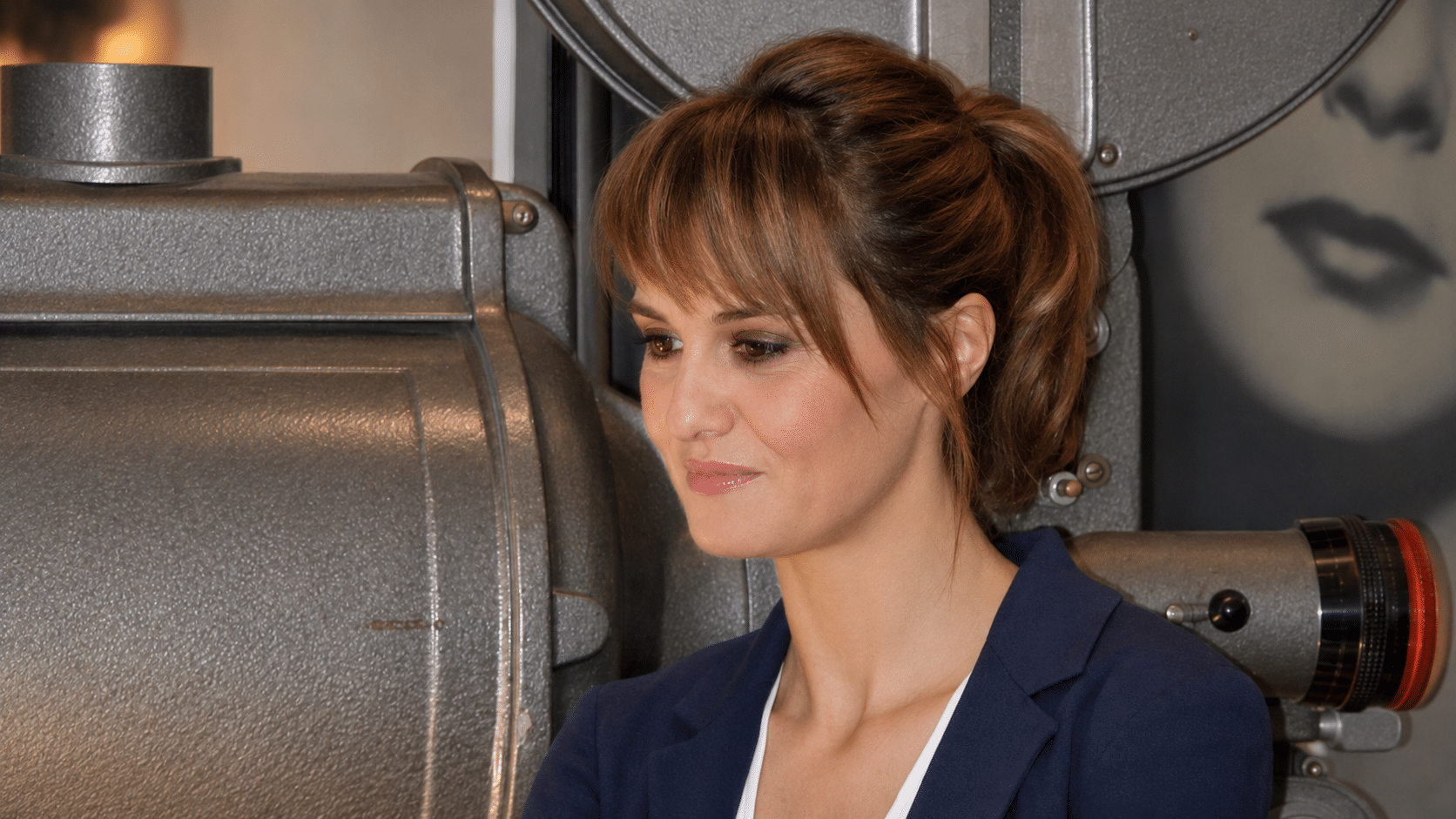
Paola Cortellesi made her name on Italian television by impersonating people audiences already knew. In her first film as a director, she asked them to spend two hours with someone they might have passed in the street without a second thought. Delia, the working-class Roman mother she plays in C’è ancora domani (There’s Still Tomorrow), earns money wherever she can, looks after three children and lives with a violent husband. She also has a wry sense of humor and a friend who knows exactly when to make her laugh.
By the time that film arrived in 2023, Cortellesi had won a David di Donatello for acting, toured Italy with a one-woman play and co-written several of her own films. Her route to directing ran through variety shows, backstage collaborations and comedies about work, money and family. You can hear that experience in the way she writes an argument and see it in how long she lets a reaction play before cutting away.
From Roman Theater Training to Television Comedy
Born in Rome in 1973, Cortellesi studied acting at Beatrice Bracco’s school and worked in theater, radio and television before finding a national audience around 2000. The satirical programs Mai dire Gol and Mai dire Grande Fratello brought her into the orbit of the Gialappa’s Band comedy team. Her impersonations drew on a musician’s ear for rhythm and phrasing. Singers such as Giorgia and Carmen Consoli gave her voices that viewers could recognize within a few beats.
In 2004, she joined Simona Ventura in presenting the 54th Festival di Sanremo. That year she also created and hosted Nessundorma, followed in 2008 by Non perdiamoci di vista. Later came Zelig, which she co-hosted with Claudio Bisio, and Laura & Paola, a 2016 Rai 1 variety show with Laura Pausini that mixed songs, sketches and monologues. Those programs gave her room to work as a presenter and as a performer who could carry a scene with a change of voice or a well-placed pause.
A One-Woman Play and a Breakthrough Film Role
Cortellesi began appearing in films while she was becoming familiar on television. She played alongside the comedy trio Aldo, Giovanni and Giacomo in Chiedimi se sono felice (2000) and returned to work with them in Tu la conosci Claudia? (2004). A stage role from the same period offers another way into her career. From 2005 to 2007 she toured with Massimiliano Bruno’s Gli ultimi saranno ultimi, a one-woman show in which she voiced multiple characters in a story about precarious employment. She received an Italian theater award for the performance.
Bruno also directed Nessuno mi può giudicare (2011), the film that brought Cortellesi her first David di Donatello for Best Actress. She plays Alice, a wealthy Roman widow who discovers that her husband has left her in debt and starts working as an escort to support herself and her son. Alice is privileged, judgmental and very funny when she finds herself out of her depth. Cortellesi lets those qualities coexist, which gives Alice room to change without making her transformation feel inevitable.
In 2015 Bruno adapted Gli ultimi saranno ultimi for the screen, with Cortellesi as a co-writer and lead actor. Her character, Luciana, is a factory worker whose contract goes unrenewed after she becomes pregnant. Seeing the two films together shows how much range there is in Cortellesi’s comic timing. Alice can talk her way through an awkward encounter. Luciana has to reckon with how little control she has over a decision that will alter her life.
Writing Comedy About Work, Class and Family
In Riccardo Milani’s Scusate se esisto! (2014), which she co-wrote, Cortellesi plays Serena Bruno, a talented architect who returns to Italy after working abroad. She ends up letting people believe the architect behind her proposal is a man. Much of the comedy comes from Serena having to maintain the fiction as people take her ideas seriously under someone else’s name. Raoul Bova plays Francesco, the friend she draws into the deception.
Milani’s Come un gatto in tangenziale (2017), another film Cortellesi co-wrote, brings two Roman families together when their teenage children start dating. Cortellesi plays Monica, who lives on the urban outskirts. Antonio Albanese plays Giovanni, who works on social integration and finds his ideas tested once a relationship between the two families becomes his own business. Their exchanges work because Monica is every bit as quick to size up Giovanni as he is to make assumptions about her. The pair returned for a sequel in 2021.
Cortellesi could bring the same attention to domestic detail to someone else’s screenplay. In Figli (2020), written by Mattia Torre, she and Valerio Mastandrea play parents whose daily life becomes unmanageable after the birth of their second child. That year she also began playing police inspector Petra Delicato in Petra, the Genoa-set television series based on novels by Spanish writer Alicia Giménez Bartlett. As Petra, she uses silence and an impatient look to get across what an earlier comic character might have said out loud.
Directing There’s Still Tomorrow
Cortellesi co-wrote her 2023 directing debut with Furio Andreotti and Giulia Calenda. It opened the Rome Film Fest and takes place in Rome in 1946. Cortellesi plays Delia, Valerio Mastandrea plays her husband Ivano, and Romana Maggiora Vergano plays their eldest daughter, Marcella. Emanuela Fanelli is Marisa, the friend with whom Delia can speak freely. A letter arrives that gives Delia a reason to imagine a different future. The less you know about that letter before watching, the better.
The black-and-white photography and working-class Roman setting recall postwar Italian cinema. The soundtrack and staging are freer with period conventions. In one unsettling sequence, Cortellesi uses music and choreography to depict domestic violence. The stylized movement makes the abuse feel like a routine Ivano expects Delia to follow. In the scenes between Delia and Marisa, the two women’s easy banter gives the audience a sense of how Delia might sound if she could speak that freely at home.
Cinetel recorded €32.9 million in Italian ticket sales for the film in calendar year 2023. In 2024, it won six David di Donatello awards. Cortellesi won Best Directorial Debut and Best Actress and shared Best Original Screenplay with Andreotti and Calenda. Fanelli won Best Supporting Actress, and the film received both the audience and youth awards. Italia Mia’s guide to There’s Still Tomorrow covers the film in more depth, including viewing options.
Paola Cortellesi’s Second Film
Filming on Cortellesi’s second feature as director began in Rome in September 2026. Produced by Our Films, the project has been reported under the working title Tutto quello che conta, with an Italian theatrical release expected around Christmas 2027. Cortellesi again wrote the screenplay with Andreotti and Calenda. The title and release timing are provisional.
What to Watch First
| Title | Year | Why start here |
|---|---|---|
| Nessuno mi può giudicare | 2011 | Her first David-winning role pairs broad comedy with a sharp portrait of a woman losing her social footing. |
| Scusate se esisto! | 2014 | A good introduction to Cortellesi as both comic lead and co-writer. |
| Gli ultimi saranno ultimi | 2015 | The screen adaptation of her stage hit shows her playing a worker with fewer and fewer options. |
| Come un gatto in tangenziale | 2017 | Her exchanges with Antonio Albanese show how much of her comedy comes from listening and reacting. |
| Petra | 2020 debut | A quieter performance in a detective series set in Genoa. |
| C’è ancora domani (There’s Still Tomorrow) | 2023 | Her directing debut brings together the concerns that run through her earlier work, including paid labor, family obligations and who gets heard. |
If you came to Cortellesi through There’s Still Tomorrow, go back to Scusate se esisto! and watch Serena listen as others discuss her own work. The tone is lighter, but the scene shares Delia’s predicament in one respect. Both women know what they can do, and both have to work out how to make themselves heard. For a wider view of the generation she belongs to, see Italia Mia’s guide to 21st-century Italian actresses.
External Links
- Treccani’s Paola Cortellesi biography and Rai’s profile of her television work
- Rai News introduction to Laura & Paola
- Filmitalia’s Paola Cortellesi filmography and Sky’s official introduction to Petra
- Massimiliano Bruno’s guide to Nessuno mi può giudicare
- Rome Film Fest’s C’è ancora domani program entry and the official English-subtitled trailer
- Cinetel’s Italian box-office figures and the David di Donatello awards archive
- Italy for Movies’ production listing for Tutto quello che conta and ANSA’s report on the second film