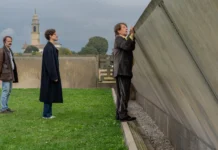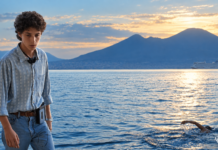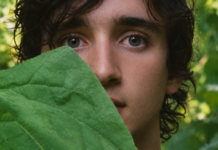
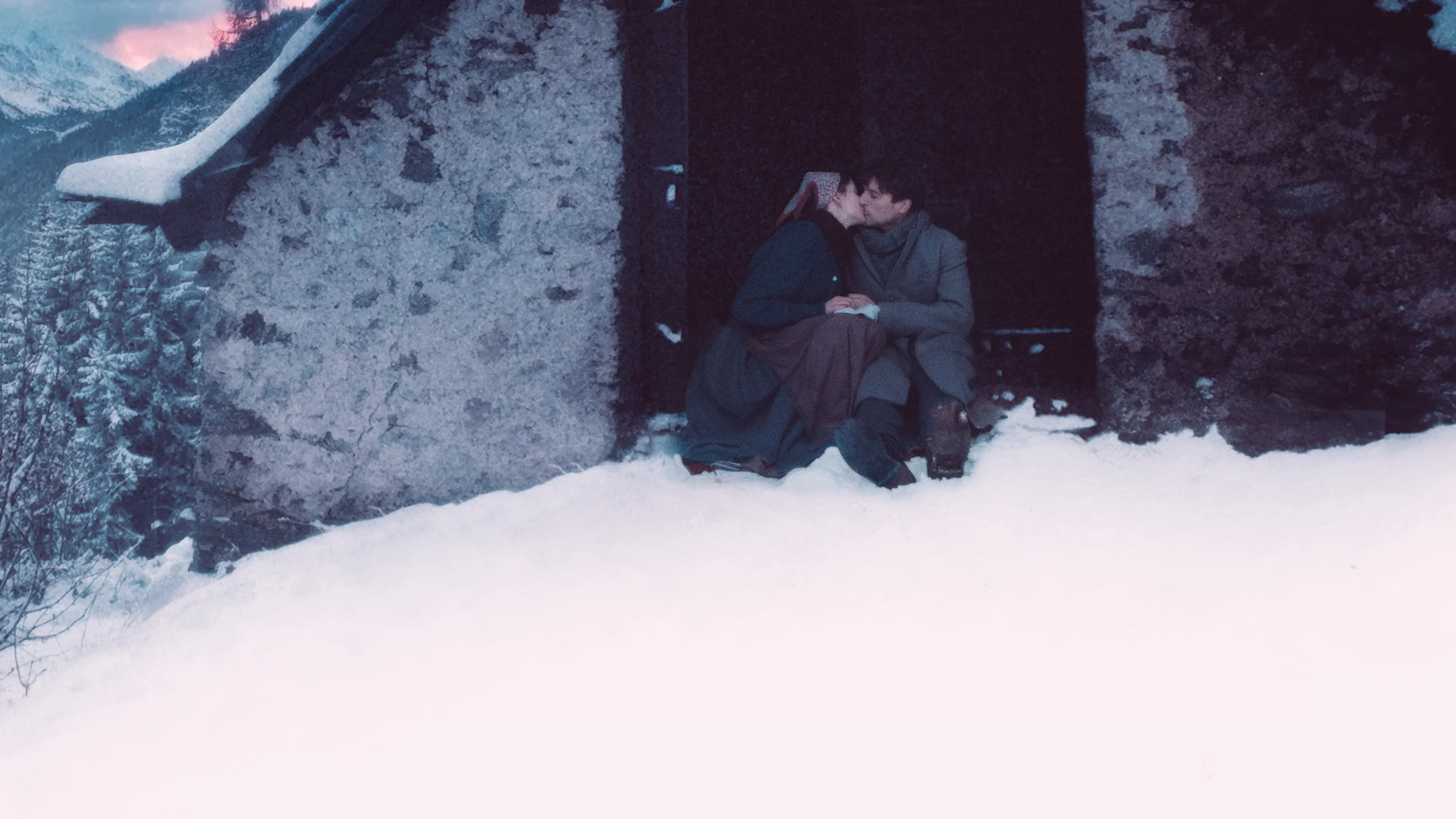
 Vermiglio (2024), written and directed by Maura Delpero, tells a wartime story through the people who remain at home. Set in an Alpine village, it follows a large family whose routines begin to shift after a soldier arrives. Love offers the promise of a different future. However, that promise carries consequences no one can fully foresee.
The film’s power comes from its attention to ordinary life. Lessons, meals, whispered conversations, and shared rooms reveal how this community works. Meanwhile, the mountains give the story both beauty and a sense of confinement.
For readers exploring Italia Mia’s best Italian movies, Vermiglio offers a compelling example of contemporary cinema rooted in a particular place. Its quiet approach asks for patience, then rewards it with emotional depth.
The Story
Spoiler notice: This section discusses the premise and central relationships without revealing the major twists or ending.
The story begins in 1944 in Vermiglio, a village in Trentino’s Val di Sole. The Second World War shapes daily life, even when the fighting remains outside the frame. Absence, uncertainty, and the arrival of people fleeing the conflict bring the wider world into the village.
At the center stands the Graziadei family. Cesare, the local schoolteacher, holds authority both in his classroom and at home. His wife, Adele, carries much of the work of raising their many children.
Then Pietro, a Sicilian soldier who has deserted the army, arrives with Attilio. His presence changes the household’s balance. Lucia, Cesare’s eldest daughter, develops feelings for him, and their relationship opens a door beyond the life she knows.
Yet Vermiglio gives equal weight to the people around this romance. Lucia’s sisters, Ada and Flavia, face their own questions about desire, faith, education, and belonging. Although they share a home, they do not imagine the same future.
The story unfolds across four seasons around the end of the war. This structure lets change emerge through small moments. A look across a room can matter as much as a spoken decision.
Delpero builds tension around the gap between what people know and what they hope. As a result, the film invites us to watch closely. Its central question reaches beyond whether a relationship will last: how much freedom can anyone claim within a family that has already decided their role?
Cast and Characters
Martina Scrinzi plays Lucia, whose attraction to Pietro becomes a central thread. Her restrained performance suits a character who cannot always speak openly. Lucia’s silences leave room for hope, uncertainty, and the pressure of family expectations.
Giuseppe De Domenico plays Pietro, the soldier whose arrival unsettles village life. He brings the experience of another region and the weight of a past that others cannot easily read. His reserve gives the romance an uneasy edge.
Tommaso Ragno plays Cesare, the schoolteacher and father. Education gives Cesare standing in the community, but knowledge does not make him free of contradictions. His authority raises a difficult question: does he prepare his children for independence, or for the lives he considers proper?
Roberta Rovelli plays Adele, the mother at the center of the household’s daily work. Her presence helps reveal the physical demands of family life. Through Adele, the film gives domestic labor a weight that period dramas sometimes overlook.
Rachele Potrich plays Ada, while Anna Thaler plays Flavia. Their characters broaden the story beyond Lucia’s romance. Each sister responds differently to the possibilities and restrictions around her.
The supporting cast includes Carlotta Gamba as Virginia, Orietta Notari as Aunt Cesira, and Santiago Fondevila Sancet as Attilio. Sara Serraiocco also appears. Together, experienced performers and screen newcomers create the sense of a community with lives extending beyond the main plot.
Awards and Recognition
Vermiglio won the Silver Lion – Grand Jury Prize at the 2024 Venice Film Festival. This award established the film as a major discovery of that year’s festival.
Its success continued at the 2025 David di Donatello Awards, where it received seven prizes:
- Best Film
- Best Director
- Best Original Screenplay
- Best Producer
- Best Cinematography
- Best Sound
- Best Casting
Maura Delpero also became the first woman to win the David di Donatello for Best Director. That milestone adds historical significance to the film’s achievement.
International recognition included a 2025 Golden Globe nomination for Best Motion Picture – Non-English Language.
Italy selected Vermiglio as its submission for the 2025 Academy Awards, and it reached the 15-film shortlist for International Feature Film. However, it did not receive a final Oscar nomination. The distinction matters when describing its awards history.
These honors reflect several strengths working together. The directing and screenplay shape the family drama, while the photography, sound, and casting make its world feel inhabited.
How the Film Was Made
Vermiglio grew from Delpero’s connection to her father and his family’s village. In her director’s statement, she describes dreaming of him as a young child after his death. That image helped inspire a story about the household and community from which he came.
The film draws on family memory, but it is a work of fiction. Delpero uses that personal connection to explore a wider experience: the lives of people whose wartime histories often remain within homes and families.
Filming took place in Val di Sole. The setting gives the story a strong sense of physical reality. Snow, wood, stone, and the changing seasons shape how people move and live.
Cinematographer Mikhail Krichman gives the landscape a striking presence. At the same time, the interiors keep our attention on shared space. Privacy is limited, and a family member may be close enough to hear what someone would prefer to hide.
The film uses Italian and local dialect, preserving the importance of regional speech. Language helps locate the characters within their community and makes Pietro’s arrival from Sicily feel more distinct.
Delpero also combines experienced actors with newcomers. That choice supports the film’s close attention to everyday behavior. Gestures and pauses often carry the meaning that another drama might place in a speech.
An Italian, French, and Belgian production, Vermiglio runs approximately 119 minutes. Its measured pace gives the audience time to notice how relationships change before the characters can name those changes.
Why It Still Matters
Vermiglio examines a familiar tension: a family can provide security while limiting the people within it. Care and control do not always arrive separately. Sometimes they come from the same person.
The sisters make this tension especially clear. Their futures depend on more than talent or desire. Education, money, religious expectations, and family decisions all influence which paths remain open.
The film also asks us to reconsider what counts as a war story. Here, the effects of conflict emerge through waiting, disrupted relationships, and uncertain futures. The household becomes a place where history leaves lasting marks.
Its treatment of rural life is equally thoughtful. The village offers connection and continuity, but it also leaves little room for privacy. Delpero lets these qualities coexist without turning the community into either a paradise or a caricature.
For me, the most interesting way to approach Vermiglio is to watch who gets to make decisions. Who can leave? Who can study? Who must adapt when someone else changes course? These questions give the film a relevance beyond its historical setting.
Viewers who enjoy reflective dramas will find much to consider. Those expecting constant action should approach it as a film of observation. Its emotional force builds through accumulated details.
That is what makes Vermiglio memorable. It gives full attention to people whose lives might otherwise survive only as a few family stories.
Where to Watch or Buy
Availability checked on October 5, 2026. Catalogs and purchase options can change.
United States — subscription and library streaming
The Criterion Channel has a dedicated viewing page for Vermiglio. Its collection also includes an interview with Maura Delpero.
JustWatch’s U.S. listing lists Kanopy as another option. Access depends on whether your participating library or university provides the film.
United States — digital rental or purchase
Current U.S. listings show Amazon Video, Apple TV Store, and Fandango at Home for rental or digital purchase. These are separate transactions; an Amazon rental does not imply inclusion with Prime.
Use the U.S. availability guide to compare the current offers.
Italy — free streaming
In Italy, Vermiglio is listed on RaiPlay, with JustWatch identifying it as free streaming with advertising. Access can depend on location and the current viewing window.
Italy — digital rental or purchase
JustWatch’s Italian listing shows paid options through services including Apple TV Store, TIMVISION, CHILI, and Rakuten TV. Amazon Video also appears among purchase options. Check the individual listing for the transaction offered.
DVD and Blu-ray
The U.S. Criterion Premieres edition is available on DVD and Blu-ray, with a director interview and trailer. Italian DVD and Blu-ray editions are also listed by retailers.
Browse Vermiglio DVD and Blu-ray editions on Amazon.com or Vermiglio editions on Amazon.it. These are search links, so compare the exact edition, subtitles, and disc compatibility before buying.
Watching while traveling
If you use a VPN for privacy while traveling, you can explore NordVPN through Italia Mia’s affiliate link. A VPN does not guarantee access to RaiPlay or another service; regional rights and platform terms still apply.
Affiliate disclosure: Italia Mia may earn a commission from qualifying purchases through the Amazon and NordVPN links, at no extra cost to you.
External Sources
- La Biennale di Venezia: Vermiglio and the director’s statement
- La Biennale: Vermiglio’s seven David di Donatello awards
- Golden Globes: Vermiglio
- Academy: 97th Oscars shortlists
- Janus Films: Vermiglio
- Criterion: film details and physical editions
- Official press kit
- Comune di Vermiglio: filming in Val di Sole
- Italian DVD and Blu-ray listings
- U.S. viewing options
- Italian viewing options