

 Italian Fashion Designers: The People Behind Made in Italy
Italy and fashion have been connected for centuries. Long before Milan became an international fashion capital and before the phrase “Made in Italy” became a global mark of quality, Italian cities were already famous for textiles, tailoring, leatherworking, embroidery and luxury craftsmanship.
Today, Italian fashion designers are among the most influential names in the history of modern clothing. Giorgio Armani changed the way men and women dress for business. Gianni Versace turned fashion into spectacle. Miuccia Prada challenged conventional ideas about luxury. Valentino Garavani made romantic elegance an international language, while Salvatore Ferragamo transformed footwear into an art form.
Other designers and families created equally important traditions. Gucci grew from a Florentine luggage shop into a global luxury house. Fendi helped establish Rome as a center of modern luxury. Zegna built an international reputation around textiles and menswear. Missoni made colorful knitwear unmistakably Italian, while Moschino brought humor and irony to the runway.
The result is much more than a collection of famous labels. Italian fashion represents a particular approach to design: craftsmanship combined with creativity, tradition combined with experimentation, and elegance combined with practicality.
For a broader introduction, see Italia Mia’s guide to Italian Fashion: An Introduction.
How Italy Became a Fashion Superpower
Italy’s fashion industry did not appear overnight.
The country’s long tradition of luxury craftsmanship can be traced to the Renaissance and even earlier. Florence, Venice, Milan, Rome and Naples developed specialized industries producing silk, wool, leather, shoes, jewelry and clothing for wealthy customers.
Renaissance courts were important consumers of luxury textiles and clothing. Paintings by artists such as Raphael and Titian provide visual evidence of the elaborate clothing worn by Italy’s wealthy and powerful families.
Yet modern Italian fashion developed particularly strongly after World War II.
1Florence and the birth of modern Italian fashion
One of the most important events occurred in Florence in 1951, when Giovanni Battista Giorgini organized a fashion presentation designed to introduce Italian designers to international buyers and journalists.
The initiative helped establish Italy as an alternative to Parisian haute couture.
Florence became associated with elegant but relatively wearable clothing, while Italian designers increasingly demonstrated that luxury could be sophisticated without being excessively formal.
The development of Italian fashion accelerated during the postwar economic boom.
2Milan takes the lead
By the 1970s and 1980s, Milan had become the center of Italian ready-to-wear fashion.
Designers and companies based in Milan developed a model that combined industrial production with sophisticated craftsmanship. This was one of the keys to Italy’s success.
Rather than relying exclusively on traditional couture, Italian fashion houses developed collections that could be manufactured at scale while maintaining high standards of design and materials.
The Camera Nazionale della Moda Italiana, established in the late 1950s and reorganized in the early 1960s, became an important institution in coordinating and promoting Italian fashion.
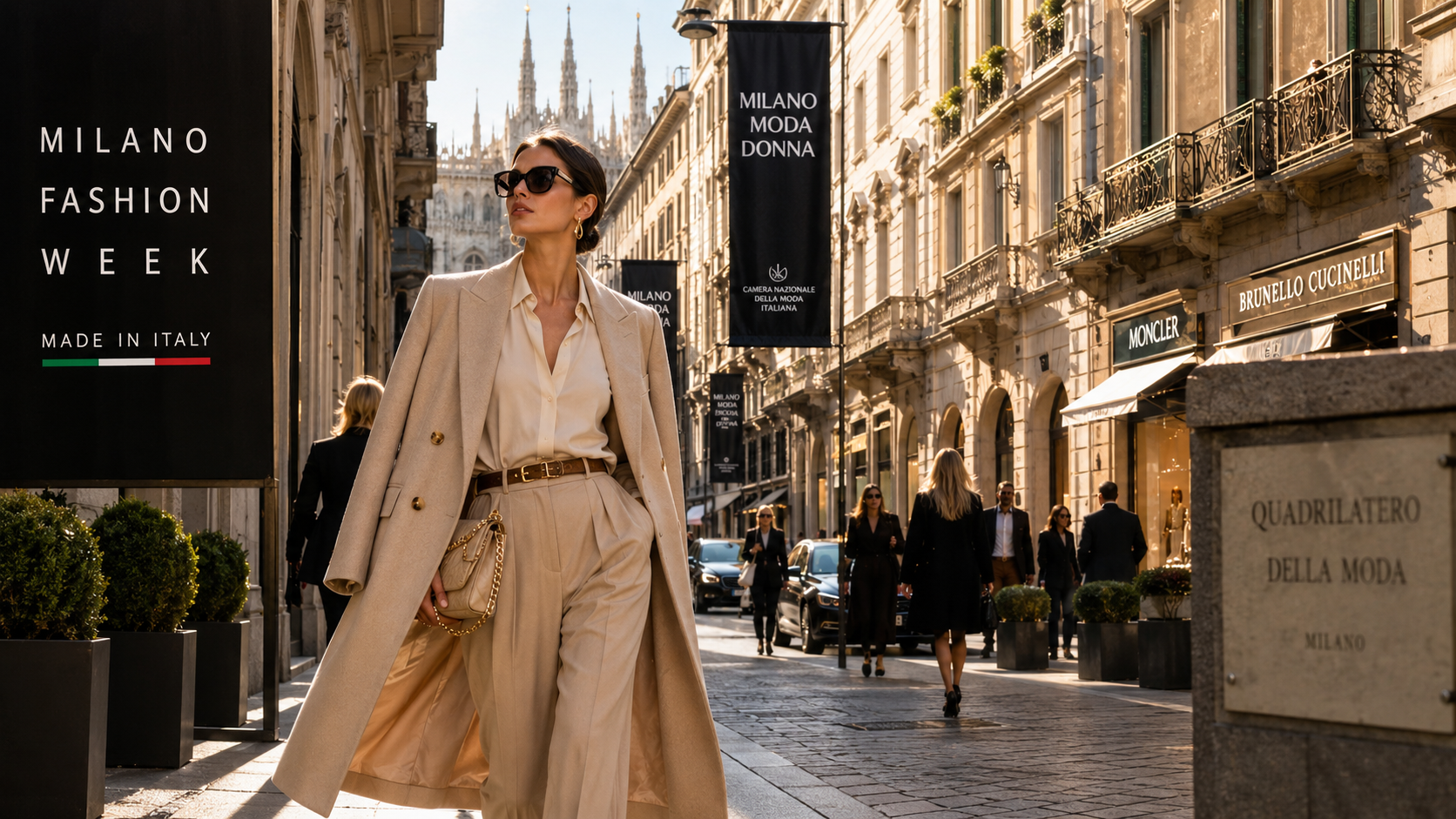
Today, Milan Fashion Week remains one of the major events in the international fashion calendar. The Camera Nazionale della Moda Italiana coordinates hundreds of shows, presentations and industry events and promotes both established Italian maisons and emerging designers.
What Makes Italian Fashion Different?
There is no single Italian fashion style.
That is one of the most interesting characteristics of the country’s fashion industry.
Armani represents understated sophistication. Versace is associated with glamour and sensuality. Prada is intellectually experimental. Dolce & Gabbana often draws on Mediterranean and Sicilian imagery. Valentino represents romantic couture. Ferragamo is strongly associated with footwear and leather craftsmanship.
Despite these differences, several characteristics appear repeatedly.
3Craftsmanship
Italian fashion houses traditionally maintain close relationships with specialized manufacturers and artisans.
Leather goods, shoes, tailoring, silk, knitwear and textiles are produced in specialized districts throughout the country.
4Quality materials
Italian fashion has long placed enormous emphasis on fabrics and materials.
The Biella area in Piedmont, for example, became internationally important for fine wool and textile production. Ermenegildo Zegna began his textile business in Trivero in 1910, with a vision centered on producing exceptional fabrics.
5Attention to construction
The difference between an ordinary garment and an exceptional one is often found in details that are invisible to the casual observer: stitching, lining, construction, fabric weight, pattern placement and finishing.
This is particularly important in Italian tailoring and footwear.
6The connection between fashion and lifestyle
Italian fashion rarely exists in isolation.
Clothing is part of a larger lifestyle that includes architecture, automobiles, furniture, food, travel, art and design.
This explains why the idea of Made in Italy has become much broader than clothing.
The Greatest Italian Fashion Designers
The following designers and fashion families represent some of the most important chapters in the development of Italian fashion.
1. Giorgio Armani
Few designers have had a greater impact on modern clothing than Giorgio Armani.
Born in Piacenza in 1934, Armani founded his own fashion company in Milan in 1975. His vision was radically different from the rigid formal tailoring that had dominated much of traditional menswear.
Armani introduced softer construction, relaxed tailoring and fluid silhouettes.
His suits could look formal without feeling restrictive.
The Armani aesthetic became synonymous with understated luxury: muted colors, sophisticated fabrics, clean lines and a deliberate absence of unnecessary decoration.
The company’s own history describes Armani’s central idea as moving beyond the rigid structure of traditional clothing toward a more natural relationship between fashion and everyday life.
Armani also understood the power of cinema. His clothing became strongly associated with Hollywood and international celebrities, further establishing the Armani image as the embodiment of modern sophistication.
The Armani empire subsequently expanded into numerous areas, including accessories, eyewear, fragrances, hotels and restaurants.
Signature: understated elegance, relaxed tailoring and sophisticated minimalism.
2. Gianni Versace
If Armani represented restraint, Gianni Versace represented the opposite.
Born in Reggio Calabria in 1946, Versace grew up surrounded by the fabrics and craftsmanship of his mother’s dressmaking business.
He founded his own company in Milan in 1978.
Versace brought color, sexuality, mythology, pop culture and theatricality onto the runway.
His designs frequently featured bold prints, metallic materials, body-conscious silhouettes and powerful colors.
The Medusa became the unmistakable symbol of the house.
Versace understood something fundamental about modern fashion: clothing could be entertainment.
His designs became particularly popular with musicians and celebrities, helping establish the modern relationship between fashion, music and celebrity culture.
Gianni Versace was murdered in Miami in 1997, but his influence on fashion remains enormous.
Signature: glamour, bold prints, sensuality, color and theatrical design.
3. Guccio Gucci and the Gucci Legacy
Guccio Gucci was not originally a fashion designer in the conventional sense.
He was a Florentine entrepreneur who founded Gucci in 1921.
After working at London’s Savoy Hotel, Gucci became fascinated by the luggage and sophisticated travel accessories used by wealthy international travelers. He returned to Florence and opened his own business specializing in luggage and leather goods.
The first Gucci boutique opened on Via della Vigna Nuova in Florence in 1921.
The company gradually developed from a leather-goods business into one of the world’s most recognizable luxury fashion houses.
Gucci’s history demonstrates an important characteristic of Italian fashion: a fashion house does not necessarily begin with clothing.
Leather, luggage, shoes, accessories and craftsmanship can be the foundation of an international fashion empire.
The Gucci name became associated with equestrian influences, distinctive leather goods, the green-red-green stripe and the famous interlocking GG logo.
Signature: Florentine craftsmanship, leather goods, luxury accessories and constantly evolving creative direction.
4. Miuccia Prada
Miuccia Prada transformed the concept of luxury fashion.
The granddaughter of Prada founder Mario Prada, she inherited a company that had originally specialized in luxury travel goods.
Prada was founded in Milan in 1913, and the original store in the Galleria Vittorio Emanuele II sold luxury luggage and accessories.
Under Miuccia Prada, the company moved into a radically different creative direction.
One of her most influential innovations was the use of industrial-looking nylon in luxury fashion.
Instead of hiding utilitarian materials, Prada made them desirable.
Her work often combines apparently contradictory ideas:
- luxury and practicality
- traditional and futuristic
- feminine and masculine
- beautiful and deliberately awkward
- classic and experimental
Miu Miu, created as a sister brand to Prada, provided another outlet for this experimental approach, particularly through more playful and youthful designs.
Signature: intellectual fashion, minimalism, unconventional materials and sophisticated experimentation.
5. Valentino Garavani
Valentino Garavani is one of the great masters of romantic Italian fashion.
Born in Voghera in 1932, Valentino studied in Paris before establishing himself in Rome.
His first atelier opened on Via Condotti, and Maison Valentino was officially established in 1960 with Giancarlo Giammetti.
Valentino became famous for spectacular evening gowns, sophisticated tailoring and extraordinary attention to detail.
His name became inseparable from a particular shade of intense red that came to be known simply as Valentino Red.
His clientele included royalty, actresses, socialites and political figures.
Among his most famous clients was Jacqueline Kennedy, whose relationship with Valentino helped establish the designer’s international reputation.
Valentino retired from fashion in 2008, but the aesthetic vocabulary he created remains one of the defining chapters in Italian couture.
For a more detailed biography, see Valentino Garavani: The Life, Legacy & Lasting Impact of the Fashion Icon.
Signature: couture, romantic gowns, elegance, embroidery and Valentino Red.
6. Salvatore Ferragamo
If one designer could be called the great architect of Italian luxury footwear, it would be Salvatore Ferragamo.
Born in Bonito near Avellino in 1898, Ferragamo developed his skills as a shoemaker before moving to the United States.
He eventually worked with Hollywood stars and earned a reputation as the “shoemaker to the stars.”
Ferragamo returned to Italy and established his company in Florence. The company’s first major corporate foundation dates to 1927, when Salvatore Ferragamo Italia was established to produce women’s footwear.
Ferragamo experimented extensively with footwear construction and materials.
Among his most famous innovations was the cork wedge.
His clients included some of the most famous women of the twentieth century.
The company later expanded into leather goods, clothing, accessories, fragrances and other luxury products.
Florence remains central to the Ferragamo identity.
For more about the broader tradition behind Italian leather, see Italian Leather and Where to Buy Leather Goods in Italy.
Signature: footwear innovation, craftsmanship, leather and sophisticated Italian luxury.
7. Domenico Dolce and Stefano Gabbana
Dolce & Gabbana brought a highly recognizable Mediterranean identity to international fashion.
Domenico Dolce was born in Sicily, while Stefano Gabbana was born in Milan.
They began working together and established Dolce & Gabbana in 1985.
Their aesthetic frequently draws on Sicilian culture, Catholic imagery, Mediterranean landscapes, traditional tailoring and dramatic femininity.
Black lace, corsets, floral prints, leopard patterns and sharply tailored suits became part of the house’s visual vocabulary.
The designers also helped establish Italian fashion as a powerful presence in celebrity culture.
Signature: Sicilian inspiration, sensuality, lace, dramatic tailoring and Mediterranean glamour.
8. Roberto Cavalli
Roberto Cavalli developed one of the most immediately recognizable visual styles in Italian fashion.
Born in Florence in 1940, Cavalli became famous for innovative textile printing techniques, particularly on leather and denim.
Animal prints, exotic textures, decorated denim and glamorous silhouettes became central to his aesthetic.
His fashion was designed for a confident, extravagant customer.
Cavalli’s designs became particularly prominent during the 1990s and early 2000s, when celebrity culture and luxury nightlife were increasingly influencing fashion.
His contribution to Italian fashion was important because he demonstrated that Italian luxury could be flamboyant, sensual and deliberately excessive.
Signature: animal prints, leather, denim, glamour and extravagant patterns.
9. The Missoni Family
Missoni represents one of the greatest Italian fashion success stories built around knitwear.
Tai and Rosita Missoni founded the company in 1953.
Rather than focusing primarily on traditional tailoring, the Missonis transformed knitted fabrics into sophisticated high fashion.
Their colorful zigzag patterns, stripes and complex geometric designs became instantly recognizable.
Missoni demonstrated that knitwear could be luxurious, artistic and highly sophisticated.
The company also became an important example of the Italian family fashion business, with different generations contributing to its evolution.
Signature: knitwear, geometric patterns, color and distinctive zigzag designs.
10. Franco Moschino
Franco Moschino brought something unusual to Italian fashion: humor.
Moschino founded his company in 1983 and quickly became known for questioning the seriousness and self-importance of the fashion industry.
His designs could resemble advertisements, uniforms, toys or jokes.
He used irony to challenge the idea that luxury fashion always had to be solemn.
Moschino’s approach influenced a later generation of designers who incorporated humor, popular culture and social commentary into high fashion.
Signature: irony, humor, pop culture, satire and unexpected design.
11. Ermenegildo Zegna
The Zegna story is different from that of many Italian fashion houses.
Its foundation is textile manufacturing.
Ermenegildo Zegna established his wool mill in Trivero in 1910 with the ambition of producing some of the world’s finest fabrics.
That obsession with textiles eventually developed into a complete luxury menswear business.
Zegna became particularly famous for exceptional wool, cashmere and sophisticated tailoring.
The company illustrates the importance of the Italian manufacturing system: sometimes the designer’s greatest contribution is not the silhouette but the material itself.
Signature: luxury menswear, fine wool, tailoring and textile innovation.
12. Emilio Pucci
Emilio Pucci was an aristocrat, politician, athlete and fashion designer.
Born in 1914, Pucci became famous for brightly colored geometric patterns.
His designs captured the optimism and energy of the postwar era.
Pucci’s clothing was particularly suited to the jet age: elegant but colorful, sophisticated but relaxed.
His distinctive prints remain one of the most recognizable visual signatures in twentieth-century Italian fashion.
Signature: geometric prints, brilliant colors, resort wear and the jet-set lifestyle.
13. Fendi and the Fendi Sisters
Fendi is one of the most important fashion houses associated with Rome.
The company was founded in 1925 by Adele and Edoardo Fendi as a fur and leather business.
The Fendi family subsequently played a major role in developing the house.
Karl Lagerfeld became creative director in 1965 and remained associated with the company for more than five decades, dramatically transforming its approach to fur and ready-to-wear.
The famous Baguette bag, designed by Silvia Venturini Fendi, became one of the defining handbags of the late twentieth century.
Fendi demonstrates how a traditional Roman leather and fur business could become a global fashion house without abandoning its craftsmanship heritage.
Signature: leather, fur, Roman luxury, accessories and innovative handbags.
14. Mariuccia Mandelli and Krizia
Mariuccia Mandelli, better known as Krizia, was an important figure in the development of Italian ready-to-wear.
She founded Krizia in 1954.
Her designs challenged conventional ideas about women’s clothing and helped introduce more experimental silhouettes into Italian fashion.
Krizia’s name is particularly associated with innovative proportions and playful approaches to the female wardrobe.
Mandelli also represents an important generation of women designers who helped establish Italy’s fashion industry internationally.
Signature: experimental silhouettes, contemporary womenswear and innovation.
15. Laura Biagiotti
Laura Biagiotti became internationally known for feminine clothing, knitwear and luxurious fabrics.
Initially interested in archaeology and literature, Biagiotti eventually entered the fashion world through her family’s dressmaking business.
She presented her first major collection in 1972.
Her work helped establish Rome as an important center for Italian fashion and she became particularly associated with elegant knitwear and soft, flowing silhouettes.
She was also among the Italian designers who helped expand the international visibility of Italian fashion during the late twentieth century.
Signature: feminine elegance, knitwear, flowing shapes and sophisticated fabrics.
16. Trussardi
The Trussardi story begins in 1911, when Dante Trussardi established a business specializing in luxury gloves.
Like Gucci and Ferragamo, Trussardi demonstrates how Italian luxury often developed from a highly specialized craft.
The company later expanded into leather goods, clothing, accessories and fragrances.
Its Milanese identity became an important part of its image.
Signature: leather, refined Milanese style and understated luxury.
17. Giuseppe Zanotti
Giuseppe Zanotti represents the modern Italian tradition of luxury footwear.
His designs are known for sculptural shapes, jeweled details, dramatic heels and luxury sneakers.
Unlike designers whose influence is primarily associated with tailoring or textiles, Zanotti demonstrates how footwear can become the central expression of a fashion identity.
His work combines Italian shoemaking traditions with contemporary glamour.
Signature: luxury shoes, sculptural heels, sneakers and jewelry-like decoration.
18. Bulgari and Sotirios Voulgaris
Bulgari occupies a slightly different position in this list because it is primarily a jewelry and luxury goods house rather than a clothing designer.
Its founder, Sotirios Voulgaris, was born in Greece and eventually established himself in Italy.
The company was founded in Rome in 1884.
Bulgari became internationally famous for jewelry, watches and luxury accessories, demonstrating that Italian fashion extends well beyond clothing.
Its bold use of colored gemstones, architectural forms and distinctive combinations of materials has influenced luxury design around the world.
Signature: jewelry, colored gemstones, watches and Roman luxury.
19. Elsa Schiaparelli
Although Elsa Schiaparelli established her fashion house in Paris rather than Italy, she deserves recognition in any broad history of Italian-born fashion designers.
Born in Rome in 1890, Schiaparelli became one of the most innovative designers of the twentieth century.
She worked closely with artists, including Salvador Dalí, and incorporated surrealist ideas into fashion.
Her famous “Shocking Pink” became an iconic color, while her collaborations demonstrated that fashion could be an art form rather than merely a commercial product.
Schiaparelli is particularly important because she anticipated the modern relationship between fashion, contemporary art and popular culture.
Signature: surrealism, artistic collaborations, theatrical clothing and Shocking Pink.
20. Brunello Cucinelli
Brunello Cucinelli represents a more contemporary interpretation of Italian luxury.
Founded in 1978, the company became famous for cashmere and understated luxury.
Cucinelli’s aesthetic is deliberately restrained.
Instead of obvious logos and dramatic designs, the emphasis is on exceptional materials, neutral colors, craftsmanship and sophisticated casual clothing.
The company’s connection to Solomeo in Umbria is also central to its identity.
Cucinelli’s success demonstrates that Italian luxury does not have to be flashy.
Signature: cashmere, understated luxury, craftsmanship and sophisticated casualwear.
21. Bottega Veneta
Although Bottega Veneta is a fashion house rather than the name of a single designer, it belongs in any discussion of Italian design.
Founded in Vicenza in 1966, the house became particularly famous for leather craftsmanship.
Its woven Intrecciato leather technique became one of the most recognizable forms of Italian luxury design.
Bottega Veneta also helped popularize an important concept in modern luxury: luxury without an obvious logo.
The craftsmanship itself becomes the brand.
This philosophy is particularly important in understanding why Italian fashion remains influential even when trends change.
22. Tod’s and the Italian Luxury Footwear Tradition
Tod’s is another example of the Italian ability to turn craftsmanship into a global luxury business.
The company became particularly famous for its leather shoes and the Gommino driving shoe.
Tod’s belongs to the broader Italian tradition of high-quality footwear that includes Ferragamo and Zanotti.
Its success illustrates the continuing importance of Italian leatherworking and shoemaking.
For more on the subject, see Italia Mia’s Italian Leather Guide.
The Italian Fashion Families
One of the most unusual characteristics of Italian fashion is the importance of family businesses.
Gucci, Prada, Fendi, Missoni, Zegna, Ferragamo and many other houses developed through generations.
This structure helped preserve specialized knowledge.
A family business could maintain relationships with artisans, textile producers and manufacturers over decades.
At the same time, younger generations could introduce new ideas.
Miuccia Prada is perhaps one of the most famous examples: she inherited a traditional luxury business and transformed its identity into one of the most intellectually influential fashion houses in the world.
Milan: The Capital of Italian Fashion
Although Italian fashion is spread across the country, Milan remains its commercial and international center.
The city combines:
- major fashion houses
- textile companies
- advertising agencies
- photographers
- fashion schools
- showrooms
- buyers
- journalists
- models
- manufacturers
- luxury retailers
Milan Fashion Week is therefore much more than a series of runway shows.
It is a business ecosystem.
The Camera Nazionale della Moda Italiana describes Milano Moda Donna as one of the most important events in the international fashion system, with hundreds of shows and presentations associated with each edition.
Visitors interested in experiencing Italian fashion in person should explore the Quadrilatero della Moda, particularly Via Montenapoleone, Via della Spiga, Via Manzoni and Corso Venezia.
Italia Mia’s Shopping in Milano guide provides a detailed overview of the city’s fashion districts.
For an even closer look at luxury retail, see Via Monte Napoleone: The Most Expensive Fashion Street in the World.
Florence: Leather, Craftsmanship and Fashion Heritage
Florence has a different relationship with fashion.
While Milan is strongly associated with fashion business and ready-to-wear, Florence remains deeply connected with artisanal craftsmanship.
Leather is particularly important.
Visitors can find handbags, belts, shoes, jackets, wallets and other products produced using techniques that have been developed and refined over generations.
Gucci began in Florence, while Ferragamo established its historic headquarters in the city.
Florence is therefore essential to understanding the craft-based roots of Italian luxury.
Rome and the World of Couture
Rome has traditionally occupied a different position.
The city became particularly important for haute couture and elegant eveningwear.
Valentino’s history is closely tied to Rome, as is Fendi.
The city’s architecture, cinema industry, aristocratic history and association with international celebrities helped create an environment in which glamorous fashion could flourish.
Rome also became internationally associated with the golden age of Italian cinema.
The connection between Cinecittà and fashion was particularly powerful.
Costume designers, actresses and fashion houses interacted in ways that helped establish the glamorous image of Italian style.
Italian Fashion Is More Than Luxury Brands
It is easy to assume that Italian fashion means expensive designer labels.
That is only part of the story.
Italy also has an enormous network of smaller manufacturers and artisans producing:
- shoes
- leather goods
- knitwear
- silk
- wool
- tailoring
- eyewear
- jewelry
- gloves
- hats
- accessories
This manufacturing network is one of the reasons Italian fashion has remained so resilient.
The country’s fashion system connects major international corporations with small specialized workshops.
The result is a continuum from a handmade pair of shoes produced in a family workshop to a global luxury collection presented at Milan Fashion Week.
Italian Leather and the Fashion Industry
Leather deserves particular attention because it connects many of Italy’s most important fashion houses.
Gucci, Ferragamo, Prada, Fendi, Bottega Veneta and numerous smaller Italian manufacturers have built their reputations partly on leather goods.
The importance of leather also explains why cities such as Florence have become major destinations for international fashion shoppers.
Italia Mia’s Italian Leather and Where to Buy Leather Goods in Italy explores the subject in greater detail.
Italian Eyewear: Another Fashion Success Story
Italian fashion also extends into eyewear.
Armani, Gucci, Versace, Prada and numerous other Italian fashion names have developed successful eyewear collections.
Italy also has a powerful manufacturing tradition in the sector.
For more information, read Italian Sunglasses and Eyeglasses.
From Haute Couture to Everyday Italian Style
Perhaps the greatest achievement of Italian fashion designers is that their influence extends far beyond the runway.
The principles developed by famous designers have influenced everyday clothing.
Italian style often emphasizes:
- excellent fit
- quality fabrics
- restrained colors
- good shoes
- leather accessories
- tailoring
- simplicity
- attention to proportion
You do not have to own an Armani suit or a Prada handbag to adopt elements of Italian style.
A well-cut jacket, good leather shoes and a high-quality shirt can communicate many of the same principles.
For practical advice, see How to Look Like a Local in Italy: Clothing and Style Guide.
The Future of Italian Fashion
Italian fashion is changing, just as it always has.
The industry now faces new challenges involving sustainability, digital retail, changing consumer habits, artificial intelligence, supply-chain transparency and the environmental impact of textile production.
At the same time, Italy retains advantages that cannot easily be duplicated elsewhere.
The country has:
- centuries of craft knowledge
- specialized manufacturing districts
- internationally recognized brands
- highly skilled artisans
- prestigious fashion schools
- Milan Fashion Week
- strong connections between fashion, design, art and culture
The Camera Nazionale della Moda Italiana has increasingly emphasized sustainability and responsible production within the Italian fashion system, while also supporting new designers and emerging talent.
The next generation of Italian designers will therefore have to balance creativity with environmental responsibility and technological change.
That could ultimately make Italian fashion even more interesting.
Why Italian Fashion Designers Matter
The greatest Italian designers did not simply create clothes.
They changed the way people think about clothing.
Armani made formal clothing softer and more natural.
Versace made fashion theatrical.
Prada made intellectual experimentation fashionable.
Valentino transformed elegance into an international language.
Ferragamo elevated footwear into luxury design.
Gucci turned Florentine craftsmanship into a global lifestyle brand.
Missoni transformed knitwear.
Moschino introduced humor.
Zegna demonstrated the importance of exceptional textiles.
Fendi transformed leather and fur into modern luxury.
Cavalli brought extravagance and animal prints to the international runway.
Together, these designers created something larger than individual brands.
They created the idea of Italian style.
The Enduring Meaning of Made in Italy
“Made in Italy” is not simply a geographical description.
At its best, it represents a philosophy.
It suggests that design matters. Materials matter. Craftsmanship matters. Proportion matters. And the object should be beautiful as well as functional.
That philosophy explains why Italian fashion has survived enormous changes in the international industry.
The names change.
The trends change.
The technology changes.
But the fundamental attraction of Italian fashion remains remarkably consistent.
From a Florentine leather workshop to a Milanese runway, from a Roman couture atelier to a family textile mill in Piedmont, Italian fashion continues to combine heritage, craftsmanship, creativity and innovation.
That is why the world’s greatest Italian fashion designers remain influential long after individual collections have disappeared from the runway.
Frequently Asked Questions About Italian Fashion Designers
7Who is the most famous Italian fashion designer?
There is no single definitive answer, but Giorgio Armani, Valentino Garavani, Gianni Versace, Miuccia Prada and Salvatore Ferragamo are among the most internationally influential Italian designers.
8Who founded Italian fashion?
Modern Italian fashion developed through the work of many designers, manufacturers and entrepreneurs. Giovanni Battista Giorgini’s postwar fashion presentations in Florence were particularly important in establishing Italy as an international fashion center.
9Which city is the fashion capital of Italy?
Milan is generally regarded as Italy’s fashion capital and is the country’s principal center for ready-to-wear fashion, luxury brands and international fashion business.
10Is Gucci an Italian fashion brand?
Yes. Gucci was founded in Florence in 1921 by Guccio Gucci and remains one of the world’s best-known Italian luxury fashion houses.
11What is Made in Italy?
Made in Italy refers broadly to products designed, manufactured or substantially produced in Italy and is particularly associated with craftsmanship, quality and design in sectors such as fashion, leather goods, footwear, furniture, automobiles and luxury goods.
12Which Italian designers are famous for men’s fashion?
Giorgio Armani, Ermenegildo Zegna, Brunello Cucinelli, Stefano Pilati, Domenico Dolce and numerous other Italian designers have made major contributions to men’s fashion.
13Which Italian designer is famous for shoes?
Salvatore Ferragamo is one of the most famous Italian footwear designers. Giuseppe Zanotti and other Italian shoemakers have subsequently built international reputations for luxury footwear.
14Where can I shop for Italian designer fashion?
Milan is the obvious destination for luxury fashion, particularly the Quadrilatero della Moda. Florence is particularly important for leather and craftsmanship, while Rome has a strong tradition of couture and luxury fashion.
See the Italia Mia guides to Shopping in Milan and Shopping in Milano and the Quadrilatero.
Related Italia Mia Guides
- Italian Fashion: An Introduction
- Italian Fashion Designers: The Icons Who Define Style and Elegance
- Valentino Garavani: The Life, Legacy & Lasting Impact of the Fashion Icon
- Italian Fashion Trends Fall–Winter 2026–2027
- Fashion in Italy for Spring and Summer 2026
- How to Look Like a Local in Italy: Clothing and Style Guide
- Italian Leather and Where to Buy Leather Goods in Italy
- Italian Leather Guide: Finest Craftsmanship, Authentic Products and Where to Buy in Italy
- Italian Sunglasses and Eyeglasses
- Shopping in Milan, Italy: A Complete Guide
- Via Monte Napoleone: The Most Expensive Fashion Street in the World
- Italist: Italian Luxury Boutiques and Fashion Brands
External Links
- Camera Nazionale della Moda Italiana — Official organization representing and promoting the Italian fashion industry.
- Milano Fashion Week – Camera Nazionale della Moda Italiana — Official Milan Fashion Week information and fashion calendar.
- Giorgio Armani – Official History — History of the Giorgio Armani fashion house.
- Gucci – Official History — History of Gucci and its Florentine origins.
- Prada – Galleria 1913 and Brand History — Official history of Prada.
- Valentino – Official Maison History — History of Valentino Garavani and Maison Valentino.
- Ferragamo Group – Official History — History of Salvatore Ferragamo and the company.
- Zegna – Ermenegildo Zegna, Founder — Official history of the Zegna founder and textile tradition.