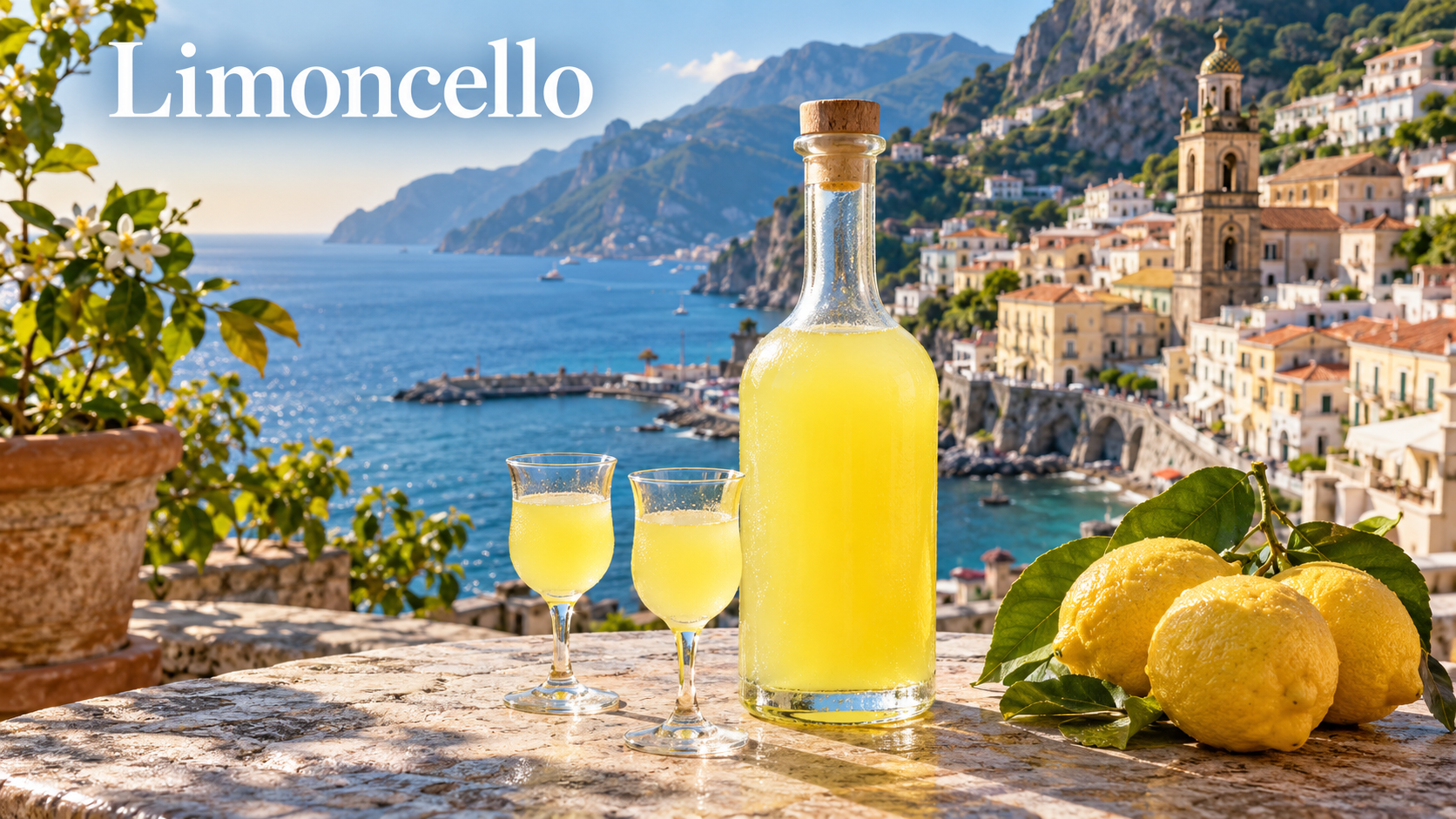
 Limoncello brings together two of southern Italy’s most familiar pleasures: fragrant lemons and a leisurely meal. A small chilled glass often arrives after dinner in Sorrento, on the Amalfi Coast or on Capri. Its sweetness is unmistakable, but the character of a good bottle comes from the citrus peel.
Choosing limoncello means looking beyond a bright yellow label or a decorative bottle. Lemon origin, ingredients and the producer’s approach all help explain what you are buying. Some brands emphasize lemons from the Sorrento Peninsula. Others use Amalfi Coast fruit or offer their own interpretation of this Italian lemon liqueur.
This guide introduces ten Italian selections, starting with producers closely connected to Sorrento, Amalfi and Capri. The later entries broaden the comparison to other Italian houses. They are suggestions to explore, rather than a ranking based on a tasting panel.
Affiliate disclosure: As an Amazon Associate, Italia Mia earns from qualifying purchases.
Shopping note: The links below open Amazon searches for each named product. They do not confirm that a bottle is currently available. Results may include glasses, sweets, cream liqueurs or alcohol-free alternatives. Check the product, seller and delivery conditions carefully. Alcohol availability varies by marketplace and destination, particularly for readers in the United States.
What Is Limoncello?
Traditional limoncello is a sweet lemon liqueur made by infusing lemon peel in alcohol, then combining the infusion with water and sugar. The peel supplies aromatic oils, which give the drink much of its fragrance.
Unlike lemonade, limoncello usually does not rely on lemon juice as its main ingredient. Producers can use different recipes, however, so the label is the best guide to the particular bottle.
Classic limoncello also differs from crema di limoncello. The cream version typically contains milk or cream and has a richer texture. An alcohol-free lemon drink is another distinct product, even when its packaging resembles a conventional limoncello bottle.
For more about the fruit behind these drinks, read Italia Mia’s guide to Amalfi lemons, chinotto and Calabrian bergamot.
Sorrento Lemons and Amalfi Coast Lemons
Sorrento and Amalfi share a strong association with limoncello, but their celebrated lemons are distinct.
Villa Massa and Limoncello DICAPRI identify the Ovale di Sorrento as the fruit used in their products. Pallini highlights the Sfusato lemons of the Amalfi Coast. Both traditions place particular value on fragrant peel.
The letters IGP, or PGI in English, indicate a protected geographical indication. When a producer names an IGP lemon, the claim concerns a specific ingredient and its geographical identity. It should not be read as proof that every limoncello bottle carries the same certification.
If provenance matters to you, look for the named lemon on the product label or producer’s website. A coastal illustration alone does not explain where the fruit was grown.
10 Italian Limoncello Selections to Explore
1. Villa Massa Limoncello
Villa Massa is a natural starting point for readers interested in Sorrento. The company is based in Piano di Sorrento and identifies Ovale di Sorrento lemons as the basis of its limoncello.
Its emphasis on local fruit makes this a useful reference when comparing bottles with a clear connection to the peninsula. Villa Massa also states that its recipe uses no added artificial flavors or colors. Choose the classic limoncello when you want to explore that approach.
Why consider it: A Sorrento-focused selection with clearly explained lemon provenance.
Search Amazon.it for Villa Massa Limoncello · Search Amazon.com for Villa Massa Limoncello
2. Pallini Limoncello
Pallini highlights Sfusato IGP lemons from the terraces of the Amalfi Coast. Its classic limoncello therefore provides a useful comparison with bottles based on Sorrento lemons.
Check the product name before ordering. Pallini also offers a cream version and Limonzero, an alcohol-free alternative. These serve different purposes and should not be confused with the traditional alcoholic bottle.
Why consider it: An Amalfi-lemon selection for readers who want to compare the two coastal traditions.
Search Amazon.it for Pallini Limoncello · Search Amazon.com for Pallini Limoncello
3. Limoncello DICAPRI
Limoncello DICAPRI, also familiar as Limoncello di Capri, connects its identity to Capri and the Sorrento lemon tradition. The producer describes its classic recipe as Sorrento IGP lemon peel, alcohol, water and sugar, without further additions.
That concise ingredient list makes it especially relevant if you want to understand the traditional style. Its name reflects the brand’s Capri heritage; consult the producer’s information for precise production details.
Why consider it: A clearly described four-ingredient approach using Sorrento IGP lemons.
Search Amazon.it for Limoncello DICAPRI · Search Amazon.com for Limoncello DICAPRI
4. Piemme Limoncello di Sorrento
Piemme is based in Piano di Sorrento and makes limoncello using Limone di Sorrento IGP. Its official information describes lemon processing, infusion and bottling within the company.
Piemme also offers an organic version. If that interests you, check the exact listing: the organic bottle and the standard limoncello are separate selections. Compare the ingredients, format and certification shown for the bottle you intend to buy.
Why consider it: Another locally rooted Sorrento producer, with an organic option to investigate.
Search Amazon.it for Piemme Limoncello · Search Amazon.com for Piemme Limoncello
5. Santa Teresa Limoncello di Sorrento
Santa Teresa presents itself as an artisanal producer from the Sorrento Peninsula. Its range includes limoncello and cream liqueurs, making it another name to explore beyond the larger international brands.
For this guide, look for the classic Limoncello di Sorrento. A cream bottle will offer a different texture and may have different storage instructions. Marketplace availability should be checked rather than assumed.
Why consider it: A further Sorrento Peninsula selection for readers exploring local producers.
Search Amazon.it for Santa Teresa Limoncello · Search Amazon.com for Santa Teresa Limoncello
6. Antica Distilleria Petrone Limoncello
Petrone broadens the selection within Campania. Its official range includes a classic limoncello described as an artisanal infusion of lemon peel.
The company also offers special presentations and a sea-aged edition. Start with the standard bottle if your goal is a straightforward comparison with other traditional limoncellos. Decorative packaging and special editions can be interesting gifts, but they should be assessed separately.
Why consider it: A Campanian producer offering both classic limoncello and distinctive gift formats.
Search Amazon.it for Petrone Limoncello · Search Amazon.com for Petrone Limoncello
7. Strega Alberti Limoncello
Strega Alberti offers a limoncello alongside its better-known herbal liqueur. The company’s official store describes the lemon product as an infusion of selected lemon peels.
These are different drinks, so check that the listing says “Limoncello.” Strega’s limoncello adds another Campanian house to the comparison without requiring you to choose a bottle marketed specifically around Sorrento or Amalfi.
Why consider it: A lemon liqueur from the Benevento house associated with Strega.
Search Amazon.it for Strega Alberti Limoncello · Search Amazon.com for Strega Alberti Limoncello
8. Luxardo Limoncello
Luxardo describes its limoncello as following a family recipe first advertised in 1905. Its production information mentions lemon peel, pulp and juice from lemons harvested in southern Italy.
That recipe offers a useful contrast with the peel-only approach described by some coastal producers. Luxardo is included as an Italian interpretation of limoncello, rather than as a Sorrento or Amalfi specialist.
Why consider it: A different recipe from an established Italian liqueur house.
Search Amazon.it for Luxardo Limoncello · Search Amazon.com for Luxardo Limoncello
9. Toschi Lemoncello
Toschi uses the spelling “Lemoncello” for its product. Its official shop lists a lemon-peel infusion and natural flavorings, illustrating why ingredient comparisons can be useful even within the same broad category.
The range also includes cream and alcohol-free alternatives. Select the standard alcoholic Lemoncello if you are comparing it with the classic bottles in this list.
Why consider it: A broader Italian option with a published ingredient list to compare.
Search Amazon.it for Toschi Lemoncello · Search Amazon.com for Toschi Lemoncello
10. Bottega Limoncino
Bottega’s Limoncino is a lemon liqueur made with Femminello lemon peel. The producer explains that sugar and grappa are added after the infusion.
The addition of grappa gives this recipe a clear point of difference from the four-ingredient coastal style. Check the exact product name, since Bottega offers several lemon drinks, including alcohol-free versions.
Why consider it: A lemon liqueur with a grappa component for readers exploring different Italian recipes.
Search Amazon.it for Bottega Limoncino · Search Amazon.com for Bottega Limoncino
How to Choose a Bottle
Begin with the style you want. For a classic coastal comparison, explore Villa Massa, Pallini, DICAPRI or Piemme. For a wider view of Italian lemon liqueurs, consider the later entries too.
Next, compare bottle size, alcohol content and ingredients. A lower headline price may simply mean a smaller bottle. Likewise, a ceramic container can add to the cost without explaining the quality of the liquid.
For gifts, consider the recipient’s preferences. Someone who enjoys traditional liqueurs may appreciate a simple bottle with clear provenance. Someone who collects ceramics may value the presentation as well. Italia Mia’s Italian gourmet food guide offers more ideas for building a food and drink gift.
How to Serve Limoncello
Serve limoncello chilled in a small glass. It is traditionally enjoyed after a meal, although producers also suggest using it in cocktails and desserts.
Follow the bottle’s storage instructions. Avoid assuming that every lemon drink belongs in the freezer, especially cream liqueurs and alcohol-free alternatives.
For a simple spritz, try 75 ml Prosecco, 50 ml limoncello and 25 ml soda over ice, then add a strip of lemon peel. This follows the proportions published by DICAPRI. A small splash can also flavor an adult dessert such as sorbet or fruit salad.
To explore the wider drinks tradition, visit Italia Mia’s guide to Italian sodas, cocktails and aperitivo.
Making Limoncello at Home
The basic process involves infusing suitable lemon peel in food-grade alcohol, removing the peel and adding sugar syrup. Different recipes use different strengths and proportions, so follow a complete recipe rather than improvising the dilution.
Choose lemons whose peel is suitable for culinary use, wash them thoroughly and remove thin strips of zest with as little white pith as possible. The pith can introduce bitterness. Organic status alone does not replace checking that the peel is suitable to use.
Vodka-based recipes also exist, but they need proportions designed for vodka. Substituting it directly for stronger alcohol changes the finished drink.
External Sources
- Villa Massa: Limoncello
- Pallini: Limoncello
- Limoncello DICAPRI
- Piemme: Limoncello di Sorrento
- Santa Teresa Liquori
- Antica Distilleria Petrone: Products
- Strega Alberti: Limoncello
- Luxardo: Limoncello
- Toschi: Lemoncello
- Bottega: Limoncino
- DICAPRI: Serving and Cocktail Ideas