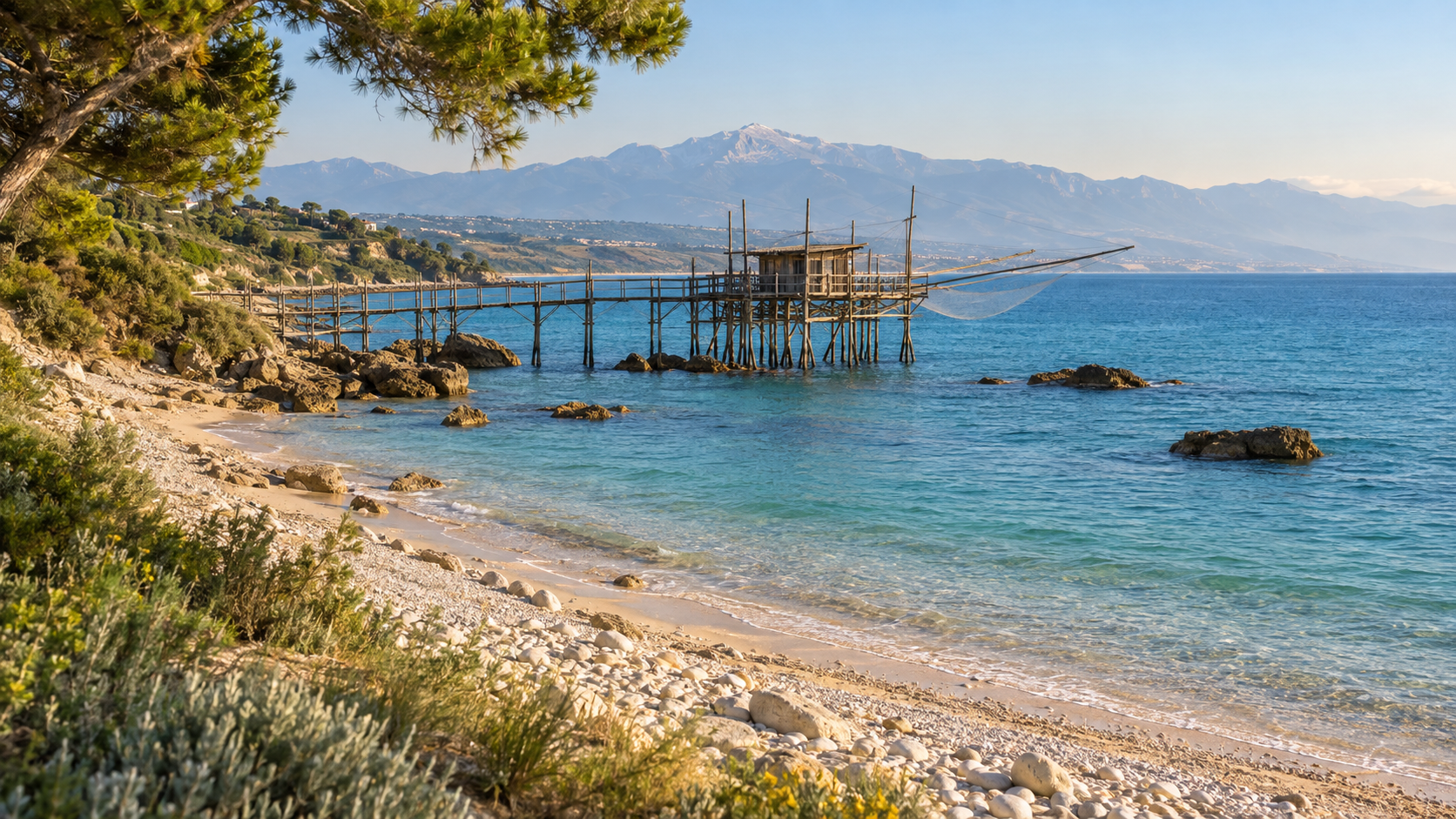
 Abruzzo may be better known for rugged mountains, medieval villages and national parks, but its Adriatic coastline is one of central Italy’s most appealing seaside destinations. Stretching for approximately 130 kilometers, the coast combines broad sandy beaches, shady pine forests, family-friendly resorts, secluded pebble coves and the atmospheric fishing platforms of the Costa dei Trabocchi.
Northern Abruzzo is characterized mainly by long, organized beaches with shallow water and lively promenades. Farther south, particularly between Ortona and Vasto, the landscape becomes more dramatic, with cliffs, rocky inlets, nature reserves and traditional wooden trabocchi extending over the sea.
Abruzzo’s beaches are generally less internationally famous than those of Puglia, Sardinia or the Amalfi Coast. That is part of their attraction: accommodations are often more affordable, seaside towns retain a distinctly Italian atmosphere, and the mountains are close enough for travelers to combine swimming with hiking, historic villages and regional food.
For a broader introduction to the region, read Italia Mia’s complete Abruzzo travel guide.
Table of Contents
- Punta Penna
- Punta Aderci and Spiaggia dei Libertini
- Mottagrossa Beach
- Ripari di Giobbe
- Lido Riccio
- Calata Turchino
- Fossacesia Marina
- Punta Cavalluccio
- Pineto and Torre del Cerrano
- Silvi Marina
- Roseto degli Abruzzi
- Giulianova
- Tortoreto Lido
- Alba Adriatica
- Vasto Marina
- Best Abruzzo Beaches by Travel Style
- When to Visit
- Where to Stay
- How to Explore the Abruzzo Coast
- Frequently Asked Questions
1. Punta Penna: Best Natural Sandy Beach
Located inside the Punta Aderci Nature Reserve near Vasto, Punta Penna is one of the finest natural beaches in Abruzzo. Unlike many of the pebble beaches along the southern coastline, Punta Penna has a long expanse of soft, pale sand backed by dunes and Mediterranean vegetation.
The water is generally shallow near the shore, making this a good choice for families who want natural surroundings without giving up the convenience of a sandy beach. The atmosphere is considerably quieter than at the organized resorts of Vasto Marina or Pescara.
Punta Penna forms part of Abruzzo’s first protected coastal reserve. The surrounding environment supports dune vegetation and nesting birds, so visitors should remain on marked paths and avoid disturbing fenced areas. The reserve is open throughout the year and admission is free.
Facilities are limited and may vary by season. Bring drinking water, sun protection and everything needed for the day, particularly outside July and August.
Best for: Nature, families, soft sand and peaceful surroundings.
2. Punta Aderci and Spiaggia dei Libertini: Best Coastal Views
The Punta Aderci promontory rises above one of the most striking stretches of the Abruzzo coast. From the top, visitors can see the beaches, surrounding farmland and distant Apennine mountains.
Below the headland is Spiaggia dei Libertini, a small beach of pebbles and coarse sand reached from Punta Penna or by descending approximately 80 steps from the path leading toward the promontory. The combination of clear water, cliffs and natural scenery makes it especially rewarding for swimming and photography.
The beach has fewer services than Abruzzo’s urban resorts. Water shoes can make entering the sea more comfortable, while lightweight beach equipment is preferable because of the walk and steps.
Best for: Scenic swimming, couples, photography and nature lovers.
3. Mottagrossa Beach: Best for Solitude
North of the Punta Aderci promontory, Mottagrossa is a long pebble beach surrounded by one of the wildest coastal landscapes in central Italy. It feels considerably more remote than nearby Vasto Marina.
A panoramic path follows the former railway line above the beach for approximately three kilometers, passing pine trees, Mediterranean scrub and viewpoints over the Adriatic. Access requires more effort than at an organized resort, but the reward is space, silence and an almost undeveloped shoreline.
There is little natural shade directly on the beach and few services. Bring water, food, suitable footwear and a sun umbrella. The pebbles can become hot during summer afternoons.
Best for: Quiet days, long walks, cycling and escaping crowded resorts.
4. Ripari di Giobbe: Best Hidden Cove
Ripari di Giobbe, just north of Ortona, is one of Abruzzo’s most photogenic coves. Pale cliffs and dense vegetation frame a narrow beach of pebbles and coarse sand, while the water often takes on green and turquoise tones.
The beach sits below a high coastal terrace and is reached on foot using a steep staircase. Italy’s official tourism portal describes a descent of approximately 65 meters, so this is not the easiest option for visitors with limited mobility, very small children or heavy beach equipment.
Arrive early in high season because the cove is relatively small. Water shoes are useful, and snorkelers will find more interesting underwater scenery here than along Abruzzo’s broad sandy beaches.
Best for: Dramatic scenery, snorkeling and romantic beach days.
5. Lido Riccio: Best Beach Near Ortona
Lido Riccio offers a very different experience from Ripari di Giobbe. This is a wide, sandy and accessible beach with bathing establishments, restaurants, parking and accommodations close to the shore.
The gently sloping seabed and organized services make Lido Riccio particularly convenient for families. It is also a practical base for travelers who want to explore Ortona, the Costa dei Trabocchi and nearby coves without staying in a large city.
Ortona itself deserves time away from the beach. Its historic center, Castello Aragonese and Adriatic viewpoints add a cultural dimension to a seaside vacation.
Best for: Families, convenience and exploring Ortona.
6. Calata Turchino: Best Trabocco Setting
Calata Turchino, near San Vito Chietino, is associated with one of the most celebrated trabocchi on the Abruzzo coast. These wooden fishing structures stand on stilts above the sea and are connected to the land by narrow walkways.
The shoreline is rocky and less suited to travelers looking for a conventional sandy resort. Its appeal lies instead in the landscape, the clear water and the opportunity to experience the character of the Costa dei Trabocchi.
Some trabocchi have been converted into seafood restaurants, while others remain cultural or historic landmarks. Reservations are usually essential when dining on one, especially during summer weekends.
Best for: Trabocchi, coastal atmosphere, seafood and photography.
7. Fossacesia Marina: Best Base on the Costa dei Trabocchi
Fossacesia Marina has a long pebble beach, clear Adriatic water and several trabocchi positioned along the shoreline. It is one of the most practical places to stay when exploring southern Abruzzo.
The beach includes both free areas and organized establishments. Because the shore is made primarily of smooth pebbles, the water often appears clearer than at the sandy resorts farther north.
Above the coast stands the Abbey of San Giovanni in Venere, a magnificent Romanesque complex overlooking the sea. Visiting the abbey in the morning and spending the afternoon on the beach creates one of the most memorable day trips in the region.
Best for: Clear water, pebble beaches, cycling and Costa dei Trabocchi excursions.
8. Punta Cavalluccio: Best Small Cove on the Trabocchi Coast
Punta Cavalluccio, in the municipality of Rocca San Giovanni, is a small and scenic coastal inlet overlooked by a traditional trabocco.
The beach mixes pebbles, rocks and small patches of sand. It is better suited to swimming, kayaking and photography than to visitors who want rows of umbrellas and resort facilities.
The wider coastline around Rocca San Giovanni contains several headlands, coves and historic fishing structures, including Punta Tufano, Punta Isolata and Punta Punciosa.
Parking and access can be limited during peak summer periods. Arriving before 9:00 a.m. provides the best chance of finding a convenient space and enjoying the shoreline before it becomes busier.
Best for: Swimming beneath a trabocco and exploring small coves.
9. Pineto and Torre del Cerrano: Best Beach with a Pine Forest
Pineto takes its name from the extensive pine trees lining the shore. The trees provide welcome shade and create a relaxed landscape that feels different from the more urban resorts along the Adriatic.
The town’s long sandy beach is well suited to families, walkers and cyclists. Offshore stands the Torre del Cerrano, a historic coastal watchtower that has become the symbol of the protected marine area extending between Pineto and Silvi.
The combination of shallow water, sand, cycling routes and natural shade makes Pineto one of the most balanced beach destinations in Abruzzo.
Visitors should respect the protected marine environment, avoid walking through sensitive dune vegetation and follow local rules governing boating, fishing and water activities.
Best for: Families, cycling, pine-shaded walks and nature.
10. Silvi Marina: Best Combination of Beach and Hill Town
Silvi Marina has a broad sandy shoreline, numerous beach clubs and views toward the hills of inland Abruzzo. The sea is generally shallow near the shore, making it popular with families.
The modern resort stretches along the waterfront, while the older village of Silvi Paese occupies a panoramic hilltop a short drive inland. From the historic center, visitors can look across the Adriatic and surrounding countryside.
This combination of an organized beach and atmospheric hill town makes Silvi more varied than a typical seaside resort. It is also conveniently located for day trips to Atri, Pineto and Pescara.
Best for: Families, beach services and evening visits to a historic village.
11. Roseto degli Abruzzi: Best Relaxed Seaside Town
Roseto degli Abruzzi offers long golden beaches, a pleasant promenade and a more relaxed atmosphere than Pescara. The shoreline includes organized establishments as well as public beach areas.
The town is a good choice for travelers who want restaurants, accommodations and evening activity without the pace of a major urban center. Its relatively level waterfront is convenient for walking and cycling.
Roseto is also positioned well for exploring the province of Teramo. The medieval village of Montepagano rises above the coast, while Atri and the Gran Sasso foothills can be reached on day trips.
Best for: Couples, families and relaxed longer stays.
12. Giulianova: Best Beach for Facilities
Giulianova combines an active town, fishing port and spacious sandy beach. Its waterfront has numerous bathing establishments, restaurants, sports facilities and accommodations.
The historic district, Giulianova Alta, stands above the modern beachfront and preserves Renaissance architecture and traditional streets. Visitors can therefore combine a conventional beach holiday with cultural sightseeing.
The beach is particularly suitable for families because of its broad shoreline and generally shallow water. Giulianova also has useful train connections along the Adriatic railway.
Best for: Full-service beach holidays, families and travelers without a car.
13. Tortoreto Lido: Best for Young Children
Tortoreto Lido is known for its wide sandy beach and shallow water. The promenade is lined with palm trees, cycle paths, restaurants and family-oriented bathing establishments.
The flatter coastal district contrasts with Tortoreto Alto, the attractive historic village overlooking the sea. An evening trip uphill provides cooler temperatures, panoramic views and a quieter atmosphere after a day on the beach.
Tortoreto is particularly convenient for families seeking predictable services, easy access and plenty of space rather than isolated natural scenery.
Best for: Young children, cycling and organized beach services.
14. Alba Adriatica: Best Lively Resort
Alba Adriatica’s Spiaggia d’Argento—or Silver Beach—is one of northern Abruzzo’s best-known seaside destinations. The coast is broad, sandy and lined with hotels, beach clubs and a long promenade.
The town has a livelier summer atmosphere than Pineto or Roseto, with evening entertainment, restaurants and activities for younger visitors. The level waterfront and cycling routes make it easy to move between Alba Adriatica, Villa Rosa and Tortoreto without relying constantly on a car.
Travelers seeking complete solitude may prefer Punta Aderci or Mottagrossa, but Alba Adriatica is a strong choice for a traditional Italian resort vacation.
Best for: Nightlife, families, groups and long beach days.
15. Vasto Marina: Best All-Around Beach Destination
Vasto Marina has a long crescent of sandy beach, a gently sloping seabed and an extensive selection of hotels, vacation rentals, restaurants and beach clubs.
Unlike the remote beaches inside Punta Aderci Reserve, Vasto Marina provides almost every service a visitor may need. It is particularly suitable for travelers who want to alternate convenient beach days with excursions.
The historic center of Vasto stands on a hill above the coast, offering elegant squares, churches, gardens and panoramic views. Punta Penna, Punta Aderci, San Nicola and the southern Costa dei Trabocchi are all accessible from the town.
Best for: First-time visitors, families and travelers seeking both nature and services.
Best Abruzzo Beaches by Travel Style
| Travel style | Recommended beach |
|---|---|
| Best natural sandy beach | Punta Penna |
| Best wild coastline | Mottagrossa |
| Best scenic cove | Ripari di Giobbe |
| Best for snorkeling | Ripari di Giobbe or Punta Cavalluccio |
| Best for young children | Tortoreto Lido |
| Best for cycling | Pineto or Fossacesia Marina |
| Best for nightlife | Alba Adriatica or Pescara |
| Best for trabocchi | Calata Turchino or Punta Cavalluccio |
| Best full-service destination | Vasto Marina |
| Best without a car | Giulianova or Pescara |
| Best romantic setting | Punta Aderci |
| Best combination of beach and culture | Ortona or Vasto |
Sandy Beaches or Pebble Beaches?
Choosing where to stay in Abruzzo depends largely on the type of beach you prefer.
The northern coast—from Martinsicuro through Alba Adriatica, Tortoreto, Giulianova, Roseto, Pineto and Silvi—is dominated by long sandy beaches. These resorts generally offer shallow water, established beach clubs, promenades and family-oriented accommodations.
The central urban coast around Montesilvano, Pescara and Francavilla al Mare is also mostly sandy, with excellent access to restaurants, transportation and nightlife.
South of Ortona, the Costa dei Trabocchi becomes more varied. Pebble beaches, rocky coves and small bays alternate with occasional sandy stretches. The landscape is more dramatic and the water can appear clearer, but water shoes are often helpful.
Punta Penna and Vasto Marina provide excellent sandy alternatives in southern Abruzzo.
When to Visit Abruzzo’s Beaches
The main beach season runs from June through September.
June
June is one of the best months for sightseeing and beach time. Days are usually warm, the coast is less crowded and accommodations can cost less than in July or August. The sea may still feel cool early in the month.
July
July brings warmer water, reliable beach weather and fully operational resorts. Crowds increase, especially on weekends, but conditions are generally excellent for swimming.
August
August is the busiest and most expensive month, particularly around Ferragosto on August 15. Reserve accommodations, trabocco restaurants and beach umbrellas well in advance.
September
Early September often provides warm water, pleasant temperatures and fewer visitors. Some seasonal facilities begin reducing their hours later in the month, but it remains an excellent time for couples and independent travelers.
May and October can be beautiful for walking and cycling, although the weather is less reliable for a conventional beach holiday.
Where to Stay on the Abruzzo Coast
Hotels and accommodation in Abruzzo — Compare seaside hotels, mountain retreats and holiday properties near Pescara, Vasto, Roccaraso, Sulmona and Abruzzo’s national parks.
Find hotels throughout Abruzzo with Expedia
Choose your base according to the experience you want:
- Alba Adriatica or Tortoreto: Best for a lively, family-oriented resort vacation.
- Giulianova: Best for facilities, train access and a mix of beach and town life.
- Pineto: Best for nature, shade and cycling.
- Pescara: Best for transportation, nightlife, shopping and urban amenities.
- Ortona: Best for history and access to the northern Costa dei Trabocchi.
- Fossacesia Marina: Best for cycling, pebble beaches and trabocco restaurants.
- Vasto: Best all-around base for beaches, restaurants, history and nature reserves.
Travelers planning to explore several beaches should consider dividing their stay between Pineto or Giulianova in the north and Ortona, Fossacesia or Vasto in the south.
Exploring the Coast by Bicycle
One of the best ways to experience southern Abruzzo is by bicycle. The Via Verde follows much of the former coastal railway route along the Costa dei Trabocchi, passing beaches, headlands, tunnels and fishing structures.
Cycling allows visitors to reach several coastal locations without repeatedly searching for parking. The route is particularly enjoyable in spring, early summer and September, when temperatures are milder.
Conditions and temporary closures can change. The Punta Aderci Reserve has previously reported trail diversions caused by landslides, so cyclists and walkers should check local notices before departure.
Practical Tips for Visiting Abruzzo’s Beaches
- Bring water shoes for the Costa dei Trabocchi, Ripari di Giobbe, Mottagrossa and other pebble beaches.
- Arrive early at small coves because parking and beach space are limited.
- Carry water and sun protection when visiting nature reserves.
- Never walk across protected dunes or disturb marked nesting areas.
- Check local signs before swimming, especially after storms or heavy rainfall.
- Reserve trabocco restaurants several weeks ahead during summer.
- Use trains for larger coastal towns, but rent a car for remote beaches and inland villages.
- Keep valuables out of sight when leaving a vehicle at isolated parking areas.
- Confirm seasonal shuttle schedules locally rather than relying on information from a previous year.
Combining the Beach with Inland Abruzzo
One of the region’s greatest advantages is the short distance between the Adriatic and the Apennines. Visitors can spend the morning at the beach and reach hill towns, vineyards or mountain landscapes later the same day.
Possible excursions include:
- Atri from Pineto or Silvi
- Città Sant’Angelo from Montesilvano
- Chieti from Francavilla al Mare
- Crecchio from Ortona
- Lanciano from Fossacesia
- Vasto’s historic center from Vasto Marina
- The Maiella foothills from the Costa dei Trabocchi
Nature lovers can also explore Italia Mia’s guide to the best mountain destinations in Italy, which includes Abruzzo’s protected landscapes.
What to Eat Along the Abruzzo Coast
A beach trip in Abruzzo should include time for the region’s seafood cuisine.
Brodetto alla vastese is a rich fish stew traditionally prepared around Vasto with several varieties of local fish, tomatoes, peppers and olive oil. Different coastal towns have their own versions of brodetto.
Other dishes to look for include:
- Spaghetti alla chitarra with seafood
- Cozze ripiene, or stuffed mussels
- Fritto misto dell’Adriatico
- Grilled calamari
- Scapece alla vastese, fried fish preserved with saffron and vinegar
- Pasta with clams
- Local Pecorino, Trebbiano and Cerasuolo d’Abruzzo wines
For more regional flavor, read Italia Mia’s article about fritto misto and the Costa dei Trabocchi.
Frequently Asked Questions
Does Abruzzo have good beaches?
Yes. Abruzzo offers approximately 130 kilometers of Adriatic coastline, ranging from broad sandy resorts to pebble coves, pine-backed beaches and protected natural areas. The region is particularly attractive for travelers seeking a less internationally crowded alternative to Italy’s most famous coastal destinations.
Which is the most beautiful beach in Abruzzo?
Punta Penna is arguably the best natural sandy beach, while Punta Aderci offers the most impressive panoramic setting. Ripari di Giobbe is one of the most beautiful small coves, and Pineto is an excellent choice for families and cyclists.
Are Abruzzo beaches sandy?
Many are. The northern Abruzzo coast and the areas around Pescara, Francavilla and Vasto Marina have extensive sandy beaches. The Costa dei Trabocchi includes more pebbles, rocks and small coves.
Which beaches are best for families?
Tortoreto Lido, Alba Adriatica, Giulianova, Pineto, Silvi Marina and Vasto Marina are among the best family destinations because they combine sandy beaches, shallow water and organized services.
Where is the clearest water in Abruzzo?
The pebble beaches and rocky coves along the Costa dei Trabocchi frequently offer clearer-looking water than the sandy urban beaches. Ripari di Giobbe, Punta Cavalluccio, Fossacesia Marina and Punta Aderci are strong choices.
Can I visit Abruzzo’s beaches without a car?
Yes, particularly if you stay in Pescara, Giulianova, Alba Adriatica, Roseto, Pineto or Vasto Marina. However, a car is useful for reaching Punta Aderci, Ripari di Giobbe and the smaller beaches of the Costa dei Trabocchi.
Is Abruzzo expensive for a beach vacation?
Abruzzo is often more affordable than better-known destinations such as the Amalfi Coast, Capri, Sardinia or parts of Puglia. Prices rise in August, but good value can still be found in June and September.
Why Choose Abruzzo for an Italian Beach Vacation?
Abruzzo does not offer just one kind of beach. Its coastline changes gradually from northern sandy resorts to southern cliffs, coves, nature reserves and trabocchi.
Families can choose Tortoreto, Giulianova or Pineto. Couples and nature lovers can explore Punta Aderci and Ripari di Giobbe. Cyclists can follow the coast between Ortona and Vasto, while travelers who want restaurants and nightlife can stay in Pescara, Alba Adriatica or Vasto Marina.
Most importantly, Abruzzo makes it possible to experience the sea without separating it from the rest of Italy. Mountains, historic towns, vineyards, abbeys and traditional food remain close at hand, turning a simple beach vacation into a much richer journey.
Related Italia Mia Articles
- Region of Abruzzo: Complete Travel Guide
- Top Beaches in Italy
- Exploring Italy’s Most Beautiful Coastlines
- Region of Puglia: Complete Travel Guide
- Best Mountain Destinations in Italy
Recommended Abruzzo Travel Books
- Abruzzo travel guides on Amazon
- Costa dei Trabocchi travel books and maps
- Italy road atlases and touring maps
External Sources
- Italia.it: The Abruzzo Coast
- Italia.it: Costa dei Trabocchi
- Punta Aderci Nature Reserve
- City of Vasto: Punta Aderci Nature Reserve
- ENIT: Beach Tourism in Abruzzo