
 Italy’s artistic history extends across more than two thousand years, from Etruscan tomb paintings and Roman monuments to Renaissance masterpieces, Baroque churches, Futurist experiments and contemporary installations.
This history is not a simple sequence in which one style ended before another began. Artistic periods overlapped, developed at different speeds and acquired distinctive characteristics in Rome, Florence, Venice, Milan, Naples, Bologna, Siena, Palermo and other Italian cities.
Some terms in this guide—Romanesque, Gothic and Baroque, for example—describe broad historical styles later defined by scholars. Others, including Futurism and Spatialism, were organized movements whose artists published manifestos and deliberately promoted new ideas.
The dates below are therefore approximate. They provide a reliable chronological framework rather than rigid boundaries.
This article contains affiliate links. Italia Mia may receive a commission when you purchase tickets or books through these links, at no additional cost to you.
Italian Art Timeline at a Glance
| Period or movement | Approximate dates in Italy | Defining characteristics |
|---|---|---|
| Etruscan and Greek art | 8th–3rd centuries BC | Funerary art, temples, ceramics and bronze sculpture |
| Roman art | 3rd century BC–5th century AD | Monumental architecture, portraiture, frescoes and mosaics |
| Early Christian and Byzantine art | 3rd–12th centuries | Sacred imagery, mosaics, icons and symbolic representation |
| Romanesque | c. 1000–1200 | Rounded arches, solid architecture and sculpted church façades |
| Gothic and Proto-Renaissance | c. 1200–1400 | Elegance, narrative expression, spatial depth and greater naturalism |
| Early Renaissance | c. 1400–1490 | Classical revival, linear perspective, proportion and humanism |
| High Renaissance | c. 1490–1527 | Balance, monumentality, idealized anatomy and harmony |
| Mannerism | c. 1520–1600 | Elongated figures, artificial colors and complex compositions |
| Baroque | c. 1600–1750 | Drama, movement, theatrical space and contrasts of light |
| Rococo | c. 1720–1780 | Decorative elegance, pale colors and aristocratic refinement |
| Neoclassicism | c. 1750–1830 | Classical order, restraint and archaeological inspiration |
| Romanticism | c. 1800–1870 | Emotion, nationalism and dramatic historical subjects |
| Macchiaioli | c. 1855–1880s | Outdoor painting through patches of light and color |
| Divisionism | c. 1890–1915 | Separated strokes of color and luminous effects |
| Futurism | 1909–1944 | Speed, machinery, technology and dynamic movement |
| Metaphysical painting | c. 1910–1920s | Enigmatic spaces, mannequins, stillness and dreamlike unease |
| Novecento Italiano | 1920s–1940s | Monumental figurative art and a return to classical order |
| Spatialism | late 1940s–1960s | Space, gesture, cut surfaces and modern technology |
| Arte Povera | late 1960s–1970s | Ordinary materials, process, nature and experimentation |
| Transavanguardia | late 1970s–1980s | Expressive painting, symbolism and historical references |
| Contemporary Italian art | 1990s–present | Installation, photography, video, performance and digital media |
Etruscan and Greek Art
Eighth to Third Centuries BC
The artistic history of ancient Italy began long before Rome became an imperial power. Etruscan communities in central Italy created painted tombs, terracotta temple decorations, bronze objects and expressive funerary sculptures.
Etruscan tomb paintings frequently represented banquets, musicians, dancers, athletes and ceremonial events. These lively scenes provide valuable evidence about Etruscan society and beliefs concerning death and the afterlife.
At the same time, Greek colonies in southern Italy and Sicily—an area known as Magna Graecia—produced temples, painted ceramics and sculptures closely connected to the wider Greek world. Paestum, Selinunte and Agrigento preserve some of the most impressive ancient Greek temples outside modern Greece.
Etruscan and Greek traditions both influenced Roman religious architecture, sculpture and visual culture. Roman artists and patrons, however, eventually adapted these influences to their own political and social purposes.
Where to See Etruscan and Greek Art
The National Etruscan Museum of Villa Giulia in Rome is one of the most important collections devoted to Etruscan civilization. Other major destinations include Tarquinia, Cerveteri, Paestum, Agrigento and the National Archaeological Museum of Naples.
- Reserve tickets for the National Etruscan Museum of Villa Giulia
- Reserve National Archaeological Museum of Naples tickets
Roman Art
Third Century BC to Fifth Century AD
Roman art combined Greek and Etruscan influences with the political, religious and practical requirements of a rapidly expanding state.
Definition: Roman art includes the architecture, sculpture, painting, mosaics and decorative objects produced under the Roman Republic and Roman Empire.
Roman architects transformed cities through roads, aqueducts, bridges, basilicas, bath complexes, amphitheaters and triumphal arches. Their sophisticated use of concrete, vaults and domes made enormous interior spaces such as the Pantheon possible.
Roman portrait sculpture could be strikingly individualized. Emperors and public officials also used idealized statues to communicate authority, continuity and divine favor.
Monuments such as Trajan’s Column and the Arch of Titus transformed historical events into carefully organized public narratives. Frescoes and mosaics preserved at Pompeii and Herculaneum reveal domestic interiors filled with architecture, mythology, landscapes, gardens and scenes of everyday life.
Where to See Roman Art
Rome itself is an enormous open-air collection of Roman art and architecture. The Colosseum, Roman Forum, Pantheon, Capitoline Museums and Palazzo Massimo alle Terme illustrate different aspects of ancient Roman civilization.
Pompeii and Herculaneum preserve houses, frescoes, mosaics and everyday objects, while the National Archaeological Museum of Naples contains many important works recovered from the Vesuvian sites.
- Reserve a Colosseum, Roman Forum and Palatine Hill combination ticket
- Reserve National Archaeological Museum of Naples tickets
For a wider cultural itinerary, see Italia Mia’s guide to Italy’s greatest art cities.
Early Christian and Byzantine Art
Third to Twelfth Centuries
Christian art began developing within the Roman world before becoming increasingly prominent after Christianity received imperial recognition during the fourth century.
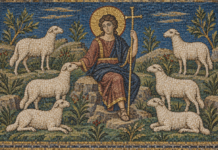
Early churches frequently adopted the longitudinal form of the Roman basilica. Mosaics, frescoes and carved sarcophagi communicated biblical stories, theological ideas and images of salvation.
Definition: Early Christian art refers to works created by Christian communities during late antiquity. Byzantine art developed within the Eastern Roman Empire and emphasized sacred presence through frontal figures, gold backgrounds, symbolic scale and carefully established religious imagery.
Italy maintained close political, religious and commercial relationships with the Byzantine world, particularly in Ravenna, Venice, Sicily and southern Italy.
Ravenna’s fifth- and sixth-century mosaics are among the finest surviving ensembles from this period. In Sicily, the Palatine Chapel, Monreale Cathedral and Cefalù Cathedral combine Byzantine mosaic techniques with Norman architecture and Islamic decorative influences.
The Byzantine tradition did not disappear when Western medieval styles emerged. Its influence remained visible in Italian panel painting well into the thirteenth and fourteenth centuries.
Where to See Early Christian and Byzantine Art
Ravenna is the essential destination for Early Christian mosaics. Venice’s St. Mark’s Basilica and the medieval churches of Sicily demonstrate how Byzantine traditions continued and evolved in different regions.
The Vatican Museums also preserve Byzantine icons and important medieval Italian paintings.
Romanesque Art and Architecture
Approximately 1000–1200
Romanesque was not a single national Italian style. The term describes a group of medieval architectural and artistic traditions that developed across Europe, with considerable regional variation.
Definition: Romanesque art is generally characterized by substantial masonry, rounded arches, rhythmic interiors, sculpted portals and religious imagery designed for churches and pilgrimage routes.
Tuscan churches often used geometric arrangements of colored marble. Lombard builders favored brick construction, exterior galleries and decorative arcading. In southern Italy, buildings incorporated Latin, Byzantine, Islamic and Norman traditions.
Sculpture became increasingly important on church façades, portals and pulpits. Biblical stories could be communicated visually, while fantastic animals and symbolic figures represented spiritual ideas or warned viewers about sin.
Where to See Romanesque Art
Important examples include Modena Cathedral, the Basilica of Sant’Ambrogio in Milan, San Miniato al Monte in Florence, Pisa Cathedral and the cathedrals of Parma and Bari.
The monuments of Pisa’s Piazza dei Miracoli provide an especially accessible introduction to Italian Romanesque architecture.
Gothic Art and the Proto-Renaissance
Approximately 1200–1400
Gothic art reached Italy from northern Europe but developed distinctive regional forms. Italian churches generally retained broader walls and spaces suitable for fresco cycles rather than adopting the extreme height and enormous stained-glass windows associated with French Gothic cathedrals.
Definition: Italian Gothic art combines pointed architectural forms, elegant lines, rich surface decoration and increasingly naturalistic representations of human figures and emotions.
Nicola Pisano and Giovanni Pisano brought new vitality to sculpture. Cimabue, Duccio and Simone Martini transformed panel painting, while Giotto gave his figures greater physical weight, emotional presence and spatial credibility.
Giotto’s frescoes in Padua’s Scrovegni Chapel became an important reference for later Italian painters.
This transition is sometimes called the Proto-Renaissance, but medieval Italian art should not be treated simply as an incomplete version of the Renaissance. Its artists worked within sophisticated religious, civic and courtly cultures that deserve to be understood on their own terms.
Where to See Gothic and Proto-Renaissance Art
Siena is one of the best places to study Italian Gothic art. The cathedral and Palazzo Pubblico contain architecture, sculpture and painting associated with the city’s distinctive artistic tradition.
Florence’s Uffizi Gallery allows visitors to follow the transition from medieval panel painting to the Renaissance. Other essential destinations include the Basilica of San Francesco in Assisi and the Scrovegni Chapel in Padua.
The Early Renaissance
Approximately 1400–1490
The Renaissance did not begin suddenly on a single date, nor should it be confused with the Enlightenment, which belongs primarily to the seventeenth and eighteenth centuries.
Definition: Renaissance art revived and reinterpreted classical antiquity while exploring humanism, linear perspective, anatomy, proportion and direct observation of the physical world.
Florence became a principal center of innovation during the fifteenth century. Filippo Brunelleschi demonstrated linear perspective and designed buildings based on clear geometric relationships. Donatello studied classical sculpture while creating figures with unprecedented psychological presence. Masaccio used perspective, light and anatomy to give painted figures convincing physical weight.
Other Italian cities developed their own Renaissance cultures. Piero della Francesca worked in central Italy and Urbino; Andrea Mantegna became a leading artist in Mantua; Antonello da Messina helped spread oil-painting techniques; and Giovanni Bellini transformed Venetian painting through color and atmospheric light.
Where to See Early Renaissance Art
Florence offers the greatest concentration of Early Renaissance art. The Uffizi, Bargello, San Marco Museum, Brancacci Chapel and cathedral complex reveal how painting, sculpture and architecture developed together.
Urbino, Mantua, Padua and Venice provide important regional perspectives.
The High Renaissance
Approximately 1490–1527
The High Renaissance traditionally describes a relatively brief period during which leading artists pursued monumental form, idealized beauty and harmonious composition.
Florence remained influential, but Rome became a dominant artistic center under ambitious papal patrons. Venice followed a related but distinctive path centered on color, light and atmosphere.
Leonardo da Vinci brought together scientific observation and artistic imagination. Michelangelo gave the human body extraordinary physical and emotional power. Raphael created balanced compositions that appear effortless despite their complexity.
In Venice, Giorgione and Titian developed a painterly approach in which color became as important as drawing in determining the structure and mood of an image.
The conventional ending date of 1527 corresponds to the Sack of Rome. It is a useful historical marker rather than an abrupt conclusion to Renaissance artistic practice.
Where to See High Renaissance Art
The Vatican Museums contain Michelangelo’s Sistine Chapel frescoes and Raphael’s celebrated rooms. Florence’s Accademia houses Michelangelo’s David, while the Uffizi displays works by Leonardo, Michelangelo and Raphael.
In Milan, Leonardo’s Last Supper remains one of the defining works of the period.
- Reserve Vatican Museums and Sistine Chapel tickets
- Reserve Accademia Gallery tickets to see Michelangelo’s David
- Reserve Leonardo’s Last Supper and Brera Gallery tickets
Read Italia Mia’s complete Vatican Museums guide before planning your visit.
Mannerism
Approximately 1520–1600
Mannerism developed during the final decades of the Renaissance and overlapped with the mature careers of Michelangelo and Titian.
Definition: Mannerism is characterized by elongated bodies, unconventional proportions, artificial colors, ambiguous spaces and poses of studied elegance.
Rather than attempting only to reproduce nature, Mannerist artists displayed their invention, refinement and technical sophistication. Pontormo used emotionally charged colors; Parmigianino exaggerated bodily proportions; Bronzino created polished court portraits; and Giulio Romano constructed elaborate architectural illusions.
The term once implied artistic decline after the High Renaissance. Today, Mannerism is generally understood as a deliberate response to the achievements of Leonardo, Michelangelo and Raphael and to the political and religious instability of the sixteenth century.
Where to See Mannerist Art
The Uffizi and Palazzo Vecchio in Florence contain major Mannerist works. Palazzo Te in Mantua is one of the period’s most remarkable architectural and decorative ensembles.
The Capodimonte Museum in Naples and numerous churches in Rome also preserve important Mannerist paintings.
Baroque
Approximately 1600–1750
Baroque art emerged prominently in Rome around 1600 before spreading across Italy and Europe. It was shaped by Catholic patronage, princely courts, new religious orders and the desire to involve viewers directly in an emotional experience.
Definition: Baroque art employs movement, dramatic emotion, theatrical space and powerful contrasts between light and darkness.
Caravaggio placed sacred subjects in convincingly physical settings and used intense chiaroscuro. Annibale Carracci pursued a more classical approach while creating influential illusionistic ceilings.
Gian Lorenzo Bernini integrated architecture and sculpture into theatrical environments, while Francesco Borromini manipulated geometry to produce complex, undulating spaces.
Naples developed a powerful Baroque tradition represented by Jusepe de Ribera, Mattia Preti and Luca Giordano. Lecce and the towns of southeastern Sicily developed distinctive architectural interpretations using richly carved local stone.
Where to See Baroque Art
Rome is the essential Baroque destination. Bernini’s sculptures in the Borghese Gallery, Caravaggio’s paintings in churches and museums, and the architecture of Bernini and Borromini transformed the city.
Naples, Turin, Lecce and the late-Baroque towns of Sicily reveal important regional interpretations.
- Reserve Borghese Gallery tickets
- Reserve Palazzo Barberini tickets
- Reserve National Archaeological Museum and Capodimonte tickets in Naples
Rococo and Eighteenth-Century Venetian Art
Approximately 1720–1780
Rococo overlapped with the late Baroque and became more influential in some Italian regions than in others.
Definition: Rococo art favors decorative elegance, luminous color, asymmetry, fantasy and intimate or aristocratic subjects rather than the monumental religious drama associated with much Baroque art.
Venice became one of eighteenth-century Europe’s most important artistic centers. Giovanni Battista Tiepolo created expansive frescoes filled with light and airborne figures.
Canaletto and Francesco Guardi produced Venetian city views sought by Grand Tour travelers. Rosalba Carriera achieved international success with her refined pastel portraits.
Where to See Rococo Art
Ca’ Rezzonico in Venice provides an excellent introduction to eighteenth-century Venetian interiors and decorative art. The Gallerie dell’Accademia contains works that place the period within the wider history of Venetian painting.
Neoclassicism
Approximately 1750–1830
The excavations of Pompeii and Herculaneum encouraged renewed interest in ancient art. Enlightenment thinkers also promoted reason, order and civic virtue.
Definition: Neoclassicism revived classical forms through controlled composition, archaeological detail, clarity and restrained emotion.
Antonio Canova became Italy’s leading Neoclassical sculptor. His highly polished marble figures combined close study of antiquity with exceptional technical refinement.
Neoclassicism also influenced theaters, civic buildings, villas, monuments and redesigned urban spaces throughout Italy.
Where to See Neoclassical Art
The Canova Museum in Possagno is dedicated to the sculptor’s life and work. His sculptures can also be seen in the Borghese Gallery and Vatican Museums.
Milan’s Brera Gallery and Gallery of Modern Art help place Neoclassicism within the transition to nineteenth-century art.
Romanticism and History Painting
Approximately 1800–1870
Italian Romanticism was closely connected with literature, history and the political movement toward national unification.
Definition: Romantic art emphasizes emotion, imagination, dramatic narrative and the psychological or patriotic meaning of historical events.
Francesco Hayez became the best-known Italian Romantic painter. His celebrated The Kiss can be interpreted both as an intimate scene and as an image connected with the ideals of the Risorgimento.
Historical paintings were not neutral records of past events. Artists selected medieval, Renaissance and contemporary subjects that could evoke ideas about liberty, sacrifice and Italian national identity.
Where to See Italian Romanticism
The Pinacoteca di Brera and Gallery of Modern Art in Milan contain important examples of Italian Romantic and nineteenth-century painting.
The Gallery of Modern Art at Palazzo Pitti in Florence provides another valuable overview of the period.
The Macchiaioli
Approximately 1855–1880s
The Macchiaioli formed one of Italy’s most original nineteenth-century movements. Its artists gathered around the Caffè Michelangiolo in Florence and rejected the polished conventions of academic painting.
Definition: The name derives from macchia, meaning a patch or spot. The artists constructed scenes through contrasting areas of light, shadow and color, frequently painting outdoors.
Giovanni Fattori, Silvestro Lega and Telemaco Signorini depicted landscapes, soldiers, domestic scenes and aspects of modern Italian society.
The Macchiaioli developed their methods before the first Impressionist exhibition in Paris in 1874. Although the two movements shared an interest in outdoor observation and changing light, the Macchiaioli should not simply be described as Italian Impressionists.
Where to See the Macchiaioli
The Gallery of Modern Art at Palazzo Pitti holds an important collection. The Museo Civico Giovanni Fattori in Livorno and the National Gallery of Modern and Contemporary Art in Rome contain additional works.
Divisionism
Approximately 1890–1915
Italian Divisionism emerged from experiments with color, light and contemporary optical theory.
Definition: Divisionist painters placed separated strokes or filaments of color next to one another so that the colors would appear to blend when viewed from a distance.
Unlike French Neo-Impressionism, Italian Divisionism frequently combined luminous technique with Symbolist spirituality or social commentary.
Giovanni Segantini painted Alpine landscapes with mystical intensity. Giuseppe Pellizza da Volpedo addressed social solidarity, while Gaetano Previati created visionary compositions through flowing lines and divided color.
Divisionism became an important foundation for artists who later embraced Futurism, particularly Giacomo Balla and Umberto Boccioni.
Where to See Divisionism
Milan’s Museo del Novecento and Gallery of Modern Art contain significant Divisionist works. Other important collections can be found at GAM in Turin and the Museo del Divisionismo in Tortona.
Futurism
Beginning in 1909
Futurism was Italy’s first major organized avant-garde movement of the twentieth century. Filippo Tommaso Marinetti launched it with his literary manifesto in 1909, and Futurist painters published their own manifestos soon afterward.
Definition: Futurism celebrated speed, machines, electricity, industrial cities and the sensation of continuous movement. It aggressively rejected artistic conventions and reverence for the past.
Umberto Boccioni represented bodies and spaces merging through motion. Giacomo Balla analyzed sequences of movement, while Carlo Carrà, Gino Severini, Luigi Russolo and Fortunato Depero extended Futurist principles into painting, sculpture, typography, design, theater and advertising.
The movement’s connections with nationalism, war and Fascism remain an essential and difficult part of its history. Futurism should therefore be studied both for its formal innovations and within its political context.
Giorgio de Chirico and Amedeo Modigliani were important modern Italian artists, but neither should be classified as a principal Futurist. De Chirico founded Metaphysical painting, while Modigliani developed an independent figurative style in Paris.
Where to See Futurist Art
The Museo del Novecento in Milan holds one of the world’s most important Futurist collections. Other significant works can be found at MART in Rovereto, GAM in Turin and the Peggy Guggenheim Collection in Venice.
Metaphysical Painting
Approximately 1910–1920s
Definition: Metaphysical painting presents familiar objects and architectural spaces in mysterious, dreamlike arrangements that appear to conceal meanings beyond ordinary appearances.
Giorgio de Chirico filled empty piazzas with deep shadows, classical statues, arcades, trains and mannequin-like figures. Carlo Carrà moved from Futurism to Metaphysical painting during the First World War.
Giorgio Morandi participated briefly before developing his quiet, highly individual still lifes.
The movement’s uncanny environments influenced Surrealism, although Metaphysical painting developed before Surrealism was formally organized.
Where to See Metaphysical Painting
Important works can be found at the National Gallery of Modern and Contemporary Art in Rome, Museo del Novecento in Milan and Museo Morandi in Bologna.
Novecento Italiano and the Return to Order
1920s–1940s
After the experiments of the early avant-garde, many European artists returned to recognizable figures, classical structure and monumental composition.
Definition: Novecento Italiano was a Milan-centered movement that promoted modern figurative art while drawing inspiration from Italian classical and Renaissance traditions.
Artists associated with the group included Mario Sironi, Achille Funi, Ubaldo Oppi and Anselmo Bucci. Their work was not stylistically identical, and the movement’s relationship with Fascist cultural institutions requires careful interpretation.
“Novecento” should not be used as a general label for every Italian artist active during the twentieth century.
Where to See Novecento Italiano
The Museo del Novecento in Milan provides the clearest museum introduction to the movement and its historical context.
Spatialism and Postwar Experimentation
Late 1940s–1960s
After the Second World War, Italian artists questioned whether painting should continue to represent images within a conventional rectangular surface.
Definition: Spatialism sought to unite color, movement, physical space, gesture and modern technology. Its best-known works open the canvas to the surrounding space.
Lucio Fontana published Spatialist manifestos and created canvases punctured with holes or opened with controlled cuts. These works were not casual acts of destruction. The incisions transformed the canvas from a flat pictorial surface into a physical object involving light, shadow and real space.
Alberto Burri explored matter and transformation through burlap, plastic, wood, combustion and cracked surfaces.
Where to See Spatialism and Postwar Art
Milan’s Museo del Novecento includes an important Lucio Fontana collection. Burri’s work can be explored at the Fondazione Palazzo Albizzini Collezione Burri in Città di Castello.
The Peggy Guggenheim Collection in Venice helps place Italian postwar experiments within a broader international context.
Arte Povera
Late 1960s–1970s
The critic Germano Celant introduced the term Arte Povera in 1967 to describe a loosely connected group of artists challenging established artistic and commercial systems.
Definition: Arte Povera—literally “poor art”—used ordinary, natural, industrial or perishable materials to investigate transformation, energy, labor, memory and the relationship between culture and nature.
The term “poor” does not mean that the art lacked intellectual or material value. It refers to a deliberate rejection of prestigious materials and traditional artistic hierarchies.
Artists associated with Arte Povera include Michelangelo Pistoletto, Jannis Kounellis, Mario Merz, Marisa Merz, Alighiero Boetti, Giuseppe Penone, Giovanni Anselmo and Gilberto Zorio.
Their works could incorporate earth, stones, plants, cloth, fire, glass, metal, living animals or the artist’s own actions.
Where to See Arte Povera
Castello di Rivoli near Turin is one of the most important destinations for Arte Povera and contemporary Italian art. Other relevant collections include MAXXI in Rome, the National Gallery of Modern and Contemporary Art in Rome and Museo Madre in Naples.
Transavanguardia
Late 1970s–1980s
After a period dominated by Conceptual art, process and dematerialization, several Italian artists returned to painting, recognizable imagery and expressive individuality.
Definition: Transavanguardia describes an eclectic return to painting that borrowed freely from mythology, art history, popular culture and personal symbolism.
The critic Achille Bonito Oliva coined the term. Sandro Chia, Francesco Clemente, Enzo Cucchi, Nicola De Maria and Mimmo Paladino became its principal representatives.
Their work formed part of a wider international revival of expressive and figurative painting.
Where to See Transavanguardia
Works by Transavanguardia artists can be found at Castello di Rivoli, MAXXI, Museo Madre and the Museo del Novecento.
Contemporary Italian Art
1990s to the Present
Contemporary Italian art cannot be reduced to one dominant movement. Artists work across painting, sculpture, photography, installation, performance, sound, film and digital media.
Maurizio Cattelan employs provocative humor and carefully staged objects. Vanessa Beecroft is known for choreographed performances involving groups of people. Paola Pivi creates visually unexpected installations, while Francesco Vezzoli examines celebrity, mass media and cultural memory.
Italy continues to play an international role through the Venice Biennale, founded in 1895, and institutions such as MAXXI, Castello di Rivoli, Museo Madre, Pirelli HangarBicocca and Fondazione Prada.
Where to See Contemporary Italian Art
Rome, Milan, Turin, Naples and Venice are the principal centers for major contemporary collections and exhibitions. The Venice Biennale remains one of the world’s most influential international art events.
- Explore Venice museum tickets and cultural experiences
- Explore Milan museum tickets and cultural experiences
How to Experience Italian Art Chronologically
No single museum represents every period equally well. A carefully planned itinerary makes the development of Italian art much easier to understand.
- Rome: Begin with Roman archaeology and continue through Renaissance and Baroque art at the Vatican Museums and Borghese Gallery.
- Ravenna: Study Early Christian architecture and Byzantine mosaics.
- Florence: Follow the transition from medieval painting to Renaissance naturalism at the Uffizi, Bargello and Accademia.
- Siena: Compare Sienese Gothic painting with Florence’s increasingly spatial and naturalistic approach.
- Venice: Explore Byzantine, Gothic, Renaissance, Rococo and modern traditions.
- Milan: Connect Leonardo’s Renaissance with Romanticism, Divisionism, Futurism and postwar art.
- Turin and Rivoli: Examine Arte Povera and contemporary experimentation.
- Naples: Combine Roman archaeology, southern Baroque painting and contemporary art.
For help choosing destinations, consult Italia Mia’s guide to Italy’s greatest art cities and the ten best museums in Italy.
Recommended Books About Italian Art
History of Italian Renaissance Art
Frederick Hartt and David G. Wilkins provide an extensive survey of Renaissance painting, sculpture and architecture. The book is particularly valuable for readers who want more detail than a general travel guide can provide.
Find History of Italian Renaissance Art on Amazon.com
Italian Renaissance Art
Stephen J. Campbell and Michael W. Cole examine Renaissance art within its political, religious and social contexts, extending the discussion beyond the most familiar Florentine masters.
Find Italian Renaissance Art by Campbell and Cole on Amazon.com
The Story of Art
E. H. Gombrich’s classic introduction places Italian art within the wider development of Western art. Its accessible style makes it a useful starting point for readers new to art history.
Find The Story of Art on Amazon.com
Caravaggio: The Complete Works
A richly illustrated Caravaggio volume can help readers study the artist’s compositions and dramatic use of light before visiting Rome, Naples or Milan.
Find books about Caravaggio on Amazon.com
Italian Futurism
Books devoted to Futurism provide essential historical context for the movement’s paintings, sculpture, manifestos, typography, design and complicated political associations.
Find books about Italian Futurism on Amazon.com
Frequently Asked Questions
What is the most famous Italian art movement?
The Renaissance is Italy’s most internationally celebrated artistic period. Roman art, Baroque, Futurism and Arte Povera also transformed art far beyond Italy.
Did the Renaissance begin immediately after Roman art?
No. Approximately one thousand years of Early Christian, Byzantine, Romanesque and Gothic art separate late antiquity from the mature Renaissance.
Giotto and other late-medieval artists introduced naturalistic and narrative developments that later Renaissance artists expanded.
What is the difference between an artistic period and a movement?
A period is a broad historical category applied to art created across a span of time. A movement is usually a more focused group of artists connected through shared principles, exhibitions, critics or manifestos.
Baroque is a broad period and style. Futurism was a self-conscious movement with published manifestos.
Was Giorgio de Chirico a Futurist?
No. Giorgio de Chirico is principally associated with Metaphysical painting. Carlo Carrà participated in Futurism before joining de Chirico’s Metaphysical experiments.
Was Amedeo Modigliani a Futurist?
No. Modigliani developed a distinctive figurative style in Paris and was not a central member of the Futurist movement.
Were the Macchiaioli Italian Impressionists?
The Macchiaioli and the Impressionists both challenged academic conventions and explored outdoor light, but they were separate movements. The Macchiaioli began experimenting with patches of light and shadow in Tuscany before the first Impressionist exhibition of 1874.
Where is the best place to see Renaissance art in Italy?
Florence has the greatest concentration of accessible Renaissance masterpieces, particularly at the Uffizi, Accademia, Bargello, San Marco and the city’s major churches.
Rome and Vatican City are essential for the High Renaissance, while Venice, Milan, Mantua and Urbino reveal important regional developments.
External Sources and Further Reading
- Uffizi Galleries: The Uffizi and Its Collections
- Vatican Museums: Byzantine and Medieval Art
- Vatican Museums: Fifteenth- and Sixteenth-Century Art
- Vatican Museums: Seventeenth- and Eighteenth-Century Art
- The Metropolitan Museum of Art: Italian Painting of the Later Middle Ages
- The Metropolitan Museum of Art: Baroque Rome
- Museo del Novecento: Futurism
- Museo del Novecento: Twentieth-Century Collection
Museum displays, opening hours, ticket availability and admission conditions may change. Check the booking page and official museum website before visiting.