
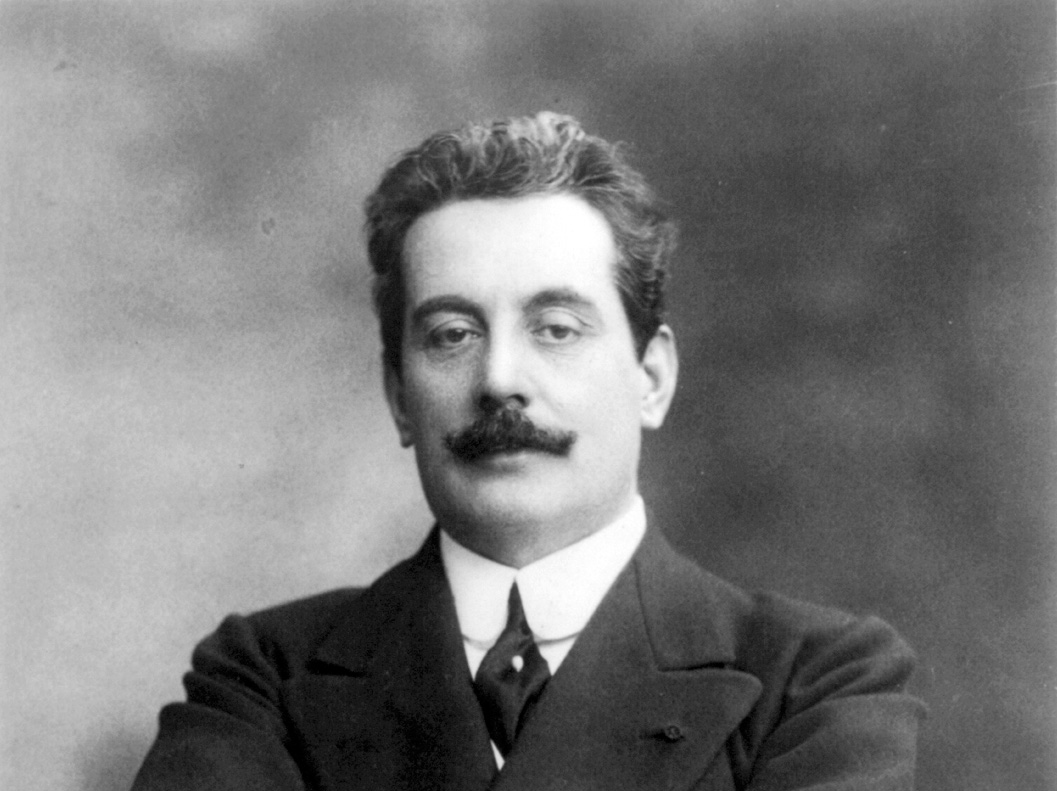
- Few composers understood the emotional power of the human voice as instinctively as Giacomo Puccini. In operas such as La Bohème, Tosca, Madama Butterfly and Turandot, he transformed intimate human experiences—love, jealousy, hope, poverty and loss—into music capable of filling the world’s largest theaters.
Puccini inherited the tradition of nineteenth-century Italian opera but refused simply to imitate it. He combined Italian lyricism with Wagnerian dramatic techniques, French orchestral color, contemporary harmonies and an almost cinematic awareness of timing. His operas can move rapidly from conversation to orchestral drama and then to an aria that seems to stop time.
That accessibility sometimes worked against his reputation among critics, who dismissed his music as sentimental or excessively theatrical. Audiences disagreed. More than a century after his death, Puccini remains one of the most frequently performed opera composers in the world and one of the central figures in the history of Italian music.
Born into a Musical Dynasty in Lucca
Giacomo Antonio Domenico Michele Secondo Maria Puccini was born in Lucca on December 22, 1858. He belonged to a family that had dominated the city’s religious music for more than a century. Several generations of Puccinis had served as composers and organists associated with Lucca Cathedral and other local churches.
His father, Michele Puccini, died in 1864, when Giacomo was only five. The young composer grew up with his mother, Albina Magi, six sisters and a brother. Because of the family tradition, it was widely assumed that he would eventually inherit a church-music position.
Puccini received his earliest musical instruction in Lucca and studied at the Pacini Institute of Music, initially learning the organ before concentrating on composition. He played in local churches and reportedly supplemented his limited income by performing in taverns and other secular venues.
According to the traditional account of his life, Puccini’s ambitions changed after he walked from Lucca to Pisa to hear a performance of Giuseppe Verdi’s Aida. Whether every detail of the story is exact or not, Verdi’s opera undoubtedly helped convince him that his future belonged in the theater rather than the church.
Puccini completed his Lucca studies in 1880 with the Messa a quattro voci, now commonly called the Messa di Gloria. That same year, supported financially by his mother and a scholarship, he moved to Milan.
Student Years in Milan
From 1880 to 1883, Puccini studied at the Milan Conservatory under Antonio Bazzini and Amilcare Ponchielli, the composer of La Gioconda. Milan exposed him to an international musical culture very different from provincial Lucca. He encountered the operas of Wagner, contemporary orchestral music and the commercial world of Italian publishers, librettists and theaters.
Life was not comfortable. Puccini lived economically in rented rooms and shared the struggles of other young musicians. These experiences later helped him portray the cold apartments, unpaid bills, youthful ambitions and improvised meals of the artists in La Bohème.
Ponchielli encouraged Puccini to enter a competition organized by the publisher Edoardo Sonzogno. The result was Le Villi, based on a Central European legend about supernatural spirits who punish faithless lovers. The jury rejected it, but supporters arranged a performance at Milan’s Teatro Dal Verme in 1884.
The production attracted the attention of Giulio Ricordi, head of Italy’s most influential music-publishing company. Ricordi recognized Puccini’s potential, acquired Le Villi and commissioned another opera. His support would prove essential throughout the composer’s career.
Puccini’s second opera, Edgar, premiered at La Scala in 1889. Its confused plot and uneven construction prevented it from becoming a lasting success. Puccini revised it repeatedly, but the experience taught him a decisive lesson: an opera needed a dramatically effective libretto before even the most beautiful music could succeed.
Elvira Bonturi and Puccini’s Private Life
Puccini’s personal life was complicated. In the mid-1880s, he began a relationship with Elvira Bonturi Gemignani, a married woman from Lucca. Elvira left her husband to live with Puccini, creating a scandal in their conservative community. Their son Antonio was born in 1886.
Because divorce was not available in Italy, Puccini and Elvira could not marry until after the death of her first husband. They finally married in 1904, almost two decades after beginning their relationship.
Puccini was frequently unfaithful, and the marriage was marked by jealousy, arguments and periods of separation. Nevertheless, Elvira remained a major presence in his life until his death.
During their early years together, the family endured financial uncertainty. That changed with the success of Puccini’s third opera.
Manon Lescaut: The First Masterpiece
Manon Lescaut premiered at Turin’s Teatro Regio in 1893. Based on Abbé Prévost’s novel about a young woman torn between love and luxury, the story had already been turned into a successful opera by Jules Massenet. Puccini nevertheless believed he could approach Manon with greater Italian passion.
The opera established him as the most promising successor to Giuseppe Verdi. Its sweeping orchestration, intense love music and devastating final act revealed the qualities that would define mature Puccini.
The success of Manon Lescaut gave him financial independence and confirmed Ricordi’s faith in him. It also began Puccini’s productive, sometimes stormy collaboration with librettists Luigi Illica and Giuseppe Giacosa.
Illica generally developed the scenario and dramatic structure, while Giacosa refined the poetry. Puccini demanded constant revisions, cuts and changes. He could be indecisive and exasperating, but his relentless attention to theatrical detail helped produce three extraordinary works: La Bohème, Tosca and Madama Butterfly.
La Bohème: Youth, Love and Loss
Premiered in Turin in 1896 under the young conductor Arturo Toscanini, La Bohème follows a group of impoverished artists living in Paris. At its center is the relationship between the poet Rodolfo and the seamstress Mimì.
The opera does not depend on kings, mythological heroes or great political events. Its drama grows from ordinary experiences: friends joking over a meager dinner, young people falling in love, jealousy, illness and the realization that happiness cannot last.
Puccini differentiates the bohemians through short, memorable musical ideas. The orchestra captures the cold of the attic, the chaos of the Latin Quarter and the stillness surrounding Mimì’s death. Comedy and tragedy exist side by side, as they often do in real life.
The first critical response was mixed, partly because comparisons were made with Verdi and Wagner. Audiences soon embraced it. La Bohème became one of the most frequently performed operas ever written and later inspired Jonathan Larson’s musical Rent.
Tosca: Opera as Political Thriller
Tosca premiered at Rome’s Teatro Costanzi in 1900. Set during the political turmoil of June 1800, it compresses its action into less than twenty-four hours and uses three identifiable Roman locations: the Church of Sant’Andrea della Valle, Palazzo Farnese and Castel Sant’Angelo.
The singer Floria Tosca loves the painter Mario Cavaradossi. Their relationship is destroyed by Baron Scarpia, Rome’s sadistic chief of police, who manipulates Tosca’s jealousy and uses torture, execution and sexual coercion to maintain his authority.
Puccini constructs the opera with remarkable dramatic economy. Church bells, cannon fire, offstage voices and recurring orchestral motifs make Rome itself part of the action. The lyrical arias “Vissi d’arte” and “E lucevan le stelle” emerge from a tightly controlled musical drama rather than functioning as isolated showpieces.
Because visitors can still see the principal locations associated with the story, Tosca offers one of the strongest connections between an opera and an actual Italian city.
Madama Butterfly: Failure Transformed into Triumph
Puccini discovered the story that became Madama Butterfly after seeing David Belasco’s play in London. The opera concerns Cio-Cio-San, a young Japanese woman who believes her marriage to the American naval officer B. F. Pinkerton is permanent. Pinkerton treats the arrangement as temporary and eventually returns to Japan with an American wife.
The premiere at La Scala on February 17, 1904, was a notorious failure. The audience jeered, shouted and disrupted the performance. Puccini withdrew the score and revised it, dividing the long second act, tightening the drama and making other musical changes.
The revised version was presented in Brescia on May 28, 1904, and received a triumphant response. Further alterations followed, and several versions of the opera survive.
Cio-Cio-San is one of Puccini’s most fully developed characters. Her music moves from youthful excitement to patient hope, dawning recognition and final despair. The long orchestral vigil between the second and third acts creates the sensation of an entire night passing while she waits for Pinkerton.
Puccini’s Mature Operas
A serious automobile accident in 1903 left Puccini with a badly broken leg and a long recovery. Together with the death of Giuseppe Giacosa in 1906 and Giulio Ricordi in 1912, the accident contributed to a slower rate of composition after Madama Butterfly.
La Fanciulla del West
Puccini encountered the source for La Fanciulla del West during a visit to New York. The opera premiered at the Metropolitan Opera in 1910, with Emmy Destinn, Enrico Caruso and Pasquale Amato in the leading roles and Toscanini conducting.
Set during the California Gold Rush, it centers on Minnie, the independent owner of a miners’ saloon, and the outlaw Dick Johnson. The score is harmonically adventurous and densely orchestrated, anticipating some of the techniques later associated with film music.
La Rondine
Originally commissioned by a Viennese theater, La Rondine premiered in Monte Carlo in 1917 after the First World War complicated its production. It combines the elegance of operetta with the emotional language of Italian opera.
Its heroine, Magda, leaves a wealthy protector for romantic love but ultimately concludes that her past makes a conventional future impossible. The opera’s bittersweet restraint distinguishes it from Puccini’s more violent tragedies.
Il Trittico
Il Trittico premiered at New York’s Metropolitan Opera in 1918. Puccini designed it as an evening of three contrasting one-act operas:
- Il Tabarro is a dark story of adultery and murder on a barge on the Seine.
- Suor Angelica follows a nun separated from the child she bore outside marriage.
- Gianni Schicchi is a brilliantly paced comedy about a greedy Florentine family attempting to manipulate a wealthy relative’s will.
The triptych demonstrates Puccini’s extraordinary range. The brutality of Il Tabarro, spiritual intensity of Suor Angelica and comic precision of Gianni Schicchi sound strikingly different, yet each reveals his mastery of theatrical timing. “O mio babbino caro,” from Gianni Schicchi, became one of his most familiar arias.
Puccini’s Operatic Style
Puccini is often described as a composer of verismo, the late nineteenth-century movement associated with emotionally direct stories about recognizable human beings. The label is useful but incomplete.
Unlike the concentrated violence of Pietro Mascagni’s Cavalleria rusticana or Ruggero Leoncavallo’s Pagliacci, Puccini’s operas range from Parisian bohemian life and Renaissance comedy to the American West and a legendary Chinese court.
Several characteristics make his music immediately recognizable:
Melody Shaped by Speech
Puccini wrote expansive melodies, but he also listened carefully to the rhythms of conversation. His vocal lines can move almost imperceptibly from ordinary dialogue into soaring lyricism.
Recurring Musical Motifs
Influenced partly by Wagner, Puccini associated short musical ideas with characters, memories, objects and emotions. These motifs return in altered forms as the drama develops, creating psychological connections without interrupting the action.
Orchestral Color
The orchestra does more than accompany the singers. It evokes physical environments, from Parisian streets and Roman church bells to Japanese ceremonial music and the vast court of Turandot. Puccini also used offstage bands, bells, unusual percussion and spatial effects to expand the theatrical world.
Precise Dramatic Timing
Puccini approached an opera almost like a stage director. He calculated entrances, silences, climaxes and changes of atmosphere with extraordinary precision. His best scenes feel spontaneous even though their emotional effects are meticulously constructed.
Interest in Modern Music
Although he remained committed to melody, Puccini studied contemporary European music. His later scores reveal an awareness of Debussy, Richard Strauss, Stravinsky and other modern composers. La Fanciulla del West, Il Tabarro and Turandot are particularly sophisticated in harmony and orchestration.
Controversies and Reassessment
Puccini’s enormous popularity has never prevented debate about either the man or his operas.
The Tragedy of Doria Manfredi
The most disturbing episode in Puccini’s private life involved Doria Manfredi, a young servant in the Puccini household. Elvira became convinced that Doria was having an affair with her husband and subjected her to public accusations and harassment.
Doria took poison in 1909 and died after several days of suffering. A postmortem examination contradicted the allegation that she had been sexually involved with Puccini. Her family pursued legal action against Elvira, who was convicted, although a private settlement later prevented her from serving the imposed sentence.
Puccini attempted to intervene during the conflict but failed to protect Doria effectively. The tragedy cannot be reduced to colorful gossip about an artist’s marriage; it was the destruction of a young woman’s life and remains a grave part of the Puccini family story.
Women in Puccini’s Operas
Puccini created exceptionally memorable female characters, but several—Mimì, Tosca, Cio-Cio-San, Suor Angelica and Liù—suffer or die. Critics have therefore questioned whether his operas repeatedly aestheticize female sacrifice.
Others argue that these women possess the deepest emotional and moral awareness in their respective works. They are frequently more courageous and psychologically complex than the men surrounding them. Modern productions increasingly examine this tension rather than presenting the operas as uncomplicated romantic tragedies.
Orientalism in Madama Butterfly and Turandot
Puccini carefully researched musical material associated with Japan and China and incorporated recognizable melodies into both works. Nevertheless, the operas emerged from a European tradition that often portrayed Asian societies as exotic, mysterious or cruel.
Madama Butterfly is also inseparable from the unequal relationship between the United States and Japan represented by Pinkerton’s behavior. Contemporary productions may retain the music while questioning racial stereotypes, colonial assumptions and outdated performance traditions.
Such reinterpretation does not require audiences to reject Puccini. It allows the operas to remain alive by confronting the historical viewpoints embedded in them.
Puccini and Fascism
During the early 1920s, Puccini expressed approval of Benito Mussolini and accepted an honorary Fascist Party membership. After his death, the regime attempted to present him as a symbol of Italian cultural greatness.
The precise meaning of Puccini’s political sympathies remains debated. He died in 1924, before the dictatorship developed into its later, fully repressive form, and there is no convincing evidence that Turandot was conceived as a Fascist political allegory. His favorable comments should not be concealed, but neither should his entire career be interpreted through a political system established near the end of his life.
Turandot: Puccini’s Unfinished Final Opera
Puccini began composing Turandot in 1920, working with librettists Giuseppe Adami and Renato Simoni. The story, derived from a theatrical fable by Carlo Gozzi, follows a Chinese princess who orders her suitors to answer three riddles. Failure means death.
Prince Calaf solves the riddles but offers Turandot a way out: if she discovers his name before sunrise, he will accept execution. The enslaved woman Liù, who secretly loves Calaf, kills herself rather than reveal his identity.
Puccini struggled with the final transformation of Turandot from an emotionally frozen ruler into a woman capable of love. He completed and orchestrated much of the opera but left only sketches for the final duet and conclusion.
A habitual smoker, Puccini developed cancer of the larynx. He traveled to Brussels for experimental radiation treatment but died from complications on November 29, 1924.
Franco Alfano completed Turandot using Puccini’s surviving sketches. At its La Scala premiere on April 25, 1926, Toscanini stopped the performance after the music Puccini had completed, following Liù’s funeral procession. Alfano’s ending was used in subsequent performances, although Toscanini substantially shortened it. Luciano Berio created an alternative completion in 2001.
The opera contains some of Puccini’s boldest choral and orchestral writing. Calaf’s “Nessun dorma” became famous far beyond the opera house, particularly through Luciano Pavarotti’s performances. Yet the unresolved transition after Liù’s death reminds listeners of the dramatic problem Puccini was still trying to solve.
Puccini’s Death and Burial
Following his death in Brussels, Puccini received funeral ceremonies there and in Milan. He was initially buried in Milan in the family tomb of Arturo Toscanini.
In 1926, his remains were transferred to the chapel inside his villa at Torre del Lago. Elvira, their son Antonio and other members of the family were later buried there as well.
Puccini’s death was widely perceived as the end of a great era in Italian opera. No later Italian composer achieved a comparable combination of international popularity, repertory permanence and influence on popular culture.
Puccini Places to Visit in Italy
Travelers interested in Puccini can follow his life through several cities in Tuscany and northern Italy.
Puccini Museum – Birth Home in Lucca
Puccini was born in a house at Corte San Lorenzo in the historic center of Lucca. It is now the Puccini Museum and contains documents, letters, portraits, personal belongings and the Steinway piano on which he composed parts of Turandot.
The museum provides the best introduction to his family background and early life. Lucca can be reached easily by train, as explained in our guide to exploring Tuscany without a car.
Villa Museo Puccini at Torre del Lago
Puccini settled at Torre del Lago, near Lake Massaciuccoli, in the 1890s. He loved the landscape, hunting and relative isolation. The villa he built there became his principal residence for more than twenty years.
Now the Villa Museo Puccini, the house preserves original rooms, furnishings and personal possessions. The chapel containing his tomb makes it the most emotionally significant Puccini destination.
Puccini Festival
The annual Puccini Festival presents his operas in an open-air theater near Lake Massaciuccoli. Attending a performance here allows visitors to hear the music in the landscape where several of the operas were composed.
Because programs and performance dates change annually, tickets and schedules should always be checked through the official festival website.
Villino Puccini in Viareggio
Environmental changes and industrial activity around Lake Massaciuccoli eventually encouraged Puccini to leave Torre del Lago. He moved into a new villa in Viareggio in 1921 and worked there on Turandot.
The restored Villino Puccini opens for guided visits and special cultural events. Visitors should confirm access in advance, as it may not operate like a museum with continuous daily admission.
Milan and La Scala
Milan shaped Puccini’s education and professional career. Visitors can see the Milan Conservatory, where he studied, and Teatro alla Scala, where Edgar and Madama Butterfly received their premieres.
La Scala’s museum contains costumes, musical instruments, portraits and documents connected with Italian opera. For additional historic venues, see our guide to the most famous theaters in Italy.
Turin’s Teatro Regio
Turin hosted the premieres of Manon Lescaut and La Bohème. The original Teatro Regio was largely destroyed by fire in 1936, but the modern theater occupies the same historic location and remains one of Italy’s principal opera houses.
Puccini’s Rome
Rome offers a different kind of Puccini itinerary. Admirers of Tosca can follow the action from Sant’Andrea della Valle to Palazzo Farnese and Castel Sant’Angelo. The opera premiered at the Teatro Costanzi, now the Teatro dell’Opera di Roma.
Puccini’s Enduring Legacy
Puccini wrote relatively few operas, but an extraordinary number became permanent repertory works. His influence extends beyond classical music. Film composers learned from his orchestral storytelling, musical-theater writers adopted his seamless movement between speech and melody, and singers carried arias such as “O mio babbino caro” and “Nessun dorma” into popular culture.
The emotional immediacy of Puccini’s music should not be mistaken for simplicity. Beneath its memorable melodies lies a highly controlled dramatic method built from recurring motifs, harmonic tension, orchestral color and an acute understanding of the stage.
Puccini could expose tenderness and cruelty within the same scene. He understood that the smallest human gesture—a candle extinguished in a cold room, a woman waiting through the night or a prisoner remembering the stars—could become the center of an enormous musical drama.
That ability explains why audiences continue to return to his work. Puccini did not merely write beautiful arias. He created theatrical experiences in which music makes private emotion visible.
Frequently Asked Questions
What are Puccini’s most famous operas?
His best-known operas are La Bohème, Tosca, Madama Butterfly and Turandot. Manon Lescaut, La Fanciulla del West, Gianni Schicchi and Suor Angelica are also regularly performed.
Was Puccini a verismo composer?
Puccini was influenced by verismo and shared its interest in direct emotion and recognizable human situations. However, his style was broader, combining Italian lyricism, recurring Wagnerian motifs, modern European harmony and highly sophisticated orchestration.
Why did the premiere of Madama Butterfly fail?
The original version was dramatically unbalanced, and the hostile La Scala audience loudly disrupted the performance. Puccini withdrew and revised the opera. The new version was successfully presented in Brescia a few months later.
Who completed Turandot?
Franco Alfano completed the ending from Puccini’s sketches. Toscanini shortened Alfano’s original conclusion, producing the version most commonly performed today. Luciano Berio later composed an alternative ending.
Where is Puccini buried?
Puccini is buried in a chapel inside the Villa Museo Puccini at Torre del Lago, near Viareggio.
External Links