
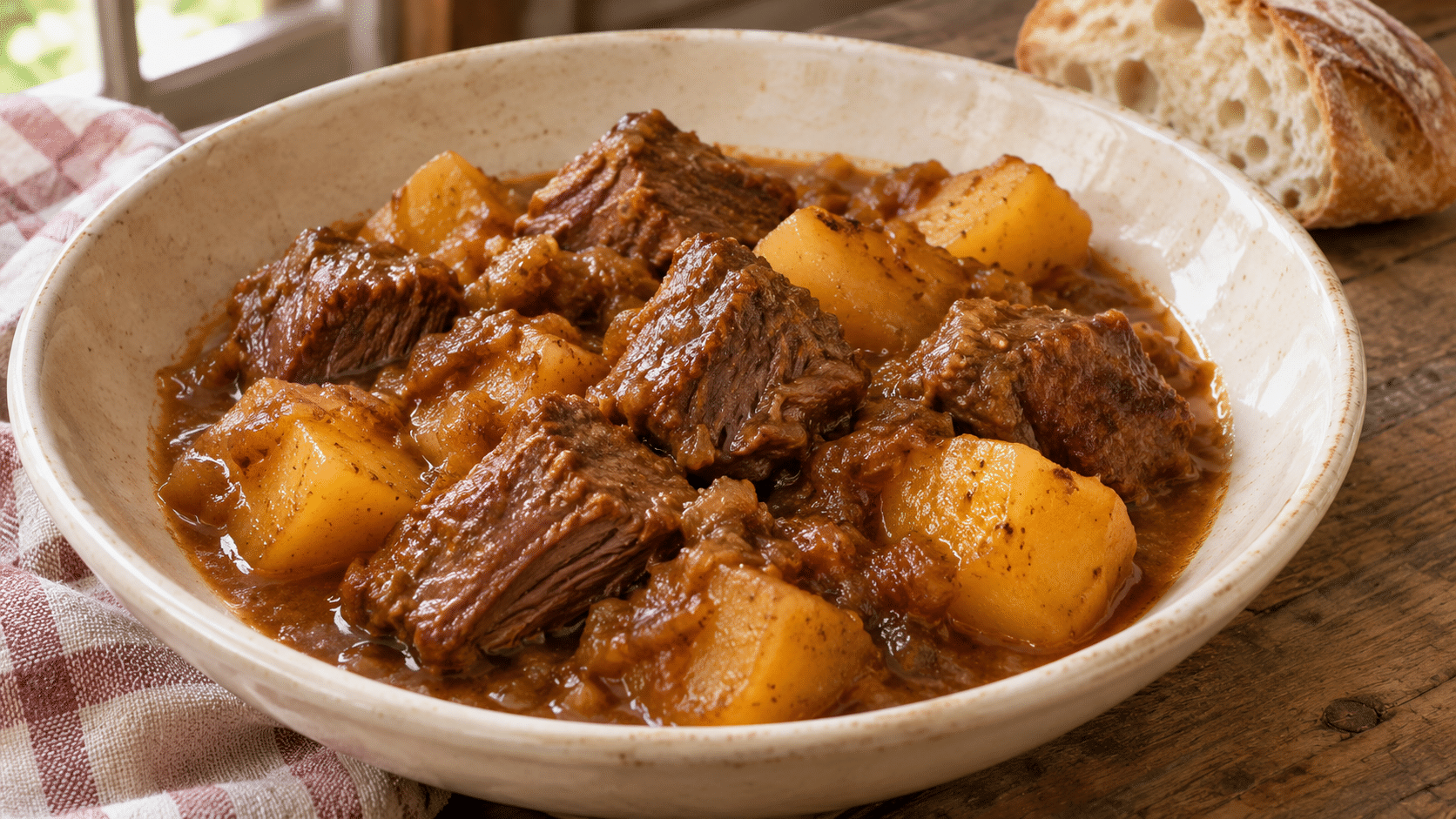
The best time to peel the potatoes for spezzatino di manzo con patate is when you can slip a fork halfway into a piece of beef. By then the onion has all but disappeared, the wine has cooked down, and there is just enough time for the potatoes to absorb the broth while the beef finishes cooking. Put everything in the pot at the beginning and you could be eating mashed potatoes by the time the meat is tender.
Spezzatino is meat cut into small pieces and cooked slowly. An Italian butcher might sell beef, veal or pork already cut per spezzatino. This beef version starts with onion, carrot and celery, uses a spoonful of tomato paste for depth, and makes enough sauce to warrant bread on the table. Serve it in shallow bowls, with a spoon alongside the fork.
Italian beef and potato stew recipe
Serves 4 generously. Allow 25 minutes for preparation and about 2 to 2½ hours on the stove, sometimes longer depending on the cut. Use a heavy pot with a lid, wide enough to brown the meat in two or three batches.
Ingredients
- 800 g (1¾ lb) boneless beef chuck or shoulder, cut into 3–4 cm (about 1½-inch) pieces
- 700 g (1½ lb) yellow potatoes, such as Yukon Gold
- 1 medium onion, 1 medium carrot and 1 celery stalk, all finely diced
- 2–3 tablespoons extra virgin olive oil
- 1 tablespoon tomato paste
- 150 ml (⅔ cup) dry red wine
- 500 ml (about 2 cups) hot low-salt beef stock, plus extra stock or water as needed
- 1 bay leaf and 1 small sprig of rosemary
- Fine salt and freshly ground black pepper
- Crusty bread, to serve
Method
- Brown the beef. Pat the pieces dry and season lightly with salt. Heat two tablespoons of oil over medium-high heat. Lay the beef in a single layer with space between the pieces. Leave the first side alone until it has a brown crust and releases easily, then turn to brown another side. Transfer to a plate and repeat. Leave the brown deposits on the bottom of the pot for the sauce.
- Soften the vegetables. Turn the heat down to medium-low. Add the onion, carrot and celery, another drizzle of oil if the pot looks dry, and a pinch of salt. Cook for 8–10 minutes, stirring and loosening the browned bits as the onion releases moisture. When the carrot yields to the edge of a spoon, clear a small space in the middle. Add the tomato paste and stir it through the oil for a minute.
- Start the braise. Pour in the wine, scrape the bottom with a wooden spoon and let the wine reduce by about half. Return the beef and any juices to the pot. Tuck in the bay and rosemary. Add enough hot stock to come about three-quarters of the way up the meat. Bring just to a simmer, cover and turn the heat low. Look under the lid after ten minutes. A few bubbles should break the surface at a time.
- Check the beef before adding the potatoes. Turn the pieces occasionally and start testing after an hour of gentle cooking. If a fork barely gets past the surface, cover the pot and give it another 15–20 minutes before testing again. Add a splash of hot stock whenever the exposed pieces start looking dry. Once a fork enters the beef readily but still meets resistance in the center, peel the potatoes and cut them into roughly 3 cm (1¼-inch) chunks.
- Finish the stew. Nestle the potatoes among the beef. Spoon the sauce over them and add a little hot stock if needed to bring the liquid halfway up the potatoes. Cover and simmer for 25–35 minutes, turning them gently once. Test one of the larger pieces with a small knife. It should slide through to the center. The beef should now separate under gentle pressure from a fork.
- Adjust the sauce and serve. Discard the herbs. If the sauce already coats a spoon, take the pot off the heat. If it looks thin, crush one cooked potato against the side and fold it through. Taste a spoonful of sauce with a bite of potato before adjusting the salt and pepper. Let the stew stand for five minutes, then ladle it into warm bowls.
What to ask for at the butcher
Buy chuck in one piece if possible. That lets you cut uniform chunks and keep the fine seams of connective tissue that soften during cooking. Trim any thick, tough membrane on the outside. In Italy, tell the butcher you are making uno spezzatino di manzo da cuocere lentamente. Shoulder cuts such as cappello del prete work well. If you buy ready-cut meat, check the packet for very small pieces and save those for another dish, or leave the larger ones a little smaller so they cook at a similar rate.
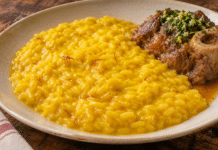
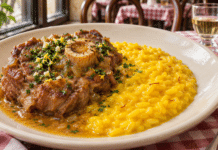
If you enjoy the beef once it reaches that spoon-tender stage, try Italia Mia’s ossobuco alla Milanese. The veal shanks stay on the bone, and a fresh gremolata of lemon, parsley and garlic goes on at the end.
When the beef and potatoes cook at different speeds
A small piece taken from the edge of the pot can give a misleading impression. Check a larger piece of beef and a larger potato from the middle. If the potatoes are ready first, lift them into a bowl with a slotted spoon. Let the beef finish under the lid, then slide the potatoes back into the sauce to warm through. If the beef is ready first, do the reverse. This is easier than stirring the whole pot repeatedly and breaking up dinner.
For a thicker gravy with distinct chunks of potato, lift the cooked meat and potatoes into a serving dish. Boil the sauce uncovered for a few minutes, tasting as it reduces, then pour it over them. Stop while it still flows from the spoon. The potatoes will absorb a little more liquid as the dish stands.
Variations and what to serve alongside
For spezzatino in bianco, omit the tomato paste and use dry white wine. Follow the same browning step carefully, since much of the sauce’s flavor and color will come from the bottom of the pan. For a wine-free stew, loosen those browned bits with extra stock. A handful of frozen peas can go in for the last five minutes, when the potatoes are nearly tender.
With potatoes already in the pot, a loaf of bread and a bowl of bitter leaves dressed with lemon and olive oil make a full supper. For a Sunday lunch with several courses, serve smaller portions as a secondo. Bring the pot to the table with a ladle so everyone can take a little extra sauce for the last piece of bread.
External Links
As an Amazon Associate, Italia Mia earns from qualifying purchases.
- Marcella Hazan, Essentials of Classic Italian Cooking. A practical choice for readers who want to explore Italian braising beyond this recipe. Amazon US · Amazon Italy
- Pellegrino Artusi, Science in the Kitchen and the Art of Eating Well. Read Artusi for a historical view of Italian home cooking, including the meat dishes collected under umidi. English edition on Amazon US · Italian edition on Amazon Italy
- La cucina di Lice’s spezzatino di manzo con patate offers another Italian home cook’s approach to adding the potatoes toward the end of cooking.