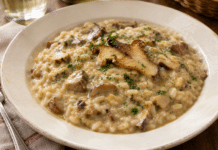

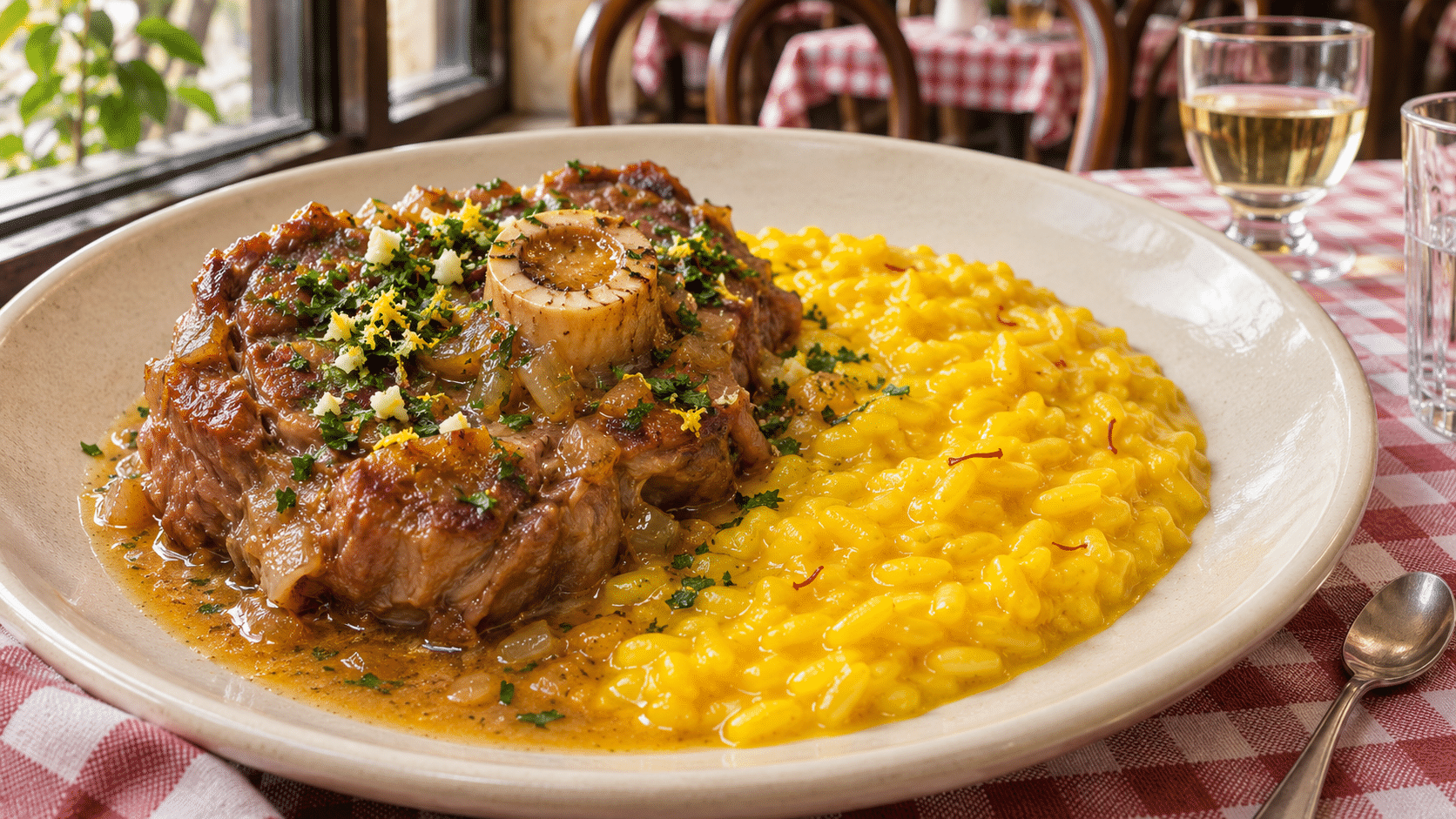
In Milan, an ossobuco often arrives beside a pool of saffron risotto, with a small spoon for the marrow in the center of the bone. Drag a forkful of rice through the brown pan juices and you get butter, white wine and the sweetness of slowly cooked onion. The lemon comes a moment later. It goes into the pan only after the veal is tender, along with a handful of parsley and a little raw garlic.
This recipe makes ossobuco in bianco, with white wine and broth. The sauce takes its amber color from the browned shanks. A wide pan with a lid does most of the work, and the veal can wait while you finish the rice. For a Sunday lunch, that last point matters almost as much as the choice of meat.
Ossobuco alla milanese recipe
Serves 4 · Prep 20 minutes · Cooking about 2 to 2½ hours, depending on the thickness of the shanks
For the veal
- 4 bone-in, cross-cut veal shanks, each about 4 cm (1½ inches) thick and 300–350 g (10½–12 oz)
- Fine salt and freshly ground black pepper
- 3 tablespoons all-purpose flour, for dusting
- 40 g (about 3 tablespoons) unsalted butter, divided
- 1 tablespoon olive oil
- 1 medium yellow onion, finely chopped
- 150 ml (⅔ cup) dry white wine
- 400 ml (about 1⅔ cups) warm, low-salt beef or veal broth, plus more as needed
For the gremolata
- 3 tablespoons finely chopped flat-leaf parsley
- Finely grated yellow zest of 1 lemon
- 1 small garlic clove, finely minced
- Prepare the shanks. Pat the veal dry. With kitchen scissors, snip through the tight outer membrane in two or three places around each slice. Leave the rest attached to hold the meat together. Season both sides with salt and pepper. Dust lightly with flour just before browning, tapping off the excess.
- Brown the veal. Heat the oil and half the butter in a heavy, wide pan over medium heat. When the butter foams, lay the shanks flat. Work in two batches if they would touch closely. Give the first side about 4 minutes to form a golden crust, then turn and brown the second side. Transfer the meat to a plate. Keep the golden bits on the base of the pan and lift out any scorched flour with a spoon.
- Build the sauce. Lower the heat, add the onion and cook for 6–8 minutes, stirring until soft. Pour in the wine. Use a wooden spoon to loosen the browned bits while the wine bubbles down by about half. Slide the veal and its collected juices back into the pan in a single layer.
- Braise gently. Pour in enough warm broth to reach halfway up the shanks. Bring to a gentle simmer, cover and reduce the heat to low. Look under the lid after 10 minutes. A few bubbles should break at the edges. Turn the shanks carefully halfway through cooking and add a splash of broth if the pan is getting dry. Begin checking tenderness after 90 minutes. Thick slices can take 2 hours or a little longer. A fork should slide easily into the thickest part and twist with little resistance.
- Finish the pan juices. Slip a wide spatula under each shank and transfer the meat to a warm platter. If the sauce looks thin, simmer it uncovered until it lightly coats a spoon. If it has thickened too far, loosen it a spoonful of broth at a time. Taste for salt now, once you know how concentrated the sauce will be.
- Add the gremolata and serve. Combine the parsley, lemon zest and garlic on a board. Run a knife through them together a few times so the garlic is evenly distributed. Take the pan off the heat, swirl in the remaining butter and stir in half the gremolata. Spoon the sauce over the shanks and scatter the remaining gremolata on top. Bring the platter straight to the table.
What to ask the butcher for
Ask for center-cut slices of veal hind shank, sawn across the bone, with the marrow intact. Four slices of similar thickness make the timing much easier. Pay attention to the width as well. If one slice is especially broad, check whether all four will fit in your pan before you start flouring them. A sauté pan with two short handles is often a better fit for this job than a deep soup pot.
Osso means bone and buco means hole. The name makes sense the moment you see the cut. Some of the soft marrow may slip into the sauce as the shanks cook. Leave the rest in place for whoever gets that piece. A small espresso spoon will reach it, and a piece of toasted bread gives you somewhere to spread it.
Why the gremolata goes in last
Chop the parsley while the sauce reduces. Dry the leaves well first so they separate under the knife, and grate the lemon directly over them to catch the fragrant oils. Turn the fruit as soon as you see the white pith. One small clove of garlic is plenty here, especially when freshly cut. If yours is large, start with half and taste a little gremolata on a spoonful of sauce.
In Lombardy you will also see the spelling gremolada. The regional recipe collected in the Nuovo codice della cucina lombarda includes sage and rosemary alongside the parsley. Its braise uses butter, wine and broth. Other Milanese versions include carrot, celery or tomato. The onion-only base here leaves a light sauce to spoon over saffron rice, with enough lemon at the finish to catch its scent as you lean over the plate.
Serving ossobuco with saffron risotto
Wait until the veal passes the fork test before starting the risotto. Keep the shanks covered in their sauce off the heat while the rice cooks, reserving the butter and gremolata for the finish. When the rice is nearly ready, warm the veal gently and finish the sauce. It is much easier to hold a braise for a few minutes than to rescue a pot of risotto that has sat too long.
Spoon the saffron rice onto warm plates and give each plate a gentle shake so it spreads. Set a shank slightly to one side, leaving some of the yellow rice visible, and spoon the juices around the meat. Soft polenta also catches the sauce beautifully. For help choosing rice, see Italia Mia’s Italian pantry guide. If you are planning to try the dish in its home city, explore our Milan travel guide.
Italian cookbooks for the kitchen shelf
As an Amazon Associate, Italia Mia earns from qualifying purchases.
Marcella Hazan’s Essentials of Classic Italian Cooking is the book to reach for if you enjoyed the timing of this dish. Read her approach to ossobuco alongside her chapter on risotto, especially if you want to get comfortable judging the rice by sight and by the feel of the spoon. Find the book on Amazon.com · Amazon.it
Pellegrino Artusi’s Science in the Kitchen and the Art of Eating Well offers a different pleasure. Look up recipe 358, Osso buco. Its short instructions make an interesting comparison after cooking a modern version, particularly when you reach Artusi’s choice of aromatics. English readers can search by the translated title, while Italian readers can look for La scienza in cucina e l’arte di mangiar bene. Find the English edition on Amazon.com · Find the Italian edition on Amazon.it
External Links
- ERSAF Lombardia – Nuovo codice della cucina lombarda (PDF), Milanese ossobuco on page 92
- La Cucina Italiana – Ossobuco alla milanese