Italian music is far more varied than the romantic ballads and operatic voices many international listeners associate with the country. Those traditions remain important, but today’s Italian charts also move to the rhythms of rap, urban pop, indie songwriting, electronic dance music, rock and contemporary Neapolitan music.
When I listen to what is popular in Italy now, the most striking feature is how naturally artists combine old and new. A melodic chorus worthy of the Sanremo stage may sit beside trap production, regional dialect or an international dance beat. According to FIMI, Italian repertoire accounted for 85% of the country’s Top 100 albums in 2025—a clear sign that local artists continue to command the attention of Italian listeners.
This selection is not intended as an all-time ranking. For historic icons such as Mina, Adriano Celentano, Lucio Battisti and Vasco Rossi, see our guide to the most famous Italian singers and bands from the 1960s to today. Here, I am concentrating on singers and bands that best represent the energy, variety and direction of contemporary Italian music.
Olly
Federico Olivieri, known as Olly, represents the return of melodic pop to the center of Italian popular music. His songs combine conversational lyrics, youthful energy and choruses designed to be sung by an entire arena.
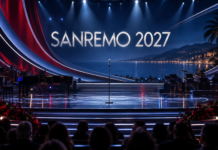
After winning the 2025 Sanremo Music Festival with Balorda nostalgia, Olly became one of Italy’s defining contemporary pop artists. His success was not limited to a single festival appearance: FIMI’s annual rankings placed him at the top of both the album and singles charts for 2025.
His appeal lies in his accessibility. The production is modern, but the emotional directness belongs to the long Italian tradition of turning everyday feelings into memorable songs.
Start with: Balorda nostalgia, Devastante and Per due come noi.
Geolier
Geolier has helped take Neapolitan rap from a strong regional movement to the center of Italy’s national music industry. Born Emanuele Palumbo, he performs largely in Neapolitan, treating the language as a living means of contemporary expression rather than a nostalgic reference to the past.
His music combines street storytelling, trap production, melody and an unmistakable sense of place. Even listeners who do not understand every word can hear the rhythm and emotional weight of the dialect.
Geolier’s sustained chart success demonstrates how regional identity can become a source of national influence. His popularity has also encouraged a wider audience to explore the thriving music scene of Naples.
Start with: I p’ me, tu p’ te, Come vuoi and Chiagne.
Måneskin
Few Italian bands have achieved the international visibility of Måneskin. Their victory at the 2021 Eurovision Song Contest with Zitti e buoni transformed the Roman group into a global rock act, but their success was built on more than one television moment.
Damiano David, Victoria De Angelis, Thomas Raggi and Ethan Torchio created a recognizable identity through energetic live performances, glam-rock imagery and songs that move between Italian and English. Tracks such as Beggin’, I Wanna Be Your Slave and The Loneliest introduced millions of listeners to a new, confident face of Italian rock.
The members’ individual projects have expanded their creative range, yet Måneskin’s impact remains clear: they showed that an Italian rock band could once again compete in the international mainstream.
Start with: Zitti e buoni, Torna a casa and The Loneliest.
Annalisa
Annalisa has developed one of the most successful careers in modern Italian pop. Her technically precise voice was always evident, but her evolution into sophisticated electronic pop gave her music a stronger and more distinctive identity.
Songs such as Bellissima, Mon amour and Sinceramente combine polished production with immediately recognizable melodies. They are contemporary without abandoning the importance of the chorus—a fundamental element of Italian pop.
Her visual style, carefully constructed performances and vocal control have made her one of the country’s most complete mainstream entertainers. She also belongs to a longer lineage explored in our article on the most popular female singers in Italy.
Start with: Sinceramente, Bellissima and Mon amour.
Mahmood
Mahmood is one of the artists who most convincingly connects Italian songwriting with international R&B, electronic pop and urban production. Born in Milan to an Italian mother and Egyptian father, he writes about identity, family, desire and emotional distance without reducing those subjects to simple slogans.
His 2019 Sanremo-winning song Soldi became an international hit, while Brividi, performed with Blanco, brought him back to Eurovision in 2022. Later songs such as Tuta gold confirmed his talent for combining unusual rhythmic phrasing with memorable pop hooks.
Mahmood’s music feels distinctly Italian while remaining open to sounds from across the Mediterranean and the wider pop world.
Start with: Soldi, Tuta gold and Brividi.
Elodie
Elodie has grown from a television talent-show contestant into one of Italy’s most recognizable pop performers. Her music draws on dance-pop, R&B and electronic production, while her performances emphasize movement, fashion and strong visual storytelling.
What makes Elodie interesting is the combination of glamour and vulnerability. Her best songs are designed for radio and the dance floor, but they often retain an emotional tension beneath their polished surface.
She also reflects the increasingly fluid relationship between music, cinema, television and fashion in contemporary Italian entertainment.
Start with: Due, Bagno a mezzanotte and Andromeda.
Marracash
Marracash is one of the most respected figures in Italian rap. While many successful rappers focus primarily on status or lifestyle, his strongest work examines insecurity, ambition, relationships, fame and the contradictions of modern society.
Albums such as Persona and Noi, loro, gli altri expanded the possibilities of mainstream Italian hip-hop. His writing can be confrontational, analytical and deeply personal, often within the same song.
For listeners interested in Italian rap as a form of serious contemporary songwriting, Marracash is essential.
Start with: Crazy Love, Laurea ad honorem and Bravi a cadere.
Sfera Ebbasta
Sfera Ebbasta was central to the explosion of Italian trap during the second half of the 2010s. His melodic delivery, fashion-conscious image and international collaborations helped turn a once-underground style into mainstream pop culture.
His lyrics frequently explore money, success, exclusion and the distance between his early life and celebrity. Although his subject matter can divide listeners, his influence on Italian youth culture and the national recording industry is impossible to ignore.
Sfera also helped create an international audience for Italian-language trap, demonstrating that the genre did not need to imitate its American origins to become commercially powerful.
Start with: Tran Tran, Cupido and Visiera a becco.
Lazza
Lazza combines rap technique with a strong musical background, including years of piano study. That combination gives his work an unusual flexibility: he can deliver hard-edged verses, melodic pop refrains and more introspective compositions without sounding as though he is moving between separate identities.
His Sanremo song Cenere introduced him to an even broader audience, while his albums established him as one of the major names in Italian urban music.
Lazza is particularly effective for listeners who want an accessible entrance into Italian rap without losing the genre’s verbal intensity.
Start with: Cenere, 100 messaggi and Panico.
Achille Lauro
Achille Lauro resists simple classification. Across his career, he has experimented with rap, glam rock, punk imagery, theatrical pop and romantic songwriting.
His appearances at Sanremo turned the festival stage into a space for costume, provocation and performance art. Yet behind the visual spectacle is an artist with a strong instinct for memorable melodies and cultural references.
Whether listeners see him as a musician, provocateur or multimedia performer, he has expanded expectations of what a mainstream Italian pop artist can look and sound like.
Start with: Rolls Royce, Me ne frego and Incoscienti giovani.
Cesare Cremonini
Cesare Cremonini remains one of Italy’s most accomplished pop songwriters. After beginning his career as the frontman of Lùnapop, he built a solo catalogue filled with elegant melodies, carefully arranged instrumentation and lyrics that balance intimacy with broad appeal.
His music often feels cinematic. Rather than following every passing production trend, he concentrates on songwriting and arrangement, which has given his work considerable longevity.
Cremonini also excels in large venues, where personal songs become communal experiences without losing their emotional detail.
Start with: La nuova stella di Broadway, Poetica and Nessuno vuole essere Robin.
Ultimo
Ultimo has built an exceptionally devoted audience through piano-led ballads and emotionally direct lyrics. His songs frequently address loneliness, ambition, family, lost love and the struggle to find one’s place.
Critics sometimes describe his style as traditional, but that familiarity is part of his strength. He understands the enduring Italian appetite for melody and confession, particularly when delivered in a stadium filled with listeners who know every word.
His rise also shows that streaming-era success does not depend exclusively on rap, dance production or short-lived viral trends.
Start with: I tuoi particolari, Pianeti and 22 settembre.
Pinguini Tattici Nucleari
Pinguini Tattici Nucleari bring intelligence, humor and warmth to contemporary Italian pop-rock. Formed in the province of Bergamo, the band spent years building an audience before reaching the national mainstream.
Their songs are filled with cultural references, small observations and stories about relationships or missed opportunities. The arrangements are approachable, but the writing often rewards closer attention.
In a music market increasingly centered on solo artists, their success proves that the Italian band remains very much alive.
Start with: Ringo Starr, Giovani Wannabe and Rubami la notte.
The Kolors
The Kolors specialize in sleek, danceable pop shaped by funk, disco and international radio. Frontman Stash gives the group a recognizable identity, while their strongest songs thrive on rhythm and uncomplicated, infectious choruses.
Italodisco became a major European success by turning nostalgia for 1980s Italian dance music into something playful and contemporary. The band’s sound works especially well in summer, when Italian radio, beach clubs and town festivals become important stages for seasonal hits.
Start with: Italodisco, Un ragazzo una ragazza and Everytime.
Bresh
Bresh belongs to the productive Genoese urban scene, but his work often moves beyond conventional rap. He combines conversational delivery with melodic choruses and imagery connected to the sea, friendship, home and personal uncertainty.
His songs feel intimate without being small. This ability to transform local memories into emotions recognized across Italy has made him one of the most distinctive voices of his generation.
Bresh is a good example of how the boundaries between rapper and cantautore have become increasingly difficult—and increasingly unnecessary—to define.
Start with: Guasto d’amore, Altamente mia and La tana del granchio.
Angelina Mango
Angelina Mango combines pop immediacy with rhythmic influences connected to her southern Italian roots. The daughter of singer-songwriter Mango and Laura Valente, she entered music with a significant artistic inheritance but quickly established an identity of her own.
Her songs can move from introspective writing to bright, percussive pop. After winning Sanremo 2024 with La noia, she represented Italy at Eurovision and gained a substantially wider international audience.
Her vocal personality and instinct for movement make her one of the most interesting figures in Italy’s younger pop generation.
Start with: La noia, Ci pensiamo domani and Che t’o dico a fa’.
Lucio Corsi
Lucio Corsi offers something quite different from highly polished mainstream pop. The Tuscan singer-songwriter blends glam rock, folk, surreal imagery and the storytelling tradition of the Italian cantautore.
His songs are populated by unusual characters, rural landscapes and poetic transformations. Visually, he embraces theatricality, but his work is grounded in musicianship and an affection for classic songwriting.
His emergence into wider public attention demonstrates that originality and eccentricity can still find space in Italy’s mainstream music culture.
Start with: Volevo essere un duro, Tu sei il mattino and Altalena Boy.
Sal Da Vinci
Sal Da Vinci brings the contemporary Italian mainstream into contact with the great musical traditions of Naples. An experienced singer and stage performer, he combines melodic pop with the emotional directness associated with Neapolitan song.
His victory at the 2026 Sanremo Music Festival with Per sempre sì introduced him to an even broader national and European audience. It also confirmed that Italian popular music does not move in a straight line from old to new. Established regional traditions can return to the center of the national conversation when presented with conviction and a strong song.
Start with: Per sempre sì, Rossetto e caffè and Non riesco a farti innamorare.
Giorgia
Giorgia remains one of Italy’s most admired vocalists. Her combination of soul, pop and technical control has influenced younger singers, while her continuing recordings and festival appearances keep her connected to the present rather than confined to nostalgia.
She can deliver dramatic ballads without oversinging and contemporary material without disguising the qualities that made her famous. For anyone exploring Italian vocal music, Giorgia is an important bridge between generations.
Start with: Come saprei, Gocce di memoria and Parole dette male.
Laura Pausini
Laura Pausini continues to be one of Italy’s most successful musical ambassadors. Her recordings in Italian and Spanish have created a lasting connection with audiences across Europe and Latin America.
While her international career sets her apart, her music remains rooted in the emotional clarity of Italian pop. Love, separation, family and personal growth are expressed through melodies built to cross linguistic and cultural borders.
Her longevity illustrates the difference between temporary popularity and a truly international career.
Start with: La solitudine, Strani amori and Tra te e il mare.
What Defines Italian Music Today?
There is no single contemporary Italian sound. That is precisely what makes the scene so interesting.
Rap and trap remain commercially powerful, especially among younger listeners. At the same time, melodic pop has returned strongly to the charts. Naples and its language exert enormous influence, while Sanremo continues to introduce artists and songs to a national audience. Bands such as Måneskin, The Kolors and Pinguini Tattici Nucleari demonstrate three very different ways of keeping the group format relevant.
The traditional cantautore has not disappeared either. Instead, the role has evolved. Today, personal storytelling may arrive through a piano ballad, a rap verse, an indie-rock arrangement or electronic production.
For a wider historical perspective, explore our overview of Italian music, our introduction to Italian jazz and our guide to Italian classical music.
A Starter Playlist
If you are discovering modern Italian music for the first time, these ten tracks provide a varied introduction:
- Olly — Balorda nostalgia
- Geolier — I p’ me, tu p’ te
- Måneskin — Zitti e buoni
- Annalisa — Sinceramente
- Mahmood — Soldi
- Elodie — Due
- Marracash — Crazy Love
- Pinguini Tattici Nucleari — Ringo Starr
- Angelina Mango — La noia
- Lucio Corsi — Volevo essere un duro
Together, they reveal a country where melody remains essential but is constantly being reshaped by new rhythms, languages and personalities.
The Continuing Evolution of Italian Music
Italy’s current music scene respects tradition without being trapped by it. Veteran performers still command enormous audiences, while younger artists bring regional dialects, urban production and new forms of personal storytelling into the mainstream.
That mixture is the real vibrant sound of Italy: not one genre or generation, but an ongoing conversation between the country’s musical past and its changing present.
External Sources
- FIMI – Official Italian music charts
- FIMI – Annual music charts
- RAI – Official Sanremo Music Festival website
- Eurovision – Italy’s artists and participation